It's facebook viral survey time again!
Directions: open iTunes and sort your songs by number of plays. List the top 15 distinct artists that appear in terms of plays and the most-played track by each (along with the number of plays). Eminem and Eminem feat. xyz and variants thereof are not distinct artists, as much as iTunes may think they are. Write something about each of them. Tag me in your note.
1. "Greater Than," Vedera, from Stages (38). Okay, this one is going to take a little explanation. Two and a half years ago, Last.fm suggested that I listen to a little EP called Stages from a band called Vedera. It was awesome. It's three songs of brilliance; if you want them to, they can tell a cohesive story, and if not, they're perfectly amazing in isolation. But the best part was that Vedera hyped the EP as a preview of things to come with their second full-length album, also called Stages. The full-length didn't quite live up to the EP, but I still listened to it far, far too many times back in fall 2009. "Greater Than" is both the first and best track on the album, explaining its gratuitous number of plays.
2. "Sing Me Spanish Techno," The New Pornographers, from Twin Cinema (30). In a year that also saw the release of The Everglow, Plans, Illinois, and Picaresque, Twin Cinema still managed to be a standout album. This was the first song I heard by the New Pornographers--tragically, not until 2010!--and it made me an instant fan. Energy, imagery, and creative lyrics make this song a worthy addition to the list. Go listen to it.
3. "Careful," Paramore, from Brand New Eyes (20). Yep, guilty as charged, I'm into Paramore. The only surprise here was that my most-played Paramore track wasn't from Riot!, because that album is seriously good, and I will defend it with every ounce of critical credibility that I have. "Careful" is a fine track too, with enough energy to have been on Riot! and slightly more sophisticated lyrics.
4. "Australia," The Shins, from Wincing the Night Away (17). Love this song, love this album, love the Shins. It's so happy--how could you not love it? Some highlights are grin-inducing lyrics like "faced with the dodo's conundrum," a vague theme of breaking out of the mold and doing what makes you happy, and an absolutely delightful music video.
5. "The Wanting Comes in Waves/Repaid," The Decemberists, from The Hazards of Love (15). The Decemberists have a lot of material that's tough to explain to a non-fan, and Hazards takes the cake for furthest out there. It's also irrationally my favorite Decemberists album--I think the theater/folk/prog experiment paid off. This song is essentially the end of "Act I" of the implied musical; it's about the shape-shifting protagonist William trying to escape the clutches of his jealous forest-queen mother. And in the context of Hazards, that not only all makes sense, but is really entertaining, both narratively and musically.
6. "Jewel to Sparkle," The Juliana Theory, from Love (14). A little surprised this showed up until I remembered how often I listen to the Juliana Theory at the gym. They might be the most under-appreciated rock band of the 2000s, and if they're known at all, it's for Emotion is Dead. It's a fine album, but Love is probably better and certainly under-rated. It contains a lot of harmonic and instrumental explorations not normally associated with circa-2003 emo rock, which it what makes it such good music.
7. "Daniel," Bat for Lashes, from Two Suns (13). My friend Andrew and I have a fine tradition of listening to the Pitchfork "top ten albums of the year" every January. 2009's was particularly terrible (some trash from Animal Collective was apparently the "best"), but the one bright spot we came across was Bat for Lashes. And by bright spot, we meant this song and maybe two or three more on Two Suns. "Daniel" is an out-of-place techno-inspired track on an album that feels like an opiate-induced day-long dream; it's Bat for Lashes at its most accessible and musically sound.
8. "Someone Else's Arms," Mae, from The Everglow (12). Absolutely a travesty that this track is so far down on the list, it's possibly my favorite song from possibly my favorite album of all time. My love for The Everglow defies explanation, but it involves some combination of personal significance and musical brilliance. Of all the songs on it, "Someone Else's Arms" rocks the hardest and leaves the strongest impression.
9. "Desecration Smile," Red Hot Chili Peppers, from Stadium Arcadium (12). Not being a huge Chili Peppers fan in general, I was pleasantly blown away by Stadium Arcadium. It has a few weak tracks on it; "Desecration Smile" is not one of them. It might be about a relationship, or drugs, or nothing at all, but it hardly needs lyrics considering its modal, brooding melodies are so intriguing.
10. "Shady Grove," as performed by Among the Oak and Ash, from Among the Oak and Ash (11). Very cool. I've never been shy about admitting that I like a little folk and bluegrass garnish to go along with my steady diet of indie pop, which explains why I took to AtOAA so readily after hearing them on Paste Magazine's podcast a couple of years ago. "Shady Grove" is an old American folk song, with thousands of renditions out there, and Garrison Starr's simple banjo-accompanied version is as good as any of them.
11. "Bohemian Like You," The Dandy Warhols, from Thirteen Tales from Urban Bohemia (11). I claim to be a Dandy Warhols fan on the strength of this album alone; in fact, I've never even heard any of the other albums, I just assume they're a fraction as good. My friend Nicholas shared this album with me back in 2005, and this track was an instant favorite: "Bohemian Like You" made fun of the hipster culture before it was cool to make fun of hipsters.
12. "Help I'm Alive," Metric, from Fantasies (11). In the wasteland of music that was 2009, Metric somewhat quietly released by far their best album, managing to incorporate their dance-y unconventionality from previous albums without being nearly as aggressively in our faces about it. "Help I'm Alive" is far more interesting than it deserves to be for how much it repeats, but Emily Haines and company make me want to hear the insistent, driving chorus each of the dozen or so times it shows up.
13. "We Are What You Say," Sufjan Stevens, from A Sun Came! (10). Hardly a shock that a Sufjan Stevens song shows up on this list, the only surprise being that it's from A Sun Came! instead of the more recent The Age of Adz or the more brilliant Illinois. Along with "A Winner Needs A Wand," "We Are What You Say" opens Stevens' debut album with a surprisingly hard-rock take on Middle Eastern folk. Complete with slightly unconventional instrumentation and structure and vaguely-religious-but-draw-your-own-conclusions lyrics, "We Are What You Say" laid the foundation for more than a decade's worth of experimentation by Sufjan Stevens in the realm of indie folk.
14. "Barrowland Ballroom," Amy MacDonald, from This Is The Life (10). Every season, Starbucks releases a "Have You Heard" compilation that has historically done a pretty impressive job of picking out the next big thing in indie-land. I first heard Amy MacDonald on the Fall 08 edition, which also included current indie darling Bon Iver. I wasn't as impressed with his music as I was apparently supposed to be, but "This Is The Life" convinced me to buy Amy MacDonald's album. Most of it isn't as good as the title track; "Barrowland Ballroom" is one of the few songs that's probably better. Once styled as "the UK's answer to Katy Perry, except she can actually sing," MacDonald pilots her spirited contralto through a stride piano-driven track about doing awesome things with people you love.
15. "Close Call," Rilo Kiley, from Under the Blacklight (10). Even though they're the two most different-sounding Rilo Kiley albums, Blacklight and Take-Offs and Landings go back and forth for the honor of "Matt's favorite Rilo Kiley album". Blacklight must have won out, at least over the two-year span that this iTunes library has been racking up plays. Like every good Rilo Kiley song, it's a Jenny Lewis vocal showcase with just a hint of country
Currently listening: "My Lovely," Eisley, from Room Noises (only 3 plays? what?)
Showing posts with label The Decemberists. Show all posts
Showing posts with label The Decemberists. Show all posts
Wednesday, June 22, 2011


Thursday, June 02, 2011
The Oregon Trail, Day 3: May 29, 2011
New to this? Start with the prologue, Day 1, and Day 2!
10:20 am, Redmond OR: Slow start today. After Sonia and I fail to find a Catholic church in central Oregon with an 11 am Mass, we're forced to abandon Plan Go To Church. We enact Plan Investigate the Check Engine Light instead.
10:32 am, US 97 between Redmond OR and Bend OR: Josh's iPod, as is customary for it, plays some Tupac. Mr. Shakur raps the lyric "crack cocaine rocked us," which is probably the cleverest rap lyric I've heard in quite a while.
11:01 am, Bend OR: There is nothing wrong with Josh's car.
11:38 am: Driving aimlessly through downtown Bend, we come to an outdoor market selling items by local artists. A man who calls himself the "Nutmaster" is selling various delicious nuts; I order some cinnamon pecans with the accent on the first syllable.
12:05 pm: Beer tasting at Deschutes Brewery. It's slightly pretentious in a winery sort of way, where the beers are described with flavor notes. They're pretty tasty, and the Twilight Ale is a fine drink, but I still can't stand IPAs.
12:30 pm: Time for the brewery tour. There's chemical engineering here!

1-2 pm: Bend is no Portland, but it holds its own in terms of local Oregon flavor.


1:34 pm: "Thaiphoon" might be the best restaurant name ever.
1:43 pm: Ranch Records. Oh yes. These guys have Dr. Dre's The Chronic on vinyl. They also have a poster for tonight's Decemberists show in the window. I ask the grungy guy behind the counter if they have any more. "No, the promoters come and put that stuff up, so that's all we have. If you come back later, when we're closing, we can probably let them go." (He looks at his phone.) "I mean... if you just want to take it off the wall now, I don't care. I can just look the other way." I do, and he does.
2:46 pm: Linner at Deschutes Brewery's brewpub affords us a chance to taste yet more beer.

4:48 pm: While in line for the Decemberists concert, there's some concern about the blanket we just bought. We got it from Wal-Mart, which is the single least hipster place we might have bought it. If we were locals, we obviously would have taken a trip to the Goodwill. Josh turns the bag around so nobody can see the Wal-Mart logo.
5:35 pm: The pre-show music is decidedly twangier here than it was at the Death Cab show. It's true that The King is Dead has a lot of folk inspiration, but people expecting a straight-up bluegrass concert will end up sorely disappointed.
5:37 pm: The age distribution here is a lot wider than at Friday's concert. More forty-year-olds, and strangely, more four-year-olds.
5:38 pm: Parenting of the Year Award: baby in one hand, cup of beer in the other.
5:55 pm: Of all the foods the hipsters to our right could have sneaked in, they have chosen raw carrots.
6:09 pm: The first opener, Dan Mangan, totally obeys the Canadian Indie Band Rule by bringing six people to the stage.

7:04 pm: Gabriela Quintero of Rodrigo y Gabriela is pretty crazy, in the way that she's jumping up and down while playing acoustic guitar for a bunch of indie kids. In the context of metal, she's beyond tame; here, she's rocking hard.

8:07 pm: The hipster couple to my left is discussing their favorite things to buy at Trader Joe's.
8:23 pm: The Decemberists open with "The Infanta"! It's one of my favorite Decemberists songs, and the very first one of theirs that I heard. They hadn't played it at either of the other two concerts I'd seen them at, so it was a really nice surprise to hear it here.

It's followed by three tracks from the new album, "Down By the Water," "Calamity Song," and "Rise to Me". Given that Decemberists albums are usually two-thirds hit and one-third miss, it's pretty much on par. "Water" and "Calamity" are both excellent; "Rise" is okay but doesn't do much for me.
8:42 pm: Yes, that is Jenny Conlee on the accordion/keyboard/auxiliary percussion! She's undergoing treatment for cancer, and she was scheduled to miss all of the Decemberists' summer tour dates, but she's made a surprise appearance here. It's awesome to see her, and I've never heard so much heartfelt applause for an accordion player.
Like Death Cab, the Decemberists have done a really good job of sampling music from all over their discography. Older material (from Castaways and Cutouts and Her Majesty, two albums that I can never keep straight) includes "Leslie Anne Levine" and "Billy Liar," the latter with some fun audience participation. Picaresque has a nice showing after "The Infanta" with "The Bagman's Gambit" and "16 Military Wives," the latter also featuring some audience input.
The only song from The Crane Wife turns out to be "The Crane Wife Part 3," but that's as good a choice as any from that album. I'm still irrationally attached to The Hazards of Love, though explaining the album makes me realize how inscrutable it can be on a first (or fifth) listen. I got to jam to "Won't Want for Love's" prog rock-y intro for half a minute before I realized I should probably explain what in the world was going on to Josh, who isn't nearly as into the Decemberists as I am.
"Okay, this song is from the Decemberists' prog-rock opera The Hazards of Love. It's sung by the female protagonist, Margaret. She's commanding forest plants to do various things. She can do that because she's pregnant with the male protagonist William's child, and William and the forest are tight. Well, at least until the Forest Queen gets involved, but that hasn't happened yet. Oh, and William shapechanges into a fawn sometimes."
Later: "This one is called 'The Rake's Song'." "As in the cut the house takes in gambling?" (Josh plays a lot of poker.) "No, as in the immoral pleasure seeker. He's the antagonist in the rock opera. This song is about him killing his children in especially brutal ways."
And The King is Dead gets some more love (four and a half months out, this is still the King is Dead tour, after all) in "Rox in the Box" and "This is Why We Fight," "Rox" still being my favorite track on the album. The main set ends with "This is Why We Fight," but I've seen the Decemberists enough to know that their set isn't close to finished. On the Crane Wife tour, these guys played a seven-song encore, so I'd be surprised if we didn't see at least fifteen minutes more music.
The encore starts with "January Hymn," also from the new album. I like "January Hymn." It's quiet and simple, yet evocative; and it gets in, does what it needs to, and gets out. Afterward, Colin Meloy starts talking like it's actually the end of the show. They'd better play something big if my "fifteen more minutes" prediction is going to hold up. He tells us the next song will "fall apart" without our help. When Chris Funk (hearty round of applause) gives the signal, we're all to scream as if we're being eaten by a whale! It's "The Mariner's Revenge Song".

I have a schizophrenic love-hate relationship with this song. On one hand, it's totally awesome. It's not the sort of song I choose to listen to frequently, because it requires such a big time and emotional commitment. But as a creative piece of music that's well-performed and tells as engaging story, it's one of the Decemberists' most interesting songs.
On the other hand, I'm puzzled and a little dismayed that the song is so intimately connected to the Decemberists, particularly by non-fans. Upon mentioning that I like the Decemberists, I've had multiple people independently ask me "aren't the band that does that belly of the whale song?" Yes, they're the band that does "that belly of the whale song". And if all you're expecting to find from the Decemberists is nine-minute-long sea shanties, that's all you're going to find. But I promise, this band does a lot more than that.
Regardless of my conflicted emotions toward the song, "The Mariner's Revenge Song" was a lot of fun live, and it seemed the perfect note to end the show on. After a few minutes' absence, though, the band retakes the stage yet again for the rare double-encore. They play "June Hymn," another selection from The King is Dead that I like a lot, but it seems sort of a strange follow-up to the intensity of "Mariner". This time, the Decemberists leave the stage for real, having played sixteen songs--not as many as the twenty-four-song behemoth of a set that Death Cab gave us, but a healthy bit of music nonetheless.
The Decemberists are the only band that I've seen in concert three times, and it's a testament to how great their live shows are that I haven't gotten tired of them yet. Sure, they're playing new music every time, but Colin Meloy engages the audience so well, and the entire band is so accomplished at showmanship that I would gladly see them three more times.
11:06 pm, Redmond OR: Back to the Super 8 for our last night in the great state of Oregon.
10:20 am, Redmond OR: Slow start today. After Sonia and I fail to find a Catholic church in central Oregon with an 11 am Mass, we're forced to abandon Plan Go To Church. We enact Plan Investigate the Check Engine Light instead.
10:32 am, US 97 between Redmond OR and Bend OR: Josh's iPod, as is customary for it, plays some Tupac. Mr. Shakur raps the lyric "crack cocaine rocked us," which is probably the cleverest rap lyric I've heard in quite a while.
11:01 am, Bend OR: There is nothing wrong with Josh's car.
11:38 am: Driving aimlessly through downtown Bend, we come to an outdoor market selling items by local artists. A man who calls himself the "Nutmaster" is selling various delicious nuts; I order some cinnamon pecans with the accent on the first syllable.
12:05 pm: Beer tasting at Deschutes Brewery. It's slightly pretentious in a winery sort of way, where the beers are described with flavor notes. They're pretty tasty, and the Twilight Ale is a fine drink, but I still can't stand IPAs.
12:30 pm: Time for the brewery tour. There's chemical engineering here!

1-2 pm: Bend is no Portland, but it holds its own in terms of local Oregon flavor.

The Cyclepub

Bend Haiku Weekend--one week too early!

Vintage and local.
1:34 pm: "Thaiphoon" might be the best restaurant name ever.
1:43 pm: Ranch Records. Oh yes. These guys have Dr. Dre's The Chronic on vinyl. They also have a poster for tonight's Decemberists show in the window. I ask the grungy guy behind the counter if they have any more. "No, the promoters come and put that stuff up, so that's all we have. If you come back later, when we're closing, we can probably let them go." (He looks at his phone.) "I mean... if you just want to take it off the wall now, I don't care. I can just look the other way." I do, and he does.
2:46 pm: Linner at Deschutes Brewery's brewpub affords us a chance to taste yet more beer.

4:48 pm: While in line for the Decemberists concert, there's some concern about the blanket we just bought. We got it from Wal-Mart, which is the single least hipster place we might have bought it. If we were locals, we obviously would have taken a trip to the Goodwill. Josh turns the bag around so nobody can see the Wal-Mart logo.
5:35 pm: The pre-show music is decidedly twangier here than it was at the Death Cab show. It's true that The King is Dead has a lot of folk inspiration, but people expecting a straight-up bluegrass concert will end up sorely disappointed.
5:37 pm: The age distribution here is a lot wider than at Friday's concert. More forty-year-olds, and strangely, more four-year-olds.
5:38 pm: Parenting of the Year Award: baby in one hand, cup of beer in the other.
5:55 pm: Of all the foods the hipsters to our right could have sneaked in, they have chosen raw carrots.
6:09 pm: The first opener, Dan Mangan, totally obeys the Canadian Indie Band Rule by bringing six people to the stage.

7:04 pm: Gabriela Quintero of Rodrigo y Gabriela is pretty crazy, in the way that she's jumping up and down while playing acoustic guitar for a bunch of indie kids. In the context of metal, she's beyond tame; here, she's rocking hard.

8:07 pm: The hipster couple to my left is discussing their favorite things to buy at Trader Joe's.
8:23 pm: The Decemberists open with "The Infanta"! It's one of my favorite Decemberists songs, and the very first one of theirs that I heard. They hadn't played it at either of the other two concerts I'd seen them at, so it was a really nice surprise to hear it here.

8:42 pm: Yes, that is Jenny Conlee on the accordion/keyboard/auxiliary percussion! She's undergoing treatment for cancer, and she was scheduled to miss all of the Decemberists' summer tour dates, but she's made a surprise appearance here. It's awesome to see her, and I've never heard so much heartfelt applause for an accordion player.
Like Death Cab, the Decemberists have done a really good job of sampling music from all over their discography. Older material (from Castaways and Cutouts and Her Majesty, two albums that I can never keep straight) includes "Leslie Anne Levine" and "Billy Liar," the latter with some fun audience participation. Picaresque has a nice showing after "The Infanta" with "The Bagman's Gambit" and "16 Military Wives," the latter also featuring some audience input.
The only song from The Crane Wife turns out to be "The Crane Wife Part 3," but that's as good a choice as any from that album. I'm still irrationally attached to The Hazards of Love, though explaining the album makes me realize how inscrutable it can be on a first (or fifth) listen. I got to jam to "Won't Want for Love's" prog rock-y intro for half a minute before I realized I should probably explain what in the world was going on to Josh, who isn't nearly as into the Decemberists as I am.
"Okay, this song is from the Decemberists' prog-rock opera The Hazards of Love. It's sung by the female protagonist, Margaret. She's commanding forest plants to do various things. She can do that because she's pregnant with the male protagonist William's child, and William and the forest are tight. Well, at least until the Forest Queen gets involved, but that hasn't happened yet. Oh, and William shapechanges into a fawn sometimes."
Later: "This one is called 'The Rake's Song'." "As in the cut the house takes in gambling?" (Josh plays a lot of poker.) "No, as in the immoral pleasure seeker. He's the antagonist in the rock opera. This song is about him killing his children in especially brutal ways."
And The King is Dead gets some more love (four and a half months out, this is still the King is Dead tour, after all) in "Rox in the Box" and "This is Why We Fight," "Rox" still being my favorite track on the album. The main set ends with "This is Why We Fight," but I've seen the Decemberists enough to know that their set isn't close to finished. On the Crane Wife tour, these guys played a seven-song encore, so I'd be surprised if we didn't see at least fifteen minutes more music.
The encore starts with "January Hymn," also from the new album. I like "January Hymn." It's quiet and simple, yet evocative; and it gets in, does what it needs to, and gets out. Afterward, Colin Meloy starts talking like it's actually the end of the show. They'd better play something big if my "fifteen more minutes" prediction is going to hold up. He tells us the next song will "fall apart" without our help. When Chris Funk (hearty round of applause) gives the signal, we're all to scream as if we're being eaten by a whale! It's "The Mariner's Revenge Song".

I have a schizophrenic love-hate relationship with this song. On one hand, it's totally awesome. It's not the sort of song I choose to listen to frequently, because it requires such a big time and emotional commitment. But as a creative piece of music that's well-performed and tells as engaging story, it's one of the Decemberists' most interesting songs.
On the other hand, I'm puzzled and a little dismayed that the song is so intimately connected to the Decemberists, particularly by non-fans. Upon mentioning that I like the Decemberists, I've had multiple people independently ask me "aren't the band that does that belly of the whale song?" Yes, they're the band that does "that belly of the whale song". And if all you're expecting to find from the Decemberists is nine-minute-long sea shanties, that's all you're going to find. But I promise, this band does a lot more than that.
Regardless of my conflicted emotions toward the song, "The Mariner's Revenge Song" was a lot of fun live, and it seemed the perfect note to end the show on. After a few minutes' absence, though, the band retakes the stage yet again for the rare double-encore. They play "June Hymn," another selection from The King is Dead that I like a lot, but it seems sort of a strange follow-up to the intensity of "Mariner". This time, the Decemberists leave the stage for real, having played sixteen songs--not as many as the twenty-four-song behemoth of a set that Death Cab gave us, but a healthy bit of music nonetheless.
The Decemberists are the only band that I've seen in concert three times, and it's a testament to how great their live shows are that I haven't gotten tired of them yet. Sure, they're playing new music every time, but Colin Meloy engages the audience so well, and the entire band is so accomplished at showmanship that I would gladly see them three more times.
11:06 pm, Redmond OR: Back to the Super 8 for our last night in the great state of Oregon.
Tuesday, May 31, 2011
The Oregon Trail, Prologue
March 26, 2011, 10 am: Tickets for Death Cab for Cutie's San Francisco concert go on sale.
March 26, 2011, 8 pm: I log on to Ticketmaster and am surprised to find that I can't buy a ticket to the concert. "This is odd," I think. "Surely this concert hasn't sold out in less than a day."
Late March-Early April 2011: I stalk Ticketmaster (and Stubhub and Craigslist) several times a day... and no luck. I come to find out that the concert had sold out not only in less than a day, but in less than an hour. Ticketmaster isn't doing it for me because there are literally no tickets left, and the resale markets are essentially useless because the tickets are will-call, photo-ID only.
But I'm not about to give up on this concert. I've been a fan of Death Cab for six or seven years, having never seen them live, and they've easily worked their way to the top of my Bands I Need To See In Concert list. On a whim, I look at the rest of their tour dates, curious if they'd be playing a show elsewhere in northern California. They're not... but they are playing at this sweet-looking venue called the Les Schwab Amphitheater in some town called Bend, Oregon. That's "only" eight to nine hours away... and The Decemberists are playing the exact same venue only two days later. Better yet, all of this happens over Memorial Day weekend, so I could easily make a weekend of it: drive up Friday, stay through Sunday, and come home Monday, only missing one day of work.
Late April 2011: I convince my friend Josh and his girlfriend (now fiancee!) Sonia to come along. The Oregon Trail is going to happen.
Tuesday, January 18, 2011
The Decemberists: The King is Dead
Now that they've been making albums for ten years, it doesn't look like a completely consistent Decemberists album, one that's just plain good from start to finish, is ever going to be in the cards. Look at literally any of their six full-length albums (and many of their EPs and other assorted releases), and you'll see that half to two thirds of it is amazing, bordering on brilliant, and the remainder is... not. Sometimes it tries too hard and becomes the indie cliche that the Decemberists are often accused of being. Sometimes it doesn't try hard enough, and what would otherwise be a halfway decent track is lost to much better material to either side of it. And sometimes it's just boring.
The weird thing about the Decemberists is that however they dress their music up, it turns out this same way. Whether they're set in medieval Japan or Arthurian England, every Decemberists album follows the pattern. So forget the "blah blah blah REM" hype, and lay the "hey look, this album was recorded in a barn, so it is rustic" to rest. It's still a Decemberists record. It's still indie pop with strong folk influences and a pinch of hard rock to make it interesting. It still features Colin Meloy using words that you didn't know existed. And it still features six or seven outstanding tracks and a handful of entirely forgettable ones.
 That's not to say that The King Is Dead is the same album as any of the Decemberists' past releases--least of all The Hazards of Love. Where Hazards was high-concept rock opera (and really cool, though not everyone's cup of tea), King is toned down a bit. The only major "theme" on this album, if one exists at all, is the passage of time: seasons turn, calamities happen, we reminisce, we fight in wars... and everything goes on. But the Decemberists are rarely ones to make a statement ("16 Military Wives" being possibly the sole exception). They're content to sing songs, and that's what's great about them.
What works on King? For starters, everything involving that "turn of the seasons" motif: "Don't Carry It All" is an upbeat way to start the album, a sincere paean to lending a helping hand. "January Hymn" has an austere beauty that executes Fleet Foxes' concept better than Fleet Foxes can, and "June Hymn" is as unpretentious an indie-pop tune you'll ever find, reveling in some simplicity that evokes some almost-real Springville Hill.
My favorite track, strangely, is "Rox in the Box." It has an irritating title, and the first two lines of it sound like they should be from a Charles Barkley commercial for Taco Bell, but it evolves into a complex tune with layers of bluegrass and old-style American folk that very few bands could pull off. "All Arise!" is another stylistic experiment, mixing in zydeco harmonica, accordion, and fiddle--and like "Rox," it borrows heavily from the aesthetic of the Decemberists' so-called side project, Black Prairie. And "Down By the Water" is a fine first single; what it lacks in usual Decemberists flamboyance, it makes up for with Gillian Welch's vocal performance. (Welch is featured on around half of the album's tracks, but her talents are used most effectively in "Water".)
King's biggest problem is that its pacing is just a bit askew. It's not a long album, weighing in at under 40 minutes, and every time it finishes, I want there to be more--which speaks highly for the album. Still, it drags in parts: both "Rise to Me" and "Dear Avery" are nearly five minutes long, and neither is interesting enough to warrant that much length. "Dear Avery" in particular is a curious, unexpectedly low-key end to the album. It's not quite as dull as "Of Angels and Angles," the mind-numbingly emo finale to 2005's Picaresque, but it doesn't build to any sort of climax that gets me excited about the last eight minutes of the album.
But it's the Decemberists, after all, and we can't expect every single track to be a winner. Six or seven brilliant out of ten is nothing to sneeze at.
Currently listening: "Apologies", Christie DuPree
The weird thing about the Decemberists is that however they dress their music up, it turns out this same way. Whether they're set in medieval Japan or Arthurian England, every Decemberists album follows the pattern. So forget the "blah blah blah REM" hype, and lay the "hey look, this album was recorded in a barn, so it is rustic" to rest. It's still a Decemberists record. It's still indie pop with strong folk influences and a pinch of hard rock to make it interesting. It still features Colin Meloy using words that you didn't know existed. And it still features six or seven outstanding tracks and a handful of entirely forgettable ones.
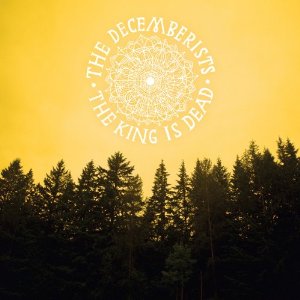
What works on King? For starters, everything involving that "turn of the seasons" motif: "Don't Carry It All" is an upbeat way to start the album, a sincere paean to lending a helping hand. "January Hymn" has an austere beauty that executes Fleet Foxes' concept better than Fleet Foxes can, and "June Hymn" is as unpretentious an indie-pop tune you'll ever find, reveling in some simplicity that evokes some almost-real Springville Hill.
My favorite track, strangely, is "Rox in the Box." It has an irritating title, and the first two lines of it sound like they should be from a Charles Barkley commercial for Taco Bell, but it evolves into a complex tune with layers of bluegrass and old-style American folk that very few bands could pull off. "All Arise!" is another stylistic experiment, mixing in zydeco harmonica, accordion, and fiddle--and like "Rox," it borrows heavily from the aesthetic of the Decemberists' so-called side project, Black Prairie. And "Down By the Water" is a fine first single; what it lacks in usual Decemberists flamboyance, it makes up for with Gillian Welch's vocal performance. (Welch is featured on around half of the album's tracks, but her talents are used most effectively in "Water".)
King's biggest problem is that its pacing is just a bit askew. It's not a long album, weighing in at under 40 minutes, and every time it finishes, I want there to be more--which speaks highly for the album. Still, it drags in parts: both "Rise to Me" and "Dear Avery" are nearly five minutes long, and neither is interesting enough to warrant that much length. "Dear Avery" in particular is a curious, unexpectedly low-key end to the album. It's not quite as dull as "Of Angels and Angles," the mind-numbingly emo finale to 2005's Picaresque, but it doesn't build to any sort of climax that gets me excited about the last eight minutes of the album.
But it's the Decemberists, after all, and we can't expect every single track to be a winner. Six or seven brilliant out of ten is nothing to sneeze at.
Currently listening: "Apologies", Christie DuPree
Friday, April 16, 2010
Black Prairie: Feast of the Hunters' Moon
 The curious thing about the Decemberists is that they don't often know what era they're writing music in. Sure, they have some songs that are clearly contemporary ("16 Military Wives"). But they seem more comfortable setting their songs in Moorish North Africa ("The Infanta"), Arthurian Britain (the whole of The Hazards of Love), medieval Japan ("The Crane Wife"), or World War I Europe ("The Legionnaire's Lament", "The Soldiering Life").
So it should come as little surprise that Black Prairie's debut album, Feast of the Hunters' Moon would rather exist in 19th-century Kentucky than 21st-century Portland. It's tempting to call Black Prairie a "Decemberists side project"--after all, it consists of more than half of the Decemberists--but it quickly becomes apparent that Black Prairie is a musical beast all its own. Decemberists Jenny Conlee (accordion), Nate Query (bass), and Chris Funk (let's be honest, what doesn't Chris Funk play?) join Jon Neufeld (guitar) and Annalisa Tornfelt (violin and vocals) to create a pastiche of Americana closer to the folk of Among the Oak & Ash than the indie pop you might expect.
Probably the most impressive thing about Feast of the Hunters' Moon is the incredible breadth of musical genres and styles it spans. The strongest influence is bluegrass, but zydeco, steel guitar string band, country, and even klezmer are right at home on the album. The original conception of Black Prairie was as an instrumental band, so it's no surprise that 9 or 10 of the 13 tracks are purely instrumental, creative explorations of what the band's unique combination of instruments can do.
It's ironic, then, that the vocal tracks are among the best on the album. Annalisa Tornfelt is not a singer by trade, and it shows, but her vocals lend an organic timelessness to the songs where they appear. "Single Mistake" stands out as fragile, sincere emotion. Probably the best track on the album is "Red Rocking Chair", which is a haunting interpretation of an old folk song.
Black Prairie's music probably won't see any radio play outside of the occasional college airwaves. (That said, think about Feast of the Hunters' Moon as the soundtrack for the hypothetical Damon Lindelof-Carlton Cuse adaptation of The Gunslinger from the Dark Tower and tell me it wouldn't be fantastic.) That's all the more reason for you to track it down on your own.
Currently listening: "Ich Will", Rammstein
Wednesday, January 06, 2010
2009 Music in Review
(or: "Really, musical artists, that's the best you can put together?")
2009 was not a banner year for music. Or, rather, it was not a banner year for listenable music. For the past few weeks, I've been lamenting various "best" lists: Pitchfork's is egregiously bad, and the Onion AV Club's is not much better. Decide for yourself, but a vast majority of the albums on that list seem more like disjointed slurred noise than actual music.
Therefore, here's my own "top albums of the year" list, picking through the very little from this past year that didn't suck so bad.
 Best album that Pitchfork more or less got right: Two Suns, Bat for Lashes
It's not a wall-to-wall masterpiece. Two Suns has its weird operatic moments that are easily the worst bits of the album--as my friend and fellow music critic Andrew put it, "oh, no, Bat for Lashes, don't get all Nightwish on me." It has its share of songs, apparently a prerequisite for albums released in 2009, that sound more like atonal background noise than anything you'd listen to on purpose.
But I have a professed love of indie girl singers with pretty voices, and singer Natasha Khan's voice is both pretty and girly enough that it carries the album's better parts past its worse. Number seven album of the year? In a normal year, no, not even close. In 2009? Sounds about right.
 Best album that most critics admit is pretty good: Middle Cyclone, Neko Case
It took me an embarrassingly long time to come around to this album. Pretty redhead indie girl singer/songwriter with a folkish voice that compares to Jenny Lewis's? Shouldn't I be all over that? Well, yes, I really should. Case's music is a delightful combination of "indie", pop, and folk that just barely survives its brush with country. In Cyclone, Case seems so determined to make her sound unique that she takes a carefree, at times reckless approach to song structure. Her method of "do what feels right" comes off as odd if you're expecting something conventional.
But like those cyclones, conformity to convention is never going to be Case's strong suit. It's not like we should expect it to be--this is coming from the woman who sings more love songs about animals than people and who's ready to pounce on some unfortunate passerby with a katana on her album cover. Instead of working yourself up into a structuralist frenzy, just take Case's voice for the treasure that it is.
 Best album derived from American folk music: Among the Oak and Ash (self-titled)
Paste Magazine is better than Rolling Stone because Paste doesn't jam leftist politics down your throat at every opportunity (just occasionally). And Paste is better than just about any other music publication out there because it takes a truly unique approach to the music it likes. Pure-indie rags are a dime a dozen; the "why sing when you can autotune?" trash that's so popular now gets sufficiently covered everywhere else.
But Paste has no qualms about picking ludicrous genres and showcasing the best of them. Adult contemporary/adult alternative? Passe? Yes, usually, but Paste recognizes when that genre produces a worthwhile album. Americana, the sort that our great-grandfathers played with three-strong banjos? Boring? Not at all, says Paste--both important to our culture and an opportunity to develop something intensely artistic. Among the Oak and Ash, which I've already reviewed, is a fine example of all of that.
 Best vocal performance of the year: Stages, Vedera
Stages is not going to win any prizes for originality, bound-pushing, or ground-breaking, and I realize that. But I absolutely love Vedera anyway. They're fantastically nice people, down-to-earth and caring towards their fans. Their music is relatable and pop-sensibly singable. And Kristen May, I'm convinced, gives the best vocal performances of anyone who's making music today. Seriously, I challenge you to prove me wrong.
 Best Broadway musical disguised as an album: The Hazards of Love, the Decemberists
And here I was under the impression that the musical community as a whole liked the Decemberists... on the contrary, I think the only "top of the year" that Hazards showed up on was Paste's. Hazards is an album that I realize is not going to be everyone's cup of tea, and that's mostly because it's only tangentially an album anyway. It's a story, and you have to have the patience to bear with plot, character development, and even literary devices to get the most out of it.
It toes the line of campy, and mostly I see that as a sign that the Decemberists don't take themselves too seriously. But, even more importantly, they know how to make a hell of an entertaining experience.
 Best tongue-in-cheek funk: Single Entendre, Here Come the Mummies
Here's a concept: ten or so dudes in full mummy wrappings play some of the most energetic funk this side of 1978. Why the mummy costumes? Tough to say, but rumor has it that they're a stealth funk supergroup, some of whom are signed to other bands or labels, and don't want to reveal their identities because that might represent a breach of contract. Now consider that their music is largely humorous, rife with sexual innuendo (just look at that album cover), and tell me this isn't the best band ever.
Currently listening: "The Tain" (part I), the Decemberists
2009 was not a banner year for music. Or, rather, it was not a banner year for listenable music. For the past few weeks, I've been lamenting various "best" lists: Pitchfork's is egregiously bad, and the Onion AV Club's is not much better. Decide for yourself, but a vast majority of the albums on that list seem more like disjointed slurred noise than actual music.
Therefore, here's my own "top albums of the year" list, picking through the very little from this past year that didn't suck so bad.
 Best album that Pitchfork more or less got right: Two Suns, Bat for Lashes
It's not a wall-to-wall masterpiece. Two Suns has its weird operatic moments that are easily the worst bits of the album--as my friend and fellow music critic Andrew put it, "oh, no, Bat for Lashes, don't get all Nightwish on me." It has its share of songs, apparently a prerequisite for albums released in 2009, that sound more like atonal background noise than anything you'd listen to on purpose.
But I have a professed love of indie girl singers with pretty voices, and singer Natasha Khan's voice is both pretty and girly enough that it carries the album's better parts past its worse. Number seven album of the year? In a normal year, no, not even close. In 2009? Sounds about right.
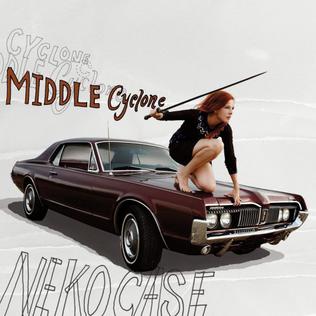 Best album that most critics admit is pretty good: Middle Cyclone, Neko Case
It took me an embarrassingly long time to come around to this album. Pretty redhead indie girl singer/songwriter with a folkish voice that compares to Jenny Lewis's? Shouldn't I be all over that? Well, yes, I really should. Case's music is a delightful combination of "indie", pop, and folk that just barely survives its brush with country. In Cyclone, Case seems so determined to make her sound unique that she takes a carefree, at times reckless approach to song structure. Her method of "do what feels right" comes off as odd if you're expecting something conventional.
But like those cyclones, conformity to convention is never going to be Case's strong suit. It's not like we should expect it to be--this is coming from the woman who sings more love songs about animals than people and who's ready to pounce on some unfortunate passerby with a katana on her album cover. Instead of working yourself up into a structuralist frenzy, just take Case's voice for the treasure that it is.
 Best album derived from American folk music: Among the Oak and Ash (self-titled)
Paste Magazine is better than Rolling Stone because Paste doesn't jam leftist politics down your throat at every opportunity (just occasionally). And Paste is better than just about any other music publication out there because it takes a truly unique approach to the music it likes. Pure-indie rags are a dime a dozen; the "why sing when you can autotune?" trash that's so popular now gets sufficiently covered everywhere else.
But Paste has no qualms about picking ludicrous genres and showcasing the best of them. Adult contemporary/adult alternative? Passe? Yes, usually, but Paste recognizes when that genre produces a worthwhile album. Americana, the sort that our great-grandfathers played with three-strong banjos? Boring? Not at all, says Paste--both important to our culture and an opportunity to develop something intensely artistic. Among the Oak and Ash, which I've already reviewed, is a fine example of all of that.
 Best vocal performance of the year: Stages, Vedera
Stages is not going to win any prizes for originality, bound-pushing, or ground-breaking, and I realize that. But I absolutely love Vedera anyway. They're fantastically nice people, down-to-earth and caring towards their fans. Their music is relatable and pop-sensibly singable. And Kristen May, I'm convinced, gives the best vocal performances of anyone who's making music today. Seriously, I challenge you to prove me wrong.
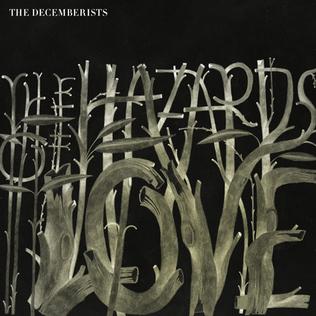 Best Broadway musical disguised as an album: The Hazards of Love, the Decemberists
And here I was under the impression that the musical community as a whole liked the Decemberists... on the contrary, I think the only "top of the year" that Hazards showed up on was Paste's. Hazards is an album that I realize is not going to be everyone's cup of tea, and that's mostly because it's only tangentially an album anyway. It's a story, and you have to have the patience to bear with plot, character development, and even literary devices to get the most out of it.
It toes the line of campy, and mostly I see that as a sign that the Decemberists don't take themselves too seriously. But, even more importantly, they know how to make a hell of an entertaining experience.
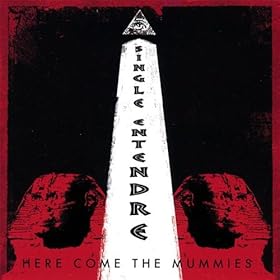 Best tongue-in-cheek funk: Single Entendre, Here Come the Mummies
Here's a concept: ten or so dudes in full mummy wrappings play some of the most energetic funk this side of 1978. Why the mummy costumes? Tough to say, but rumor has it that they're a stealth funk supergroup, some of whom are signed to other bands or labels, and don't want to reveal their identities because that might represent a breach of contract. Now consider that their music is largely humorous, rife with sexual innuendo (just look at that album cover), and tell me this isn't the best band ever.
Currently listening: "The Tain" (part I), the Decemberists
Thursday, June 04, 2009
The Hazards of Love, Live
If you're a Decemberists fan, like the new album and have a chance to catch the Hazards of Love tour, by all means do. The format is this: Hazards of Love in its entirety, about twenty minutes' (well-deserved) break for the band, and then roughly an hour of old music too.
I've been a big, big supporter of Hazards of Love since I first heard it, but after hearing this concert, I don't know how you could dislike the album. Most of what I said in my review of the album still stands, with a few new observations.
The band does a wonderful job, as it always does in concert. Becky Stark (of Lavender Diamond, who plays the role of Margaret) is excellent. But it's Shara Worden (of My Brightest Diamond, who plays the role of the Queen) who really steals the show with her stage antics. Excellently cast.

Colin Meloy and Shara Worden, my new favorite person. Who knew the brooding, villainous Forest Queen was so short and cute?
Listening to the album by itself, I've been finding it easier and easier to stop listening after "Annan Water", because the songs seem to get less exciting after that. But remembering the theatrical conceit, of course the songs should get less exciting after "The Crossing", which is the climax of the story. (Specifically, I think it's the cool rock organ/electric guitar bit that really seems like a sonic destination for the album.) Seeing the whole production live, those songs become not only necessary but narratively interesting.
Because the framework of the album is more theater than pop record, this is a collection of songs that really does improve when you see it live. We get scenery, costuming, lighting effects. To carry out the stage performance a few steps further, it might have been cool to do some scene changes--though the background pulled off both "forest" (with green lighting) and "river" (with blue lighting).
This probably strains the upper limit of feasibility, but how about recasting the entire staging to put the band in a pit, orchestra-style? Obviously, the point of the pit is to hide the orchestra, and the point of a live concert is to watch the band. I'm not advocating covering up the band, but maybe there's a spatial organization that creates visual distinction between the "actors" (Colin Meloy and/or Shara Worden and/or Becky Stark, depending on who's important at the time) and the "band" (John Moen, Chris Funk, Nate Query, Jenny Conlee).
And as long as we're going over the top anyway, how about live fireflies?
The rest of the show promised a "tidy selection" of old material, but we ended up with as much material is in Hazards of Love--not that that's a bad thing by any means! The general aim seemed to be to hit a highlight or two from each old album.
If I were momentarily in charge of picking the Decemberists' set list, and I knew that the goal was two songs from The Crane Wife, I certainly wouldn't have picked "O Valencia!" and "Shankhill Butchers". Personally, I'm partial to "The Island", but since that's stylistically very similar to The Hazards of Love, I can understand the not wanting to play it. That restriction probably rules out and of the "Crane Wife" cycle too.
With those constraints in mind, the obvious next choice is "Yankee Bayonet". It's not a song that's easy to perform on tour--you absolutely need a female vocalist to cover the duet part, or the song doesn't work at all. On this tour, though, we have not one but two talented female vocalists, so the Decemberists could have taken their pick--or used them both. I also like "Summersong" a lot, but that one never seemed to catch on with the general fan base as much as I think it should have. Failing "Summersong", I guess "O Valencia!" is an acceptable substitute. I never really got into "Shankhill Butchers", though. I think it's too much buildup, too much brooding tension, and no payoff.
On the other hand, if I had to pick two songs from Picaresque, "The Engine Driver" and "16 Military Wives" would have been up there on my list as well as the Decemberists'. I don't agree with putting politics into music in almost any case, but damned if the Decemberists don't make "16 Military Wives" fun to sing in person. They probably do the "pit halves of the audience against each other" during the "la di dah" bit of the chorus at every show... and it never gets less awesome. (Do they ever perform "The Infanta" on tour? It was the first Decemberists song I heard and still among my favorites.)
The crowd's tepid response to "Raincoat Song" showed how few people payed attention to Always the Bridesmaid. It was pleasant if not particularly memorable. I was surprised to hear "Shiny", which has been around for something like nine years now, and I get the idea it's not oft-performed on tour. Probably the Decemberists just seized the opportunity of "well, we have this steel guitar around, so let's do something with it." I sort of psyched myself into thinking we'd get "California One" too, as long as the steel guitar was just sitting there, but no such luck.
"July, July!" is still one of the most fun songs the Decemberists do, so I was glad to see it show up. "The Bachelor and the Bride" is still not my favorite song, but at least it sounded good. And I wonder if they end most shows with "A Cautionary Song", or if they just coincidentally did at both of the shows I've been to? Those two accordion chords are a darn fine way to end a show.
One thing that absolutely deserves mention is the Decemberists' improv theater. You've got Colin Meloy on stage, backed up by Jenny Conlee on accordion and Nate Query on bass. Chris Funk, John Moen, Shara Worden, and Becky Stark are standing in front of the stage, and Colin Meloy starts making up a story about trains and gypsies. In true "Whose Line" style, the actors and the music change in time with what Meloy calls out. The result is something profoundly entertaining and something that gives further proof--as if we needed it--as to the Decemberists' artistic mastery.
Currently listening: "Don't Bring Me Down", Electric Light Orchestra
I've been a big, big supporter of Hazards of Love since I first heard it, but after hearing this concert, I don't know how you could dislike the album. Most of what I said in my review of the album still stands, with a few new observations.
The band does a wonderful job, as it always does in concert. Becky Stark (of Lavender Diamond, who plays the role of Margaret) is excellent. But it's Shara Worden (of My Brightest Diamond, who plays the role of the Queen) who really steals the show with her stage antics. Excellently cast.
Colin Meloy and Shara Worden, my new favorite person. Who knew the brooding, villainous Forest Queen was so short and cute?
Listening to the album by itself, I've been finding it easier and easier to stop listening after "Annan Water", because the songs seem to get less exciting after that. But remembering the theatrical conceit, of course the songs should get less exciting after "The Crossing", which is the climax of the story. (Specifically, I think it's the cool rock organ/electric guitar bit that really seems like a sonic destination for the album.) Seeing the whole production live, those songs become not only necessary but narratively interesting.
Because the framework of the album is more theater than pop record, this is a collection of songs that really does improve when you see it live. We get scenery, costuming, lighting effects. To carry out the stage performance a few steps further, it might have been cool to do some scene changes--though the background pulled off both "forest" (with green lighting) and "river" (with blue lighting).
This probably strains the upper limit of feasibility, but how about recasting the entire staging to put the band in a pit, orchestra-style? Obviously, the point of the pit is to hide the orchestra, and the point of a live concert is to watch the band. I'm not advocating covering up the band, but maybe there's a spatial organization that creates visual distinction between the "actors" (Colin Meloy and/or Shara Worden and/or Becky Stark, depending on who's important at the time) and the "band" (John Moen, Chris Funk, Nate Query, Jenny Conlee).
And as long as we're going over the top anyway, how about live fireflies?
The rest of the show promised a "tidy selection" of old material, but we ended up with as much material is in Hazards of Love--not that that's a bad thing by any means! The general aim seemed to be to hit a highlight or two from each old album.
If I were momentarily in charge of picking the Decemberists' set list, and I knew that the goal was two songs from The Crane Wife, I certainly wouldn't have picked "O Valencia!" and "Shankhill Butchers". Personally, I'm partial to "The Island", but since that's stylistically very similar to The Hazards of Love, I can understand the not wanting to play it. That restriction probably rules out and of the "Crane Wife" cycle too.
With those constraints in mind, the obvious next choice is "Yankee Bayonet". It's not a song that's easy to perform on tour--you absolutely need a female vocalist to cover the duet part, or the song doesn't work at all. On this tour, though, we have not one but two talented female vocalists, so the Decemberists could have taken their pick--or used them both. I also like "Summersong" a lot, but that one never seemed to catch on with the general fan base as much as I think it should have. Failing "Summersong", I guess "O Valencia!" is an acceptable substitute. I never really got into "Shankhill Butchers", though. I think it's too much buildup, too much brooding tension, and no payoff.
On the other hand, if I had to pick two songs from Picaresque, "The Engine Driver" and "16 Military Wives" would have been up there on my list as well as the Decemberists'. I don't agree with putting politics into music in almost any case, but damned if the Decemberists don't make "16 Military Wives" fun to sing in person. They probably do the "pit halves of the audience against each other" during the "la di dah" bit of the chorus at every show... and it never gets less awesome. (Do they ever perform "The Infanta" on tour? It was the first Decemberists song I heard and still among my favorites.)
The crowd's tepid response to "Raincoat Song" showed how few people payed attention to Always the Bridesmaid. It was pleasant if not particularly memorable. I was surprised to hear "Shiny", which has been around for something like nine years now, and I get the idea it's not oft-performed on tour. Probably the Decemberists just seized the opportunity of "well, we have this steel guitar around, so let's do something with it." I sort of psyched myself into thinking we'd get "California One" too, as long as the steel guitar was just sitting there, but no such luck.
"July, July!" is still one of the most fun songs the Decemberists do, so I was glad to see it show up. "The Bachelor and the Bride" is still not my favorite song, but at least it sounded good. And I wonder if they end most shows with "A Cautionary Song", or if they just coincidentally did at both of the shows I've been to? Those two accordion chords are a darn fine way to end a show.
One thing that absolutely deserves mention is the Decemberists' improv theater. You've got Colin Meloy on stage, backed up by Jenny Conlee on accordion and Nate Query on bass. Chris Funk, John Moen, Shara Worden, and Becky Stark are standing in front of the stage, and Colin Meloy starts making up a story about trains and gypsies. In true "Whose Line" style, the actors and the music change in time with what Meloy calls out. The result is something profoundly entertaining and something that gives further proof--as if we needed it--as to the Decemberists' artistic mastery.
Currently listening: "Don't Bring Me Down", Electric Light Orchestra
Wednesday, March 25, 2009
Pretty Whistles Meet Prog Rock: The Hazards of Love
Review and Discussion: The Hazards of Love
Is it a good sign that the Decemberists' latest album takes such a long time to digest? I think yes, even though it's more than a little daunting at first. There are characters to follow, plot lines to keep track of, even literary devices that you never thought you'd see again after freshman English.
And in many ways, although it's far different in character from most of the Decemberists' earlier works, it's exactly the logical place for them to have gone next. For those fans that think the prog-metal vibe is new, I'd encourage a listen to the 2004 EP The Tain, based off the Celtic epic Tain bo Cuailnge. The good news is that you don't have to be able to pronounce that to enjoy retelling of the story, which essentially describes a bunch of Irishmen fighting over a cow.
Even those more recently converted to the Decemberists' fanbase might see strains of works they know. The band's most recent recording, The Crane Wife, has moments of Hazards-like character throughout, particularly in the three-in-one song cycle "The Island".
Where "The Island" was loosely, maybe only thematically, connected, Hazards has all the internal consistency you'd ever want or need from a rock album. And where The Tain was content to borrow a mythology, albeit an obscure one, Hazards jumps right in an makes up its own. The result is something that seems more like it ought to be on Broadway than a CD.
In other words, we've got ourselves a rock opera.
A rather heated debate seems to be focusing around whether you can enjoy this as individual songs, or whether you need to take it holistically and evaluate the entire album, and I'm coming down on the side of "entire album". The Decemberists encourage it too, it seems, with the exclusive use of gapless playback: for any given song, while the "during" might be the most important part, the "before" and the "after" are critical too. That's not to say you'll get nothing out of listening to one song at a time, for example if one comes up randomly in shuffle mode, but it's a lot mroe enjoyable to press play at the beginning of track 1 and not touch anything until the end an hour later.
There's good reason for that. Yes, plot and characters are part of it, but there are some impressively-crafted themes, foreshadowing, irony, and witticisms that you might miss given only a song or two. And you'll want to appreciate them.
All of this literary business is fine and good, but what about the music? Is the album worth listening to? Is it what we've come to expect from the Decemberists? Mostly yes. There's a much wider variety that you might have gotten on, say, Her Majesty. And at first, it may seem completely off the mark from what we might have expected, but with a closer examination, it's completely understandable. That's exactly the sort of direction that's nice for a band to head in once they've gotten to the point of five full length albums.
My comments on the album, in generally chronological order.
The album starts with an instrumental "Prelude"--think of it like something that would play as the opening credits roll and we see gorgeous, sweeping shots of the Queen's domain and the Annan Water. The real action starts with "The Hazards of Love 1", with the curious subtitle "The Prettiest Whistles Won't Wrestle the Thistles Undone". Literally, that's saying "if you’re caught in a prickly plant, it doesn’t matter how nice a sound you make, it won’t disentangle you." More abstractly, "if you go about a problem the wrong way, it doesn’t matter how hard you try, you won’t solve it." That's actually a major theme of the album, though we hardly recognize it as that at the very beginning.
There's a male voice yelling something between "The Hazards of Love 1" and "A Bower Scene", but I can't figure out what it's saying or who it is. Could it be Margaret's "irascible blackguard of a father"?
One of the album's biggest successes is its use of voicing to distinguish the characters. Margaret's soprano, which we first hear in "Won't Want For Love", the Queen's alto (which we hear later on), and William's tenor are always in about the same range, and though I might have liked a baritone for one of the major male characters, it makes it very easy to distinguish whose point of view we're hearing without having to see the characters.
This successful character distinction isn't just in the voices--there's also some nice leitmotif in the background music. The few seconds of banjo in "The Queen's Approach" foreshadows her driving metal theme in "Repaid" and "The Queen's Rebuke".
"Won't Want For Love" is my favorite track on the album. Given my love of indie bands with soprano girl singers, this probably isn't too shocking.
"The Hazards of Love II" and "Isn't It A Lovely Night?" are both very nice songs, but they're too close together on the album. It makes sense in the narrative why they are where they are, but with every other pair of songs marking a stylistic shift, it seems odd to have the two most down-tempo, emotional songs next to each other.
Two songs that do follow each other are "Isn't It A Lovely Night?" and "The Wanting Comes In Waves", which feature an interesting major/minor inversion. "Waves" is not exactly a reprise of "Lovely Night"--there are a few true reprises later on--but it sounds sort of similar. Speaking of "The Wanting Comes in Waves", being sort of a music theorist, it bothers me that I can't figure out what the meter is in that song. There's a lot of weird rest and upbeat business, that's for sure.
"Repaid", the second half of "The Wanting Comes in Waves", sets up the backstory between William and the Queen, though it's not fully explained until "The Queen's Rebuke" later in the story. That's excellent storytelling, something that you'd see in a real musical or opera. And "Repaid" is an excellent cliffhanger to the intermission; the action picks up an indeterminate amount of time later without having to give the details of what happened in between. It sets up the second half of the album--call it "Act II"--well.
Apart from being a terrible person, the Rake--or more specifically his song--has the most clever foreshadowing and irony in the album. The Rake expects that we'd think he'd be "haunted" by his despicable actions. That's meant figuratively enough, until he actually is haunted by the ghosts of his dead children toward the end. And he "reckons his curse" is having those children, but eventually they'll literally curse him, not just offend him with their presence.
"The Wanting Comes in Waves" is formally called a reprise when it's repeated at the end of the album, but "The Abduction of Margaret" is a also reprise of "A Bower Scene", and "Margaret in Captivity" is a reprise of "The Hazards of Love 1". Both of these juxtapose willing vs. unwilling love. In "A Bower Scene", Margaret "withdraws to the taiga"; in "Abduction", she "falls prey to her abductor". "Margaret in Captivity" is a whole lot worse: "The Hazards of Love 1" described her quite amicable meeting with William, while "Captivity" describes her rape in the Rake's fortress.
"The Queen's Rebuke" is really cool, and I love the narrative/mythological role it plays, but I'm not crazy about the super-distorted guitar solo in the middle of it. One of the things that makes it so important is that it describes a limit to the Queen's power. She has a way around the Annan Water--allowing the Rake to fly over it--but even she can't make the water less "wild".
Where's the climax of this story? I tend to think it's "The Crossing", where I imagine the Rake (helped along by the Queen's fell forest magics) flying over the Annan Water and William arriving just too late to do anything about it. William knows that Margaret is somewhere across the water, but does he actually know she's in the Rake's fortress? I don't really think so; instead, I see Margaret escaping from the fortress and her and William reuniting.
I see the Annan Water as a symbol of both separation and of powerlessness versus fate and nature. Both songs that feature the Annan ("Annan Water" and "The Hazards of Love 4") switch to acoustic and mention lyrics like "rolling only where [the river] takes us". Neither creature of the forest--William or his mother--can best the Annan, though they both find their ways around it. (William's gets him in a bit more trouble.)
How does Margaret escape? With the help of the ghost children, of course. Some people have advanced the theory that the children aren't meant to represent Charlotte, Dawn, and Isaiah, but I don't but that for a second. The first child, a girl, specifically mentions getting fed flowers (ie, foxglove); the second, another girl, mentions drowning; and the third, a boy, mentions getting into a fight. Somehow, they distract the Rake for long enough to get Margaret out. Ghostly powers, or something.
Finally, reunited though they are, William and Margaret must face the music. William is at a lose-lose: he's promised both the Annan Water and his mother his life. And I think for that reason, William was completely fine with making his deal with the Annan. Better dead with his Margaret than alive but completely in his mother's grasp, right?
If "the prettiest whistles" are one of the themes of the story, what's the other? It's a lot more direct: "these hazards of love". For Margaret (toward William), it’s being put in the position of caring for a strange beast-creature, leading to her being outcasted then captured ("The Hazards of Love 1"). For the Queen (toward William), it’s jealousy ("Hazards 2", when she sees how much William loves Margaret). For the Rake (toward his bride), it’s children, who then haunt him ("Hazards 3"). And for William (toward Margaret), it’s the deals he has to make with his mother and the Annan Water, which lead to his death ("Hazards 4").
I don't think this album tops Wincing the Night Away, and I don't know if anything will ever top The Everglow. But I like it a whole lot. And it's one that I can see myself becoming fiercely protective of. There's people out there who don't like it, who give it bad reviews, who call the prog/metal flavor "out of place", who see a rock opera these days as "indulgent".
They're wrong. They're boorish. And they wouldn't know good storytelling if it hit them in the ear. The Hazards of Love is something we've seen a hundred times, but the Decemberists have made it relevant and excellent.
Currently listening: "Futures", Jimmy Eat World
Monday, January 12, 2009
Reviews of EPs from Last Year, Part II
Review: Always the Bridesmaid EPs, the Decemberists
In this curious arrangement of three EPs of two songs each, we have the latest efforts from the Decemberists. Why the obtuse order of release? Tough to know; a single EP of six songs might be more conventional. But then, the Decemberists were never known for convention. Recall their first album, a six-song EP called 5 Songs. As if that makes any sense.
I mention 5 Songs specifically because in some strange way, Always the Bridesmaid hearkens back to the earlier EP. Personal, mostly heartfelt songs about relationships, mostly gone sour. Ill-gotten souvenirs. Raincoats that only make it rain more. Lapses from drinking. Something fouled up so badly that it recalls the fall of the Roman Empire. One of the first descriptions I heard of the Decemberists was something about their "over-the-top grandiloquence", and it seems to have returned--or at least changed form to look more like its old self--on this EP.
The worst song, by far, is "I'm Sticking With You". The Decemberists ought to have learned long ago that songs that repeat the same phrase over and over again for their entirety are not their best.
But it's made more than okay by "Valerie Plame", by far the best song on the EP. It's like "The Bagman's Gambit" from Picaresque recast from the Cold War to the War on Terror. This song has just about everything going for it. First, and most saliently for me, we all know the Decemberists have some expressed political leanings. Very, very rarely do I think that's an appropriate matter for music--leave it to the angry talking heads and op-ed writers. Despite writing a song about a current event that sparked a good deal of outrage and controversy, the Decemberists never make the song overtly political, mostly because it's only tangentially about the controversy anyway. I hope they realize that their song is that much stronger for it.
Of course, it also includes a catchy chorus. A horn line that, like the subject matter, reminds us of Picaresque. A much lighter mood than "The Bagman's Gambit", as if to poke fun at the guy in the song rather than build up drama around him.
All in all, this is a decent collection of songs. It works well for fans of the band who've had a two year drought of new music; even though you won't really feel like you've heard anything new, that's sort of okay. At the very least, maybe it'll remind you why you loved the Decemberists in the first place.
Currently listening: Day and Age, the Killers
Tuesday, July 01, 2008
Anatomy of a Mix Tape: Part I
To read the introduction to the Accidental Mix Tape project, click here.
I'll now delve into each of the tracks that made it onto the CD, giving possibly-relevant facts like album and date of release. I also aim to give a one-paragraph synopsis of the band—it might stretch into two—and a quick chat about why I chose the particular song that I did. I'll finish off with a few "honorable mention" tracks that also could have been good choices for the CD, and might well make it onto Mix Tape Part 2.
Track 1: "Close Call" by Rilo Kiley, track 2 from Under the Blacklight, August 2007
Rilo Kiley is one in a proud line of bands that I was first exposed to thanks to my friend Nick. For a while back in high school, it seemed that every time I saw Nick, he had a new CD packed to the brim with his latest favorite bands. Some of these bands I just couldn't get into, and sort of let fall by the wayside; some of them, I keep coming back to even now. Rilo Kiley is definitely in the second group, I want to say introduced to me in June 2005. Their lyrics are creative and clever, lead singer Jenny Lewis has a gorgeous voice, and the instrumentation takes cues not only from rock and pop, but also from folk and country.
I would put Under the Blacklight in my personal top five albums of 2007, ranking behind Wincing the Night Away (which is also represented on the CD), but maybe not much else. We’ve seen incredible development since the days of Take-Offs and Landings. The band's sound has progressed from lo-fi and indie to refined and produced, and Lewis's voice has transformed from girly and almost coquettish to mature and approaching sultry in places. The thing that's striking, though, is that both CDs are remarkably good. In the end, I went with the recency of Under the Blacklight over the primacy of Take-Offs and Landings. "Close Call" is one of three or four excellent tracks on the album; in the end, I thought it had a little more energy than "Silver Lining", and I wanted to give something besides the title track a try after it had been my ringtone for several months.
Honorable mentions: "Plane Crash in C" from Take-Offs and Landings, "Paint's Peeling" from The Execution of All Things, "Silver Lining" and "Under the Blacklight" from Under the Blacklight
Track 2: "Here I Dreamt I Was an Architect" by the Decemberists, track 2 from Castaways and Cutouts, May 2002
The Decemberists, even after their dreaded Migration to a Major Label, remain as indie-workhorse as ever. A massive vocabulary, songs about Japanese geishas and crooked French-Canadian bootleggers, and immensely entertaining live shows have given them a well-deserved place near the top of the indie heap. It's tough to remember the exact first time I heard of the Decemberists, but the references just kept piling up in April and May of 2005. By the time I finally broke down and listened to one of their songs, I had just eaten dinner at Dante's Down the Hatch, a wonderful Buckhead fondue place with an 18th century naval theme. And I had just finished reading Neal Stephenson's The System of the World, the final volume in the Baroque Cycle, a delightfully epic historical fiction trilogy. The first Decemberists song I heard was "The Infanta", which tied into both of those cultural experiences and made me instantly appreciate the band.
I first heard Picaresque in its entirety, then Castaways and Cutouts and Her Majesty at the same time, later acquiring The Crane Wife when it was released. I think I made a mistake in not "cleansing my palette" in between listening to the two earlier albums, because they're not immensely stylistically distinct, and even now I have a hard time telling them apart. Both albums have about half mediocre filler and half sheer brilliance, such that if you combined the best half from each, you'd probably have one of the greatest collections of music ever. Alas, even the Decemberists can't pull together utter genius every waking moment. But the thing that distinguishes the Decemberists despite a handful of less-than-exciting songs (not bad, per se, just uninteresting) per album is that the "good half" is incredible. I said "sheer brilliance" and I don’t think that's an overstatement. "Here I Dreamt I Was an Architect" is in this half.
I liked the song already, but I began to truly appreciate it last summer in Europe. There's something indescribably wonderful about seeing the Mediterranean coast for the first time ever, passing over the Spanish border at sunrise, and hearing the lyric "and here in Spain I am a Spaniard" not half an hour later. The song features three evocative, imagistic vignettes about attempts at getting love to work out in fantastic circumstances. And it showcases the Decemberists' lyrical brilliance possibly better than any of their songs.
Honorable mentions: "July, July!" and "California One" from Castaways and Cutouts, "Billy Liar" and "Song for Myla Goldberg" from Her Majesty, "The Infanta" from Picaresque, "The Island" from The Crane Wife (though its scope and length might not make it quite right for the "mix tape" environment)
Track 3: "I Want to Save You" by Something Corporate, track 1 from Leaving Through the Window, May 2002
Unlike Castaways and Cutouts, which I first heard three years after its release, I've been listening to Leaving Through the Window since the day it came out. That's more than six years now, which is nigh unfathomable. The album became a soundtrack to my sophomore year in high school, a time that turned out to be huge in terms of maturation, all that wonderful "coming out of puberty" business. Appropriately, Something Corporate belongs to that genre that I've talked about before as having defined my high school musical experience, sometimes called "pop-punk" or "post-punk" or a label that I've taken a liking to, "prep rock". You know the sorts of band. New Found Glory, Good Charlotte, number bands like Blink-182 and Sum 41.
I didn't realize it at the time, but for a type of music to dominate the high school popular scene, that wasn't necessarily a bad trend. It came on the heels of insipid pop along the lines of Christina Aguilera, N'Sync, and Ricky Martin. And it was followed by the ascendancy of mainstream hip-hop: Kanye West, Usher, Nelly, Jeezy, and all the rest. Something Corporate wasn't the best-known exemplar of that trend in music, but I think they're among the most distinctive. They knew when to cool off and play at slower than 180 beats per minute. And they also made the most of unconventional orchestration, adding strings and piano to enhance their sound nicely. "I Want to Save You" doesn’t have any particular significance over the rest of the album, but I like its pacing and tempo.
Honorable mentions: "I Woke Up in a Car" from Leaving Through the Window, "Bleed American" and "Splash, Turn, Twist" by Jimmy Eat World from Bleed American. Usually I'll try to preserve the same artist in an "honorable mention"... this is more of a "relational" connection.
Track 4: "Such Great Heights" by The Postal Service, track 2 from Give Up, February 2003
The Postal Service is another one of those bands that's tricky to nail down an exact time I first heard them, or heard of them. I'm pretty sure Nick had something to do with it, but whether that "something" was introducing me, or merely burning the music for me, I don't remember. The band is relatively well known by this point as a collaborative project between Death Cab for Cutie's lead singer Ben Gibbard and some dude who does electronica that nobody can really remember. It's emo, sure, but intelligent emo, and a darn catchy beat in the background. This band is one of the most universally accepted among my friends, colleagues, and acquaintances. Nearly everyone who's heard of the Postal Service likes them, views them favorably, and reacts well to their music being played in a long car ride. Of course, there are people who don’t know anything about them at all, and whose personal spheres of music appreciation probably don't come close to including indie pop. But you don't have to be a green amoeba shirt-wearing Shins fan to think good things about the Postal Service.
They have but one full album, sadly, and I've gone with what's undoubtedly the most well known song from it. You can hear "Such Great Heights" in UPS commercials, Target commercials, and M&Ms commercials. It was even covered by another indie staple, Iron & Wine, prompting a huge and still-raging debate over which version is the superior one. (Of course, by its inclusion on this CD, I come down on the side of the Postal Service). Apparently it's "the only positive song" Ben Gibbard has ever written about love, and positive it is, and happy too, which is why I've chosen it for the CD.
Honorable mention: "The District Sleeps Alone Tonight" and "Brand New Colony" from Give Up
Track 5: "Turn on Me" by the Shins, track 7 from Wincing the Night Away, January 2007
This is a direct Nick contribution, in the form of an actual CD, and it's his single greatest act of genius and philanthropy. What a fantastic collection of music. Perfectly paced and balanced, dramatically introductioned, gracefully concluded. No filler, except for the 54 seconds of "Pam Berry", which is just as easily overlooked—you want to listen to every song. Interesting instrumentation and outreaches to various genres. Witty and unconventional throughout, but nowhere near the point of becoming novelty—these guys are making music meant to be taken seriously but manage to have a lot a fun doing it. I got Wincing the Night Away for my birthday, February 2007, and almost instantly, it became one of my favorites. I was actually hesitant to listen to the band's earlier albums, because there wasn't any way they could be as good as Wincing the Night Away. Eventually I caved in. I was right, they weren't quite as good, but still excellent.
If I said that Rilo Kiley's sound has matured since their first album, then the Shins have accomplished a metamorphosis worthy of Ovid or Kafka. Oh, Inverted World, a darling of the indie community, was so lo-fi and poorly produced by comparison that lead singer James Mercer's vocals seem muffled and unintelligible. And Wincing the Night Away is so much more varied and original that after listening to it, all the songs on Oh, Inverted World sound the same—to a synesthete, it's almost like they take on the same weirdly drab blue of the album's cover. This isn't an indictment of Oh, Inverted World at all; merely an observation that next to Wincing the Night Away, even an earlier success pales in comparison. I don't know if I'm alone in the belief that Wincing the Night Away completely eclipsed Oh, Inverted World as the Shins' masterwork, but I'll stick by that belief as fervently as I need to. Picking a song was tougher, but "Turn on Me" has everything you'd want from the Shins: catchiness, imaginative similes, and the good old apathy that's become their trademark.
Honorable mentions: "So Says I" and "Saint Simon" from Chutes Too Narrow, "Australia" and "Phantom Limb" from Wincing the Night Away
Check back tomorrow for part II!
Currently listening: "Turkish March", Mozart
Friday, October 06, 2006
Why Labels Do Not Matter
Mr. Morford is being a little antagonistic and egging me on to post. Truth is, he's right; I do have something to talk about. So I'm by and large a big Decemberists fan. I like their music, and so I was very excited by their new release The Crane Wife. Of course, the big news wasn't that one of the most inventive and original bands of the decade had a new release; no, it was that this release was on a *major label*. The Decemberists were abandoning Kill Rock Stars! Soon the Second Angel would pour forth his vial upon the sea, right?
As it turns out, no, not so much. The Decemberists, though their new album falls a bit short of true brilliance, aptly debunk one of the great principles of the Indie Music school of thought: any given collection of music is automatically better when released on anything but a major label. Because except for a few missteps, The Crane Wife is probably their best album to date. So guess what? The transition to Columbia didn't make them suddenly suck.
This CD starts with "The Crane Wife Part 3," which is actually the last third of the musical adaptation of the Japanese folk tale of the same name. You're probably familiar with it, so listen carefully to the lyrics so you can catch the story. This first song is moving and emotional, and it's musically satisfying. About three minutes into it, I started thinking "If this whole album is this good, then we've got something amazing on our hands."
Then I heard "The Island."
I'm not going to lie, I'm surprised I didn't start breathing heavily when I heard this one for the first time. As a huge fan of "The Tain," of course I was ecstatic to find what basically amounts to "The Tain's Little Brother" in the middle of a full length album. I'm not going to talk much about this track, but suffice it to say that it's almost twelve minutes of pure brilliance from start to finish. And any band who can incorporate a Tempest allusion and a "Whiskey in the Jar" tribute within a few minutes of each other is something special indeed.
"Yankee Bayonet" is very good, taking us to the Civil War via a folky male-female duet. "O Valencia!" is unfortunately less good. There's nothing wrong with it musically, and it's put together very well, but it just toes the line of "not interesting." How many modern-day retellings of Romeo and Juliet do we really need? And how many stories of lost love can the Decemberists churn out? "The Crane Wife" and "Yankee Bayonet" are both love-lost stories, but more sincere and inventive than "O Valencia!" It's not a bad song per se, but there are about four tracks I would have picked ahead of this one to make the first single out of.
Then we really get into the doldrums of the album. "The Perfect Crime #2" is sadly the inevitable track that's going to give Mr. I'm-Better-Than-You-Because-I-Discovered-This-Band-Before-You-Even-
Knew-Indie-Music-Existed a little ammunition to cry out his "Holy crap, the Decemberists suck now just because they're on a major label" lament. There are a handful of people who will defend this song; I fail to see its musical merit. I feel like half the song is Colin repeating the words "The perfect, the perfect, the perfect, the perfect crime" over and freaking over again. Even if that's not the exact proportion, the fact that it seems like that makes it a bad piece of music. It's frustratingly repetitive and not at all imaginative, which is not something I ever thought I would say about a Decemberists song.
Next, we hear "When the War Came," which nobody but me seems to have any issue with. Maybe I'm biased against the horrendously bad trumpet lick in the chorus, but that combined with the insistent banging of the guitar riff just results in a musically jarring song. Luckily, now, the album begins its ascent back into good musical quality. I have to say that I'm not a huge fan of "Shankill Butchers" either, but it's certainly better than the two tracks preceeding it. The fact that it's based off real events is cool, and the musical atmosphere created by the song--a sort of unsettling and creepy bedtime tune--definitely works given the subject matter. But this song, more than any other on the album, just lacks energy. It doesn't go much of anywhere.
After all this, we're refreshed with the brilliance of "Summersong." This is an absolutely delightful song, as imagistic and lyrically deep as any of the Decemberists' best work. It works on a variety of levels, too: are these happy times that necessarily will end eventually? Or sad ones, in reminiscence of the better ones? What's getting swallowed by a wave: the summer itself, or some ideal that it represents? This is probably the best (non-twelve minute) track on the album: it's beautiful and catchy, and as deep as you want it to be.
"The Crane Wife 1 and 2" provides the first two thirds of the already-finished fable, and delivers well. Finally, "Sons and Daughters" is a light, hopeful, and optimistic song to end the album; it has the happy effect of leaving the message that there's always something to look forward to.
This album does add an interesting dynamic to the Decemberists fanbase. In the past, we had never seen a truly bad song from them. There were boring songs, and un-brilliant ones, certainly; never an awful one. So in the past we could tolerate an "Of Angels and Angles" in return for a "The Infanta." How many "The Perfect Crime #2"s are we willing to accept if we're going to get a "The Island" and a "Summersong" out of the deal?
All in all, with the notable exception of the middle two tracks, this album is definitely worth listening to. To remind everyone (Zach and Enrique, I know you're interested in going), Decemberists concert on the 27th, 9 pm, at the Tabernacle. It should be great.
Currently listening: Sam's Town, the Killers (review soon to follow)
Saturday, February 04, 2006
More songs to listen to (Part II of II)
6) “The Infanta” by the Decemberists
I promise, this is my last foray into the realm of “indie rock.” But the Decemberists clearly deserve a mention here, mostly because they’re able to make good music about things other than love gone wrong. They have their share of those songs (which, by the way, are far more sincere than most), but a band’s musical greatness can truly shine when one of their best songs is about… an African child-queen? Calling an album Picaresque invites that sort of thing, but the Decemberists actually go through with it, and they do it spectacularly. This song has a colossal vocabulary, which is immediately attractive, and the Decemberists weave that vocabulary into a masterpiece. Don’t listen to this song once, because you’re almost certain to miss some of the remarkable uses of words the first three runs through. The result is something straight out of a Neal Stephenson novel, something more suited to a traveling minstrel or bard than a modern rock band. And that is by no means a bad thing.
7) “Springtime for Hitler” from The Producers soundtrack
Broadway shows can be called “daring,” “shocking,” and a variety of other adjectives that only the Village Voice could think up, but a show with a song called “Springtime for Hitler” as its huge show-stopping number can only be called “gutsy.” If you don’t know the play’s story, this is parody—no, I’m not advising anyone to go and listen to a song that praises the Fuhrer. Try this: think of comedic rhyming phrases that could possibly be used to describe the Third Reich. Difficult? Not for the comedic genius Mel Brooks and the rest of the writers and actors behind this theatrical tour de force. Nazi Germany used to be one of those “untouchable” entities that nobody dared parody, but The Producers destroyed that taboo. When listening to this song, keep in mind that the flamingly gay Roger De Bris is portraying Hitler (rumored to be gay himself), a role originally cast for the actual Nazi Franz Liebkind, all within the play in a play that’s central to The Producers. Then, lines like “Deutschland is happy and gay” are all the more hilarious.
8) “25 Or 6 To 4” by
9) “Longing” from the Hero soundtrack
Contemporary classical music on a whole doesn’t do it for me. Minimalism, atonality, and lack of a tonal structure do not make your music bold and original; they do not make it complex and intricate; they simply make it bad. One review of this type of music I read described it as “throwing a musical brick at the audience.” Tan Dun, however, has distinguished himself from the brick-throwers of the modern orchestral era by integrating Chinese folk themes into his compositions. This lends itself particularly well to movie soundtracks like Hero’s. Now, maybe you’ve seen Hero. Hopefully you liked it as much as I did. Maybe you even noticed that its soundtrack was pretty good. But even if you saw the movie and thought its music added something to it, you probably don’t know “Longing” in particular. I have to say that this is probably the most obscure song on this list. I didn’t even know of the song until an English teacher had us listen to pieces of music and write our reactions to them as short prose or poetry pieces. “Longing” was one of the selections, and the remarkable thing (about not only this piece, but Tan’s music in general) is that everyone can have a wildly different reaction to the piece, but somehow it’s still right. In one piece, using no words and about four instruments, Tan manages to convey more emotion, more imagery, and more significance than any songwriter could ever hope for.
10) “Bamboleo” by the Gipsy Kings
Chances are good that you’ve heard the song “Bamboleo.” You may not know it by name; heck, you might not even know who the heck the Gipsy Kings are. But “Bamboleo” is practically ubiquitous. And it represents the reason I like the Gipsy Kings: you can become a well-known and well-liked band without being able to sing. Of course, the Gipsy Kings have good musicianship. Their lyrics could be amazing (Mae-quality) or atrocious (Eminem-quality) and I’d have no idea either way because they’re all in Spanish. And the best part is, they can’t sing to save their lives. “Bamboleo” is featured on both a self-titled Gipsy Kings album as well as no less than three “Greatest Hits” compilations, and deservedly so. Despite the fact that their singing is certainly nothing to write home about and the lyrics are incomprehensible to a non-Spanish speaker, “Bamboleo” (like the rest of the Gipsy Kings’ songs) comes out passionate, musical, and incredibly fun to listen to.
Subscribe to:
Posts (Atom)
