Friday, April 30, 2010

Saga of an overheating graphics card

Late March 2010: I'm playing a video game (Awakening, the expansion to Dragon Age: Origins, which is pretty good; not as good as the original, but I didn't really expect it to be). I've been playing for maybe half an hour when my computer crashes. The screen goes blank, and the audio is stuck looping in the fraction of a second it was on when the crash happened. The computer is still on--the power and wireless indicator lights shine blue, and it still seems open to receiving some sort of input signal--my mouse optical sensor still lights up. But I can't do anything with the screen blank.

It's unexpected for sure. I have literally changed nothing about this computer since December, when I added a second DVD-RW drive. This is the first time the computer has as much as frozen or locked up since I installed Windows 7 back in October, but I don't read too much into it. I instead take my own computer advice: "You can solve nine computer problems out of ten by shutting the computer off and turning it back on. You might never know what went wrong or why, but you probably don't need to." It turns on just fine, and within a few minutes I'm back killing darkspawn. Then it crashes again, same behavior as before, except that it only takes ten minutes this time.

Except this time it doesn't turn back on. Now I start to worry: this has all the marks of a fried graphics card, and that's a hundred dollar hassle I don't need. I leave the computer alone for a while, watch some TV, read a book, and eventually work up the courage to turn it on again. It works! Everything seems to be running fine, except that one of the fans is going a little crazy. Turns out it's the graphics card fan.

Computer operates fine outside gaming (except for an overtaxed fan), gaming makes it crash, and it takes a while for whatever problem happened in the first place to go away? Sounds like a heat issue to me. How do you solve a problem like overheating? Hold your moonbeam can of compressed air in your hand, crack the case, and drive some dust from its nest. The CPU, power supply, and GPU fans are all a little dusty, but not enough to cause major problems, same with the motherboard heat sink. The case fan is squeaky clean. Not feeling I'd solved any problems, I turn the computer on again to find out that I haven't. The graphics card fan still runs hot, and ten minutes of Dragon Age makes it crash. I decide to leave the problem alone for a few days--I have more important things to worry about, like a trip to Texas--and I hope it goes away on its own.


Early April 2010: I do a Google search and find CPUID HW Monitor, a nice little free utility that monitors system health diagnostics, like fan RPM, temperature, and even voltages (if you're such a power user that seeing VIN0 at 1.68 V tells you anything at all, more power to you). I install it to confirm that it is in fact a heat problem, and boy is it. My CPU and hard drives are all running between 25 and 40 C, which is exactly where they should be. The GPU? Idling between 80 and 85 C, and peaking at 110 C while gaming before a crash. Granted, graphics cards are supposed--or at least accepted--to tun hotter than the rest of your machine, but when it's putting out enough heat to boil water, that signals a problem.

Easy ways to alleviate a heat problem? Blow out all the dust (check). Make sure the airflow inside the case isn't obstructed (check). Aim a box fan at it (totally infeasible). "Buy a slot fan and aim it at your GPU" sounds like my next step. I do that.


Middle April 2010: My slot fan arrives from Newegg. I quickly realize a major problem: I don't have a free slot open. I'm not going to sacrifice my wireless internet for gaming, that's for sure, but I decided to (temporarily) take the hit and remove my TV tuner card. The new fan screws into place fine, the computer boots up fine, and I check the temperature to see that it's now idling between 65 and 70 C, about a 15 degree reduction from where it was before. More importantly, when I run Dragon Age for a few minutes, the card only reaches 90 C or so, and the computer doesn't crash.

Another major problem arises pretty quickly: this thing is loud. It was probably assembled in some factory in Guangdong Province by a few dudes who have never seen a computer in their lives. After running for a few minutes, it expels this nasty raspy "rahhhh" that sounds a little like Lady Gaga singing the hook section of "Bad Romance". For the time being, I decide that "loud computer that plays games but doesn't record television" is preferable to "quiet computer that crashes if you try to game"... but just barely. I look for an alternate solution.


Late April 2010: My new toy arrives, a contraption touted as a "0 dB fanless cooling system" that mounts on the graphics card. It's designed to act like a fancy heat sink: a conductive material (here, copper) contacts the hottest part of the card and conduct the heat to a series of intricate fins that can dissipate the heat effectively because of their large surface area. (Quick, someone calculate the Prandtl and Nusselt numbers!) I take out my graphics card to attach this cooling system and quickly realize a major problem (this is becoming a theme here): this thing is never, ever going to fit in my case. In my mind, "mount on" the graphics card suggests it would be, oh, smaller than the graphics card. Not so.

Dejected, I put the GPU back in the case, and serendipitously forget to put Guangdong Fan in. Immediately, I notice that the GPU fan isn't working nearly as hard as it was before. I boot up HW Monitor with cautious optimism and see... 64 C? I start up Dragon Age with optimism even more cautious and see... 86 C? As little sense as it makes, I'm left with a computer that can once again play games and record TV and not crash, a five-dollar paperweight, and a twenty-five dollar paperweight. My only guess is that some long-forgotten piece of dust in the GPU air channels was jarred when I took it out of the case or put it back in.

Morals of the story: first, in an arena with sound ratings and power draws and conductances, sometimes the most important spec of all is good old physical size. Second, computers do whatever they want, and far be it from us to do anything about it.


Currently listening: "Sacrae Symphony No. 12", Giovanni Gabrieli

Sunday, April 25, 2010

Lost Speculations and Observations: April 2010 Edition

As there's no new Lost this week, I'm happy to provide all you fans with some Lost-themed entertainment... and reading my post won't even take an hour. You might be done in time to tune in to the "Ab Aeterno" rerun and watch the "cork" analogy again!

The biggest question that season 6 has raised is the question of the flash-sideways. Not "what are the flash sideways?" per se; that was easy enough to answer as early as "LA X". They're fragments of another reality, one in which Jughead's explosion sank the Island and ultimately allowed Oceanic 815 to land safely in Los Angeles. No, the bigger question has always been "so what?" Why do we care, what's the significance, how does all this matter? The past four episodes have finally started to put those pieces in place. As soon as Widmore revealed his "package" to Jin, the flash-sideways has slowly started to make sense. (And really, Charles Widmore, are you trying to intimidate Jin or pick him up at Blake's in Midtown?)

The biggest reveal so far (regarding the flash-sideways, at least) is that the flash-sideways reality is very much... real. It's not a hypothetical, "what-if" exercise in character contrast that I figured it might have been back in February. Instead, experiences from the Island timeline can surface as "memories" in the flash-sideways, and at least if you're Desmond, experiences from the flash-sideways can translate back to knowledge on the Island.

Let's talk a little more about Desmond. Over the objections of several fellow fans, I've echoed Eloise ever since "316" and insisted that the Island isn't done with Desmond yet. Apparently Charles Widmore agreed, kidnapping our favorite Scotsman and bringing him to the Island to conduct some electromagnetic experiments on him. The result of all that was Desmond getting torn away from Penny yet again... and reuniting with Penny, his constant, in a different universe. It's no coincidence that Desmond's constant, the love of his life, and the force that brought him to understand the simultaneity of the two realities are all the same person.

As moving as Desmond-Penny scenes always are, Penny was not the only important person to trigger Desmond's epiphany. Charlie and Daniel, in welcomed cameo appearances, provide important stimuli to Desmond as well. Notice that they both died in the original timeline. Who was responsible for Daniel's own revelation? Charlotte, who died in the original timeline. And then when Hurley starts to "remember" the Island? It's Libby that jogs his "memory", Libby, who died in the original timeline. There's some connection here, as if death in one world opens you more to remembering it in another world, but what that connection is we don't yet know. Another natural question to ask here is what happens if you die in the flash-sideways but you're alive on the Island? Do you start to "remember" the flash-sideways on the Island?

A little speculation: if Charlotte sparked Faraday into "remembering" the Island, and Libby did the same for Hurley, then how about Sayid "remembers" the Island when he meets Shannon in the flash-sideways, and Sawyer when he meets Juliet? It would fit both the established pattern of recalling the Island, and the motif of bringing back old dead characters for season 6 cameos.

That, of course is a matter for the third act of season 6. If "Sundown" closed the curtain on the first act by wrapping up the Temple storyline, then "The Last Recruit" opened act 3 by moving everyone into their right place. It's one of those necessary-evil sorts of episodes where nothing dramatic is happening, so it's naturally going to be open to criticism from fans (and mid-season multi-centrics do seem to be disproportionately weak; see "Namaste")... but I thought all the positioning was sort of cool.

On the Island, we have Ben, Richard, and Miles traipsing through the jungle on Mission Blow Up the Ajira Plane; Locke, Jack, Desmond, and Sayid are hanging out (mostly against their wills) at Camp Locke; and Sun, Jin, Kate, Sawyer, Hurley, Claire, and Frank are not finding Camp Widmore too hospitable either. In the flash-sideways, Creepy Desmond, Sane Claire, and Ilana (though I'd imagine her appearance in the flash-sideways is more Faraday-style cameo than necessary condition of reconciling the two timelines) are at the law offices; Sawyer, Miles, Kate, and Sayid are at the police station, some freer than others; and Sun, Jin, Jake, Locke, and Ben are at the hospital. Hurley is unaccounted for here, but I imagine he'll find a reason to head to St. Sebastian soon enough.

It all has the distinct air of battle lines being drawn, and I think "battle lines are drawn" is as fine a theme and summary as any for act 2 of season 6. That makes act 3 the final battle, and "The Last Recruit" fired the first shots of that battle with Zoe's bombardment of Locke's beach.

Before we get ahead of ourselves speculating about the rest of act 3--the last five hours of Lost ever!--there were two important revelations from the two most recent episodes. The "whispers" reveal didn't strike me as the most brilliant thing Lost has ever done. It's not even that I didn't buy it. We've been accepting for five seasons now that it's possible for the Island to force you to stick around if it's not "finished" with you yet; why not force the spirits of dead people to stick around in the same case? No, it was more that the reveal was clumsy. Hurley's "oh, I think I know what the whispers are!" came from pretty much out of nowhere--its sudden insertion into "Everybody Loves Hugo" didn't help it as an episode, and I don't really see the greater significance of those dead spirits in the storyline or mythology of the setting.

The next reveal went down much better. Jack asks the Man in Black if he was impersonating Christian, and the answer is a simple "yes." One of the oldest mysteries from the show, dating from episode 4, has finally been put to rest. (Oh, some fans will continue to speculate about it, never being satisfied with a direct answer, but the rest of us should be content.) The character of the Man in Black is fitting for this stage of the narrative, even becoming a symbol of it. Instead of getting fleeting smoke, we're finally getting something concrete, though we may not like what we hear.

I can't help but think that we're not going to like a lot of what we see, either. A lot more than Locke's beach and Ilana are going to explode in the next five episodes. Who's safe, and who's doomed? My take is that your chances of survival increase proportionately to your time on the show. Obviously it's not a perfect correlation--Miles has lasted way longer than I thought he would have, and it still surprises me when I remember that real John Locke has been dead for over a season now--but it looks generally true, especially if Ilana is any indication. My take:

Characters who have a good chance of living:

Jack has always enjoyed a sort of "first among equals" status, the closest thing to a "main character" that you'd see from an ensemble cast. I've said before, and I still believe, that Jack is going to be the "winning" candidate, the man destined (or doomed, if you prefer) to replace Jacob as guardian of the Island. Whether Jack is still alive at the end of the series is a completely different question... I can easily see the Island requiring him to sacrifice his life for its protection.

Kate has been the most consistent female character in a setting where female characters' job prospects are about as strong as those of a Whig politician circa 1856. (For the sake of comparison, Kate and Sun are the only two female characters to have been main cast every season; compare that to Jack, Sawyer, Jin, Locke, Hurley, and Sayid on the male side.) If any female character sticks around, it's going to be Kate, and at least one has to to keep the finale from being a total sausage-fest.

You absolutely, positively cannot kill Hurley. He's got the season 1 thing going for him, the candidate thing, and the comic relief thing, all of which help his chances considerably. But the thing that guarantees Hurley's survival is his role as the everyman. Where Jack rushed to the leadership position he always wished he could assume back in St. Sebastian, Sawyer became the Leader of the Opposition just to provide a check on Jack's power, and Kate got caught up between them; where Locke started pontificating about fate and destiny; where Sayid consistently toed the line between redemption and falling back into his dark past; Hurley has been just a normal guy. Sure, a normal guy who is enormously rich and who talks to dead people, but one that doesn't assign any special significance to either of those things. He's always been the one character who can step back and look at the situation without any assumptions, as if he still wanted it to make sense with the non-Island world that he knew. That analysis has been invaluable trying to make sense of the series, and it will be equally as important trying to digest the finale.

If any character deserves his happy ending, it's Desmond. Lost and "happy ending" are not really things you put in the same sentence a lot, but the Desmond-Penny relationship has been one of the most emotionally rewarding aspects of Lost and one that we've been cheering for since the second season. Desmond has been through so much and yet remained so loyal to Penny that when all is said and done, it wouldn't seem right if he were apart from her.

I can see either Jin or Sun living, but probably not both. The last string of episodes is going to be full of tragedy, and I think this one is going to hurt.

Sawyer might stick around. He has "candidate" and "season 1 character" and "historical ties to Jack" going for him, but I'm not sure what else he brings to the table. I see Jack a lot easier than Sawyer in an endgame showdown against the Man in Black.

There's a good chance that Sayid will live long enough for his redemption to happen. When Hurley made the analogy to Anakin Skywalker, he didn't even know how accurate it was. Powerful warrior shows great potential but also an affinity for the dark side, tragedy befalls the woman he loves, he is reborn as a servant of the dark and does some terrible things. But even through all that, Anakin retains his humanity enough to overthrow the Emperor at the end of the Star Wars trilogy. Maybe Sayid will be the one to defeat the Man in Black.

Characters who have a less good chance of living:

Ben and Richard were the subjects of the two best episodes so far this season, and I think that hurts their chances of staying alive. Both of their stories concluded intelligently, resonantly, and logically, both characters have been "de-mythologized" like I talked about last month, and both have come full circle in terms of explaining their greatest mysteries. They represented themselves as the most important servants of Jacob--and perhaps that was true, for a while. But now that Jacob is down to five candidates, Jacob is finished with both--and consequently the Island is finished with both. I can't help but assume that Ben's worry about what will happen to him once the Island is done with him (after it clearly showed it was done with Ilana) was foreshadowing more than it was idle speculation.

I've grown to love both Miles and Frank, and they're the only contenders to Sawyer's long-held title of "most hilariously sarcastic character", but it seems to me that they're both a little late to the party. If some people die, it would make a lot less sense for Miles and Frank to be the ones left standing than for Sawyer and Hurley--and some people are going to die. Frank has a narrative use as a pilot, and maybe Miles has a narrative use as someone who can commune with the dead, but we're rapidly approaching a point in the story where having a narrative use is no longer good enough--you need a mythological purpose as well.

Absolutely no chance that Widmore lives. Despite not being a candidate, and not really having been involved with Island leadership for twenty-five years, he's sticking his nose in where it doesn't belong and proclaiming himself savior of the Island--without Jacob's approval. There's still a chance that Widmore will die a hero, saving himself to protect one of the candidates, or something like that--but the only question is how will he die, not will he.

In the second-most heartbreaking moment of the next five hours, I think it's likely that Claire will die. She's getting turned around, to be sure--Kate has picked up Ilana's torch of providing respite and acceptance for people who feel like they've been cast out. We can expect that turnaround to continue just long enough for Claire to achieve redemption. I can see her sacrificing herself to protect Jack (now that the brother-sister thing is out on the table), or maybe Claire's unrelated death at the hands of the Man in Black will be Jack's ultimate emotional catalyst to accept the mantle of candidate.

One final theory on the role, purpose and nature of the Island, and it relates to the Dark Tower series by Stephen King. In those books--a major influence on Lost--the eponymous Tower is the linchpin of all reality, and the only physical constant among all possible worlds. It can only be entered through one specific world--Roland's native All-World--but a manifestation or representation of it exists in all worlds. Then, the reality where 815 crashed on the Island (that is, the "main" timeline from seasons 1-5) in is the only one where it's possible to interact with the Island, although a manifestation of the Island is present in every conceivable universe (such as the sunken Island in the flash-sideways). The 815 survivors' realization of this (and probably a pilgrimage to that sunken Island) is going to be critical to reconciling the two realities.


Currently listening: "Fourside" from from Mother 2 - Giygas' Counterattack

Friday, April 23, 2010

The Salsa Connoisseur: Santa Barbara Habanero Lime

I hadn't had a good habanero salsa in a while, so I made finding one a priority when I bought groceries last week. A lot of people only associate habaneros with hotness--and they are hot--but there is a specific flavor to these chilis besides just "hot". There's a fruity tang to them, an almost citrusy flavor, that makes lime a natural complement to habaneros in salsa.

Texture: not bad. A little chunky for my tastes, but still more fluid than solid. Tiny bits of habanero and other vegetables are just fine, but larger diced onions could have stood to be chopped a lot more finely.

Heat: not nearly as hot as I expected (or was hoping for, with "habanero" in the name). The jar describes the salsa as "medium +", which is something it seems like every salsa would like to be known as--"medium +" or "5 out of 8" or "chili-chili-chili-half a chili out of five chili outlines" all suggest the salsa is hot enough to be noticed but not hot enough to burn your mouth. (It's like trumpet makers who all insist that their bores are "medium-large".) Of course, we can't all be slightly above average. This salsa isn't really close--maybe "mild +" or a generous "medium -".

Flavor: Good Lord, Santa Barbara Salsa Company, why are there carrots in my salsa? It's a bizarre choice of ingredient. And you know how when they're in cake, you can't really taste them? Not exactly the case with the salsa--they're very noticeable. Aside from that, the flavor is very good, a citrusy tang that balances the heat (negligible though it may be) of the salsa.

Available at Safeway; a 12-oz jar costs $3.89 (32 cents per ounce). This salsa would be a good choice if you want the flavor of habaneros in your salsa but not their overwhelming heat. It's not a salsa for traditionalists, but if you can look past the carrot oddity, the flavor is interesting and worth tasting.


Currently listening: Sonata 19, Giovanni Gabrieli (via my awesome "Let's Pretend It's 1600" station on Pandora)

Friday, April 16, 2010

Black Prairie: Feast of the Hunters' Moon

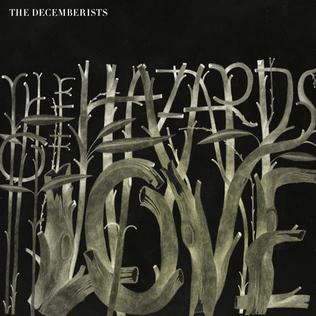
The curious thing about the Decemberists is that they don't often know what era they're writing music in. Sure, they have some songs that are clearly contemporary ("16 Military Wives"). But they seem more comfortable setting their songs in Moorish North Africa ("The Infanta"), Arthurian Britain (the whole of The Hazards of Love), medieval Japan ("The Crane Wife"), or World War I Europe ("The Legionnaire's Lament", "The Soldiering Life").

So it should come as little surprise that Black Prairie's debut album, Feast of the Hunters' Moon would rather exist in 19th-century Kentucky than 21st-century Portland. It's tempting to call Black Prairie a "Decemberists side project"--after all, it consists of more than half of the Decemberists--but it quickly becomes apparent that Black Prairie is a musical beast all its own. Decemberists Jenny Conlee (accordion), Nate Query (bass), and Chris Funk (let's be honest, what doesn't Chris Funk play?) join Jon Neufeld (guitar) and Annalisa Tornfelt (violin and vocals) to create a pastiche of Americana closer to the folk of Among the Oak & Ash than the indie pop you might expect.

Probably the most impressive thing about Feast of the Hunters' Moon is the incredible breadth of musical genres and styles it spans. The strongest influence is bluegrass, but zydeco, steel guitar string band, country, and even klezmer are right at home on the album. The original conception of Black Prairie was as an instrumental band, so it's no surprise that 9 or 10 of the 13 tracks are purely instrumental, creative explorations of what the band's unique combination of instruments can do.

It's ironic, then, that the vocal tracks are among the best on the album. Annalisa Tornfelt is not a singer by trade, and it shows, but her vocals lend an organic timelessness to the songs where they appear. "Single Mistake" stands out as fragile, sincere emotion. Probably the best track on the album is "Red Rocking Chair", which is a haunting interpretation of an old folk song.

Black Prairie's music probably won't see any radio play outside of the occasional college airwaves. (That said, think about Feast of the Hunters' Moon as the soundtrack for the hypothetical Damon Lindelof-Carlton Cuse adaptation of The Gunslinger from the Dark Tower and tell me it wouldn't be fantastic.) That's all the more reason for you to track it down on your own.


Currently listening: "Ich Will", Rammstein

Thursday, March 25, 2010

Restaurant Review: Burgermeister

Burgermeister opens in the corner storefront that Baja Fresh used to occupy before it mysteriously closed a few months ago. Baja Fresh was the sort of restaurant that I very much would have liked to patronize; its California take on south-of-the-border cuisine (maybe we'll call it Cal-Mex?) was reasonably unique to the downtown Berkeley area. Including "fresh" in their restaurant's name wasn't specious--you could actually appreciate the freshness of the ingredients they used. And they had some legitimately good salsas and other sauces.

The restaurant's downfall, though, was its unnecessarily high prices. I felt like every meal I ate there was two or three dollars more expensive than it should have been. Maybe it comes with the territory--Burgermeister has exactly the same problem.

Today around lunch time, I walked past Shattuck and Kittredge to see a massive decorated grill sitting outside the newly-opened burger restaurant, with a throng of people (mostly obnoxious high school kids) standing around it. Naturally, I went to investigate, and found that the grill was offering free half-hamburgers. I ate one, and it was tasty enough that I felt my decision to eat there for lunch was a good one.

I had the San Diego burger (most of the hamburgers have California-inspired names; I'm not sure whether they actually exemplify regional California cuisine or not), which had pepper jack cheese and jalapenos, in addition to the usual hamburger complements of lettuce, tomato, and onion. It came with a decent handful of fries.

Here's the thing: the burger itself was tasty and obviously made or order, as I got to specify that I wanted it medium. The toppings were unique, and the vegetables were fresh. The fries were obviously made recently, and they were crispy and had just about the right amount of salt. But I could have gotten a lot more meal for 8 dollars at probably dozens of restaurants in the downtown area.

To be fair, I could have "upgraded" to a 1/2 pound burger (from a 1/4 pound burger) for two more dollars, and I probably would do that if I ate here again, especially if I didn't get a free half-hamburger before I ate. I could have gotten a shake or float to go along with my burger, and it probably would have been delicious, but it would have run me another four or five dollars.

Step-up-from-fast-food hamburger and shake for thirteen dollars? Funny, I could go to Steak and Shake and get the same thing for eight or nine. Actually, in California, I can't, so Burgermeister may be the next best thing. It's tasty, and I can see myself going back there again, but in a town where a La Burrita burrito plus all the chips and salsa you can eat is under six dollars, Burgermeister probably won't become a prominent part of the lunch rotation.


Currently listening: "Again", Flyleaf (via Pandora)

Wednesday, March 24, 2010

Lost Speculations and Observations: March 2010 Edition

I'll put this out there now: "Dr. Linus" was one of my favorite episodes of Lost, ever. It wasn't a great episode in the sense of "Sundown", which had some intense action scenes and a major plot milestone. Nor was it great in the sense of "The Incident", which had more mythology and revelations than you could shake a stick at. But it was a fantastic hour of television, featuring three compelling stories, some excellent acting, and plenty of food for thought as the "second act" of the final season dawns. ("Sundown", then, was the curtain on the first act.)

One of the best things that "Dr. Linus" did was work as an episode of television. Lost is incredibly broad in scope for a television show. Many shows can afford to produce one-off episodes that don't interact with each other (the litany of CBS procedurals, for example). Some rely on the multi-episode or season-long "story arc" model, like the "Michael Scott Paper Company" run at the end of season 5 of The Office, or the search for fellowship candidates that spanned the entirety of season 4 of House.

Lost does have independent motifs (and therefore unique "flavors") for each of its seasons, arising from the thematic storytelling devices and central groups of characters that I mentioned in my "LA X" post. But often, Lost is so tied up in its overarching premise and cast and mythology that it can't see the trees for the forest. (It's why Lost has never won the Emmy for Outstanding Drama Series: two episodes extracted from the middle of any given season are going to be downright incomprehensible when watched on their own.) "Dr. Linus" is a part of the "forest" of season 6, and it's clear that it's related to the other "trees", but it's also one hell of a tree if you just consider it by itself.

The reason I think "Dr. Linus" is the best episode of season 6 so far (with the obvious outlier, "Ab Aeterno", subject to a different standard entirely) is that it made me care about the flash-sideways for the first (and so far only) time in season 6. You didn't need to be a Lost fan to appreciate the flash-sideways: it was a neatly contained 15-minute plot with a beginning, middle, and end. It had a few main characters and a couple of supporting characters. It made sense and had a satisfying resolution.

For Lost fans, though, how incredibly rewarding were the contrasts, juxtapositions, and ironies that kept showing up? They wasted no time: Dr. Linus had "Elba" on our screen before even "ABC Studios". A story of a man with absolute power, who loses it when he's exiled, and that exile involves an island? Sound familiar? The same fate befell Widmore in the original timeline, naturally at the hands of Ben. Ironically, it also befell Ben, when he moved the Island. The two stories are mirror images of each other with respect to the role of the island: Ben and Widmore lost their power upon leaving the Island, and Napoleon lost his when he was forced to go to Elba, but in all other respects, they're strikingly similar. It was the first mention of what became the theme of the episode: power, its transience, and its gain and loss. And the recall of Widmore's exile is especially appropriate as he's reversed his own exile by the end of the episode.

The slightly-off parallels to the original timeline didn't stop with Elba. One of the most obvious is also the easiest to overlook: Ben's name. In the original timeline, Ben Linus is usually referred to as "Ben". It's a first name, and a nickname of a first name at that. There's nothing wrong with calling Ben "Ben"—it's not meant to be insulting or demeaning. But it is inherently familiar, colloquial. In the flash-sideways, he's always "Linus" (if not respectful, at least professional) or "Dr. Linus" (obviously an honorific). On the Island, despite Ben's frequent power plays, people he interacts with still see him as a peer or inferior; in the flash-sideways, where Ben has been much less concerned with power (at least until his attempted coup), he seems to enjoy greater respect and formality. It's an especially important distinction in an episode so concerned with power.

In both realities, Ben had prominent relationships with two people: his father and Alex. Ben's interaction with his father is cleverly defined by gas cylinders in both realities, but where Ben poisons his angry and abusive father in the original timeline, he helps take care of his ailing and sympathetic father in the flash-sideways. Ben's relationship with Alex is even more significant; he and Alex have a similar relationship both on the Island and off, one where a childless Ben taken on a familial, fatherly relationship with the teenage Alex. Both realities feature Ben caught up in a power struggle with a man who was once his superior, contesting the organization that both were a part of. In that respect, Reynolds becomes a Widmore surrogate in the flash-sideways.

As things come to a head in each conflict, Ben is faced with a critical decision: submit to the machinations of his hated enemy in order to further Alex, or spite the enemy at the cost of Alex. On the Island, Ben chooses power. He stands his ground, displays a calm façade, and calls Keamy's bluff… and Alex pays with her life. However, in the biggest divergence between the two mostly parallel stories, flash-sideways Ben chooses to relinquish power so he can see Alex benefit. It's a wholly selfless decision, and it's unlike anything that the manipulative, scheming, out-for-himself Ben on the Island has done.

That makes Ben's on-Island actions in "Dr. Linus" even more surprising. It would have been incredibly easy for Ben to have shot Ilana, run off to Hydra island, and probably figured out an angle to work on the Man in Black in the process. Instead, Ben faces his demons, delivers a confession to Ilana, and comes to terms with his role in Alex's death. Incidentally, Ben's affirmation to loyalty to Jacob's side represents the Man in Black's first significant recruitment failure, suggesting that the tide might be turning in the impending war.

When Ben finally opens his heart to Ilana, we see him speaking with more sincerity than he’s ever shown. Ben really was shaken by Alex’s death, and even more so by his role in causing it, but this is the first time when he has no agenda in expressing his remorse over it. In the past, Ben played both sides of just about any conflict he became caught up in with the intent of manipulating them both to advance his own agenda; now, Ben makes a desperate appeal to whichever side will listen. Ilana (who, incidentally, shows for the first time that she actually has feelings) recognizes a reflection of her own plight in Ben’s story: he lost a girl he raised as a daughter, while she lost a man who was the closest to a father she’d ever had. Ironically, it was Ben’s role, direct or indirect, in both of these murders that allowed Ben and Ilana to bond over them.

Is Ben “redeemed” now? That decision rests in the hands of Ilana, who seems to fill the role of Jacob’s next of kin. Is Ben a “good guy”? Tough to say—and I still argue that neither Jacob nor the Man in Black represent absolute good or evil. But Ben is headed down the long path to atonement. His confession to Ilana, and her acceptance of him, is the culmination of Ben coming to terms with his evil acts, a coming-to-terms that started with Ben watching Keamy kill Alex and continued through his own killing of Jacob. It’s also Ben coming to terms with his loss of power on the Island. Ben stood idly while Alex died, and he was manipulated into killing Jacob. He could have seized power for himself again by shooting Ilana. Instead, in a parallel of what flash-sideways Ben does, he voluntarily abandons power for the sake of acceptance and a desire to finally do the wrong thing. It’s a sea change in Ben’s personality, but the era of manipulative, lying, out-for-himself Ben is over.

Ben is not the only character who comes to terms with his loss of power and direction in “Dr. Linus”. Richard faces an existential crisis and becomes the latest in a long line of characters to be de-mythologized. Remember how in the good old days of season 1, Tom Friendly was the most mysterious thing on the Island? Turned out he was merely middle management in the Others. Then, in season 2, the DHARMA Initiative seemed like mysterious past masters of the Island, only to learn in season 5 that they were basically dirty hippies who had less of an idea about what was going on than our people did. Ben Linus quickly fell from master manipulator in the service of Jacob to pawn of the Man in Black. And now, Richard, immortal liaison between the Island and its people, decades-long adviser to the leader of the Others, recognizes that the planned life he’s been living for 60 years or more just got turned on its head.

Learning of Jacob’s death, Richard understandably panics. He rejects an offer from the Man in Black, instead retreating to the Black Rock, presumably where he was “born” as a follower of Jacob. It’s the first time he’s been back there, and it’s a fitting place to return as he now seeks to close the loop and die. Even in his faith-shaken state, to Richard, joining the Man in Black is a fate literally worse than death. (He'll only try to join the Man in Black a few episodes later, after his suicide gambit has failed.)

Richard sees no point in sticking around as Jacob’s man, either, but a couple of kinks show up in Richard’s plan to gracefully exit the Island: first, Jacob apparently doesn’t approve of his chosen committing suicide. And then failed suicides from throughout the Lost saga fall into place: Jack couldn’t jump off the bridge, Locke couldn’t hang himself, even Michael’s gun never seemed to work when he pointed it at himself. “The Island isn’t finished with you yet” actually meant “Jacob isn’t finished with you yet”, though we were hardly ready for that revelation in season 4.

Second, Jack also doesn’t so much approve of Richard’s death. Though this scene was nominally about Richard, to set up the big reveals of “Ab Aeterno”, it was equally as much about Jack and his ultimate conversion to “Man of Faith” status. Would season 1 Jack (or LA X Jack, for that matter) talk this much about belief and destiny and things happening for a “purpose”? It appears that Jacob’s plan that he explained to Hurley in “Lighthouse” worked: sometimes you do have to bring people all the way to the lighthouse and let them figure out their destinies for themselves. Jack didn’t seem anywhere close when he visited the lighthouse, but a few hours of staring at the ocean later, and now he believes.

“Ab Aeterno” finished the de-mythologizing of Richard that “The Incident” and “Dr. Linus” took important steps in furthering. We see Richard’s origin story—at long last—and we learn that Richard is not special, or supernatural (save for the intervention of Jacob), or really mysterious at all. That said, he is a very good man—hardworking, faithful, and pious—who nevertheless faces a difficult moment retaining his sanity after his life appears to cease having any meaning. Jack’s intervention back in “Dr. Linus” saved Richard for a moment, but he has demons yet to confront before he accepts his “purpose” once again.

The first part of “Ab Aeterno”, enlightening as it is to Richard’s story, is hardly good material for discussion because it breaks from Lost tradition and delivers more answers than questions. We now know how old Richard is—if he’s about 30 in 1867, then he was born around 1837, making him 170 years old in 2007. He’s been on the Island for 140 years. We now know how the statue got broken—giant wave plus Black Rock. And we now know Richard’s raison d'etre: his wife, coming to terms with not being able to save her, and atoning for killing the doctor while trying to help her.

That’s where things get a little more interesting to the “observations and speculations” realm. Richard ostensibly is made to choose between the Man in Black and Jacob, but because of their offers, he is really choosing between seeing Isabella again and repenting for his sins (real and perceived) in her death. Richard’s requests that he makes to Jacob when trying to choose which side to join contain some of the most telling lines of the episode, both for Richard’s character and the Man in Black/Jacob conflict.

Everything that Richard requests of Jacob relates directly to his wife. First, he asks to be with her again. Jacob says he can’t do that. Then, Richard asks that his sins be absolved, and Jacob replies he can’t do that either. Finally, Richard wishes for immortality, which Jacob grants with a hand to Richard’s shoulder. Out of context, it seems a spurious request at best and a downright selfish one at worst. But remember what the priest told Richard: he didn’t have nearly enough time to be absolved of the sin for murder. Then Richard’s request of Jacob becomes more about repentance than immortality: he wants to make sure he’s on Earth for long enough to do his penance, even if that takes an eternity.

Jacob’s replies to Richard’s requests are equally as important, describing both Jacob’s philosophy and the extent of his supernatural powers. Jacob says he can’t bring someone back from the dead, and he’s right: one of the core “rules” of Lost is “dead is dead”. But it’s a proscription that comes with about a thousand asterisks. Dead is dead, unless the smoke monster decides to assume your form, or unless Hurley starts chatting with your apparition, or unless you turn up in an alternate timeline very much alive, or any other manner of “coming back from the dead”.

We don't know if Jacob denies this request because he is unwilling or unable to make a dead person appear alive. The Man in Black, though, doesn’t have any such qualms about circumventing the death rule. Most likely, that's because he can so effectively mimic anyone who has recently died. He could pretend to be Isabella all day long—and he did, in fact, pull that very trick on Richard—and nobody would be any wiser.

Next, Jacob tells Richard that he can't pardon his sins. This is both "unwilling" and "unable". Jacob is no god—at least not in the Christian sense that Richard wants him to be, one who can validate morality and make judgments on the immortal soul—he's "merely" some supernatural being with powers over life and death. Even if Jacob could actually do it, he wouldn't have. We know that Jacob is big on the whole idea of "help you help yourself". If he simply told Richard his sins were absolved, then Richard would have no incentive to continue on in Jacob's employ. Instead, Jacob tacitly and implicitly frames Richard's "job" as penance, and Richard is eager to accept the deal.

It's manipulative, but then again nobody ever accused Jacob of being forthright. His tactics and those of the Man in Black repeatedly mirror each other's. The "he can be very persuasive" speech that Dogen gave Sayid was the exact same one that the Man in Black gave to Richard when each was supposed to assassinate the other guy's enemy. And both Jacob and the Man in Black claim to be on the "free will" side of the central philosophical conflict in Lost. It's gone under many different aliases: science versus faith, coincidence versus fate, decision versus destiny, free will versus determinism.

The Man in Black says that Jacob brings you to the Island whether you like it or not, but that he won't involve himself in your life without you choosing to let him in. He has a point. Everyone whom Jacob has touched off the Island made their way to the Island whether they liked it or not. Jacob brought the Black Rock (and most likely other vessels) to the Island presumably against its will. And Jacob argues that no, he's the one who lets you choose your own path, tabula rasa style, while the Man in Black has already decided about you beforehand—and chances are that you're evil. He has a point too. Jacob and his associated faction gladly welcome anyone who can prove they're genuinely interested in redemption and starting their lives over.

It's fitting that Richard has this discussion with Jacob at the statue, because appearances of the statue are almost always associated with big mythological revelations. On the Island, within the setting, the statue is of course symbolic of an old god, presumably worshipped by some ancient Egypt-esque civilization. But in the narrative, the statue is a symbol of mystery, of the unknown, of everything we don't understand about the Island. The "shadow of the statue" is just as much about our confusion as it is about Jacob's residence, and our witnessing the statue's destruction comes at a watershed moment as answers start arriving faster than questions.

While Richard is discussing the terms of his service to Jacob, Jacob also mentions the "cork" analogy. It's a nice piece of imagery, but the important thing to remember is that it's Jacob's spin on the Island, not the gospel truth of what's going on there. The Man in Black would probably argue that Jacob is the cork, keeping him unjustly imprisoned on the Island, when all he wants to do is go home.

A few theories: I've said it before, and I still think that Jacob's presence (and presumably the Man in Black's) on the Island dates from Roman times. The Man in Black mentioned to Richard that he'd been there a long time, even in the 1800's. And even more convincingly, Jacob has a penchant for Latin phrases and names—why call the clearly Spanish Richard "Ricardus"? Why make the Others learn Roman Latin?

Second, it's starting to look like the Man in Black and Jacob are, if not different halves of the same entity, then yin/yang opposing elements of a dualistic pantheon. Here, Jacob has power over life (e.g., granting Richard immortality) and the Man in Black has power over death (e.g., being able to take the form of the dead). Maybe they're the result of one omnipotent power splitting into two—that would explain why the Man in Black accuses Jacob of stealing his body, and why he seemingly has no name.

Third, if I had to guess, I'd say that Jacob's "candidate" business dates from around 1870, when Richard showed up on the Island. It's when Jacob became aware of his own... well, "mortality" isn't the best word, but maybe fallibility. It's around this time that Jacob began taking seriously the Man in Black's threats of killing him, and that prompted Jacob to begin the search for a successor. Construction of the lighthouse soon followed, with Jacob adding names as he identified possible candidates. It explains why there's no "Alpert" in the list of candidates: Richard already had his job when Jacob started his search for a replacement. Also, it explains why Jacob defended himself against Richard's knife attack, but he didn't seem particularly perturbed at Ben's: he knew that the wheels were already turning looking for his successor.

Final note: some people are already calling "Ab Aeterno" the best episode of Lost ever. I disagree—for me, it's still "Through the Looking Glass"—but it was pretty fantastic nevertheless. Being a Catholic, I found that all the talk of sin, penance, and reconciliation had a beautiful emotional resonance, and Nestor Carbonell's facility in playing entirely different facets of his character (English, Spanish, Spanish-accented English; modern times, 1800's; losing his mind to finally coming to terms with his loss) was truly impressive. What do you think? Best episode ever? A letdown? Somewhere in between?


Currently listening: "Come Back Margaret", Camera Obscura

Monday, March 22, 2010

Surrealist Easter: A Short Story

As Spring Break dawns, some of my classmates think, for whatever reason, that they need to work this week. I respectfully disagree, and sleeping until 11 am today, I was rewarded with this dream. I thought it would make a good short story, although as all dreams must be, it's disjoint and rough around the edges. Some scenes are far more detailed than they need to be, and others are glossed over in a sentence, but I decided not to expand on my subconscious, or randomly firing neurons, or divination from the gods, whichever significance you choose to attach to dreaming. The title "Surrealist Easter" (which I did not dream, but occurred to me as I transcribed all of this) should make sense by two-thirds of the way through.


"This is bullshit." That is something Tom would say, I catch myself thinking in a starling bout of metacognition. It’s the first clue that I'm actually dreaming. He and I are in a dozens-long file of already-weary twentysomethings, leaving the most dismal auditorium I've ever seen. It's poorly lit, the few fluorescent lights that decided to wake up at 8 am fixing a feeble blue-light cast on whatever dreary event we're leaving. Plenary session in a training exercise, I surmise, and now we're headed to break-out sessions? That must be what Tom was complaining about, and I can't help but agree with him.

It seems the sun has decided to grace us with its presence. Artificial blue-white has given way to gentler earth tones, with a bit of natural light peeking its way through half-shut windows. I can't tell if there are any lights on except for that. It has to be a Saturday. This poor building is downright shocked that there's anyone here at all. Now I'm walking down stairs into an arena pit of desks. These desks are arranged like a collection of mini-classrooms: twenty or so desks in impossibly neat rows and columns, each headed by a single desk facing all the rest. I decide to sit down in a usual spot for me, second column from the left, second row from the back.

Looks like I'm one of the first ones here. In my pod, the only occupied desk is the conspicuously located one at the front. There's a girl there, young, probably 19 or 20, and I can tell she's pretty, but that's about all. Now apparently I decide I don't like the arrangement, which is odd given the detail I've already invested in it; regardless, now there are long tables with chairs on both sides. It's organic, intimate, just a touch friendlier. The girl is sitting across from me now at one of the ends of the table, and I get a better look at her. She has an unruly mop of brown hair barely restrained by a small white knit cap at the top of it, and big olive-green eyes.

If it's a dream, I may as well take advantage. "I'm Matt," I say, smiling, offering a handshake. She accepts. "Kelly." We talk for a while; I can't remember what about, but I learn that she's helping to facilitate this training session. Eventually she props her head on her right hand and grins sympathetically at me. "I'm going to have to pick a hat soon," she remarks. I'm a little confused, but I take it on face value that Kelly knows what's going on here better than I do. As if on cue, some male voice from the back of the room calls out, "Rabbit!" I turn around to see a stage, luxurious red velvet curtains tied at either side with gold-colored rope. A woman wearing a long-eared leporine getup on her head walks onto the stage. It's one of the most ridiculous things I've ever seen. The audience, which is a lot fuller now, offers a some good-natured laughs and applause.

"Oh, you have to go rabbit," I tell Kelly, who shakes her head. "Just wait," she laughs, a bemused lilting giggle. "It gets better." "Egg!" the voice from the stage calls, and a man walks onto the stage. His head has been replaced by an ovoid, dyed red and purple and yellow. It's massive, probably two feet tall and a foot across. People applaud. "Pope!" the voice calls again, and a middle-aged white man shows up on the stage. He's in Pentecost vestments, white alb, crimson stole draped around the neck, triple mitre on the top of his graying head. He's holding a halberd in his right hand.

"Yep, no question." I chuckle and nod to Kelly as the crowd cheers. "Thanks a lot." She flashes a smile at me before standing and jogging sprightly toward the stage. I look down to see a document in front of me. It's a map-meets-schedule. In enthusiastic reds and blues and yellows, I learn that this training is actually a semester-long commitment. Before I get the chance to despair, two spots catch my eye: if I go to the right places during the course, I can play mini-golf and eat free ice cream sandwiches. Mini-golf, ice cream sandwiches, and Kelly. Forget Tom's pessimism, this training is going to be great.


Some time later, maybe as long as a year, I'm walking down a residential street. I shiver and put my hands in my pockets. I look up at the rows of houses on the left side of the street, see fallen leaves, brown, clinging to the roofs. It's cloudy and the sun has just set. The house I'm passing now has a porch. Kelly is standing on it with some dude, a guy in sweater with broad horizontal gray and black stripes. He looks a little like me, but more gaunt and less sincere. He calls her "Amaline". Weird. Then he puts his arm around her. Figures. I put my head down and walk a little faster.

But just like the desks and chairs, it seems I'm not ready to give up on this one yet. She catches my eye, her smile brightens, and she runs down the steps to hug me. "Amaline?" She shrugs and grabs my hand, and we run down the block.


Currently listening: "Steady As She Goes", the Ranconteurs

Wednesday, February 24, 2010

Lost Speculations and Observations: February 2010 Edition

All right, children. Calm down a little; we need to have a chat about "What Kate Does". I've seen what the community has had to say about this episode. That it was "boring". That it felt like "filler". That it "killed" the momentum from the premier. Those things are mostly true. Was "What Kate Does" as good as "LA X"? No, not by a mile. Was it even a good episode by the standards of the rest of Lost's body of work? Not particularly. But is it the second-worst episode of Lost from season 3 on? Not even close.

There are least a dozen episodes that are as bad as, if not worse than, "What Kate Does". We'll start with "Stranger in a Strange Land", which the community really really hates. I only sort of kind of hate it, but I'm not going to defend it as anything close to a good episode. It featured probably the worst casting decision in Lost history and definitely the most useless flashback in Lost history, earning the episode its derisive nickname, the "Jack flying kites in Thailand" episode. "What Kate Does" was substantially ahead of "Stranger" in terms of plot development, character advancement, and details that ended up mattering to the overall tableau of the show. But there they stand, clumped alone at the bottom of that poll, a substantial margin between them and the so-called third-worst episode.

I could go on to talk about "Expose", "Eggtown", and the entire abortion of the "mini-arc" that started season 3, and how they're all phenomenally bad episodes compared to "What Kate Does". But at this point, rather than dig up past skeletons, it's more interesting to talk about why "What Kate Does" was so hated. I can think of three reasons.

First, this is season 6. We're sick and tired of characters knowing more than they're letting on; we're ready for this setting to be open with its information for a change. And although you really can't help but like Dogen, it's a little irritating to hear him tell us about the "infection" as if we're untrustworthy, as if we're immature, as if we can't possibly handle the world-shattering truth that he spouts. The "infection", though peripheral, has been one of the most persistent mysteries on the show, and our being strung along by a character who could clearly answer the mystery—if he deigned to—is getting frustrating.

Second, it's a Kate episode. People dislike Kate. Personally, she's my least-favorite "main character" on the show, and even my friends who are more Kate-tolerant than I am have to think for a little bit before they come up with a character they dislike more. Her "flash-sideways" (as the producers would rather us call the alternate universe) was useless—if anything, Kate is even less likeable in the alternate universe than she is in "real" life. And on the Island? Kate chased after Sawyer a bit, giving the much more interesting and developed Sawyer a chance to steal the spotlight.

Third, and finally, the premier was probably too good for, well, its own good. "LA X" was a fantastically good episode. It had character development, tension, drama, action, intrigue, important mythological revelations, and equally-enticing follow-up questions. And I can't help but think that the relative evaluations of the episodes that follow are going to sag a bit, probably until the putative Richard Alpert episode halfway through the season.

All those factors led to "What Kate Does" (while certainly a weak episode) to be saddled with a legacy that's substantially worse than it deserves. And on the other hand, for all the opposite reasons, "The Substitute" is going to fare much better on the minds of fans than it deserves.

Let's be honest: "The Substitute" wasn't that fantastic an episode until about the last ten or fifteen minutes. The Locke "flash-sideways", aside from giving poor Terry O'Quinn a chance to play Locke again, and again reminding us of the theme that certain people are destined to impact each others' lives, wasn't all that interesting. Man in Black and Richard and the mysterious blond boy in the jungle was just confusing. And Ilana pulled the same crap that Dogen is lately fond of, holding back her information even though she clearly could elucidate a lot of mysteries if she really cared to.

But we had a major mythological development, complete with a wholly satisfying answer to one of the show's most critical mysteries: "why these people, and why this Island?" Does one answer balance out an otherwise unremarkable episode? When it's in season 6, and when the answer is one of that magnitude, apparently the answer is "yes".

So we may as well discuss that answer, because it's clear that it matters—a lot—and there's plenty there to dissect. The list of names scrawled on the cave wall (and more carefully inscribed on the lighthouse compass) read like a “who’s who” of the Island over the last sixty years. The crossed-out names start with Mattingly, the name of a hapless US Army soldier (presumably) killed by the Others back in the Jughead era. They proceed through DHARMA times, with Goodspeed and possibly even Radzinsky, highlight Rousseau's science expedition, encompass a litany of 815 survivors, and even include some freighter folk for good measure.

But there are a few notable omissions from the list. Granted, we haven’t seen the whole thing yet, so maybe these names are around and just hidden. It's odd that there’s no Alpert, no Hume, no Eko, no Lapidus… but my antipathy toward her aside, the most surprising placement of a name on the list is Austen. “The Substitute” made the connection between Jacob touching a person and his or her candidacy explicit through the superposition of flashbacks over the Man in Black’s speech. Locke, Reyes, Ford, Jarrah, Shephard. There’s still the ambiguity surrounding “Kwon”, but regardless of whether it was meant to represent Jin or Sun (or possibly even the longshot Ji Yeon), it seems like Jacob had to touch both to get his selected candidate to show up on the Island.

So if Jacob paid as much attention to his remaining candidates as he did to Kate, where’s the “Austen” on the wall? 51. Not 4, not 8… 51. 51 is a partial sum of the Numbers (51 = 4 + 8 + 16 + 23), but there are dozens of partial sums of the Numbers. Does it matter that Kate is attached to a "lesser" number? That’s a question that needs to be addressed soon, and incidentally, it’s the most interesting thing to happen to Kate’s character in a few seasons. Whatever the answer, it's clear that Kate is still very much in play.

It ties into the deeper mystery of the significance of these candidates. Are any of the candidates "better" candidates than others? Has Jacob identified some as being more loyal, having more potential, or being easier to sway? If so, do these line up with the Numbers that we know and love?

Here's another way to think about it. It takes a little setup, but it's interesting to consider. In the universe that we're familiar with, there is a known set of Numbers (4, 8, 15, 16, 23, 42). The most recent significance assigned to the Numbers is that they match up with a known set of candidates (Locke, Reyes, Ford, Jarrah, Shephard, Kwon). But that's not the only known significance of the Numbers. They're also the core values of the Valenzetti equation, a mathematical effort born out of the Cold War to try and predict the exact date and time of mankind's extinction.

One of the purposes of the DHARMA Initiative's research was to alter the core values of the equation. As far as we know, they failed. But say there was another reality (possibly even the flash-sideways timeline we've been watching) where that research came to fruition. In this hypothetical reality, the Numbers are now (6, 10, 17, 18, 25, 44). In the known reality, these numbers also corresponded to a set of candidates (including our friend Mattingly). In the new reality, what would the candidate-number mapping look like? Would Locke now be associated with 6, Reyes with 10, and so on? Or would we instead have been following the adventures of Mattingly and friends for five seasons?

In other words, it's a sort of chicken-and-the-egg problem: did Locke, Reyes, and the rest become the "most important candidates" because Jacob aligned them with the Numbers? Or did the Numbers become important because they were the values associated with our survivors? Then again, maybe we only know the Numbers that we know because we know the candidates we know; if we had been following Mattingly and company, we would have seen a surprising prevalence of 6, 10, 17, 18, 25, and 44? Is there such a thing as a "more important candidate" at all?

Yet another intriguing bit from the lists of names is the handful of people not crossed out that we've never heard of. Hansen? Kysea? Who are these people? Are they characters we know, and just don't know their last names? (Ilana could very well be one of them.) Characters we're yet to discover?

For its recency in insertion into the Lost mythos, the candidate list is nevertheless very important. It raises a few questions that are notable to the mythology as a whole, and particularly central to season 6. First, hitting on the motif of free will versus determinism: what does Jacob’s touch really mean? Is it, like the Man in Black alleges, tantamount to the destruction of free will and an invisible though irrevocable shove toward the Island? Or is it merely an assurance during a crucial juncture in a life?

Second, and even more important: does the Island really need protection? Does it deserve it? Will bad things really happen if Jacob doesn’t crown a successor? Or is Jacob just using the Island as a laboratory to conduct experiments on the human condition? As grave as these questions are, Lost would be far better served by not answering them. Proponents of Jacob and proponents of the Man in Black can have this argument now. By the end of the show, both sides will be armed with better facts and more compelling reasoning, but the mythology deserves to retain as much of that ambiguity as it reasonably can.


Currently listening: "Jewel to Sparkle", The Juliana Theory

Tuesday, February 23, 2010

The Salsa Connoisseur: Happy Jackal Hell-Fire


Yep, I admit it: I bought this salsa just because it was called "hell-fire". There's a howling jackal who's on fire on the lid (he doesn't look too "happy" to me...), and if the whole message was still lost on you, the burning jackal is sitting at the middle of the sun. So I was prepared for this salsa to be maybe a little on the warm side. I don't mind a salsa that has heat as its main focus as long as it at least pays to lip-service to flavor too.

It's a fresh salsa, so it starts off with a few points in my book. It's also organic, which is cool if you're into that sort of thing.

Texture: pretty excellent. Small bits of peppers and more peppers and garlic in a slightly-thicker-than-water tomato base. A nice, uniform layer sticks to the chip--no gloppy chunks of tomato or onion, but not so thin that it runs off either.

Heat: oh goodness, hot. Not the hottest salsa or hot sauce I've ever had, but it's up there, and it might very well be the hottest fresh salsa I've ever had. Does not relent--starts hot and stays hot even after you've finished your chip. And you'll feel it all throughout your mouth. Plenty of jalapeno and habanero action in there.

Flavor: overwhelmingly garlicky. It has the scent you might expect of a Maggiano's built on the Yucatan. If you try really hard, you can pick out the scent of cilantro (purportedly the second ingredient... right) and cider vinegar. The taste is a brick wall of garlic and capsaisin that desperately needs something else to balance it. In Chinese cooking, garlic and chiles are both yang foods, and we could really use a little balancing yin in the form of more tomato or vinegar.

Available at Berkeley Bowl; a 10-oz tub was $2.89 (29 cents per ounce). Probably available at other California locations; I doubt you're going to find it outside the greater Bay area because it doesn't make sense to ship fresh salsa too far.

Recommended if you're in the mood for a very hot fresh salsa. Stay away if you prefer milder salsas, and don't get anywhere close if you're not a garlic-phile.


Currently listening: "Sherry Fraser", Marcy Playground

Wednesday, February 17, 2010

Reaction to xkcd 703, "Honor Societies"


Here's an idea: how about you stop being such a stuck-up douche, join the damn honor society like all the rest of your peers, and try to make the most of it. I understand the honor society situation is really just a lead-up to the tautology joke, but it exposes an ingrained and infuriating pattern that's shown up in some recent xkcd comics.

I have very little patience for this sort of xkcd. The Holden Caulfield-esque, "let's pretend we're precocious even though we're really just rebellious," "I have noticed an inconsistency in the system, therefore I am allowed to flout the system," "I am so extraordinary that the rules do not apply to me" mentality is tiresome at best and dangerous at worst.

But it's with this mentality, and characters who have this mentality, that loyal xkcd fans identify best. It's especially prevalent among xkcd's high school characters, and therefore the high school fans of the comic. 519, "11th Grade" strikes me as an egregious example. I've made my feelings toward 588, "Pep Rally" abundantly clear. There are probably others.

As I mentioned in my discussion of "Pep Rally", teaching math and science and history and language is but one of the tasks of primary and secondary education. The other, equally necessary, side of the coin is to socialize. The education system is as much about preparing children and adolescents for their careers as it is about preparing them to exist in society, to follow the same norms and mores as those around them, to sign the same social contract as everyone else they'll be dealing with once they're out in the "real world".

The characters in these xkcd's don't seem to have gotten the message yet. The behavior of these xkcd characters, and those hypothetical high schoolers who act the same way that these characters do, only reinforces the need for that socialization. Granted, rebellion is an integral part of the teenage experience. Virtually every teenager rebelled against something at some point in their teenage years, some more aggressively, or loudly, or destructively, than others.

And virtually all of those rebellions were ultimately fruitless. That's an important part of both socialization and the teenage experience as well: gaining the understanding that just because you find fault with something doesn't mean it's without value. It's a lesson that xkcd would do well to learn.


Currently listening: "Born for This", Paramore

Thursday, February 04, 2010

Lost Speculations and Observations: LA X Edition

Every season of Lost has had two iconic, overarching motifs: the first and most important is a unique storytelling device. The first three seasons told the survivors' stories by flashbacks, and while flashbacks have persisted through the fifth season, the pre-island stories of Jack and Locke and Kate and all the rest were just about finished. In season four (actually, at the tail end of season three), we were introduced to the flashforward, and season five gave us time travel and parallel timelines.

These devices weren't arbitrary. In Lost, as in any great story, every single detail has a meaning. The season one flashbacks have the comparatively mundane task of acquainting the audience with the characters; the flashbacks in seasons two and three emphasized the characters' prior relations before coming to the Island, resounding the Lost theme that certain people are destined to be connected to each other. Season four's flashforwards continued that same theme, raised another: that the events on the Island have implications that reach much farther than the South Pacific, and subtlety hinted at all the time travel we'd be seeing a season later. Finally, the time travel in season five fulfilled functions both narrative (to tell the story of the DHARMA Initiative) and thematic (that the conflict on the Island is bigger than any single era).

The second iconic motif is the central group of characters. In season one, almost all of the action revolved around the middle-section survivors of Oceanic 815, and season two introduced us to the tail-section survivors. Season three told us about the Others. Season four was the freighter people, and season five introduced us to the DHARMA personnel we'd heard so much about over the past few seasons.

As early as the premiere, it's obvious to see that the storytelling device du jour in season six is an alternate reality, where Oceanic 815 landed safely and all the former castaways got on with their lives. (Or, who's to say there's only one alternate reality? There could just as easily be dozens.) Previous seasons have opened with an eye opening; the first thing we see in season six is an airplane window, an eye of sorts, a means of looking out at a world that is not quite the same as what we've been accustomed to. That's fitting for the alternate universe. When we're back on the Island, in the superficially "real" universe, it's back to an eye opening. That sets the tone for the entire season: the deliberate juxtaposition of two realities, one we know, and another that's similar to what we know but speckled with a few sharp contrasts.

The thematic significance of this storytelling device is much trickier to pinpoint so early in the season, however. Is it going to be an elaborate validation of "whatever happened, happened"? That is, are we going to see the same sorts of character developments and interactions that we've already seen, and is course-correction going to be able to steer the characters' lives in the same directions as they went on the Island? Might we see instead an exposition on destiny; a reality where our characters' lives are significantly worsened because they never made it to the Island like they "should have"?

Contrarily, we have absolutely no idea who the central group of characters is going to be. Early rumblings and speculation wondered if it might be Bram and Ilana's mysterious Jacob fan club, but our old friend the smoke monster pretty well put that to rest less than an hour into the premiere. I'd lean toward the simple and elegant: that our "central characters" are going to be Jacob and his nemesis, white and black, progress and stagnation, optimism and pessimism. (But not ever "good and evil".)

Yes, we do need to talk about Smokey. The big reveal of the Man in Black's masquerade as the smoke monster (or is it the other way around?) gave us the biggest mythological revelation of the season so far, and it may well continue to hold that distinction for the next several episodes. We even got a glimpse of the Man in Black's history with Richard; apparently the last time the two of them interacted is when Richard was "in chains". Are those literal chains, suggesting that Richard was at one time a prisoner or slave? Or is he being figurative and comparing Richard's dedication to Jacob and the Island to servitude?

In classic Lost fashion, every revelation is actually a litany of follow-up questions in disguise: is the Man in Black actually Christian Shephard? Yemi? Dave? Kate's black horse? What (if any) are the limits to his power? Why does DHARMA's sonic fence stop him? Does it stop only the smoke form, or the human form as well? Does it work in a manner similar to the circle of ash? How much does Jacob know about all this? Does (did) Jacob have a handy alternate form too? Where is "home"? Did Jacob being alive present an obstacle to his going home? Not all of these questions will be answered—the domain of season six is not explaining the mechanism of various means of restraining the smoke monster. But it is resolving the plots and conflicts surrounding our main characters.

Lost is and has always been a show about the characters, so the greatest success of the alternate universe is the contrast it provides between the characters' personas. We see a direct juxtaposition of 2004 vs. 2007, LAX vs. Island, season 1 vs. season 6. And it was surprising to look back and remember just how much the Island had changed people. Some are subtly different, if at all; others are entirely new people—and mostly better people, at that.

The biggest changes came from Sawyer and Sun. When we first met Sawyer, he was a charismatic con man, superficially charming but entirely lacking a moral center. But his time on the Island gave him an entirely new direction. The alternate universe highlights two of the biggest differences between the "Sawyer" side of James Ford and the "LaFleur" side: he's a shameless flirt pre-island and a passionate lover post-island; and more significantly, while he defies the law pre-island, he is the law post-island.

Sun has also found a sense of self after living on the Island. On 815, she's a submissive and obedient wife to an overbearing husband. But on the Island, she's insightful and gutsy—not to mention a loving partner and mother. Jin, for his own part, has become dedicated to his wife rather than his perception of a proper marriage, not to mention becoming a trustworthy friend rather than an aloof stranger.

We saw a "return to form" for other characters as well. Kate is back to being the vengeful outlaw. Locke is something of a special case as we haven't seen the real John Locke for half a season, but compare the timid, wishful-thinking Locke on the plane to the self-assured, spiritual Locke who led the Others, and the distinction is profound. And while Jack is still the man-of-science spinal surgeon, the "Dr. Fix-it" urge seeming to be as much a part of Jack's essence as his brown hair, this Jack isn't about to spout any lines about destiny, much like he was hesitant to do through the entire first half of Lost.

While most characters have "reverted" to their pre-island personalities in the alternate universe (and a few, like Sayid and Claire, we haven't seen enough of to know), there are the characters whose presence or personalities were entirely off of what they should have been. Desmond should never have been on the plane but was. Eko, Libby, Michael, and others should have been on the plane but weren't. Hurley's personality is the same blissfully-ignorant as ever, but him being the luckiest man alive strikes us as deeply wrong. Maybe other characters have had stark contrasts to their personalities as well, and we just haven't experienced them yet.

All of this (except for Hurley's newfound chi, which at least for now sticks out like a sore thumb) does so far seem to be a ringing endorsement of both the reset and course correction. In this existence, where Jughead was detonated (and the Island apparently sunk to the bottom of the ocean to hang out with miserably-animated CGI sharks), the characters don't know each other. But those bonds are already starting to re-form, and by the middle to end of season six, I fully expect Sawyer to regain his LaFleur-like bearing, Sun and Jin's romance to rekindle, and John Locke to assume his mantle as confident man of faith.

Back on the Island, a interesting new motif has developed over the last two episodes: the divorce of the spiritual form from the physical body. We've actually gotten hints of that motif for a long time now: Hurley and Miles have been speaking to the dead, and even the whispers suggest the idea of out-of-body consciousness. But now we have explicit confirmation that the "man in black" entity can take on both human and incorporeal forms. Jacob's direct and immediate appearance to Hurley after his own death reinforces the motif.

Then there's the question of Sayid. Is he, too, now a body divorced from its spirit? There are at least four possibilities here:
—The Sayid whom we know is dead; the Sayid that stood up at the end of “LA X” is actually the Man in Black, making him the new John Locke;
—The Sayid whom we know is dead; the Sayid that stood up at the end of “LA X” is actually Jacob, making him the equal and opposite John Locke;
—The plan to heal Sayid worked like it was intended and Sayid never died; or
—Sayid did die but was restored to life by the Island or some other unknown agent or mechanism.

Despite the blatant hints that “The Incident” and “LA X” screamed about corporeal/spiritual disjunction, the third possibility is most likely. Though the first and second possibilities have mythological potential, they don’t work from the standpoint of the narrative. Lost is a show about characters. Having one of our beloved original characters die and be replaced by a mysterious superhuman entity strained the character-driven nature of the setting enough. To have the same thing happen to a second, equally as significant character would be disastrous.

The reason that I say the plan to heal Sayid did work comes from the reactions of the Japanese Temple dude (apparently his name is Dogen) and his merry swashbuckling band. At first, they were a split second from shooting Jack and Kate and Sawyer; when they opened the magic ankh and read Jacob's secret message, they instantly and completely became convinced that shooting our survivors was a very bad idea. "We're all in trouble" if Sayid dies, proclaims Japanese pirate's bespectacled translator (evidently called Lennon). And suddenly, it was in everyone's interest to heal Sayid.

Why, then, were Dogen and Lennon so dispassionate when it appeared to everyone else that Sayid was dead? Simple: they knew he wasn't. Or perhaps it was a test; Sayid really would have died if Jack hadn't attempted to save him. Then, Sayid's healing became the product of both Jack's resuscitation and the time in the spring; a product of science and faith.

Faith is of course a necessary prerequisite for any Temple. And this one doesn't want for any religious images. Its architecture is Mesoamerican, bearing particular resemblance to the temples at Tikal. If you look especially closely, you can see a Hindu icon in one of the niches on the exterior of the temple. This being Lost, Egyptography is everywhere. Dogen strikes me as rather Zen (although his readiness to have his men shoot people is far from Buddhist). And of course, the spring in the middle of the Temple interior mirrors a baptismal font, an essentially Judeo-Christian installation. "We can take him there", Richard Alpert tells Kate about young Ben, "but he'll never be the same," promising a figurative rebirth in that font of water.

Now it appears that we're headed for a confrontation at the Temple, and it seems fitting that it pits Jack, man of science, against an intractable enemy taking the form of Locke, man of faith.


Currently listening: Highly Refined Pirates, Minus the Bear

Thursday, January 28, 2010

Five Reasons Why The Departed is Overrated

(This entry is part of the Netflix Project series.)

Apparently, The Departed won a lot of awards. Cool. And enough people have made references to it, either direct or oblique, that I thought it merited consideration toward the top of the Project.

I didn't think it was that bad a movie. The problem is, I just didn't think it was that good a movie either. Given the critical acclaim that it received, this might be surprising; given my generally lukewarm attitude to a vast majority of movies out there, it's perfectly in character. Why am I unlikely to commit The Departed to any of my "top movies of all time" lists?

1) This movie is long. Generally, I think that movies are best suited to the hour-and-a-half to two-hour range. Longer than two hours is okay as long as you've got something really interesting going. Two and a half hours is in many ways a point of no return where my attention span tends to stray irreversibly. And three hours is only ever acceptable if you're adapting a fantasy novel to film. The Departed weighs in right at that 2.5 hour mark, and boy does it feel like all 150 minutes.

Here's something interesting. Leonardo DiCaprio, while able to produce films of wildly varying quality, seems uncompromising on their length. Consider:

--Titanic, 1997, 194 minutes, awful
--Catch Me If You Can, 2002, 141 minutes, actually quite enjoyable
--Gangs of New York, 2002, 166 minutes, pretty good
--The Aviator, 2004, 169 minutes, sort of okay
--The Departed, 2006, 151 minutes, meh

2) The characters are all the same. If you want to make a film where 10 of the 12 most important characters are white dudes from Boston with Irish ancestry, that's fine, as long as we can tell them apart. Jack Nicholson's not-so-merry band of thugs are especially interchangeable, and it took until half of them were dead for me to be able to distinguish them.

Also, the worst part of setting a 151-minute movie in Boston? You're necessarily doomed to hear the Boston accent (the single most irritating of the American accents) for two and a half hours.

3) The love story was completely unnecessary. Tell me that the movie would have been any different without "little miss Freud", and you'd be lying. She appears as a convenient excuse at the end to have Matt Damon's character (whose generic Irish-ish name I can't remember) come to terms with his double life, but you know what, any other character could have happened upon those tapes and the result would have been exactly the same.

4) The plot was overly MacGuffin-y. A briefcase full of super-powerful microchips that have some vague appeal to the Chinese because of their William Tell-like ability to pinpoint cruise missiles from halfway around the world? Come on. That amounts to an admission that you're using the entire plot as a mere excuse to play around with your characters. There's nothing wrong with that necessarily, but for a film to be truly great, both the plot and characters have to be excellent.

5) Soul-crushing determinism. Let's look at the material lessons of what happen to the characters in this film. You're a high-up in a crime syndicate, you die. Okay, I can get behind that. You're the crime syndicate's rat in the police, you die. Fine. You're the ho-bag psychologist who can't keep her pant suit on; you don't die, but your life is irrevocably messed up. Yep, you deserved that one.

But... you're the police secret agent in the crime syndicate, you die. You're the honest cop who just wants to do the right thing, you die. You're the upstanding police captain (and just about the only sympathetic character in the film), you die. Virtually nothing positive happens to anyone in this movie, whether "good guy" or "bad guy".


Currently listening: "Ignorance", Paramore (nope, the Paramore binge hasn't ended yet)

The Great Netflix Project

I'm a recent devotee of Netflix.

That's not because I'm a great lover of the cinema. It's not because I find myself drowning in disposable income, and I feel that I must buy something. It's not that I'm hopelessly bored and cannot devise anything else to do at all.

No, it's because I'm tired of people looking at me like I have lobster stalks growing out of my skull when I tell them I haven't seen some movie. Here's a conversation, circa 2009:

Roommate #1: Ooh, Terminator 2 is on. Let's watch it.
Roommate #2: Okay.
Roommate #1: This is so much better than the first Terminator, right?
Me: Uh, actually I haven't seen either one.
Roommate #1: (silence)

Oh man. The stalks must have sprouted eyeballs by now. Now, contrast that conversation to this one, circa 2010:

Friend #1: Who played Linda Hamilton in Terminator?
Friend #2: That doesn't sound right...
Me: No, Linda Hamilton was the actress. She played Sarah Connor.
Friend #1: Oh, yeah, you're right.

See? Netflix makes people like you! Seriously, though, there are a lot of movies in the annals of cinema that I just haven't seen, and I feel like I'd benefit from doing so. As I work through the list, I'll be posting my thoughts on each.

(Micro review of Terminator: the movie was undoubtedly groundbreaking for its time, and I buy that it influences sci-fi even now. That said, judged on its own merits, the movie has not aged well, and the Governator probably couldn't act his way out of a wet paper theater.)

If you have any suggestions for my cinematic education, please let me know.


Currently listening: "Misery Business", Paramore (damn it all...)

Wednesday, January 06, 2010

2009 Music in Review

(or: "Really, musical artists, that's the best you can put together?")

2009 was not a banner year for music. Or, rather, it was not a banner year for listenable music. For the past few weeks, I've been lamenting various "best" lists: Pitchfork's is egregiously bad, and the Onion AV Club's is not much better. Decide for yourself, but a vast majority of the albums on that list seem more like disjointed slurred noise than actual music.

Therefore, here's my own "top albums of the year" list, picking through the very little from this past year that didn't suck so bad.


Best album that Pitchfork more or less got right: Two Suns, Bat for Lashes

It's not a wall-to-wall masterpiece. Two Suns has its weird operatic moments that are easily the worst bits of the album--as my friend and fellow music critic Andrew put it, "oh, no, Bat for Lashes, don't get all Nightwish on me." It has its share of songs, apparently a prerequisite for albums released in 2009, that sound more like atonal background noise than anything you'd listen to on purpose.

But I have a professed love of indie girl singers with pretty voices, and singer Natasha Khan's voice is both pretty and girly enough that it carries the album's better parts past its worse. Number seven album of the year? In a normal year, no, not even close. In 2009? Sounds about right.


Best album that most critics admit is pretty good: Middle Cyclone, Neko Case

It took me an embarrassingly long time to come around to this album. Pretty redhead indie girl singer/songwriter with a folkish voice that compares to Jenny Lewis's? Shouldn't I be all over that? Well, yes, I really should. Case's music is a delightful combination of "indie", pop, and folk that just barely survives its brush with country. In Cyclone, Case seems so determined to make her sound unique that she takes a carefree, at times reckless approach to song structure. Her method of "do what feels right" comes off as odd if you're expecting something conventional.

But like those cyclones, conformity to convention is never going to be Case's strong suit. It's not like we should expect it to be--this is coming from the woman who sings more love songs about animals than people and who's ready to pounce on some unfortunate passerby with a katana on her album cover. Instead of working yourself up into a structuralist frenzy, just take Case's voice for the treasure that it is.


Best album derived from American folk music: Among the Oak and Ash (self-titled)

Paste Magazine is better than Rolling Stone because Paste doesn't jam leftist politics down your throat at every opportunity (just occasionally). And Paste is better than just about any other music publication out there because it takes a truly unique approach to the music it likes. Pure-indie rags are a dime a dozen; the "why sing when you can autotune?" trash that's so popular now gets sufficiently covered everywhere else.

But Paste has no qualms about picking ludicrous genres and showcasing the best of them. Adult contemporary/adult alternative? Passe? Yes, usually, but Paste recognizes when that genre produces a worthwhile album. Americana, the sort that our great-grandfathers played with three-strong banjos? Boring? Not at all, says Paste--both important to our culture and an opportunity to develop something intensely artistic. Among the Oak and Ash, which I've already reviewed, is a fine example of all of that.


Best vocal performance of the year: Stages, Vedera

Stages is not going to win any prizes for originality, bound-pushing, or ground-breaking, and I realize that. But I absolutely love Vedera anyway. They're fantastically nice people, down-to-earth and caring towards their fans. Their music is relatable and pop-sensibly singable. And Kristen May, I'm convinced, gives the best vocal performances of anyone who's making music today. Seriously, I challenge you to prove me wrong.


Best Broadway musical disguised as an album: The Hazards of Love, the Decemberists

And here I was under the impression that the musical community as a whole liked the Decemberists... on the contrary, I think the only "top of the year" that Hazards showed up on was Paste's. Hazards is an album that I realize is not going to be everyone's cup of tea, and that's mostly because it's only tangentially an album anyway. It's a story, and you have to have the patience to bear with plot, character development, and even literary devices to get the most out of it.

It toes the line of campy, and mostly I see that as a sign that the Decemberists don't take themselves too seriously. But, even more importantly, they know how to make a hell of an entertaining experience.


Best tongue-in-cheek funk: Single Entendre, Here Come the Mummies

Here's a concept: ten or so dudes in full mummy wrappings play some of the most energetic funk this side of 1978. Why the mummy costumes? Tough to say, but rumor has it that they're a stealth funk supergroup, some of whom are signed to other bands or labels, and don't want to reveal their identities because that might represent a breach of contract. Now consider that their music is largely humorous, rife with sexual innuendo (just look at that album cover), and tell me this isn't the best band ever.


Currently listening: "The Tain" (part I), the Decemberists

Monday, January 04, 2010

How to Make Any Movie Good, plus Avatar review

I always say that I'm not so much a movie person as a movie-neutral to slightly movie-averse person who ends up seeing a respectable number of movies anyway. (Actually, even that has fallen off a bit recently--besides Avatar, the movie I saw most recently in the theater was Inglourious Basterds back in August.) Avatar, I think, illustrates my relationship with the theater perfectly.

But for the suggestion and company of my good friend Jessica, I probably would not have gone to see Avatar. For instance, the dilemma "it's a slow day... either I can screw around on the internet for a few hours, or I can go see Avatar!" probably would not have presented me with an overly difficult choice, and the internet would have won handily. I'm glad I did see Avatar, though, if only because it helped me define better what I think a good movie is, and by extension, how to make any movie seem good.

(Well, okay. It probably wouldn't have helped Aliens Versus Predator: Requiem, and nothing in the world could have saved the second Transformers movie from being by far the worst movie of the year. We'll go with "almost any movie".)

Rule #1: Play to the movie's strengths. No movie is going to be able to fulfill every single cinematic desire that every single viewer might want. For example, if you're interested in clever, witty banter, a behemoth historical epic is probably not the best place to look. And a romantic comedy can hardly be blamed for not having enough explosions.

So going into Avatar expecting dramatic characterization, an original premise, and realistic dialog is sort of missing the point of the movie. Avatar is predictable, its characters are flat, it's a rehash of a story you've seen a dozen times, and the script is clunky, but it doesn't seem to care--and neither should you.

Instead, focus on the things that the movie is good at. Avatar is a movie that lives and dies by its setting more than the story that takes place in that setting. So focus first and foremost on the visuals and graphics, and second on the verisimilitude and the believability of the setting that it's created.

"Okay," you might be thinking, "that's fine and good, but what if I'm not at all impressed by any of that either?"

Rule #2: Lower your expectations. Frankly, this is the easier part of the plan. Take the parts of the movie that you're not focusing on, and expect literally nothing out of them. Take the parts of the movie that you are focusing on, and pay attention to them all, but don't expect to be blown away by any of them.

In retrospect, I think this is why I liked Inglourious Basterds more than Pulp Fiction. From Pulp Fiction, I was expecting a coherent, insightful cinematic experience. Instead, I got confusing, pointless, over-the-top violence. From Basterds, I expected only over-the-top violence... and instead, I got humorous, thoroughly entertaining over-the-top violence.

When you watch Avatar, expect the dialog to be abysmal, and when it's merely bad, you won't be disappointed. Expect the characters and story to be terrible, and if they elevate all the way to average, you'll be pleasantly surprised.

Final thoughts on Avatar? It's a movie with a strong sense of purpose. It knows exactly what it wants to be and what it wants to do. And mostly, it accomplishes those goals. Obviously, Avatar is a gorgeous movie. From conception, through design, and all the way to execution, the visuals are excellent.

A note on the graphics: Jess and I agreed that the least impressive graphical achievement was the now-notorious blue people. If you're going to go out of your way to make a distinctively non-Earth setting, why make the indigenous people so humanoid? Everything else was fantastic: the flora and fauna, the sky and atmosphere, the geological features, the inexplicably floating chunks of rock.

And what about its second purpose, trying to create a believable, immersive setting? Avatar does okay there too. Frankly, it's far from the best example of world-building that I've ever seen. Fans of epic fantasy will recognize the names Robert Jordan and George R. R. Martin; their Wheel of Time and Song of Ice and Fire series are many times more complex and convincing than Avatar. There's even a litany of video games that deliver settings better than Avatar's: Dragon Age: Origins and the Elder Scrolls games (Morrowind, Oblivion) immediately come to mind. But here I'm comparing apples to oranges: surely it's easier to craft a setting in 900 pages or 8 gigabytes than 3 hours. Given the inherent limitations of the medium, Avatar does a respectable job.

(Yes, Avatar is three hours long, or very close, and yes, in classic James Cameron fashion, it feels like all three hours.)

I could sit here and complain more about the characters, plot and dialog. I could echo the hundreds of other reviewers who point out (correctly) that Avatar is more or less a rehash of Pocahontas and entirely a rehash of Dances with Wolves. But then I wouldn't be playing by my own rules. Instead, focus on what's good. Watch Avatar entirely focused on the setting, and you'll almost certainly enjoy it.


Currently listening: "(Do You Wanna Date My) Avatar", The Guild (which I had stuck in my head for at least half the movie)