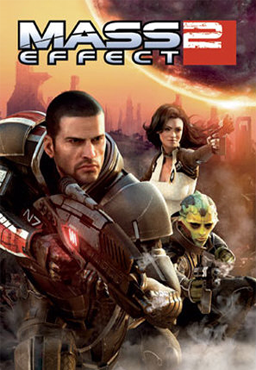
If Dragon Age: Origins was the game that got me to re-think my stance on Bioware, and the original Mass Effect was the game that finally tipped me over the edge to being a full-fledged Bioware fanboy, then Mass Effect 2 is the game that makes me glad to be there. It picked up where its predecessor left off, did a bunch more things right (and ME did plenty right on its own), and resulted in perhaps the best hybrid RPG ever.
Fans of the original, and of RPGs in general, will immediately notice that ME2 is less RPG-y than the original and than most of Bioware's earlier RPGs. The inventory system was one of the few weaknesses in the original; at times, it felt more like we were playing Spreadsheet: The RPG. Of course, whether to use Incendiary Ammo VII or Cryogenic Ammo VI would probably make such a slight sliver of difference to the gameplay that you'd really have to be looking for it to notice it, but let's face it: I spent far too long optimizing everyone's ammo upgrades on their tertiary weapons, and you did too.
ME2 doesn't waste time with those details. Every character has a handful of weapons, of which they'll ever use two at the most. Shepard's armor is customizable, but in a "hey, that's a cool bonus" sort of way as opposed to "I must squeeze every possible point of defense out of this." And gone are the multitude of skills that you may or may not ever use; each character has three plus a bonus that's unlockable over the course of the game. The result is something that doesn't feel exactly like an RPG, certainly less so than the first game did, but then again doesn't really sell itself as one or claim to be one.
All of those simplifications are things that could make the RPG purist whine, and fair enough to that. (We still have the RPG-tastic Elder Scrolls series--and Bioware's own Dragon Age--to console us.) But look at the other side of the coin: think of the pain that shooter purists must be feeling! There's no barrel-aim acceleration, no "realistic" obstacles to hitting your target like your character's breathing or footsteps, and no fancy scopes or aiming reticules. But as much as each of those is a sine qua non to a shooter person, they just represent inaccessibility to the rest of us.
So Mass Effect 2 manages to do something that's very rare indeed in the realm of game design: it hybridizes two genres to the satisfactions of all parties. It strips down both genres and figures out what's fundamentally fun about each with little regard for attaching either side's sacred-cow strictures. Then it combines all that fun into a game that turns out to be... fun.
The other thing that Mass Effect 2 does remarkably well is stray from the Bioware Path. The in media res prologue is still there, and so is the climactic final "dungeon", but gone is the almost amusingly tried-and-true "here are four parallel tasks that you must accomplish and which take place in different corners of the world" formula that literally every other Bioware game has followed. ME2 is stronger for pursuing its own identity. There's no artificial unfolding of the plot and very little railroading; instead, the endgame is laid out plainly after only a few hours of gameplay, and you can choose whichever path you see fit to get there.
It's a trend in modern video gaming to make games a reflection of a story that you want to tell rather than what the developers want to tell, and no game out there accomplishes this better than ME2. Although every playthrough of the game ends up in the same place, it's entirely up to you to get there, and your version of the game is the result of dozens of decisions that you make. It's an engaging and ultimately more rewarding experience than playing through someone else's version of the game.
And it's that immersive storytelling that really sets Bioware apart from other game studios. Bethesda builds worlds and lore better. Nintendo is more prolific and has a virtual monopoly on classic franchises. But if Bioware can make their trilogy's middle volume one of the best games in years, then consider me a fan.
Currently listening: The Valley, Eisley (review to follow!)
Showing posts with label Video Games. Show all posts
Monday, February 28, 2011
Friday, January 28, 2011
The Elder Scrolls V: Skyrim, Game Informer For Free
That we're still more than nine months away from the release of Skyrim is excruciating, but at least the good folks over at Game Informer have dedicated more or less the entire month of January to the cause. They've posted about a dozen fascinating articles about the game, ranging from insights into its development process to previews of its mechanics--but naturally, with them being a business and all, there's plenty more content in the physical magazine, in its February 2011 issue.
I'm nowhere near as big a video gamer as I was ten years ago, and my days of subscribing to video game magazines are long over... but this is Skyrim we're talking about. I decided I needed to own a copy of this issue. There were disappointingly few places I could have bought it on the internet, with the exception of eBay, and after shipping, it would end up costing me more money to buy a used copy than just to find my own.
"Easy," you might say. "Go to a bookstore." That would be a fine idea but for living in Berkeley. There's not exactly a Barnes and Noble down the street, and it's not like the hippies at the local independent bookstore carry a vast selection of video-gaming magazines. BART is always an option--but then I'd be spending more on my trip than on the magazine--and I have friends with cars, but I like to save my begged-for rides for things that really count, like trips that involve forty pounds of dirt from Home Depot.
But, upon entering my apartment yesterday, I noticed something: the February 2011 issue of Game Informer sitting on the shelf below my building's mailboxes. That shelf has come to be used for abandoning pieces of mail that belong to people no longer living in your apartment--and living in a student-heavy area, that happens quite a lot. I checked the name on the label against the name on Apartment 2's mailbox, and it was way off. Still, there's the vague thought of the phrase "federal crime" when you steal someone else's mail, and maybe there was a perfectly good explanation for why the magazine was outside its mailbox?
I didn't have to debate postal ethics for long, though. I opened my own mailbox to find the exact same issue of Game Informer had magically shown up in my mailbox. There is surely no Phillip Van Sant living in Apartment 12, and between shelving the magazine next to its twin or adopting it, the choice became easy.
Here's the thing, though: my apartment has never received an issue of Game Informer prior to January 27, 2011, and I've been leaving there for nearly a year and a half. I assume Mr. Van Sant is a prior tenant, but I've never gotten any of his mail before now. It seems downright bizarre that the first and only one that shows up happens to be the exact magazine I'm interested in.
I must have cashed in some seriously good karma for something. And, to keep the cycle going, Mr. Van Sant, the magazine is yours if you want it.
Currently listening: Tartini, Concerto in D, as performed by Maurice Andre
I'm nowhere near as big a video gamer as I was ten years ago, and my days of subscribing to video game magazines are long over... but this is Skyrim we're talking about. I decided I needed to own a copy of this issue. There were disappointingly few places I could have bought it on the internet, with the exception of eBay, and after shipping, it would end up costing me more money to buy a used copy than just to find my own.
"Easy," you might say. "Go to a bookstore." That would be a fine idea but for living in Berkeley. There's not exactly a Barnes and Noble down the street, and it's not like the hippies at the local independent bookstore carry a vast selection of video-gaming magazines. BART is always an option--but then I'd be spending more on my trip than on the magazine--and I have friends with cars, but I like to save my begged-for rides for things that really count, like trips that involve forty pounds of dirt from Home Depot.
But, upon entering my apartment yesterday, I noticed something: the February 2011 issue of Game Informer sitting on the shelf below my building's mailboxes. That shelf has come to be used for abandoning pieces of mail that belong to people no longer living in your apartment--and living in a student-heavy area, that happens quite a lot. I checked the name on the label against the name on Apartment 2's mailbox, and it was way off. Still, there's the vague thought of the phrase "federal crime" when you steal someone else's mail, and maybe there was a perfectly good explanation for why the magazine was outside its mailbox?
I didn't have to debate postal ethics for long, though. I opened my own mailbox to find the exact same issue of Game Informer had magically shown up in my mailbox. There is surely no Phillip Van Sant living in Apartment 12, and between shelving the magazine next to its twin or adopting it, the choice became easy.
Here's the thing, though: my apartment has never received an issue of Game Informer prior to January 27, 2011, and I've been leaving there for nearly a year and a half. I assume Mr. Van Sant is a prior tenant, but I've never gotten any of his mail before now. It seems downright bizarre that the first and only one that shows up happens to be the exact magazine I'm interested in.
I must have cashed in some seriously good karma for something. And, to keep the cycle going, Mr. Van Sant, the magazine is yours if you want it.
Currently listening: Tartini, Concerto in D, as performed by Maurice Andre
Friday, October 15, 2010
Videogame Best Hits List
This is probably the best viral facebook survey I've seen in years.
The rules: Don't take too long to think about it. List fifteen video games that will always stick with you. List the first fifteen you can recall in no more than fifteen minutes. Tag fifteen friends, including me, because I'm interested in seeing what games my friends choose. (To do this, go to your Notes tab on your profile page, paste rules in a new note, cast your fifteen picks, and tag people in the note.)
1. Earthbound is and will always be my favorite video game of all time. It's not the first game I played or the first one I enjoyed, and I won't even make the claim that it's the best video game ever made, but it's the first one I "discovered" (this sort of thing is important to a quasi-hipster), and it's the only one that's ever made a real impact on my life. From 1995 until 2001, Earthbound transcended being a video game for me, and it became a way of life. Where today, most of my creative output happens in my blog, during those years, it happened through Earthbound: making websites, writing fan fiction, discussing the game on various fansites like Starmen.net. Earthbound has a particular culture about it--its quirky, almost trippy, aesthetic; its hilarious understated humor; its brilliant leitmotifs on its John Lennon-inspired soundtrack--all of these things make Earthbound an absolute masterpiece of a video game.
2. The defining feature of Chrono Trigger is that it tells a linear story through a nonlinear timeline--sometimes you need to go forward in time to learn more; sometimes you need to go backwards. And the true genius of the game doesn't reveal itself until you've already played through it once, when you can play through a second time and skip to the ending at any point to see how it changes. It's one the few RPGs with legitimate replay value, and its reasonable approach time travel was well ahead of its time.
3. Final Fantasy X is one of the only games that I characterize more by the number of things I didn't do (exactly two) than the number of things I did. It is the crowning achievement in the Final Fantasy series. VI was fantastic (and on this list), VII was truly revolutionary (and on this list), but there is no (and may never be a) better Final Fantasy game than X. Sure, it introduced voice acting, had some innovative mechanics, and looked absolutely beautiful for its time... but the reason that X was so good was because its setting was impeccable. It's the best example I've ever seen of a game where every detail--the game mechanics, the plot, the locations, and even the clothes the characters wear--reinforce the setting and make playing in it incredibly rewarding.
4. Morrowind/Oblivion (/Tribunal/Bloodmoon/Knights of the Nine/Shivering Isles) are all grouped together on my list. I know that they're technically at least two games, but they're similar in that they're set in the same universe, they're incredibly open-ended, they have a collective soundtrack that is one of the best of any video game ever, their style and tone are similar... and I sunk at least 120 hours into both of them. They succeeded on different accounts--Oblivion was more balanced, more polished ("better produced" to use a music analogy), and better looking; Morrowind had slightly more to do and had a better story. They're both among the greatest PC games ever, and well worth playing if you don't mind being antisocial for an entire month.
5. The Legend of Zelda: The Ocarina of Time was the definitive game for the Nintendo 64. I'll argue that Twilight Princess was actually the superior Zelda game, but Ocarina of Time did so much for the series and for 3D gaming in general that it's tough to pass up.
6. Final Fantasy VI was the first Final Fantasy game I played, and it got me hooked, not only on the series, but also on JRPGs as a subgenre. It's easily the most nonlinear of the Final Fantasy games, which makes it a lot of fun, and it probably features the best soundtrack in the series as well.
7. I expect some resistance on this one, but I think Grand Theft Auto: Vice City is the best Grand Theft Auto game. (Full disclosure: I haven't finished IV yet, but a few hours in, it's quite good.) It was the first to feature voice acting from the player character and the first to include real-world music from well-known bands. It was entirely better than GTA III, because it took everything good about it and improved it, but it avoided the trap of overextending like San Andreas.
8. I'm not by and large a strategy fan, but I'd be remiss not to include Rise of Nations on this list. I first played it in spring 2003, after I'd taken World History in high school (pretty much my favorite class ever), so I was on a real history kick around that time. It implemented lots of innovative features like permanent cities and territory, it had enormous success in merging conventional RTS battles and world-domination grand strategy, and the expansion added some both fun and detailed re-interpretations of historical campaigns.
9. Super Metroid is an absolutely classic platformer, most notable to me for being part of my friend Nicholas's self-proclaimed "best day ever". My best friend through elementary and middle school, Nicholas's best day ever included seeing Good Burger in the theater and getting a Tamagotchi. (Hello 1997.) And it was the first time either of us completed Super Metroid in under the three hours necessary to see the "best ending". (It was a team effort--I planned a course, and Nick executed it.) Prior to that day, the goal had seemed nearly insurmountable to our ten-year-old selves.
10. Super Mario World was the very first video game I ever played and was therefore responsible for spawning one of my biggest hobbies over the past fifteen-plus years. It helped to forge my friendship with Nicholas, and a decade later I remember playing through it as being one of the most fun things I did with my high school girlfriend Jenny (except for maybe discovering Curb Your Enthusiasm).
11. Even though none of us had ever touched a skateboard in our lives, my friends and I spend an irrational amount of time playing Tony Hawk's Pro Skater 2 circa 2001. (The game did spawn a short skateboard career for Nicholas, which was sadly cut short by injury.) The soundtrack is atrocious (except in a hipster-ironic sense) and the skate culture is probably the furthest thing imaginable from my personal aesthetic, but how could you not love spelling inappropriate things in "horse" mode and pulling off the 900?
12. GoldenEye 007 was basically the de facto go-to party game in the late 1990s. It (along with its spiritual successor, Perfect Dark) was probably the only shooter I've ever truly enjoyed... and man, was it fun karate chopping, Moonraker lasering, and throwing-knifing all your friends.
13. There is at least a plurality consensus among JRPG fans that Final Fantasy VII is the best in the series, and despite my mentions of X's beautiful story and setting (or VI's free-wheeling self-determination), I haven't won too many people over. They have a point--VII pioneered 3D for console RPGs, plus it has some iconic characters and settings, the single best piece of music on any video game soundtrack ("One Winged Angel," of course), and enough secrets and side quests to occupy you for quite a while. To add a personal note, this game is what convinced me to but a Playstation.
14. Donkey Kong Country might not have made to this list had I not watched my friend Tom play about a quarter of it a few months ago. I realized that, fifteen years after I'd played the game for the first time, I still instinctively know the first twelve or so stages backwards and forwards: optimal paths, locations of extra lives, how to get to secret areas. That brought a flood of nostalgia, and I remembered just how much I'd enjoyed it back in the day.
15. Admit it: you played Pokemon. You only started playing because it was a fad, and you stopped playing when it became passe, but for the year or two when it was socially encouraged to play Pokemon, you had a hell of a good time. To this day, I can't name a game that has taken such a creative spin on the RPG idea, nor one that has combined single-player and multiplayer modes so effectively. In fact, looking back on it, you'd be hard-pressed to convince me that Pokemon was not one of the great achievements in video game design history--it was a social gaming experience five years before we knew what social media was.
Currently listening: "Sweet Talk, Sweet Talk", the New Pornographers
The rules: Don't take too long to think about it. List fifteen video games that will always stick with you. List the first fifteen you can recall in no more than fifteen minutes. Tag fifteen friends, including me, because I'm interested in seeing what games my friends choose. (To do this, go to your Notes tab on your profile page, paste rules in a new note, cast your fifteen picks, and tag people in the note.)
1. Earthbound is and will always be my favorite video game of all time. It's not the first game I played or the first one I enjoyed, and I won't even make the claim that it's the best video game ever made, but it's the first one I "discovered" (this sort of thing is important to a quasi-hipster), and it's the only one that's ever made a real impact on my life. From 1995 until 2001, Earthbound transcended being a video game for me, and it became a way of life. Where today, most of my creative output happens in my blog, during those years, it happened through Earthbound: making websites, writing fan fiction, discussing the game on various fansites like Starmen.net. Earthbound has a particular culture about it--its quirky, almost trippy, aesthetic; its hilarious understated humor; its brilliant leitmotifs on its John Lennon-inspired soundtrack--all of these things make Earthbound an absolute masterpiece of a video game.
2. The defining feature of Chrono Trigger is that it tells a linear story through a nonlinear timeline--sometimes you need to go forward in time to learn more; sometimes you need to go backwards. And the true genius of the game doesn't reveal itself until you've already played through it once, when you can play through a second time and skip to the ending at any point to see how it changes. It's one the few RPGs with legitimate replay value, and its reasonable approach time travel was well ahead of its time.
3. Final Fantasy X is one of the only games that I characterize more by the number of things I didn't do (exactly two) than the number of things I did. It is the crowning achievement in the Final Fantasy series. VI was fantastic (and on this list), VII was truly revolutionary (and on this list), but there is no (and may never be a) better Final Fantasy game than X. Sure, it introduced voice acting, had some innovative mechanics, and looked absolutely beautiful for its time... but the reason that X was so good was because its setting was impeccable. It's the best example I've ever seen of a game where every detail--the game mechanics, the plot, the locations, and even the clothes the characters wear--reinforce the setting and make playing in it incredibly rewarding.
4. Morrowind/Oblivion (/Tribunal/Bloodmoon/Knights of the Nine/Shivering Isles) are all grouped together on my list. I know that they're technically at least two games, but they're similar in that they're set in the same universe, they're incredibly open-ended, they have a collective soundtrack that is one of the best of any video game ever, their style and tone are similar... and I sunk at least 120 hours into both of them. They succeeded on different accounts--Oblivion was more balanced, more polished ("better produced" to use a music analogy), and better looking; Morrowind had slightly more to do and had a better story. They're both among the greatest PC games ever, and well worth playing if you don't mind being antisocial for an entire month.
5. The Legend of Zelda: The Ocarina of Time was the definitive game for the Nintendo 64. I'll argue that Twilight Princess was actually the superior Zelda game, but Ocarina of Time did so much for the series and for 3D gaming in general that it's tough to pass up.
6. Final Fantasy VI was the first Final Fantasy game I played, and it got me hooked, not only on the series, but also on JRPGs as a subgenre. It's easily the most nonlinear of the Final Fantasy games, which makes it a lot of fun, and it probably features the best soundtrack in the series as well.
7. I expect some resistance on this one, but I think Grand Theft Auto: Vice City is the best Grand Theft Auto game. (Full disclosure: I haven't finished IV yet, but a few hours in, it's quite good.) It was the first to feature voice acting from the player character and the first to include real-world music from well-known bands. It was entirely better than GTA III, because it took everything good about it and improved it, but it avoided the trap of overextending like San Andreas.
8. I'm not by and large a strategy fan, but I'd be remiss not to include Rise of Nations on this list. I first played it in spring 2003, after I'd taken World History in high school (pretty much my favorite class ever), so I was on a real history kick around that time. It implemented lots of innovative features like permanent cities and territory, it had enormous success in merging conventional RTS battles and world-domination grand strategy, and the expansion added some both fun and detailed re-interpretations of historical campaigns.
9. Super Metroid is an absolutely classic platformer, most notable to me for being part of my friend Nicholas's self-proclaimed "best day ever". My best friend through elementary and middle school, Nicholas's best day ever included seeing Good Burger in the theater and getting a Tamagotchi. (Hello 1997.) And it was the first time either of us completed Super Metroid in under the three hours necessary to see the "best ending". (It was a team effort--I planned a course, and Nick executed it.) Prior to that day, the goal had seemed nearly insurmountable to our ten-year-old selves.
10. Super Mario World was the very first video game I ever played and was therefore responsible for spawning one of my biggest hobbies over the past fifteen-plus years. It helped to forge my friendship with Nicholas, and a decade later I remember playing through it as being one of the most fun things I did with my high school girlfriend Jenny (except for maybe discovering Curb Your Enthusiasm).
11. Even though none of us had ever touched a skateboard in our lives, my friends and I spend an irrational amount of time playing Tony Hawk's Pro Skater 2 circa 2001. (The game did spawn a short skateboard career for Nicholas, which was sadly cut short by injury.) The soundtrack is atrocious (except in a hipster-ironic sense) and the skate culture is probably the furthest thing imaginable from my personal aesthetic, but how could you not love spelling inappropriate things in "horse" mode and pulling off the 900?
12. GoldenEye 007 was basically the de facto go-to party game in the late 1990s. It (along with its spiritual successor, Perfect Dark) was probably the only shooter I've ever truly enjoyed... and man, was it fun karate chopping, Moonraker lasering, and throwing-knifing all your friends.
13. There is at least a plurality consensus among JRPG fans that Final Fantasy VII is the best in the series, and despite my mentions of X's beautiful story and setting (or VI's free-wheeling self-determination), I haven't won too many people over. They have a point--VII pioneered 3D for console RPGs, plus it has some iconic characters and settings, the single best piece of music on any video game soundtrack ("One Winged Angel," of course), and enough secrets and side quests to occupy you for quite a while. To add a personal note, this game is what convinced me to but a Playstation.
14. Donkey Kong Country might not have made to this list had I not watched my friend Tom play about a quarter of it a few months ago. I realized that, fifteen years after I'd played the game for the first time, I still instinctively know the first twelve or so stages backwards and forwards: optimal paths, locations of extra lives, how to get to secret areas. That brought a flood of nostalgia, and I remembered just how much I'd enjoyed it back in the day.
15. Admit it: you played Pokemon. You only started playing because it was a fad, and you stopped playing when it became passe, but for the year or two when it was socially encouraged to play Pokemon, you had a hell of a good time. To this day, I can't name a game that has taken such a creative spin on the RPG idea, nor one that has combined single-player and multiplayer modes so effectively. In fact, looking back on it, you'd be hard-pressed to convince me that Pokemon was not one of the great achievements in video game design history--it was a social gaming experience five years before we knew what social media was.
Currently listening: "Sweet Talk, Sweet Talk", the New Pornographers
Tuesday, September 28, 2010
Extra Lives
Paste Magazine, which to my dismay recently suspended its print run, isn't just an indie music rag--it's an indie book/game/movie rag too! In their June/July issue, they reviewed an interesting-sounding book called Extra Lives: Why Video Games Matter. I figured it had a colon in the title, so it had to be good, and in an overwhelming display of whiteness, I decided to check it out from the library.
In it, Tom Bissell recounts his experiences playing ten or so video games, giving his reaction to each and interspersing interviews with game designers, critics, and other video-game luminaries. Finally, he tries to relate his experience with each game to some sort of social convention or human emotion, explaining why the game succeeds or fails as art.
Bissell's tales of playing through each game are by far the best parts of the book, especially if you're a gamer, and even more so if you've played the game he's discussing. These anecdotes are hilarious, accurate, and instantly relatable to anyone who's sunk triple-digit hours into Oblivion or suffered the misfortune of listening to its dialog.
The book is weaker when it's trying to make connections or prove a point. Bissell can't quite decide if he wants to apologize for his love of video games, defend it, or just revel in its geeky glory. In truth, he takes each of those three positions depending on his audience--the same game he praises for being innovative and absorbing, he starts criticizing as soon as his girlfriend does too--and he loses some credibility to that constant change of mood.
About the only other flaw in the book is its style. Bissell apparently has not learned the writer's lesson never to use a million-dollar word when a ten-dollar one will do (or however Strunk and White phrase it). He has a propensity for inserting Latin phrases just to prove that he knows them, and his sometimes-creative, sometimes-baffling bending of the conventional usage of words makes me wonder if he's writing for gamers or for other writers.
Although Bissell at times tries too hard to suck up to the smugness of the art crowd, it's clear from reading his stories that he's a gamer at heart. If you are too, you will certainly appreciate how Bissell memorializes your favorite games and sheds some light on their conception and production.
Currently listening: "Jackie, Dressed in Cobras", The New Pornographers
In it, Tom Bissell recounts his experiences playing ten or so video games, giving his reaction to each and interspersing interviews with game designers, critics, and other video-game luminaries. Finally, he tries to relate his experience with each game to some sort of social convention or human emotion, explaining why the game succeeds or fails as art.
Bissell's tales of playing through each game are by far the best parts of the book, especially if you're a gamer, and even more so if you've played the game he's discussing. These anecdotes are hilarious, accurate, and instantly relatable to anyone who's sunk triple-digit hours into Oblivion or suffered the misfortune of listening to its dialog.
The book is weaker when it's trying to make connections or prove a point. Bissell can't quite decide if he wants to apologize for his love of video games, defend it, or just revel in its geeky glory. In truth, he takes each of those three positions depending on his audience--the same game he praises for being innovative and absorbing, he starts criticizing as soon as his girlfriend does too--and he loses some credibility to that constant change of mood.
About the only other flaw in the book is its style. Bissell apparently has not learned the writer's lesson never to use a million-dollar word when a ten-dollar one will do (or however Strunk and White phrase it). He has a propensity for inserting Latin phrases just to prove that he knows them, and his sometimes-creative, sometimes-baffling bending of the conventional usage of words makes me wonder if he's writing for gamers or for other writers.
Although Bissell at times tries too hard to suck up to the smugness of the art crowd, it's clear from reading his stories that he's a gamer at heart. If you are too, you will certainly appreciate how Bissell memorializes your favorite games and sheds some light on their conception and production.
Currently listening: "Jackie, Dressed in Cobras", The New Pornographers
Tuesday, September 14, 2010
Metroid: Other M
The Metroid series may have shot itself in the foot by insisting that all its titles conform to the same unified chronology. For a comparison, look at Nintendo's two other massive flagship franchises, and let's start by talking about Mario.
Does anyone ever debate whether Super Mario 64 or Super Mario Sunshine comes later in the timeline? Is there any intrigue over the degree to which the universes of Galaxy and Galaxy 2 overlap? No, because it does not matter. We don't even know if any Mario game is a sequel, a remake, or a reboot of the game preceding it--all we know is that Bowser has done something dastardly again (often involving the Princess), and it is up to Mario to stop him. In Mario games, we're not looking for a great deal of character development or series interconnectivity; we're looking to jump on platforms, throw Koopa shells at Goombas, and kick Bowser's ass.
Zelda functions in basically the same way. There actually is a prescribed Zelda timeline, but nobody outside of a few dozen Zelda geeks and a handful of Nintendo employees knows it, because again, it does not matter. The vast majority of fans are content to treat every Zelda game as a reboot of the series, accepting that it's a new retelling of the hero Link fighting the great enemy Ganon with the power of the Triforce. In Zelda games, all we're looking to do is solve some tricky dungeon puzzles, bust out some fancy swordplay, and kick Ganon's ass.
Why can't Metroid do the same thing? Metroid fans are looking to explore every nook and cranny of an alien planet, establish a massive arsenal by finding weapon pickups, and kick Ridley's ass. It sounds awfully similar to Mario and Zelda... but for whatever reason, unlike those two, Metroid can't leave good enough alone. The first three games (Metroid, Metroid II, and Super Metroid) form a logical trilogy--though Super Metroid played enough like the original Metroid that nobody would have cried foul if it had simply been presented as a remake.
The Prime games clearly formed another logical trilogy, but these games' story and style were so distinct from the original trilogy that they seemed more like a reboot than a prequel trilogy. They didn't need to be prequels to make them fun, and them being prequels didn't enhance the series' earlier games. In fact, they set the precedent that seemingly unrelated Metroid games need to exist in the same continuum, which rather than establishing a universal and coherent story, has led to a frustrating amount of shoehorning in every other Metroid game.
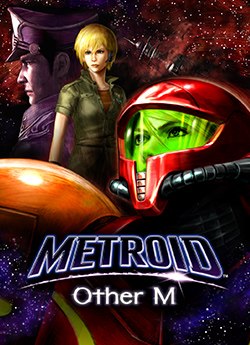
It's most apparent in Other M, which tries incredibly (at times desperately) hard to be both a sequel to Super Metroid and a prequel to Metroid Fusion. Combine that with the Wii's fervor to be one giant logroll of a console for everything good that Nintendo has ever done. The result is a game chock-full of references to the earliest parts of the series, with Metroid II remake bosses taking center stage, and Super Metroid enduring an almost amusing number of namedrops, from the ubiquitous Mother Brain and Zebes to the lowly Tourian, just to provide longtime fans of the series with a wink and a nudge.
The ultimate irony of Other M, then, is the vast amount of criticism leveled at it that it is "not a Metroid game". Here's a game that's practically built on fanservice to the most beloved title in the series, and the fans are turning on it? But speaking as a fifteen-year veteran of the series, it's easy to understand the complaint. It has nothing to do with the combat, the graphics, the story, or even the (miserably bad) characterization. Instead, Other M institutes a handful of gameplay mechanics that unfortunately rob Other M of seeming like a classic Metroid title.
The most egregious (and most universally lambasted) of these is the "item authorization" mechanic. In earlier Metroid titles, one of the highlights of the game was finding new and awesome things on the alien planet or spaceship that made your character, Samus, better. Sometimes they made you tougher, sometimes they enabled you to explore new places, and sometimes they augmented your weaponry. So much of the joy of playing Super Metroid came from figuring out exactly what your new item let you do and where you could go that you couldn't before because you had it.
All that is out the window in Other M. In an attempt to reconcile the need for progressive improvements to your character with the inconvenient reality that Samus is pretty damn formidable after she's been through Super Metroid, the game arrives on what was undoubtedly seen as quite the clever solution: Samus already has all the items she'll ever need (minus a few that are mostly conveniences anyway), but she can only use them after certain pre-determined points in the plot, when she is authorized to do so by a superior officer.
It's given a great deal of plot justification, with some back story about how Samus is doing this out of respect to her father figure and to prove to her squadmates that she can follow orders. But Adam Malkovich's voice saying "huh, looks like you need some deus ex machina to complete this puzzle" is just nowhere near as satisfying as thinking "grapple beam? Does that mean I can go back to that one room and get across it now?". Worse, much of it doesn't even make sense. Adam is worried about authorizing Samus to use too much firepower, which I can almost halfway buy. Explain how that translates into barring the use of the totally non-threatening Varia Suit (which serves the sole purpose of making you not die in a hot environment).
Other infringements on the free-exploration extravaganza that ought to be Metroid include a baffling preponderance of locked doors. It's always been standard Metroid fare to lock doors until you've met a certain condition, like killing all the monsters in a room. Other M takes this miles further and locks doors simply because it doesn't want you going that way yet. A third frustration in this vein is the restriction on free movement that some rooms unnecessarily impose. If I'm in a massive cavern-style room, and I see a far-off ledge, I should be able to jump to it. Getting halfway there and slamming into an unseen wall is incredibly disheartening. Finally, there's the third-person over-the-shoulder style rooms, which serve no apparent purpose other than to make you handle like Bowser from the original Mario Kart. In an oil slick.
Other M's other great failure is in its characters. Ordinarily, it would be patently unfair to a Metroid game to judge it on its characters with the same intensity as its gameplay, but Other M makes no bones about putting its characters at its forefront. Look no further than the menu screen: right next to the map and the list of awesome things you've found are "story" and "characters". In the past, Samus has had very little definition to her character, so any contribution that Other M could make would be an improvement, right? Not when it's to make Samus fraught with both mommy and daddy issues. On top of that, she's clearly regressed in the feminist department--she's gone from a strong and capable fighter who happens to be a woman to a whiny, insecure girl.
The only characters who have any shred of humanity are Malkovich, the scientist Madeline Bergman, and (ironically) the android virtual intelligence MB. Even they are flat: two-dimensional and static. Anthony Higgs, who could have been far more interesting, exists only to provide Samus with a hint of sexual tension. His squadmates, though, perform a remarkable feat in character-building: if Anthony is one-dimensional, these other characters are actually zero-dimensional, possessing no distinguishing characteristics whatsoever.
Earlier Metroid games have made use of voice acting, but Other M uses by far the most of any title in the series--and it's by far the worst. Samus's lines in particular are horrid, scripted by someone who seems to have no idea how people actually talk, in the style of a somewhat-precocious fifteen-year-old who is intelligent enough to have a reasonable vocabulary but not wise enough to use it responsibly. They're melodramatic, cringeworthy--and delivered in a detached style so wooden it makes the Trojan horse animated in comparison.
Does that mean Other M is a big pile of failure? Thankfully, no. The story, which seems overbearing and forced at first, actually unfolds into something decent, and it becomes worth caring about more as the game progresses. The game splits up its difficulty oddly: in other Metroid games, boss fights were the only parts of the game where you were in real danger of dying, and the difficulty came in the often grueling treks between save points. If you did die, you were in big trouble.
Now, you can expect to die on every boss, and you're in mortal danger from almost every mini-boss and some normal fights as well. But you can continue much more easily. Apparently this is a very Ninja Gaiden mechanic--fight the same impossibly hard fight half a dozen times before you finally figure out how the heck to beat it, and move on to the next one--and that makes sense, given that "Team Ninja" developed Other M. But this redistribution of difficulty isn't necessarily bad, it's just different.
Rest assured that there are plenty of things about Other M that are legitimately good. I'll be the first to speak in favor of the more combat-oriented Metroid. Tough battles in the original trilogy pretty much followed the script of "fire missiles at it until it dies." In the Prime trilogy, this became "fire a whole lot of missiles at it until it takes on its next form and throws some more hideous attacks at you." But in Other M, there's a bit more strategy--and a whole lot more style--involved in a lot of the fights. And it's much less satisfying to "fire three missiles at it" than to "fire two missiles at it, run toward it, grab its neck, and slam it into the ground."
(Overblast and Lethal Strike, the two cinematic combat elements that Other M introduces, are a bit tough to use at first, especially to Metroid veterans. "Let me get this straight, I'm supposed to tap buttons to dodge rather than run the hell away, and then run toward it and jump on it rather than blast it from a distance?" Yep. Once you're over it, it becomes doable... then it becomes a whole lot of fun.)
The switch between first- and third-person control works much better than it has any right to, though like most of the control scheme, it can be a little awkward at first. Other simplifications to the controls work very well, like making wall jumping actually possible and eliminating the need to ever do needlessly complex Morph Ball bomb jumping puzzles.
And it would be a shame to overlook the greatest strength that Other M has: it looks really pretty. It's obviously the best-looking Metroid game to date, and it probably has some of the best graphics of any Wii game. Samus finally looks like she should have twenty-five years ago (now that shoulder pads have been firmly out of style for ten or fifteen of those years), and Ridley looks downright scary... in a way that makes you completely respect him and the rest of the game.
Other M is not an instant classic in the same way that Super Metroid was. It's probably not even as good as the Metroid Prime trilogy; in fact, it may even be among the worst of the Metroid games. However, that's as much a praise of the rest of the series as it is an indictment of Other M. It's not a long game--roughly 8 to 12 hours, depending on how good you are at it and how much effort you want to put into being a completionist (but remember that Super Metroid's ultimate goal is to finish in 3 hours). The questionable voice acting and shallow characterization are not going to win any awards or even much praise. If you're a Metroid purist, you will balk at parts of the game.
But the game is fun, and that's what counts. As long as you can get over "this isn't a Metroid game," you will enjoy playing Other M.
Currently listening: "Knights", Minus the Bear
Does anyone ever debate whether Super Mario 64 or Super Mario Sunshine comes later in the timeline? Is there any intrigue over the degree to which the universes of Galaxy and Galaxy 2 overlap? No, because it does not matter. We don't even know if any Mario game is a sequel, a remake, or a reboot of the game preceding it--all we know is that Bowser has done something dastardly again (often involving the Princess), and it is up to Mario to stop him. In Mario games, we're not looking for a great deal of character development or series interconnectivity; we're looking to jump on platforms, throw Koopa shells at Goombas, and kick Bowser's ass.
Zelda functions in basically the same way. There actually is a prescribed Zelda timeline, but nobody outside of a few dozen Zelda geeks and a handful of Nintendo employees knows it, because again, it does not matter. The vast majority of fans are content to treat every Zelda game as a reboot of the series, accepting that it's a new retelling of the hero Link fighting the great enemy Ganon with the power of the Triforce. In Zelda games, all we're looking to do is solve some tricky dungeon puzzles, bust out some fancy swordplay, and kick Ganon's ass.
Why can't Metroid do the same thing? Metroid fans are looking to explore every nook and cranny of an alien planet, establish a massive arsenal by finding weapon pickups, and kick Ridley's ass. It sounds awfully similar to Mario and Zelda... but for whatever reason, unlike those two, Metroid can't leave good enough alone. The first three games (Metroid, Metroid II, and Super Metroid) form a logical trilogy--though Super Metroid played enough like the original Metroid that nobody would have cried foul if it had simply been presented as a remake.
The Prime games clearly formed another logical trilogy, but these games' story and style were so distinct from the original trilogy that they seemed more like a reboot than a prequel trilogy. They didn't need to be prequels to make them fun, and them being prequels didn't enhance the series' earlier games. In fact, they set the precedent that seemingly unrelated Metroid games need to exist in the same continuum, which rather than establishing a universal and coherent story, has led to a frustrating amount of shoehorning in every other Metroid game.
It's most apparent in Other M, which tries incredibly (at times desperately) hard to be both a sequel to Super Metroid and a prequel to Metroid Fusion. Combine that with the Wii's fervor to be one giant logroll of a console for everything good that Nintendo has ever done. The result is a game chock-full of references to the earliest parts of the series, with Metroid II remake bosses taking center stage, and Super Metroid enduring an almost amusing number of namedrops, from the ubiquitous Mother Brain and Zebes to the lowly Tourian, just to provide longtime fans of the series with a wink and a nudge.
The ultimate irony of Other M, then, is the vast amount of criticism leveled at it that it is "not a Metroid game". Here's a game that's practically built on fanservice to the most beloved title in the series, and the fans are turning on it? But speaking as a fifteen-year veteran of the series, it's easy to understand the complaint. It has nothing to do with the combat, the graphics, the story, or even the (miserably bad) characterization. Instead, Other M institutes a handful of gameplay mechanics that unfortunately rob Other M of seeming like a classic Metroid title.
The most egregious (and most universally lambasted) of these is the "item authorization" mechanic. In earlier Metroid titles, one of the highlights of the game was finding new and awesome things on the alien planet or spaceship that made your character, Samus, better. Sometimes they made you tougher, sometimes they enabled you to explore new places, and sometimes they augmented your weaponry. So much of the joy of playing Super Metroid came from figuring out exactly what your new item let you do and where you could go that you couldn't before because you had it.
All that is out the window in Other M. In an attempt to reconcile the need for progressive improvements to your character with the inconvenient reality that Samus is pretty damn formidable after she's been through Super Metroid, the game arrives on what was undoubtedly seen as quite the clever solution: Samus already has all the items she'll ever need (minus a few that are mostly conveniences anyway), but she can only use them after certain pre-determined points in the plot, when she is authorized to do so by a superior officer.
It's given a great deal of plot justification, with some back story about how Samus is doing this out of respect to her father figure and to prove to her squadmates that she can follow orders. But Adam Malkovich's voice saying "huh, looks like you need some deus ex machina to complete this puzzle" is just nowhere near as satisfying as thinking "grapple beam? Does that mean I can go back to that one room and get across it now?". Worse, much of it doesn't even make sense. Adam is worried about authorizing Samus to use too much firepower, which I can almost halfway buy. Explain how that translates into barring the use of the totally non-threatening Varia Suit (which serves the sole purpose of making you not die in a hot environment).
Other infringements on the free-exploration extravaganza that ought to be Metroid include a baffling preponderance of locked doors. It's always been standard Metroid fare to lock doors until you've met a certain condition, like killing all the monsters in a room. Other M takes this miles further and locks doors simply because it doesn't want you going that way yet. A third frustration in this vein is the restriction on free movement that some rooms unnecessarily impose. If I'm in a massive cavern-style room, and I see a far-off ledge, I should be able to jump to it. Getting halfway there and slamming into an unseen wall is incredibly disheartening. Finally, there's the third-person over-the-shoulder style rooms, which serve no apparent purpose other than to make you handle like Bowser from the original Mario Kart. In an oil slick.
Other M's other great failure is in its characters. Ordinarily, it would be patently unfair to a Metroid game to judge it on its characters with the same intensity as its gameplay, but Other M makes no bones about putting its characters at its forefront. Look no further than the menu screen: right next to the map and the list of awesome things you've found are "story" and "characters". In the past, Samus has had very little definition to her character, so any contribution that Other M could make would be an improvement, right? Not when it's to make Samus fraught with both mommy and daddy issues. On top of that, she's clearly regressed in the feminist department--she's gone from a strong and capable fighter who happens to be a woman to a whiny, insecure girl.
The only characters who have any shred of humanity are Malkovich, the scientist Madeline Bergman, and (ironically) the android virtual intelligence MB. Even they are flat: two-dimensional and static. Anthony Higgs, who could have been far more interesting, exists only to provide Samus with a hint of sexual tension. His squadmates, though, perform a remarkable feat in character-building: if Anthony is one-dimensional, these other characters are actually zero-dimensional, possessing no distinguishing characteristics whatsoever.
Earlier Metroid games have made use of voice acting, but Other M uses by far the most of any title in the series--and it's by far the worst. Samus's lines in particular are horrid, scripted by someone who seems to have no idea how people actually talk, in the style of a somewhat-precocious fifteen-year-old who is intelligent enough to have a reasonable vocabulary but not wise enough to use it responsibly. They're melodramatic, cringeworthy--and delivered in a detached style so wooden it makes the Trojan horse animated in comparison.
Does that mean Other M is a big pile of failure? Thankfully, no. The story, which seems overbearing and forced at first, actually unfolds into something decent, and it becomes worth caring about more as the game progresses. The game splits up its difficulty oddly: in other Metroid games, boss fights were the only parts of the game where you were in real danger of dying, and the difficulty came in the often grueling treks between save points. If you did die, you were in big trouble.
Now, you can expect to die on every boss, and you're in mortal danger from almost every mini-boss and some normal fights as well. But you can continue much more easily. Apparently this is a very Ninja Gaiden mechanic--fight the same impossibly hard fight half a dozen times before you finally figure out how the heck to beat it, and move on to the next one--and that makes sense, given that "Team Ninja" developed Other M. But this redistribution of difficulty isn't necessarily bad, it's just different.
Rest assured that there are plenty of things about Other M that are legitimately good. I'll be the first to speak in favor of the more combat-oriented Metroid. Tough battles in the original trilogy pretty much followed the script of "fire missiles at it until it dies." In the Prime trilogy, this became "fire a whole lot of missiles at it until it takes on its next form and throws some more hideous attacks at you." But in Other M, there's a bit more strategy--and a whole lot more style--involved in a lot of the fights. And it's much less satisfying to "fire three missiles at it" than to "fire two missiles at it, run toward it, grab its neck, and slam it into the ground."
(Overblast and Lethal Strike, the two cinematic combat elements that Other M introduces, are a bit tough to use at first, especially to Metroid veterans. "Let me get this straight, I'm supposed to tap buttons to dodge rather than run the hell away, and then run toward it and jump on it rather than blast it from a distance?" Yep. Once you're over it, it becomes doable... then it becomes a whole lot of fun.)
The switch between first- and third-person control works much better than it has any right to, though like most of the control scheme, it can be a little awkward at first. Other simplifications to the controls work very well, like making wall jumping actually possible and eliminating the need to ever do needlessly complex Morph Ball bomb jumping puzzles.
And it would be a shame to overlook the greatest strength that Other M has: it looks really pretty. It's obviously the best-looking Metroid game to date, and it probably has some of the best graphics of any Wii game. Samus finally looks like she should have twenty-five years ago (now that shoulder pads have been firmly out of style for ten or fifteen of those years), and Ridley looks downright scary... in a way that makes you completely respect him and the rest of the game.
Other M is not an instant classic in the same way that Super Metroid was. It's probably not even as good as the Metroid Prime trilogy; in fact, it may even be among the worst of the Metroid games. However, that's as much a praise of the rest of the series as it is an indictment of Other M. It's not a long game--roughly 8 to 12 hours, depending on how good you are at it and how much effort you want to put into being a completionist (but remember that Super Metroid's ultimate goal is to finish in 3 hours). The questionable voice acting and shallow characterization are not going to win any awards or even much praise. If you're a Metroid purist, you will balk at parts of the game.
But the game is fun, and that's what counts. As long as you can get over "this isn't a Metroid game," you will enjoy playing Other M.
Currently listening: "Knights", Minus the Bear
Saturday, September 04, 2010
Mass Effect: A Discussion of the Mako Tank
My last post was a review and discussion of Mass Effect, and my conclusion is that I like virtually every part of the game.
Except for one:
I am convinced that I am the worst Mako driver in the world. A blindfolded three-year-old could easily drive this piece of trash better than I could. If you've played the game, you know how difficult it is to flip the tank over. I've managed to do it. Multiple times.
My relationship with the Mako didn't exactly start out smoothly: even though almost every single button and control was explained to me perfectly reasonably, the one that never made its way into the tutorial was "how to leave the damn tank."
On an early assignment, I needed to go to some God-forsaken planet and look for some escape pod. Before I found the pod, I had to engage something monstrous called a "thresher maw," which translates to "Mako tank-sized mouth that, oh yeah, spits acid at you, on top of one hundred feet of neck." Come to find out, it has the ability to burrow under the ground and instantly kill you by resurfacing directly under you. As if the acid spitting weren't enough.
But finally, I outwitted the thresher maw and found the escape pod... then couldn't do anything with it. I quit and reloaded the game twice to make sure that it wasn't a bug or glitch. Still, nothing happened. I resorted to an online walkthrough--the first and only time--and it told me to "leave the tank" then investigate the pod. After scouring the list of controls for a few minutes, I finally found it: you press the "q" button.
Fast-forward to Feros, one of the main-plot worlds. There's a part of Feros called the "Prothean Skyway". Sounds cool, right? Sure, except until you realize that "Skyway" is actually a euphemism for "highway suspended hundreds of feet in the sky." I died more times driving my tank off the side of the Skyway than I did on all the rest of Feros combined.
A little while later, on some other planet, I drove into an ambush and saw my tank take a ton of damage. A more reasonable player would have driven away and tried to repair the vehicle, right? With as little faith as I had in the Mako, my plan was abandon the tank and sacrifice the admittedly greater firepower just to be rid of the thing. (It worked.)
Finally, even after playing the game, there are some controls on it that I simply do not understand. The first is the spacebar, which engages some mysterious thrusters on its underside that seem to be good for ejecting me from the slope of a hill and little else. The second is left click, which fires the machine gun. Here's a scenario: robot armed with rocket launcher is walking toward you. Do you spray it with your dollar-store Super Soaker knockoff, or do you obliterate it with Right Click of Exploding Doom?
I really hope all these mechanics are fixed in Mass Effect 2. Except for Right Click of Exploding Doom. I'll keep that one.
Currently listening: "Black Magic Woman," Santana
Except for one:
I am convinced that I am the worst Mako driver in the world. A blindfolded three-year-old could easily drive this piece of trash better than I could. If you've played the game, you know how difficult it is to flip the tank over. I've managed to do it. Multiple times.
My relationship with the Mako didn't exactly start out smoothly: even though almost every single button and control was explained to me perfectly reasonably, the one that never made its way into the tutorial was "how to leave the damn tank."
On an early assignment, I needed to go to some God-forsaken planet and look for some escape pod. Before I found the pod, I had to engage something monstrous called a "thresher maw," which translates to "Mako tank-sized mouth that, oh yeah, spits acid at you, on top of one hundred feet of neck." Come to find out, it has the ability to burrow under the ground and instantly kill you by resurfacing directly under you. As if the acid spitting weren't enough.
But finally, I outwitted the thresher maw and found the escape pod... then couldn't do anything with it. I quit and reloaded the game twice to make sure that it wasn't a bug or glitch. Still, nothing happened. I resorted to an online walkthrough--the first and only time--and it told me to "leave the tank" then investigate the pod. After scouring the list of controls for a few minutes, I finally found it: you press the "q" button.
Fast-forward to Feros, one of the main-plot worlds. There's a part of Feros called the "Prothean Skyway". Sounds cool, right? Sure, except until you realize that "Skyway" is actually a euphemism for "highway suspended hundreds of feet in the sky." I died more times driving my tank off the side of the Skyway than I did on all the rest of Feros combined.
A little while later, on some other planet, I drove into an ambush and saw my tank take a ton of damage. A more reasonable player would have driven away and tried to repair the vehicle, right? With as little faith as I had in the Mako, my plan was abandon the tank and sacrifice the admittedly greater firepower just to be rid of the thing. (It worked.)
Finally, even after playing the game, there are some controls on it that I simply do not understand. The first is the spacebar, which engages some mysterious thrusters on its underside that seem to be good for ejecting me from the slope of a hill and little else. The second is left click, which fires the machine gun. Here's a scenario: robot armed with rocket launcher is walking toward you. Do you spray it with your dollar-store Super Soaker knockoff, or do you obliterate it with Right Click of Exploding Doom?
I really hope all these mechanics are fixed in Mass Effect 2. Except for Right Click of Exploding Doom. I'll keep that one.
Currently listening: "Black Magic Woman," Santana
Mass Effect: Debrief
It's true: it's taken me until now to play through Mass Effect. Yes, it's been around for more than two years--in fact, I think I got some sort of second anniversary discount when I bought it back in May. Yes, a veritable legion of my friends has tried to convince me to play it for those last two years--and friends whose video game opinions I generally respect. Yes, I pretty much adore Dragon Age: Origins--and in the grand Bioware tradition, Dragon Age is basically just Mass Effect dressed up as fantasy.
I don't know why it's taken me so long. Part of it was probably my lack of time over the last two years; part of it was that I anticipated the game having too much shooter influence for my tastes--even though shooters are de rigueur in video gaming these days, I haven't played one I really got into since Perfect Dark back in 2000. Of course, my friends were completely right on this one. Mass Effect is a very good video game.
I've argued before that every Bioware game plays the same, and Mass Effect is no exception. It follows the now-familiar structure: a short in media res prologue that gets the action going; Act 1, which takes place in some beacon of civilization, establishes the central conflict of the game, and builds your party; a massive Act 2 that occupies the majority of the game and features four parallel main quests in the far reaches of the setting; a climactic Act 3, which features some major plot revelations and sets up the final battle; and a short Act 4, which is basically the final battle with a short lead-up. There are lots of side assignments you can do, many of which involve your characters and getting to know their stories better--including some that lead to romance subplots.
At around 35 hours, Mass Effect is a little shorter than I expected it to be. Maybe that shows the background that I game from--I grew up on JRPGs like Chrono Trigger and the Final Fantasy series that, even back in 1995, routinely lasted for 50-60 hours. I sunk 110 hours into Final Fantasy X, 120 into Oblivion, and I don't even want to know how many (but probably at least 150) into Morrowind. I didn't explore every nook of every isolated planet to find every side quest in the game, but I did put reasonable effort into finishing all the ones I bumped into. You could probably stretch Mass Effect to 40-45 hours if you dragged a fine-toothed comb over it, or you could probably speed through it in as few as 20-25.
But that would be a mistake. Bioware might come across as the poor man's Bethesda when it comes to crafting open, dynamic, and explorable worlds, but they're still far and away better at it than virtually everyone else in the business. There's a lot going on in Mass Effect, between history, setting, and characters, and it's worth it to explore as much of it as is feasible.
Mass Effect doesn't suffer from nearly as many difficulty issues as would plague Dragon Age: Origins just a year later. Both games scale their difficulty, so that your enemies get tougher as you do--except that the only thing that happens to your enemies is that the numbers go up. As you become more powerful, it's not strictly about the numbers, it's also about the additional things you can do. My mage character in Dragon Age was very much tilted toward "things" rather than "numbers," so the beginning of the game was unreasonably difficult (I would routinely die to a wolf ambush), while the end was almost trivially easy (because of all the resources at my disposal, I never felt seriously threatened by the final boss).
It might be a different approach to the character that I took in Mass Effect that made the difficulty more even throughout, or it might be that Mass Effect is just balanced better. Either way, the difficulty is appropriate at virtually every stage of the game, and I definitely felt seriously threatened by the final boss here.
Aesthetically, the game is decent to good. The music is passable, but it's no Jeremy Soule soundtrack (a la the Elder Scrolls games). As for the graphics, I turned the resolution up to 1280x1024 and all the other settings squarely to "medium," and I think it struck a nice balance of looks and performance, at least on my system. (My computer is only about a year old, and relatively powerful--but by no means a gaming rig. If you have a machine legitimately built for gaming, you'll be able to crank all the settings up with no problem.)
The controls are reasonably intuitive and mostly explained over the course of the "prologue" act, with a the exceptions of a handful of the minigames and a couple vagaries of the Mako tank. (In fact, there are plenty of vagaries of the Mako tank.)
But what you're really playing this game for is the story, which is executed brilliantly. It unfolds entirely sensically from the prologue to the final act, and even though you're clearly dealing with some world- (or galaxy-) changing stuff, you never really feel overwhelmed or in over your head. The plot toes the line between a self-contained story with an exciting climax and satisfying resolution and a first installment of a trilogy that's obviously part of something much bigger than itself. It works on both levels, and the best sign of its success is how excited I am about playing Mass Effect 2.
Currently listening: "Somebody Told Me", the Killers
I don't know why it's taken me so long. Part of it was probably my lack of time over the last two years; part of it was that I anticipated the game having too much shooter influence for my tastes--even though shooters are de rigueur in video gaming these days, I haven't played one I really got into since Perfect Dark back in 2000. Of course, my friends were completely right on this one. Mass Effect is a very good video game.
I've argued before that every Bioware game plays the same, and Mass Effect is no exception. It follows the now-familiar structure: a short in media res prologue that gets the action going; Act 1, which takes place in some beacon of civilization, establishes the central conflict of the game, and builds your party; a massive Act 2 that occupies the majority of the game and features four parallel main quests in the far reaches of the setting; a climactic Act 3, which features some major plot revelations and sets up the final battle; and a short Act 4, which is basically the final battle with a short lead-up. There are lots of side assignments you can do, many of which involve your characters and getting to know their stories better--including some that lead to romance subplots.
At around 35 hours, Mass Effect is a little shorter than I expected it to be. Maybe that shows the background that I game from--I grew up on JRPGs like Chrono Trigger and the Final Fantasy series that, even back in 1995, routinely lasted for 50-60 hours. I sunk 110 hours into Final Fantasy X, 120 into Oblivion, and I don't even want to know how many (but probably at least 150) into Morrowind. I didn't explore every nook of every isolated planet to find every side quest in the game, but I did put reasonable effort into finishing all the ones I bumped into. You could probably stretch Mass Effect to 40-45 hours if you dragged a fine-toothed comb over it, or you could probably speed through it in as few as 20-25.
But that would be a mistake. Bioware might come across as the poor man's Bethesda when it comes to crafting open, dynamic, and explorable worlds, but they're still far and away better at it than virtually everyone else in the business. There's a lot going on in Mass Effect, between history, setting, and characters, and it's worth it to explore as much of it as is feasible.
Mass Effect doesn't suffer from nearly as many difficulty issues as would plague Dragon Age: Origins just a year later. Both games scale their difficulty, so that your enemies get tougher as you do--except that the only thing that happens to your enemies is that the numbers go up. As you become more powerful, it's not strictly about the numbers, it's also about the additional things you can do. My mage character in Dragon Age was very much tilted toward "things" rather than "numbers," so the beginning of the game was unreasonably difficult (I would routinely die to a wolf ambush), while the end was almost trivially easy (because of all the resources at my disposal, I never felt seriously threatened by the final boss).
It might be a different approach to the character that I took in Mass Effect that made the difficulty more even throughout, or it might be that Mass Effect is just balanced better. Either way, the difficulty is appropriate at virtually every stage of the game, and I definitely felt seriously threatened by the final boss here.
Aesthetically, the game is decent to good. The music is passable, but it's no Jeremy Soule soundtrack (a la the Elder Scrolls games). As for the graphics, I turned the resolution up to 1280x1024 and all the other settings squarely to "medium," and I think it struck a nice balance of looks and performance, at least on my system. (My computer is only about a year old, and relatively powerful--but by no means a gaming rig. If you have a machine legitimately built for gaming, you'll be able to crank all the settings up with no problem.)
The controls are reasonably intuitive and mostly explained over the course of the "prologue" act, with a the exceptions of a handful of the minigames and a couple vagaries of the Mako tank. (In fact, there are plenty of vagaries of the Mako tank.)
But what you're really playing this game for is the story, which is executed brilliantly. It unfolds entirely sensically from the prologue to the final act, and even though you're clearly dealing with some world- (or galaxy-) changing stuff, you never really feel overwhelmed or in over your head. The plot toes the line between a self-contained story with an exciting climax and satisfying resolution and a first installment of a trilogy that's obviously part of something much bigger than itself. It works on both levels, and the best sign of its success is how excited I am about playing Mass Effect 2.
Currently listening: "Somebody Told Me", the Killers
Friday, November 20, 2009
Dragon Age: Origins
At first, I was not ready to believe all the hype surrounding this game. My friends touted it to me as the greatest thing to hit the computer since the mouse, but I just wasn't sure. It had been since Oblivion, nearly four years, since I'd invested myself in a massive epic RPG. I just wasn't interested, or there wasn't a good one out, or it was undergrad and I was way too busy.
And besides, Dragon Age was just another Bioware RPG, right? My history with their games wasn't exactly the torrid love affair that it was for most of my friends. I played Knights of the Old Republic and certainly enjoyed it, even though I didn't find it the revolutionary masterpiece that I many of my friends did. I scratched just enough of the surface of Neverwinter Nights to know that I didn't feel like playing the other 95% of the game. And I've heard the Baldur's Gate suite of games referenced and quoted enough that I resent them even though I've never played any of them.
But now the bustle of undergrad has given way to the relative tranquility of grad school, and with an apparently good game out, why not give it a shot? Time isn't an issue--I figure it's either video games or House reruns--and if the game were a total bust, all I'd really be wasting is 50 dollars of the Department of Homeland Security's money. So far, I've been far from disappointed.
Unsurprisingly, Dragon Age plays exactly like any other Bioware game. You play the silent protagonist, customized however you like, who's tasked with defending your corner of the kingdom/world/galaxy from the Evil Supernatural Threat of the Day. Even though you're supposed to believe you're playing in a completely-defined setting, all the action really takes place in six or seven clickable spots on the world map. Half to two thirds of the game focuses on a parallel group of four or so quests, all of which need to be completed to lead up to the Climactic Confrontation in the last chunk of the game. In lieu of the "sandbox" feel of setting continuity, the game focuses on character interaction and development, especially when it comes to discovering the back stories of your six to nine other party members. (Often, it's quoted in terms of the number of novels' worth of dialog the character discussion contains; Dragon Age weighs in at nine.) And, of course, with all this character development comes the prospect of character romance.
That may seem like a hefty paragraph of over-generalization, but seriously, every Bioware game plays like that. It's a formula that's brought them success--and if it's not broke, don't fix it--but given that every Bioware game is mechanically the same, the characters and plots need to be immersive and legitimately interesting to convince me to play your game. And that all starts with the setting. Bioware took the easy and conservative, though effective, route in their first few efforts, drawing off the established settings of the Forgotten Realms and Star Wars.
It's inherently easy to make a Star Wars game. It can't be hard to draw off 30 collective years of Star Wars myth when you're making KotOR. The framework is already there, and all Bioware had to do was fill in some interesting details. In other words, given that someone is going to spend fifty hours of their life playing a Star Wars game, it can be reasonably expected that that person is going to know what a droid is, what a Wookiee is, why Jedi are important and heroic, and why the Sith are scary and evil. If you make up a cool story about the history of the Jedi, you can just have your characters tell it, and the player will automatically care about it.
That's not necessarily the case if you're making your own setting. You have to establish the setting framework first before you can tell those cool stories. Leaping into the tale of some legendary Grey Warden from a hundred years ago just doesn't work without first establishing who the Grey Wardens are, why they're important, and why you should care about them. At the same time, though, this sort of legend is useful (and almost necessary) for establishing a sense of verisimilitude.
Dragon Age goes a step beyond this, though. If you dig deep enough, you can actually hear different versions of the same legend, or different myths about the same character. All of that contributes to the setting having an organic feeling, as if the world actually developed itself through millennia of culture rather than developer fiat. The depth of lore isn't as extensive as it is in, say, the Elder Scrolls universe--but then again, the Elder Scrolls have had four mainline games plus at least as many side stories to develop its internal mythos. That the Dragon Age mythos is even able to be compared to the Elder Scrolls this early in its development speaks volumes.
A game can't survive on quality of setting alone, obviously. Otherwise, it would be sufficient to read a series of Wikipedia articles on the subject, similarly the critical research on the Mongol empire that I may or may not have done for an afternoon or two during my Big Oil internship. You need a plot and characters. Dragon Age does all right with both; as of now, I'm slightly more impressed by the story than the party. Many of the characters in this game have the tendency of being too arch, bordering on bitchy, but that's not always the case. Shale the golem is amusingly douche-y, Alistair's sense of humor is actually funny, Sten's laconic nature actually makes you believe he's from a foreign culture, and Leliana's vast repertoire of tales actually make you believe she's picked up a thing or two as a traveling minstrel.
Aesthetically, Dragon Age is average to decent, with the notable exception of the voice acting, which is superb. I've probably been spoiled on a steady diet of Jeremy Soule in the Elder Scrolls games, but the music feels repetitive and uninspired. The graphics aren't too bad--my computer, which is relatively new and decently powerful but by no means a "gaming rig", can play it with high resolution and graphic detail. I have to assume that anyone playing on a computer meant for gaming could turn all the settings to "ultra super awesome" and things would handle just fine.
One comment about the game's difficulty. I've talked this over with a friend who's also playing through the game now, and I've narrowed it down to three possibilities: 1) I'm missing something big, and finding that something would make the game a lot easier; 2) I'm really bad at the game; or 3) the game is just really hard. (I choose to believe option 3.) Just about every fight feels like a challenge, and at least one party member dies in a significant number of them. And here's the thing--I'm playing on normal difficulty. There have been more than a few times I've been tempted to say "screw it, I'm going for easy mode." I can't imagine how or why you'd ever play hard, let alone "nightmare".
All in all, I recommend this game, unless you're not ready to commit 50+ hours to a video game. (Be especially wary if you value your social life.) And I recommend it highly if you're a fan of Bioware's previous work or epic fantasy RPGs in general. Even if you're not a Bioware fan by and large, Dragon Age: Origins might make you a believer.
Currently listening: "Simple Pages", Weezer, from the Green Album
And besides, Dragon Age was just another Bioware RPG, right? My history with their games wasn't exactly the torrid love affair that it was for most of my friends. I played Knights of the Old Republic and certainly enjoyed it, even though I didn't find it the revolutionary masterpiece that I many of my friends did. I scratched just enough of the surface of Neverwinter Nights to know that I didn't feel like playing the other 95% of the game. And I've heard the Baldur's Gate suite of games referenced and quoted enough that I resent them even though I've never played any of them.
But now the bustle of undergrad has given way to the relative tranquility of grad school, and with an apparently good game out, why not give it a shot? Time isn't an issue--I figure it's either video games or House reruns--and if the game were a total bust, all I'd really be wasting is 50 dollars of the Department of Homeland Security's money. So far, I've been far from disappointed.
Unsurprisingly, Dragon Age plays exactly like any other Bioware game. You play the silent protagonist, customized however you like, who's tasked with defending your corner of the kingdom/world/galaxy from the Evil Supernatural Threat of the Day. Even though you're supposed to believe you're playing in a completely-defined setting, all the action really takes place in six or seven clickable spots on the world map. Half to two thirds of the game focuses on a parallel group of four or so quests, all of which need to be completed to lead up to the Climactic Confrontation in the last chunk of the game. In lieu of the "sandbox" feel of setting continuity, the game focuses on character interaction and development, especially when it comes to discovering the back stories of your six to nine other party members. (Often, it's quoted in terms of the number of novels' worth of dialog the character discussion contains; Dragon Age weighs in at nine.) And, of course, with all this character development comes the prospect of character romance.
That may seem like a hefty paragraph of over-generalization, but seriously, every Bioware game plays like that. It's a formula that's brought them success--and if it's not broke, don't fix it--but given that every Bioware game is mechanically the same, the characters and plots need to be immersive and legitimately interesting to convince me to play your game. And that all starts with the setting. Bioware took the easy and conservative, though effective, route in their first few efforts, drawing off the established settings of the Forgotten Realms and Star Wars.
It's inherently easy to make a Star Wars game. It can't be hard to draw off 30 collective years of Star Wars myth when you're making KotOR. The framework is already there, and all Bioware had to do was fill in some interesting details. In other words, given that someone is going to spend fifty hours of their life playing a Star Wars game, it can be reasonably expected that that person is going to know what a droid is, what a Wookiee is, why Jedi are important and heroic, and why the Sith are scary and evil. If you make up a cool story about the history of the Jedi, you can just have your characters tell it, and the player will automatically care about it.
That's not necessarily the case if you're making your own setting. You have to establish the setting framework first before you can tell those cool stories. Leaping into the tale of some legendary Grey Warden from a hundred years ago just doesn't work without first establishing who the Grey Wardens are, why they're important, and why you should care about them. At the same time, though, this sort of legend is useful (and almost necessary) for establishing a sense of verisimilitude.
Dragon Age goes a step beyond this, though. If you dig deep enough, you can actually hear different versions of the same legend, or different myths about the same character. All of that contributes to the setting having an organic feeling, as if the world actually developed itself through millennia of culture rather than developer fiat. The depth of lore isn't as extensive as it is in, say, the Elder Scrolls universe--but then again, the Elder Scrolls have had four mainline games plus at least as many side stories to develop its internal mythos. That the Dragon Age mythos is even able to be compared to the Elder Scrolls this early in its development speaks volumes.
A game can't survive on quality of setting alone, obviously. Otherwise, it would be sufficient to read a series of Wikipedia articles on the subject, similarly the critical research on the Mongol empire that I may or may not have done for an afternoon or two during my Big Oil internship. You need a plot and characters. Dragon Age does all right with both; as of now, I'm slightly more impressed by the story than the party. Many of the characters in this game have the tendency of being too arch, bordering on bitchy, but that's not always the case. Shale the golem is amusingly douche-y, Alistair's sense of humor is actually funny, Sten's laconic nature actually makes you believe he's from a foreign culture, and Leliana's vast repertoire of tales actually make you believe she's picked up a thing or two as a traveling minstrel.
Aesthetically, Dragon Age is average to decent, with the notable exception of the voice acting, which is superb. I've probably been spoiled on a steady diet of Jeremy Soule in the Elder Scrolls games, but the music feels repetitive and uninspired. The graphics aren't too bad--my computer, which is relatively new and decently powerful but by no means a "gaming rig", can play it with high resolution and graphic detail. I have to assume that anyone playing on a computer meant for gaming could turn all the settings to "ultra super awesome" and things would handle just fine.
One comment about the game's difficulty. I've talked this over with a friend who's also playing through the game now, and I've narrowed it down to three possibilities: 1) I'm missing something big, and finding that something would make the game a lot easier; 2) I'm really bad at the game; or 3) the game is just really hard. (I choose to believe option 3.) Just about every fight feels like a challenge, and at least one party member dies in a significant number of them. And here's the thing--I'm playing on normal difficulty. There have been more than a few times I've been tempted to say "screw it, I'm going for easy mode." I can't imagine how or why you'd ever play hard, let alone "nightmare".
All in all, I recommend this game, unless you're not ready to commit 50+ hours to a video game. (Be especially wary if you value your social life.) And I recommend it highly if you're a fan of Bioware's previous work or epic fantasy RPGs in general. Even if you're not a Bioware fan by and large, Dragon Age: Origins might make you a believer.
Currently listening: "Simple Pages", Weezer, from the Green Album
Sunday, October 18, 2009
Peggle: 750,000?

I know, this post is two years late. Peggle is hardly today's news. But that's how long it's taken me to finally complete the last challenge in the game, the granddaddy of them all: 750,000? (It even comes with a question mark to show just how improbable it is to complete this challenge.)
For those of you who aren't familiar with the casual gaming event of the decade, Peggle is one of the simplest yet most addicting games ever to be released. The basic premise is that you fire balls at pegs, trying to hit as many of them as you can... and that's about it. Think Pachinko meets Breakout, with a dash of Bust-a-Move thrown in for good measure.
The game starts out innocently enough, with fifty-five levels that you only need to complete. That ends the "undergraduate" course at the Peggle Institute; next up is the much harder gauntlet of challenges. These range from "score a lot of points" to "beat the computer in a duel" to "finish a level under a set of crazy conditions." And they get harder as you go along, eventually culminating in the utterly ridiculous 750,000 point challenge.
Again, for the Peggle uninitiated, 750,000 is an absurd number of point to accumulate in a single level. A usual single-level score is in the neighborhood of 200,000 with some wide variation; say plus or minus 50,000. If you break 300,000 consistently, you're doing a great job. 500,000 is about the highest score you're likely to achieve purely by accident. This challenge demands 1.5 times that.
Most of the challenges can be completed with a little perseverance, possibly with the addition of a touch of strategy or a bit of luck. 750,000? is not among those challenges. You need a solid gameplan before you can even think about broaching this one. My first inclination was to go for a Spookyball- or Multiball-flavored strategy, trying to time and place the last few shots exactly correctly to take advantage of multiple shots at the 100,000 level-ending bonus. I think in theory that's a viable approach, but in practice there were so many variables--and each attempt took such a long time--that I decided to take a new approach.
Swallowing some pride, I turned to my old buddy the internet. And I wasn't the only one who'd done it. There are forum discussions, YouTube Videos, and even hints on the actual Peggle website. Some advised going for a simple, orderly level with predictable shots to maximize style points. Some had bizarre, fancy strategies for "trapping" the ball on complex levels with moving pegs. The problem with all of these is that they require you to be really good at Peggle. So the strategy I ended up going with represented the "brute force/pure luck" approach: Warren on Pearl Clam.
"Wait!" all you Peggle aficionados are protesting. "You always play Claude on Pearl Clam!" And it's true; Peggle conventional wisdom does call for our crabby friend on that level. The level might as well be designed to showcase how the flippers are effective. The thing about Warren is that--with enough luck--he can effectively be Claude, plus he has a few tricks of his own.
The key to this strategy is getting Warren's wheel to land on Triple Score from one of the green pegs and Flippers on the other--within one turn of each other. This is not easy. If you miss a green on the first shot, that's a restart. Hit a green but get Magic Hat or Extra Ball, restart. Hit Triple Score one turn but miss a green next turn, restart. Hit a Triple Score, but then get anything but Flippers, restart. Statistically, it's a 1/72 chance, assuming you make contact with both.
But if you make it work out, this strategy works like a gem. The turn you have Triple Score and Flippers both active, flipper the crap out of the ball until you screw up and lose it. Ideally, you'll accumulate upwards of 175,000 points (though it's feasible to get many more, like the above video shows). That will triple to 525,000. You'll probably get the Orange Attack and Flipper Maniac bonuses for an extra 75,000, bringing your first- or second-ball total to 600,000. Then it's relatively easy to get an additional 150,000, especially if you pick off all the stragglers and get the guaranteed 100,000 at the end.
Now that that's complete, do I stop playing Peggle for a while? Hardly. 100% ribbons on every level, here I come.
Currently listening: "La Virgen de la Macarena", Arturo Sandoval, from Trumpet Evolution
Saturday, August 29, 2009
Lessons Learned from a Replay of Earthbound
It's well-enough known that Earthbound is probably my favorite video game of all time. I won't argue that it's the best game of all time, or even the best RPG or the best SNES game. (It might be close on that last one.) But after observing what the video game-producing world has had to offer for the last fifteen or twenty years, I will argue that it's the one I like the best.
So, if other games feature more detailed graphics and immersive environments (Oblivion), more engrossing plots and powerful story lines (Final Fantasy X), or more entertaining multiplayer modes (Mario Kart), what makes Earthbound worthy of being my favorite ever?
A lot of it is nostalgia. Earthbound is the first, and to date one of the only, games that I "found". That is, there wasn't a huge media buzz over it that I simply succumbed to. There wasn't a mad rush among my friends to get this game that I joined once most of them had bought it too. Instead, I read a description and review of the game in the newspaper, I thought it looked interesting, and I started playing it. It turned out to be a lot of fun. And the same way that indie kids become rabidly protective of "their" bands, I started to idolize Earthbound.
Of course, it's not like Earthbound is a bad game. Otherwise it wouldn't have had the staying power that it obviously has. What works? Quirky sense of humor that gracefully vacillates between punny, absurdist, and surreal. Absolutely inspired soundtrack with a clear John Lennon influence. So many obscure, hidden treats that you're practically guaranteed to find something new every time you play through the game.
With that last one in mind, I decided I'd play through the game for probably the seventh time this past summer. I was going to take a completely novel approach to the game: complete tasks in obviously the wrong order, take the time to look for rare items I'd never bothered with in the past, make sure I sought out all those obscure hidden characters and messages that really give the game its spirit.
My observations, progress toward goals, and other thoughts about the game:
--I didn't finish, sadly enough.
--I blame my not finishing on the Broken Antenna, which upgrades to Jeff's ultimate weapon, the Gaia Beam. It took a long time to get. Fighting Uncontrollable Spheres is a pain in the ass because every time you kill one, it explodes, and you take quite a lot of damage.
--The Sword of Kings gave me a lot more trouble than it usually does... I killed a lot more than 128 Starmen Super, that's for sure. The Sword has been a running point of contention between me and my friend Nicholas because of how effortlessly I'd obtained it in the past. Once, I got it on the first try. Another time, I accidentally got two in the same game. He's never found it. I guess this is karma.
--I didn't get the Star Pendant (but I figured out how I would have approached it, had I had time to).
--The Magic Fry Pan is totally not worth the effort it takes to get. I abandoned the project a few Chomposaurs in. Paula shouldn't make too many physical attacks anyway, so unless you're really worried about Smash attacks, the Guts bonus is practically useless.
--The For Sale Sign, on the other hand, is awesome. I probably netted thousands of dollars from that thing over the course of the game, because you can use it to sell obsolete items rather than discarding them.
--There are really only three Sanctuaries you have to visit in the "right" order: Giant Step, Milky Well, and Lumine Hall. All three of these advance the plot of the game. You can skip Lilliput Steps, Milky Well, Magnet Hill, and Pink Cloud and revisit them later in the game.
--The Dusty Dunes Desert has a lot of cool Easter eggs that you wouldn't necessarily realize unless you combed every inch of it. That can be a pain because you apparently contract sunstroke if you walk around the desert for two minutes.
--The Clumsy Robot's bologna sandwich doesn't actually max out its HP.
--I never quite reached Magicant or anything beyond it, so sadly I can't comment on the rest of the game.
So while I never reached my goal of getting all the rare items and talking to every character in the game, I did find out some interesting things about the game. More importantly, I can definitely confirm that this game is awesome, and I remembered why it's among my all-time favorites.
Currently listening: "Ten Cent Blues", Eisley, from Combinations
So, if other games feature more detailed graphics and immersive environments (Oblivion), more engrossing plots and powerful story lines (Final Fantasy X), or more entertaining multiplayer modes (Mario Kart), what makes Earthbound worthy of being my favorite ever?
A lot of it is nostalgia. Earthbound is the first, and to date one of the only, games that I "found". That is, there wasn't a huge media buzz over it that I simply succumbed to. There wasn't a mad rush among my friends to get this game that I joined once most of them had bought it too. Instead, I read a description and review of the game in the newspaper, I thought it looked interesting, and I started playing it. It turned out to be a lot of fun. And the same way that indie kids become rabidly protective of "their" bands, I started to idolize Earthbound.
Of course, it's not like Earthbound is a bad game. Otherwise it wouldn't have had the staying power that it obviously has. What works? Quirky sense of humor that gracefully vacillates between punny, absurdist, and surreal. Absolutely inspired soundtrack with a clear John Lennon influence. So many obscure, hidden treats that you're practically guaranteed to find something new every time you play through the game.
With that last one in mind, I decided I'd play through the game for probably the seventh time this past summer. I was going to take a completely novel approach to the game: complete tasks in obviously the wrong order, take the time to look for rare items I'd never bothered with in the past, make sure I sought out all those obscure hidden characters and messages that really give the game its spirit.
My observations, progress toward goals, and other thoughts about the game:
--I didn't finish, sadly enough.
--I blame my not finishing on the Broken Antenna, which upgrades to Jeff's ultimate weapon, the Gaia Beam. It took a long time to get. Fighting Uncontrollable Spheres is a pain in the ass because every time you kill one, it explodes, and you take quite a lot of damage.
--The Sword of Kings gave me a lot more trouble than it usually does... I killed a lot more than 128 Starmen Super, that's for sure. The Sword has been a running point of contention between me and my friend Nicholas because of how effortlessly I'd obtained it in the past. Once, I got it on the first try. Another time, I accidentally got two in the same game. He's never found it. I guess this is karma.
--I didn't get the Star Pendant (but I figured out how I would have approached it, had I had time to).
--The Magic Fry Pan is totally not worth the effort it takes to get. I abandoned the project a few Chomposaurs in. Paula shouldn't make too many physical attacks anyway, so unless you're really worried about Smash attacks, the Guts bonus is practically useless.
--The For Sale Sign, on the other hand, is awesome. I probably netted thousands of dollars from that thing over the course of the game, because you can use it to sell obsolete items rather than discarding them.
--There are really only three Sanctuaries you have to visit in the "right" order: Giant Step, Milky Well, and Lumine Hall. All three of these advance the plot of the game. You can skip Lilliput Steps, Milky Well, Magnet Hill, and Pink Cloud and revisit them later in the game.
--The Dusty Dunes Desert has a lot of cool Easter eggs that you wouldn't necessarily realize unless you combed every inch of it. That can be a pain because you apparently contract sunstroke if you walk around the desert for two minutes.
--The Clumsy Robot's bologna sandwich doesn't actually max out its HP.
--I never quite reached Magicant or anything beyond it, so sadly I can't comment on the rest of the game.
So while I never reached my goal of getting all the rare items and talking to every character in the game, I did find out some interesting things about the game. More importantly, I can definitely confirm that this game is awesome, and I remembered why it's among my all-time favorites.
Currently listening: "Ten Cent Blues", Eisley, from Combinations
Thursday, January 01, 2009
2008 in Superlatives
It's in vogue, of course, to bring in the New Year with superlatives of 2008. Most (whatever) Politician, the perennial favorite Most (whatever) Political Scandal, and new for 2008, the Most Historic Political (whatever). Politics are, of course, not the domain of Isoceleria, so I've come up with some some superlatives of my own that are more comfortable in the "marginal relevance" landscape.
Most Strike-Proof TV Show: Lost
The disastrous 2008 Writer's Strike left television as we know it in total disarray. Some of TV's best shows (eg, House) decided to push through it and run the episodes they'd planned on anyway. That left us anachronistically watching the Christmas episode in late January, and not really remembering who these roomful of fellowship candidates were in the first place. Some others (eg, Battlestar Galactica) just took a figurative cleaver to their seasons, with ten episodes now, ten later, and an implied Gallic shrug somewhere in the middle. Still others, like 24, washed their hands of 2008 completely, choosing instead to focus on the 2009 season. (It might have been odd to call it 11 for a season anyway.)
Not Lost, though. The show was coming into its fourth season with a renewed sense of purpose, with the mythical End Date only a few years off. Three seasons to introduce some more new wrinkles, kill off a few main characters, give the faithful plenty to speculate about, and finally wrap everything up. So Lost was already in a "cut the crap" mode, even before the strike hit. It was one of the few shows to make it out of the strike an even better show than before, mostly because the "streamline" mentality was already very much a part of the show's philosophy.
The V For Vendetta Memorial Award: The Dark Knight
The V for Vendetta Memorial Award is presented annually to the most over-rated film based on an existing comic book or graphic novel. Last year, it would have gone to 300, hands down. This year, none other than The Dark Knight takes home that prestigious award.
To reiterate, The Dark Knight was not a bad movie at all. The acting was mostly overdone, whatever attempts it had at philosophizing or "commenting on the human condition" were dime-store at best, and what should have been one of the most interesting character developments (Two-Face) felt rushed. But for those faults, this movie might have been able to live up to its hype, right?
Absolutely not. I'd heard so much about how wonderful this movie was--particularly Heath Ledger's performance in it--in the weeks and months leading up to my watching it that there was literally no way it could have been as good as everyone was saying. So this V for Vendetta Memorial Award is not so much for the low quality of the movie--because it wasn't a low quality movie--but more for the downright unrealistic expectations I had after two months of Dark Knight hysteria.
Best Three-Hour Board Game: Imperial
Imperial's not a new game, I don't think, but I played it for the first time this year. In the grand German tradition, here's a board game that takes no less than three hours to play, can only be played by three or more people (of course, six is preferred), and has absolutely no element of chance, just careful planning and reacting to what the rest of the players do. It's way more fun than it ought to be, and it's one of the best ways I know of to kill a sleety Sunday.
Best Wii Party Game With Innuendo Gestures: Mario Party 8
The Mario Party games are always a lot of fun for big gatherings; they succeed mostly in that you don't have to be good at Mario Party to enjoy Mario Party. There's no competitive cult that exists with most of the popular shooters, and let's face it--it's not nearly fun enough to play as a single player game that you might want to "practice".
As with any series of games, you're going to get some (unnecessarily) impassioned arguments about which game is the best. I've only played a few of them, so I'm a poor judge of that. I can say for certainty, though, that the eighth installment is clearly the most impressive when it comes to innuendo hand gestures, mostly because it involves the use of the Wiimote. Can anyone say "Shake it Up"?
Best Contribution to My Writing: Jacqueline Snedeker, Georgia Tech School of Chemical Engineering
If you read through earlier Isoceleria entries, you might notice a tendency of mine to start sentences with "this". I was swiftly and completely broken of this habit over the semester by Ms. Snedeker, who's the closest thing to an English teacher most Tech upperclassmen will ever have. "It's ambiguous," she assured me. "You don't know what the antecedent is." Too true, Ms. Snedeker. And I did it a lot, or used to, but I quickly got a lot better at not doing it. At one point, I even challenged her to find a sentence starting with "this" anywhere in my most recent lab report, to the tune of $20 if she could find one.
I kept my Jackson squarely in my wallet.
Best Place to Pretend to Be a Hipster: Starbucks in Tech Square
Though, I'm forced to admit, that Starbucks by Lake Lucerne and Starbucks in Athens and even Starbucks in Schererville, IN are close runners-up.
Currently listening: Metro Jazz Club, Live at the Aurora Theater
Most Strike-Proof TV Show: Lost
The disastrous 2008 Writer's Strike left television as we know it in total disarray. Some of TV's best shows (eg, House) decided to push through it and run the episodes they'd planned on anyway. That left us anachronistically watching the Christmas episode in late January, and not really remembering who these roomful of fellowship candidates were in the first place. Some others (eg, Battlestar Galactica) just took a figurative cleaver to their seasons, with ten episodes now, ten later, and an implied Gallic shrug somewhere in the middle. Still others, like 24, washed their hands of 2008 completely, choosing instead to focus on the 2009 season. (It might have been odd to call it 11 for a season anyway.)
Not Lost, though. The show was coming into its fourth season with a renewed sense of purpose, with the mythical End Date only a few years off. Three seasons to introduce some more new wrinkles, kill off a few main characters, give the faithful plenty to speculate about, and finally wrap everything up. So Lost was already in a "cut the crap" mode, even before the strike hit. It was one of the few shows to make it out of the strike an even better show than before, mostly because the "streamline" mentality was already very much a part of the show's philosophy.
The V For Vendetta Memorial Award: The Dark Knight
The V for Vendetta Memorial Award is presented annually to the most over-rated film based on an existing comic book or graphic novel. Last year, it would have gone to 300, hands down. This year, none other than The Dark Knight takes home that prestigious award.
To reiterate, The Dark Knight was not a bad movie at all. The acting was mostly overdone, whatever attempts it had at philosophizing or "commenting on the human condition" were dime-store at best, and what should have been one of the most interesting character developments (Two-Face) felt rushed. But for those faults, this movie might have been able to live up to its hype, right?
Absolutely not. I'd heard so much about how wonderful this movie was--particularly Heath Ledger's performance in it--in the weeks and months leading up to my watching it that there was literally no way it could have been as good as everyone was saying. So this V for Vendetta Memorial Award is not so much for the low quality of the movie--because it wasn't a low quality movie--but more for the downright unrealistic expectations I had after two months of Dark Knight hysteria.
Best Three-Hour Board Game: Imperial
Imperial's not a new game, I don't think, but I played it for the first time this year. In the grand German tradition, here's a board game that takes no less than three hours to play, can only be played by three or more people (of course, six is preferred), and has absolutely no element of chance, just careful planning and reacting to what the rest of the players do. It's way more fun than it ought to be, and it's one of the best ways I know of to kill a sleety Sunday.
Best Wii Party Game With Innuendo Gestures: Mario Party 8
The Mario Party games are always a lot of fun for big gatherings; they succeed mostly in that you don't have to be good at Mario Party to enjoy Mario Party. There's no competitive cult that exists with most of the popular shooters, and let's face it--it's not nearly fun enough to play as a single player game that you might want to "practice".
As with any series of games, you're going to get some (unnecessarily) impassioned arguments about which game is the best. I've only played a few of them, so I'm a poor judge of that. I can say for certainty, though, that the eighth installment is clearly the most impressive when it comes to innuendo hand gestures, mostly because it involves the use of the Wiimote. Can anyone say "Shake it Up"?
Best Contribution to My Writing: Jacqueline Snedeker, Georgia Tech School of Chemical Engineering
If you read through earlier Isoceleria entries, you might notice a tendency of mine to start sentences with "this". I was swiftly and completely broken of this habit over the semester by Ms. Snedeker, who's the closest thing to an English teacher most Tech upperclassmen will ever have. "It's ambiguous," she assured me. "You don't know what the antecedent is." Too true, Ms. Snedeker. And I did it a lot, or used to, but I quickly got a lot better at not doing it. At one point, I even challenged her to find a sentence starting with "this" anywhere in my most recent lab report, to the tune of $20 if she could find one.
I kept my Jackson squarely in my wallet.
Best Place to Pretend to Be a Hipster: Starbucks in Tech Square
Though, I'm forced to admit, that Starbucks by Lake Lucerne and Starbucks in Athens and even Starbucks in Schererville, IN are close runners-up.
Currently listening: Metro Jazz Club, Live at the Aurora Theater
Labels:
Board Games,
Imperial,
Lost,
Mario Party,
Movies,
Starbucks,
The Dark Knight,
TV,
Video Games,
Writing
Saturday, February 02, 2008
Transition States (and a game review, too)
One theme that runs throughout discussions of college is change. Learning to learn. Figuring out where you actually want to go with your life. "Finding yourself" (and we all know how I feel about that). Experimentation, if that's your cup of tea. I don't doubt that certain people change; many of my friends certainly have. But I sort of don't know that I've changed much at all since I started school. Granted, I can now watch House and get the meaning of "allosteric inhibitor" or watch the French station on GTCN and catch about every tenth word, but that seems like a pure function of learning, not of personality development.
I recently clicked on the wrong button in Gmail, one that sent me hurtling back to summer 2005 (that strange, strange time between high school and college), and I decided to read some of my correspondence from that era. My writing style is essentially the same. The things I talk about are the same--at least the topics are; the amount of experience I can draw on is something like fifteen percent greater now. The only major change, as far as I can tell, is the people I talk to now.
I think everyone I'm friends with or who may read Isoceleria is, by this point, out of high school. They're out of high school to varying degrees, ranging from less than a year to decades. Think back to your Summer 2005 (whether it be summer 2007 or summer 1976 or anywhere in between) and try and recall your promises to keep in touch with high school friends. How many of them did you contact once you got to college? How many of them did you see again? How many did you actually make a continuous effort through college (and beyond) to stay in touch with? Two and a half years into college, I can say that there are less than ten people from high school I talk to regularly--and that number would probably be even lower if a few of them didn't go to my college.
The best way to measure anything--anything--relating to college is Facebook. That place is a data miner's dream, something that people like my dad can only dream about having unmitigated access to. You can gauge across people--popular culture, or counter culture; when projects are due and tests are scheduled. Or you can find out very important things about an individual person--a relationship just isn't "official" until it's on Facebook, after all. Looking at who sends me messages, it's shifted gradually over the last few year from people I knew from high school to people I know from college.
And now, friends and acquaintances are threatening to do things like "get a job" and "go to grad school". What's going to happen to college friendships once that happens? Does it all dry up, except for a select few, like high school friendships mostly seemed to do? I'm not sure if that's a bad thing (it doesn't seem like a good thing; the best thing we can hope for is neutral).
One major change that I definitely have noticed, and that definitely does seem like a good thing, is that I'm a lot more confident in my personal aesthetic. I know what I think looks good, sounds good, tastes good, is worth spending time on. As a corollary, I'm increasingly impressed with (or attracted to, in a select few cases) people who also have strongly defined aesthetics, and impatient with people who don't have them.
That hasn't changed me from liking good video gaming, though. The usual cycle of "let's all play World of Warcraft" is back in full swing, so I've retreated to some games of my own.
Review: The Legend of Zelda: Twilight Princess
I'm one of those Nintendo fanboys who believes that Twilight Princess's predecessor, Ocarina of Time, was brilliant, possibly the best video game ever. Twilight Princess might just surpass it. I'm not done with it--probably about a third to halfway, knowing Zelda games--and I'm already this impressed.
Twilight Princess relies on the Zelda mainstays of sequential dungeoneering, progressive item upgrades, delightfully frustrating item collection side-quests, and a strangely dressed man with pointy elf ears saving a mystical princess. So I won't go into those details.
Where Twilight Princess really shines, though, is in its storyline. The one knock on Ocarina of Time--the part that made people give it A's instead of A+'s--was that the downtime between dungeons was clearly the throwaway part of the game, merely designed as a linear railroad until the next part of the Item Collection Main Quest. In Twilight Princess, however, there are things like plot twists. Important NPCs with memorable character traits. Epic mounted combat. Even a bit of intrigue. Add all of that to everything good about Ocarina of Time, don't make the Oblivion mistake of getting rid of good things from the original game, and you have something truly spectacular.
Currently listening: The Execution of All Things, Rilo Kiley
I recently clicked on the wrong button in Gmail, one that sent me hurtling back to summer 2005 (that strange, strange time between high school and college), and I decided to read some of my correspondence from that era. My writing style is essentially the same. The things I talk about are the same--at least the topics are; the amount of experience I can draw on is something like fifteen percent greater now. The only major change, as far as I can tell, is the people I talk to now.
I think everyone I'm friends with or who may read Isoceleria is, by this point, out of high school. They're out of high school to varying degrees, ranging from less than a year to decades. Think back to your Summer 2005 (whether it be summer 2007 or summer 1976 or anywhere in between) and try and recall your promises to keep in touch with high school friends. How many of them did you contact once you got to college? How many of them did you see again? How many did you actually make a continuous effort through college (and beyond) to stay in touch with? Two and a half years into college, I can say that there are less than ten people from high school I talk to regularly--and that number would probably be even lower if a few of them didn't go to my college.
The best way to measure anything--anything--relating to college is Facebook. That place is a data miner's dream, something that people like my dad can only dream about having unmitigated access to. You can gauge across people--popular culture, or counter culture; when projects are due and tests are scheduled. Or you can find out very important things about an individual person--a relationship just isn't "official" until it's on Facebook, after all. Looking at who sends me messages, it's shifted gradually over the last few year from people I knew from high school to people I know from college.
And now, friends and acquaintances are threatening to do things like "get a job" and "go to grad school". What's going to happen to college friendships once that happens? Does it all dry up, except for a select few, like high school friendships mostly seemed to do? I'm not sure if that's a bad thing (it doesn't seem like a good thing; the best thing we can hope for is neutral).
One major change that I definitely have noticed, and that definitely does seem like a good thing, is that I'm a lot more confident in my personal aesthetic. I know what I think looks good, sounds good, tastes good, is worth spending time on. As a corollary, I'm increasingly impressed with (or attracted to, in a select few cases) people who also have strongly defined aesthetics, and impatient with people who don't have them.
That hasn't changed me from liking good video gaming, though. The usual cycle of "let's all play World of Warcraft" is back in full swing, so I've retreated to some games of my own.
Review: The Legend of Zelda: Twilight Princess
I'm one of those Nintendo fanboys who believes that Twilight Princess's predecessor, Ocarina of Time, was brilliant, possibly the best video game ever. Twilight Princess might just surpass it. I'm not done with it--probably about a third to halfway, knowing Zelda games--and I'm already this impressed.
Twilight Princess relies on the Zelda mainstays of sequential dungeoneering, progressive item upgrades, delightfully frustrating item collection side-quests, and a strangely dressed man with pointy elf ears saving a mystical princess. So I won't go into those details.
Where Twilight Princess really shines, though, is in its storyline. The one knock on Ocarina of Time--the part that made people give it A's instead of A+'s--was that the downtime between dungeons was clearly the throwaway part of the game, merely designed as a linear railroad until the next part of the Item Collection Main Quest. In Twilight Princess, however, there are things like plot twists. Important NPCs with memorable character traits. Epic mounted combat. Even a bit of intrigue. Add all of that to everything good about Ocarina of Time, don't make the Oblivion mistake of getting rid of good things from the original game, and you have something truly spectacular.
Currently listening: The Execution of All Things, Rilo Kiley
Saturday, April 21, 2007
Projection and Attraction Theories
An opening note: nothing in this post has anything to do with quantum mechanics. No virial equations of state here.
A point of interest in roleplaying is the presence of the female avatar. Quick operating definitions: "roleplaying game" is any sort of game where you, as a player, construct a character then play the game as that character. This can range from Web MUDs and their successors like Kingdom of Loathing, to console RPGs like Final Fantasy, to MMOs like World of Warcraft (my second-favorite game ever, next to Halo), to tabletop games like Dungeons and Dragons, to creepy live-action roleplaying, or LARPing. "Player" is the real-life person who is playing the game, and "character" is the in-game character that the player creates. "Avatar" is your character, or more precisely in the context of electronic RPGs, the visual conception of that character. It stands to common sense, reasoning, and conventional wisdom that most roleplayers are male... but there are many, many female characters out there.
Statistics back this up. According to Andrew--and realistically, if you're going to listen to anyone on the topic of WoW, it should be Andrew--about 90% of WoW players are male, but the male:female character ratio approaches gender parity. Assuming that almost all female players play a female character (and I'll explain in a bit why this is a good assumption to make) then fully 44% of male players are playing as a female character. Of course, nothing prevents a male player from playing as more than one character, so maybe one male player has two characters, one male and one female. Or maybe some males play exclusively female characters, and some, exclusively male.
Regardless of the distribution of number of players versus number of characters, the fact remains that probably a third of males--and quite possibly more--are playing at least one female character. The natural question is why? Andrew says the prevailing opinion in research on the subject (yes, apparently such a thing exists) is that it serves as an outlet for gender role reversal, something that everyone is socialized from a very early age to avoid like a high-maintenance girlfriend. That is, otherwise masculine males take this opportunity to act in a way that would otherwise get them suspicious looks at best and completely ostracized at worst. I disagree with that explanation for three reasons.
First, I've noticed that willingness to play an opposite-gender character decreases with increased personalization of a character. In a tabletop setting, which is much more intimately social than a computer setting, male willingness to play a female character is comparatively low. This is because in addition to looking like a female, players in this setting are supposed and expected actually to act like a female. In games like Kingdom of Loathing, on the other hand, males play female characters completely without reservation. This even changes among different incarnations of the same character. A reasonable explanation for this is that KoL is only tangentially an RPG. You get to watch the numbers go up, there's some sort of tun-based battle system, and a large focus of the game is on quests and equipment. But there's really very little role-playing involved.
Second, attention. In any MMO, there are a lot of emo little fifteen year olds as players, not-quite-men who don't have any female friends, much less girlfriends, and are convinced their lives are beyond redemption because of it. Therefore, they will take any available opportunity to interact with girls. Even supposed, electronic ones. Female characters, as their players of either gender will tell you, get a whole lot of attention. And most males who play female characters will admit that this is the worst part of playing as a female. Regardless of anyone's individual position on MMOs, it's pretty easy to agree on a position of being hit on by an emo fifteen year old: avoid it at all costs.
Finally, that prevailing opinion assumes that every male has some sort of secret inner desire to act like a female. Freud and Jung would doubtless agree. I do not.
My counter-explanation for this? The female avatar in RPGs fulfills the same role that the Mary Sue does fiction. That is, the female character is some sort of wish or unfulfilled fantasy that can really only come true in an unrealistic setting. During character creation, great care is often given to making the character look as "hot" as possible--never mind the fact that she's made from pixels. One the developer side, items that the character can acquire--armor is often particularly egregious--are designed to enhance this "hotness." The most ridiculous part is the "dance" that MMO characters inevitably perform. While male characters' dances are often designed to look as silly as possible, females are actually constructed to include a large element of sensuality. Remember those fifteen year old emo kids, who really want nothing more than to spend time with girls? The Mary Sue MMO character is a projection of that desire: if they can't spend time with real girls, it might as well be with electronic ones, and if those girls are going to be fake anyway, they might as well be as unrealistically perfect as possible.
So why does this only happen with males playing female characters? Surely there's some fifteen year old girls who are equally as emo as those boys? Undoubtedly. Why, then, wouldn't a female project that desire into a male character? The answer lies in the same attention reason that I don't buy the gender reversal explanation for males playing female characters. Females are going to get a whole lot of attention in an MMO... especially if they're actual girls. Therefore, there's no reason for a female to pretend to be a male. Furthermore, if that doubtlessly Freudian/Jungian idea of an inner desire for gender role reversal were true, we'd see about a third to half of female players with male avatars. That just doesn't happen.
Currently listening: "Everyone's A Little Bit Racist," Avenue Q
A point of interest in roleplaying is the presence of the female avatar. Quick operating definitions: "roleplaying game" is any sort of game where you, as a player, construct a character then play the game as that character. This can range from Web MUDs and their successors like Kingdom of Loathing, to console RPGs like Final Fantasy, to MMOs like World of Warcraft (my second-favorite game ever, next to Halo), to tabletop games like Dungeons and Dragons, to creepy live-action roleplaying, or LARPing. "Player" is the real-life person who is playing the game, and "character" is the in-game character that the player creates. "Avatar" is your character, or more precisely in the context of electronic RPGs, the visual conception of that character. It stands to common sense, reasoning, and conventional wisdom that most roleplayers are male... but there are many, many female characters out there.
Statistics back this up. According to Andrew--and realistically, if you're going to listen to anyone on the topic of WoW, it should be Andrew--about 90% of WoW players are male, but the male:female character ratio approaches gender parity. Assuming that almost all female players play a female character (and I'll explain in a bit why this is a good assumption to make) then fully 44% of male players are playing as a female character. Of course, nothing prevents a male player from playing as more than one character, so maybe one male player has two characters, one male and one female. Or maybe some males play exclusively female characters, and some, exclusively male.
Regardless of the distribution of number of players versus number of characters, the fact remains that probably a third of males--and quite possibly more--are playing at least one female character. The natural question is why? Andrew says the prevailing opinion in research on the subject (yes, apparently such a thing exists) is that it serves as an outlet for gender role reversal, something that everyone is socialized from a very early age to avoid like a high-maintenance girlfriend. That is, otherwise masculine males take this opportunity to act in a way that would otherwise get them suspicious looks at best and completely ostracized at worst. I disagree with that explanation for three reasons.
First, I've noticed that willingness to play an opposite-gender character decreases with increased personalization of a character. In a tabletop setting, which is much more intimately social than a computer setting, male willingness to play a female character is comparatively low. This is because in addition to looking like a female, players in this setting are supposed and expected actually to act like a female. In games like Kingdom of Loathing, on the other hand, males play female characters completely without reservation. This even changes among different incarnations of the same character. A reasonable explanation for this is that KoL is only tangentially an RPG. You get to watch the numbers go up, there's some sort of tun-based battle system, and a large focus of the game is on quests and equipment. But there's really very little role-playing involved.
Second, attention. In any MMO, there are a lot of emo little fifteen year olds as players, not-quite-men who don't have any female friends, much less girlfriends, and are convinced their lives are beyond redemption because of it. Therefore, they will take any available opportunity to interact with girls. Even supposed, electronic ones. Female characters, as their players of either gender will tell you, get a whole lot of attention. And most males who play female characters will admit that this is the worst part of playing as a female. Regardless of anyone's individual position on MMOs, it's pretty easy to agree on a position of being hit on by an emo fifteen year old: avoid it at all costs.
Finally, that prevailing opinion assumes that every male has some sort of secret inner desire to act like a female. Freud and Jung would doubtless agree. I do not.
My counter-explanation for this? The female avatar in RPGs fulfills the same role that the Mary Sue does fiction. That is, the female character is some sort of wish or unfulfilled fantasy that can really only come true in an unrealistic setting. During character creation, great care is often given to making the character look as "hot" as possible--never mind the fact that she's made from pixels. One the developer side, items that the character can acquire--armor is often particularly egregious--are designed to enhance this "hotness." The most ridiculous part is the "dance" that MMO characters inevitably perform. While male characters' dances are often designed to look as silly as possible, females are actually constructed to include a large element of sensuality. Remember those fifteen year old emo kids, who really want nothing more than to spend time with girls? The Mary Sue MMO character is a projection of that desire: if they can't spend time with real girls, it might as well be with electronic ones, and if those girls are going to be fake anyway, they might as well be as unrealistically perfect as possible.
So why does this only happen with males playing female characters? Surely there's some fifteen year old girls who are equally as emo as those boys? Undoubtedly. Why, then, wouldn't a female project that desire into a male character? The answer lies in the same attention reason that I don't buy the gender reversal explanation for males playing female characters. Females are going to get a whole lot of attention in an MMO... especially if they're actual girls. Therefore, there's no reason for a female to pretend to be a male. Furthermore, if that doubtlessly Freudian/Jungian idea of an inner desire for gender role reversal were true, we'd see about a third to half of female players with male avatars. That just doesn't happen.
Currently listening: "Everyone's A Little Bit Racist," Avenue Q
Wednesday, February 28, 2007
On the Appropriateness of Thought
Think back to its unfettered infancy! When Isoceleria, in its bright salad days, offered posts that approached weekly? One movie review that was offered talked about whether or not it was appropriate to discuss moral heavyweights in the context of a lighthearted comedy. My answer at the time was no (although in a different context it would be yes), and I haven't wavered from that opinion. I also never gave a satisfactory explanation for why exactly that was the case. After a talk with my friend Brian, I'm finally equipped to give a good argument why.
The question is, when is it appropriate to have ethical or moral discussions about should the topic arise? Put slightly more tritely, when is it okay to think? To the scholar or the metaphysicist, the answer is always. If the question comes up, it must be answered; it must be answered immediately, to the best of the intellectual ability of everyone involved. After all, if not to examine the condition of life, what is the purpose of life at all? To the pragmatist or the cynic, the answer is never. What good is morality when you're dead? There are more pressing concerns, more important questions to answer now than "is (whatever) appropriate?" And to the idealistic-realist (which is what I've termed my own school of thought), the answer is completely contextual. It is always good to think, but in certain situations, the necessity of thought is better fulfilled with a different discussion than the one that presents itself.
Naturally I'm maintaining a sort of middle ground, finding a way to shift my argument centerward. People are always more willing to discuss when your opinion more closely matches theirs. My personal feelings on the matter allow for the sort of intellectual discussion that I prize to thrive, while also making sure I'm not wasting my time. And what would be considered an example of either? Arguing the ethics of a mechanic within a MMORPG is certainly the latter. The chat I had with Brian was regarding another discussion he had within the context of my second-favorite video game ever, World of Warcraft (my first, of course, being a tie among all of the Halo games). According to Brian, this discussion was regarding a certain practice in WoW that I'm not entirely familiar with. When presented with an argument like "People should frown upon (insert practice here)," Brian was irritated. I would have been too, though for a different reason. I don't think Brian would disagree with my placement of him into the pragmatist/cynic category. (To some extent, I'm a cynic too. Then again, I have some of those "scholar" characteristics as well. I see it as a continuum.) So it was understandable that he didn't want to have that discussion at all. My personal reason for not wanting to have that conversation would have been that having it wouldn't get you anywhere. While the argument of "supporting a practice against the will of the general public" is one that's generally worth having, contextually it's wholly irrelevant.
In this (as far as I can tell, mostly one-sided) debate, Brian was asked to present a counter-argument. Even though I know nothing about WoW, and though arguing it within the perspective of a video game is ridiculous, I respect the idea behind the general precept of this discussion. Here's my go. Saying that a large population "should" or "should not" adopt a certain stance is dreadfully difficult to argue. If the individuals within the population cared enough, the population would collectively change its mind. Because presumably this hasn't happened yet, it probably will not happen in the absence of some external galvanizing force. In other words, to effect this change, you must not only convince people that you are right. You must first convince them that they want to care at all.
Currently listening: Wincing the Night Away, the Shins
The question is, when is it appropriate to have ethical or moral discussions about should the topic arise? Put slightly more tritely, when is it okay to think? To the scholar or the metaphysicist, the answer is always. If the question comes up, it must be answered; it must be answered immediately, to the best of the intellectual ability of everyone involved. After all, if not to examine the condition of life, what is the purpose of life at all? To the pragmatist or the cynic, the answer is never. What good is morality when you're dead? There are more pressing concerns, more important questions to answer now than "is (whatever) appropriate?" And to the idealistic-realist (which is what I've termed my own school of thought), the answer is completely contextual. It is always good to think, but in certain situations, the necessity of thought is better fulfilled with a different discussion than the one that presents itself.
Naturally I'm maintaining a sort of middle ground, finding a way to shift my argument centerward. People are always more willing to discuss when your opinion more closely matches theirs. My personal feelings on the matter allow for the sort of intellectual discussion that I prize to thrive, while also making sure I'm not wasting my time. And what would be considered an example of either? Arguing the ethics of a mechanic within a MMORPG is certainly the latter. The chat I had with Brian was regarding another discussion he had within the context of my second-favorite video game ever, World of Warcraft (my first, of course, being a tie among all of the Halo games). According to Brian, this discussion was regarding a certain practice in WoW that I'm not entirely familiar with. When presented with an argument like "People should frown upon (insert practice here)," Brian was irritated. I would have been too, though for a different reason. I don't think Brian would disagree with my placement of him into the pragmatist/cynic category. (To some extent, I'm a cynic too. Then again, I have some of those "scholar" characteristics as well. I see it as a continuum.) So it was understandable that he didn't want to have that discussion at all. My personal reason for not wanting to have that conversation would have been that having it wouldn't get you anywhere. While the argument of "supporting a practice against the will of the general public" is one that's generally worth having, contextually it's wholly irrelevant.
In this (as far as I can tell, mostly one-sided) debate, Brian was asked to present a counter-argument. Even though I know nothing about WoW, and though arguing it within the perspective of a video game is ridiculous, I respect the idea behind the general precept of this discussion. Here's my go. Saying that a large population "should" or "should not" adopt a certain stance is dreadfully difficult to argue. If the individuals within the population cared enough, the population would collectively change its mind. Because presumably this hasn't happened yet, it probably will not happen in the absence of some external galvanizing force. In other words, to effect this change, you must not only convince people that you are right. You must first convince them that they want to care at all.
Currently listening: Wincing the Night Away, the Shins
Thursday, February 15, 2007
Reflections about Video Gaming
Inspired by (well, okay, straight copied and pasted from) an email exchange with Nick:
I honestly don't play video games that much anymore. For one, I don't have a television, which makes things a little tricky. Secondly, I don't really have time for them. Darn "homework" and "classes" and "housing job." The only new-generation console that I even considered getting is a Wii, and that's because of two things: 1) virtual console and 2) new incarnations of Smash Brothers and Mario Kart. Seeing as how the virtual console isn't at full capacity yet, and the other two haven't been released, it's not worth buying for the time being. I basically hate the Xbox (except for this brilliant thing on their classic arcade called "Geometry Wars" which is like Asteroids on LSD). I don't see the value in spending any money on the PS3, let alone $600. Ooh, it does Blu-Ray. Because I care about that.
Some people might attack any sort of video gaming at all as a waste of time, a completely non-constructive futility. I agree that doing nothing but play video games isn't constructive, hence my dislike of WoW, which I believe lends itself to doing nothing but itself. But I think that about pretty much anything. A frat guy who spends all of his time at the "house," an athlete who spends all of his time at practice or in the gym... none of that seems like a good idea. The primary values I get from video games are either the "this is slightly more intellectually stimulating than sitting on my chair and staring at a towel" single-player idea or the "this is slightly more interesting than watching a movie and talking about D&D" with my friends. The first case, I have approximately zero time for anymore. I'll start the day with 8 am Numerical Methods, finish at 9:45 pm with a staff meeting, and at that point, sitting in my chair and staring at a towel isn't out of the question.
As for multiplayer games, my main "group of friends" isn't really that into them (except for my favorite game of all time, Halo, and even that they're not as interested in as they might have been a couple of years ago). We might play video games, or card/board games (my friend Walter frequents game shops and regularly has these crazy games that shouldn't be nearly as fun as they are), or play D&D, or talk about D&D, or watch a movie, or have the occasional 4 am talk about morality and ethics. I don't see any of those as inherently better or worse than each other, and in fact an evening/night with that group of guys might well encompass most or all of them. The question is whether or not a social event is an end in itself or rather a means to some sort of more significant goal. I would argue that if it does further some sort of other goal, wonderful, but if it doesn't, that doesn't mean it wasn't worth doing.
Currently listening: "Plane Crash in C," Rilo Kiley
I honestly don't play video games that much anymore. For one, I don't have a television, which makes things a little tricky. Secondly, I don't really have time for them. Darn "homework" and "classes" and "housing job." The only new-generation console that I even considered getting is a Wii, and that's because of two things: 1) virtual console and 2) new incarnations of Smash Brothers and Mario Kart. Seeing as how the virtual console isn't at full capacity yet, and the other two haven't been released, it's not worth buying for the time being. I basically hate the Xbox (except for this brilliant thing on their classic arcade called "Geometry Wars" which is like Asteroids on LSD). I don't see the value in spending any money on the PS3, let alone $600. Ooh, it does Blu-Ray. Because I care about that.
Some people might attack any sort of video gaming at all as a waste of time, a completely non-constructive futility. I agree that doing nothing but play video games isn't constructive, hence my dislike of WoW, which I believe lends itself to doing nothing but itself. But I think that about pretty much anything. A frat guy who spends all of his time at the "house," an athlete who spends all of his time at practice or in the gym... none of that seems like a good idea. The primary values I get from video games are either the "this is slightly more intellectually stimulating than sitting on my chair and staring at a towel" single-player idea or the "this is slightly more interesting than watching a movie and talking about D&D" with my friends. The first case, I have approximately zero time for anymore. I'll start the day with 8 am Numerical Methods, finish at 9:45 pm with a staff meeting, and at that point, sitting in my chair and staring at a towel isn't out of the question.
As for multiplayer games, my main "group of friends" isn't really that into them (except for my favorite game of all time, Halo, and even that they're not as interested in as they might have been a couple of years ago). We might play video games, or card/board games (my friend Walter frequents game shops and regularly has these crazy games that shouldn't be nearly as fun as they are), or play D&D, or talk about D&D, or watch a movie, or have the occasional 4 am talk about morality and ethics. I don't see any of those as inherently better or worse than each other, and in fact an evening/night with that group of guys might well encompass most or all of them. The question is whether or not a social event is an end in itself or rather a means to some sort of more significant goal. I would argue that if it does further some sort of other goal, wonderful, but if it doesn't, that doesn't mean it wasn't worth doing.
Currently listening: "Plane Crash in C," Rilo Kiley
Wednesday, January 31, 2007
Signatures and Reactivation
People take their email signatures way too seriously. O Georgia Tech student, do I really need to know your school, department, residence hall, and expected year of graduation every time I receive and email from you? O Georgia Tech Housing staff member, in addition to the aforementioned glut of information, do I really need to know about your affiliation to the Freshman Experience program, your area of work? In any case, do I need three phone numbers at which I can reach you whenever I want? The answer is no.
Imagine the following scenario. Your friend tells you about a fantastic new product he's discovered. He ensures that you'll really love it, and though you have doubts about how much your new hobby might end up costing you, you decide to give it a shot. (The first few times are free, anyway.) Almost immediately, you find yourself immersed in a bizarre subculture, complete with an idiosyncratic jargon/slang, a power structure and social hierarchy, and an economy almost as complex as that of an industrialized country.
And in the coming months, most of your peers and acquaintances complain that you're spending too much time on this hobby, and that it's affecting you in a bad way. Your personal resources are drained, but you honestly feel like it's worth spending what time and money you do. All through your day, you look forward to those few hours you can devote to this new cursus. It's become compulsive... addictive?
Sounding a bit like an after-school special or public service announcement? Warning about the dangers of drinking or drugs, perhaps? Add another item to that list: World of Warcraft.
"Hey, let's go get something to eat." "No, I can't, I'm on a raid."
There's been an expansion released that's poised to let even more people spend even more of their time in the World of Warcraft. And so let the reactivation of millions of idle accounts begin. To be clear, I of course respect WoW from a business standpoint. Eight million active accounts pre-expansion? That's a capitalist success story if ever I heard one. And while it's not nearly as overrated as Halo (which Jick from the Kingdom of Loathing correctly describes as "the single most overrated product ever"), is World of Warcraft that good? Hard for me to believe.
For all you WoW players out there, here's the question I pose. What makes World of Warcraft good? More specifically, what makes it uniquely worth your $15 per month and many hours per day that you undoubtedly pour into it?
Currently listening: "Sun" from Destination: Beautiful, Mae
Imagine the following scenario. Your friend tells you about a fantastic new product he's discovered. He ensures that you'll really love it, and though you have doubts about how much your new hobby might end up costing you, you decide to give it a shot. (The first few times are free, anyway.) Almost immediately, you find yourself immersed in a bizarre subculture, complete with an idiosyncratic jargon/slang, a power structure and social hierarchy, and an economy almost as complex as that of an industrialized country.
And in the coming months, most of your peers and acquaintances complain that you're spending too much time on this hobby, and that it's affecting you in a bad way. Your personal resources are drained, but you honestly feel like it's worth spending what time and money you do. All through your day, you look forward to those few hours you can devote to this new cursus. It's become compulsive... addictive?
Sounding a bit like an after-school special or public service announcement? Warning about the dangers of drinking or drugs, perhaps? Add another item to that list: World of Warcraft.
"Hey, let's go get something to eat." "No, I can't, I'm on a raid."
There's been an expansion released that's poised to let even more people spend even more of their time in the World of Warcraft. And so let the reactivation of millions of idle accounts begin. To be clear, I of course respect WoW from a business standpoint. Eight million active accounts pre-expansion? That's a capitalist success story if ever I heard one. And while it's not nearly as overrated as Halo (which Jick from the Kingdom of Loathing correctly describes as "the single most overrated product ever"), is World of Warcraft that good? Hard for me to believe.
For all you WoW players out there, here's the question I pose. What makes World of Warcraft good? More specifically, what makes it uniquely worth your $15 per month and many hours per day that you undoubtedly pour into it?
Currently listening: "Sun" from Destination: Beautiful, Mae
Saturday, August 12, 2006
Supporting Documents to the Agenda
Firstly, I apologize for lack of posts and generally being unavailable lately. Training will soon be over, and then things will proceed to a more regular and intuitive schedule.
Now, I have two documents. The first is a throwback to the days of middle and early high school, when email/journal quizzes were something of a phenomenon. I, at one time, took the liberty of compiling as many of these as I could find into one huge quiz. An "uber-quiz," if you will. While not intended to provide a complete (or even serious, at times) portrait of the Author, it's got enough truth to surprise and enough lies to amuse. It has been added to the sidebar, as well as being available here.
The second is an essay concerning the nature of morality, good, and evil in the video game Earthbound. If you've never played the game, it may not make a great deal of sense, and if you've got a problem with citing Wikipedia as a legimate resource, then just pretend I found the books that Wikipedia cites rather than have taken the convenient route of getting the same information from the internet. This essay can be found here.
Currently listening: "Soul Meets Body," Death Cab for Cutie
Now, I have two documents. The first is a throwback to the days of middle and early high school, when email/journal quizzes were something of a phenomenon. I, at one time, took the liberty of compiling as many of these as I could find into one huge quiz. An "uber-quiz," if you will. While not intended to provide a complete (or even serious, at times) portrait of the Author, it's got enough truth to surprise and enough lies to amuse. It has been added to the sidebar, as well as being available here.
The second is an essay concerning the nature of morality, good, and evil in the video game Earthbound. If you've never played the game, it may not make a great deal of sense, and if you've got a problem with citing Wikipedia as a legimate resource, then just pretend I found the books that Wikipedia cites rather than have taken the convenient route of getting the same information from the internet. This essay can be found here.
Currently listening: "Soul Meets Body," Death Cab for Cutie
Labels:
EarthBound,
Meta-Isoceleria,
Video Games,
Writing
Saturday, May 20, 2006
Summertime Entertainments
At this point, I would do well to explain my feelings regarding the "Wii." If you have not heard, this is what Nintendo is choosing to call their next-generation console. It's the most original of the names of the new consoles, but up against "Xbox 360" and "Playstation 3" that's not exactly saying much. The previous name for the system was "Revolution," which was inherently superior to "Wii" because 1) "Revolution" actually means something, 2) Even better, "Revolution" actually describes what Nintendo is trying to do with the system (ie, it will be a revolution in the gaming community because it's supposed to appeal to a population outside the traditional gamer), and 3) "Revolution" does not sound like the noise a 3-year-old makes when he's riding the Scrambler at a shady carnival that's just set up shop in the local strip mall parking lot.
I don't think "Wii" is disastrous. I don't think this hideous excuse for a name will hurt any sales--people who are interested in the system for its play content are still going to buy the system if it's called "Moose Crap" or "Damnation Straight to Hell" or "Tiananmen Square Tank Guy." That said, it's certainly not going to help sales. You're probably thinking that this is some artifact of the Japanese naming process. It's an interesting theory, but the fact is that "Wii" is not a phoneme that exists in the Japanese language. The reason for changing the name is ostensibly to avoid abbreviation (eg, GCN for the Gamecube, which stands for "GameCube: Nintendo" but might not be apparent to casual gamers) and localization (who the hell knows what "GameCube" comes out to be in German). "Wii" is "Wii" everywhere. Unless, of course, you're in Germany, where it's going to be pronounced "Vee."
And despite the amount of ridicule I choose to heap upon this system, I am still very interested in buying it. Playing old Nintendo games through the "virtual console"? New versions of Smash Brothers and Mario Kart (and presumably Mario Party) which you can play over a network? New controllers, but the ability to use the old ones for certain games? Sounds awesome. And at a price point at half that of the PS3... "Wii" or "Revolution" or "Tiananmen Square Tank Guy," I'm gonna buy it.
Review: Bound Together
The concept of the "remix" is one that in most cases I fail to understand. Let me get this straight. You want me to listen to a song, but instead of the version that I know and like, this version has a techno beat in the background and people muttering obtuse phrases on top of it? Huh?
The one case, however, that a remix actually makes sense, is for video game music. Most video game music has the underpinnings of enjoyable music, but it's too short and falls back on a loop of itself before it could be fully explored. Thus, the remix attempts to augment the good start of a song and add to it until it becomes listenable on its own. And this is generally successful, as seen in Overclocked Remix. Pieces like the Morrowind title, One-Winged Angel from Final Fantasy VII, and virtually everything from Chrono Trigger are reinterpreted and converted from what used to be background music into something that you would actually stick in your CD player or in your iPod on purpose.
And it was from a link off of Overclocked Remix that I came across Bound Together. This was a remix of Earthbound music, and not just a song or two, but an entire album worth. First, a word about Earthbound. This game, or Mother 2 as it's known in the context of the rest of the series in Japan, is probably my favorite video game ever. Humor, replayability, allusions and references, and--yes--room for philosophical speculation come together in an absolute gem of a roleplaying game. We're on the verge of Mother 3, a successor (if not a direct sequel) to Earthbound being released in America. The Earthbound fan community is one of the most loyal and faithful video game communities that I have ever interacted with. Therefore, given the legitimacy of video game music remixes, the appreciation (and near reverence) I have for Earthbound, and the past history and quality of Earthbound second-party content, it was without much trepidation that I downloaded Bound Together.
All in all, it's tough to give the compilation a wholly accurate review. It an immense accomplishment in places, nearly but not quite brilliant in some, and mediocre at best in others. Ultimately, Bound Together is most successful when it doesn't stray too far from the original Earthbound music. Some tracks, like "Sweet Dream Lullaby," "Paula Wanna Cracked Bat?," and "Zombie Lounge" (all of that makes a lot more sense if you've played Earthbound) are quite good because they are true reinterpretations of the Earthbound music, while a few other tracks whose names escape me are too much "techno beat in the background" and too little "song I know and like." One track, called "Da Black Market," especially stands out, as it's rap based on Earthbound. And it's not as bad as it sounds... in some of the verses. Some (the first and third, if I recall correctly) are actually quite cleverly written, some are unintelligible, and the last completely falls short when the topic of the rap becomes the cartridge. Two tips: if you're going to include lyrics in a remix, make sure they are understandable to whomever is listening, and if you run out of material, stop while you're not too far behind. The latter could really apply to the entire album... but if you're a fan of Earthbound, I definitely recommend checking this out, as it's certainly the most original and spirited take on the Earthbound material I've ever seen or heard. Whether that's a good thing or a bad one is up to you.
Review: Guild Wars
"You're a bit late here. That game has been out for a year." Of course I know that. But I only recently started playing it. To tell the truth, I've always wanted to get into an MMO. I screwed around on a friend's Everquest account back in the day, I played Ragnarok Online before its free beta run got closed... and that's about it. The monthly charge was the biggest turn-off: I didn't want to plop fifteen dollars a month for something that I might only play a little bit--or feel compelled to play it because I was paying so much. Guild Wars, though, doesn't charge anything to play besides buying the game itself. I'm not really sure why it took me so long to get into Guild Wars then, but I'm glad I did wait.
According to a friend of mine that has an extensive history with MMOs, which one you play doesn't matter nearly as much as whom you play with. Furthermore, Guild Wars isn't any significantly better or worse than any other MMO, ones for which you pay fifteen dollars a month included. Despite this, there seems to be a lot of elitism and rivalries among MMO players. Like when Final Fantasy XI came out, a lot of MMO devotees refused to play it because it wasn't a "real" MMO. And a friend of mine who plays FFXI says that a lot of people try out World of Warcraft, get bored with it, and "come back to eleven." Whatever. I'm just enjoying playing this game with my friends, and I'm enjoying even more the fact that I don't have to pay a monthly fee for it. Like other games, eventually I'll be bored with it, but that's the thing: I can simply stop when I'm bored with it. And pick it up later if I want to. Free of charge.
Currently listening: Greetings from Michigan, Sufjan Stevens
I don't think "Wii" is disastrous. I don't think this hideous excuse for a name will hurt any sales--people who are interested in the system for its play content are still going to buy the system if it's called "Moose Crap" or "Damnation Straight to Hell" or "Tiananmen Square Tank Guy." That said, it's certainly not going to help sales. You're probably thinking that this is some artifact of the Japanese naming process. It's an interesting theory, but the fact is that "Wii" is not a phoneme that exists in the Japanese language. The reason for changing the name is ostensibly to avoid abbreviation (eg, GCN for the Gamecube, which stands for "GameCube: Nintendo" but might not be apparent to casual gamers) and localization (who the hell knows what "GameCube" comes out to be in German). "Wii" is "Wii" everywhere. Unless, of course, you're in Germany, where it's going to be pronounced "Vee."
And despite the amount of ridicule I choose to heap upon this system, I am still very interested in buying it. Playing old Nintendo games through the "virtual console"? New versions of Smash Brothers and Mario Kart (and presumably Mario Party) which you can play over a network? New controllers, but the ability to use the old ones for certain games? Sounds awesome. And at a price point at half that of the PS3... "Wii" or "Revolution" or "Tiananmen Square Tank Guy," I'm gonna buy it.
Review: Bound Together
The concept of the "remix" is one that in most cases I fail to understand. Let me get this straight. You want me to listen to a song, but instead of the version that I know and like, this version has a techno beat in the background and people muttering obtuse phrases on top of it? Huh?
The one case, however, that a remix actually makes sense, is for video game music. Most video game music has the underpinnings of enjoyable music, but it's too short and falls back on a loop of itself before it could be fully explored. Thus, the remix attempts to augment the good start of a song and add to it until it becomes listenable on its own. And this is generally successful, as seen in Overclocked Remix. Pieces like the Morrowind title, One-Winged Angel from Final Fantasy VII, and virtually everything from Chrono Trigger are reinterpreted and converted from what used to be background music into something that you would actually stick in your CD player or in your iPod on purpose.
And it was from a link off of Overclocked Remix that I came across Bound Together. This was a remix of Earthbound music, and not just a song or two, but an entire album worth. First, a word about Earthbound. This game, or Mother 2 as it's known in the context of the rest of the series in Japan, is probably my favorite video game ever. Humor, replayability, allusions and references, and--yes--room for philosophical speculation come together in an absolute gem of a roleplaying game. We're on the verge of Mother 3, a successor (if not a direct sequel) to Earthbound being released in America. The Earthbound fan community is one of the most loyal and faithful video game communities that I have ever interacted with. Therefore, given the legitimacy of video game music remixes, the appreciation (and near reverence) I have for Earthbound, and the past history and quality of Earthbound second-party content, it was without much trepidation that I downloaded Bound Together.
All in all, it's tough to give the compilation a wholly accurate review. It an immense accomplishment in places, nearly but not quite brilliant in some, and mediocre at best in others. Ultimately, Bound Together is most successful when it doesn't stray too far from the original Earthbound music. Some tracks, like "Sweet Dream Lullaby," "Paula Wanna Cracked Bat?," and "Zombie Lounge" (all of that makes a lot more sense if you've played Earthbound) are quite good because they are true reinterpretations of the Earthbound music, while a few other tracks whose names escape me are too much "techno beat in the background" and too little "song I know and like." One track, called "Da Black Market," especially stands out, as it's rap based on Earthbound. And it's not as bad as it sounds... in some of the verses. Some (the first and third, if I recall correctly) are actually quite cleverly written, some are unintelligible, and the last completely falls short when the topic of the rap becomes the cartridge. Two tips: if you're going to include lyrics in a remix, make sure they are understandable to whomever is listening, and if you run out of material, stop while you're not too far behind. The latter could really apply to the entire album... but if you're a fan of Earthbound, I definitely recommend checking this out, as it's certainly the most original and spirited take on the Earthbound material I've ever seen or heard. Whether that's a good thing or a bad one is up to you.
Review: Guild Wars
"You're a bit late here. That game has been out for a year." Of course I know that. But I only recently started playing it. To tell the truth, I've always wanted to get into an MMO. I screwed around on a friend's Everquest account back in the day, I played Ragnarok Online before its free beta run got closed... and that's about it. The monthly charge was the biggest turn-off: I didn't want to plop fifteen dollars a month for something that I might only play a little bit--or feel compelled to play it because I was paying so much. Guild Wars, though, doesn't charge anything to play besides buying the game itself. I'm not really sure why it took me so long to get into Guild Wars then, but I'm glad I did wait.
According to a friend of mine that has an extensive history with MMOs, which one you play doesn't matter nearly as much as whom you play with. Furthermore, Guild Wars isn't any significantly better or worse than any other MMO, ones for which you pay fifteen dollars a month included. Despite this, there seems to be a lot of elitism and rivalries among MMO players. Like when Final Fantasy XI came out, a lot of MMO devotees refused to play it because it wasn't a "real" MMO. And a friend of mine who plays FFXI says that a lot of people try out World of Warcraft, get bored with it, and "come back to eleven." Whatever. I'm just enjoying playing this game with my friends, and I'm enjoying even more the fact that I don't have to pay a monthly fee for it. Like other games, eventually I'll be bored with it, but that's the thing: I can simply stop when I'm bored with it. And pick it up later if I want to. Free of charge.
Currently listening: Greetings from Michigan, Sufjan Stevens
Labels:
EarthBound,
Guild Wars,
Music,
Video Games,
Wii
Friday, March 31, 2006
Clearing from the Wreckage
Before I forget, addition to my list of promised future topics: on resurgence of popular media in the past few years.
Let's talk about the good old NCAA basketball tournament, shall we?
So a lot of people's brackets aren't looking so good. Mine, for instance. I correctly predicted zero of the Final Four teams. So did my dad. But it wasn't unreasonable, in my opinion, to pick most of the Final Four teams. LSU, a fine choice. Lost of people were expecting lots of good things from the Tigers, and those good things materialized. Given that a team could beat Duke, most other potential matchups wouldn't be that much of a challenge. So after picking LSU to beat Duke, maybe a bit of an upset but not an unreasonable one, picking them to win the region makes sense.
UCLA, also perfectly reasonable. It's never unreasonable to pick the #2 seed to win the region. The regional final, a classic 1-2 matchup. Sure, Memphis impressed people with their athleticism, but you can't discount the experience and background of UCLA. Florida, nothing wrong with that pick. The #2 seed in the region got there by winning the Big Ten, and as much as I like the Big Ten, they're just not that strong a basketball conference lately. So Florida beats Ohio State (or gets Georgetown to do it for them) and skates into the regional final. At that point, it becomes a tossup between Florida and Villanova.
So, by themselves, those picks make a lot of sense. Put together, it's a gutsy bracket that bets against Duke, Texas, Memphis, Gonzaga, and Villanova at the same time, but it's at least a sensible one.
Now show me a bracket that had those three teams, plus George Mason. Heck, show me a bracket that had Mason and any other three teams.
I have to think that the word "Cinderella" has never been used so often in conjunction with an early American patriot and statesman, but if the shoe fits... (dear God. Horrible pun absolutely unintended.) And I think I know why. Yes, they're only the second #11 seed to reach the Final Four in tournament history, but even more significantly than that, people love to see teams like UConn and UNC lose. If only the Patriots could also have faced Duke.
Review: Oblivion
You might have noticed that, although I promised a whole lot of interesting-sounding topics last week, among them a review of Oblivion, none of that has come to pass until today. That's mostly because I've been playing the game and having no time to review it. I predicted last year sometime that when Oblivion came out, I would lose all semblance of a social life that I might have thought I had. As it turns out, Mock Trial has been more responsible than anything for destroying my social life, but Oblivion is coming in a close second.
Simply put, this game is magnificent. I can't sing its praises highly enough. Everything is done exactly correctly. And so, rather than attempting to tell what the game is about, and how it works, I will give a summary of everything bad about the game, and every other aspect of the game can be assumed to be somewhere between "excellent" and "outstanding."
The first and most obvious problem with Oblivion is its performance requirements. I'm running P4, 1 GHz ram, 256 Mb video card, and I get an acceptable frame rate most of the time, a good frame rate in locations with little activity, and in the open world when fighting, it's pretty jerky. To fully experience this game (which entails not reducing any graphical settings, because they're that good), you absolutely need as much ram as you can stuff in your machine, and the highest-powered video card you can buy.
Secondly, the openness and lack of linearity can be a little overwhelming to players at first. Trust me, though, it was worse in Morrowind. Fast travel and the revamped quest log system make it a lot easier to remember where you are going, why you are going there, and what you're supposed to do once you arrive.
Who should play this game? Obviously, fans of the Elder Scrolls series. You know how every series has its stubborn purists? I've yet to run into anyone who liked Morrowind who doesn't also like Oblivion, which is saying something. For that matter, any RPG fan in general--be it MMO, console, tabletop, whatever--needs to play it. And heck, even if you're not into RPGs at all, but do like other video games, give Oblivion a try.
Let's talk about the good old NCAA basketball tournament, shall we?
So a lot of people's brackets aren't looking so good. Mine, for instance. I correctly predicted zero of the Final Four teams. So did my dad. But it wasn't unreasonable, in my opinion, to pick most of the Final Four teams. LSU, a fine choice. Lost of people were expecting lots of good things from the Tigers, and those good things materialized. Given that a team could beat Duke, most other potential matchups wouldn't be that much of a challenge. So after picking LSU to beat Duke, maybe a bit of an upset but not an unreasonable one, picking them to win the region makes sense.
UCLA, also perfectly reasonable. It's never unreasonable to pick the #2 seed to win the region. The regional final, a classic 1-2 matchup. Sure, Memphis impressed people with their athleticism, but you can't discount the experience and background of UCLA. Florida, nothing wrong with that pick. The #2 seed in the region got there by winning the Big Ten, and as much as I like the Big Ten, they're just not that strong a basketball conference lately. So Florida beats Ohio State (or gets Georgetown to do it for them) and skates into the regional final. At that point, it becomes a tossup between Florida and Villanova.
So, by themselves, those picks make a lot of sense. Put together, it's a gutsy bracket that bets against Duke, Texas, Memphis, Gonzaga, and Villanova at the same time, but it's at least a sensible one.
Now show me a bracket that had those three teams, plus George Mason. Heck, show me a bracket that had Mason and any other three teams.
I have to think that the word "Cinderella" has never been used so often in conjunction with an early American patriot and statesman, but if the shoe fits... (dear God. Horrible pun absolutely unintended.) And I think I know why. Yes, they're only the second #11 seed to reach the Final Four in tournament history, but even more significantly than that, people love to see teams like UConn and UNC lose. If only the Patriots could also have faced Duke.
Review: Oblivion
You might have noticed that, although I promised a whole lot of interesting-sounding topics last week, among them a review of Oblivion, none of that has come to pass until today. That's mostly because I've been playing the game and having no time to review it. I predicted last year sometime that when Oblivion came out, I would lose all semblance of a social life that I might have thought I had. As it turns out, Mock Trial has been more responsible than anything for destroying my social life, but Oblivion is coming in a close second.
Simply put, this game is magnificent. I can't sing its praises highly enough. Everything is done exactly correctly. And so, rather than attempting to tell what the game is about, and how it works, I will give a summary of everything bad about the game, and every other aspect of the game can be assumed to be somewhere between "excellent" and "outstanding."
The first and most obvious problem with Oblivion is its performance requirements. I'm running P4, 1 GHz ram, 256 Mb video card, and I get an acceptable frame rate most of the time, a good frame rate in locations with little activity, and in the open world when fighting, it's pretty jerky. To fully experience this game (which entails not reducing any graphical settings, because they're that good), you absolutely need as much ram as you can stuff in your machine, and the highest-powered video card you can buy.
Secondly, the openness and lack of linearity can be a little overwhelming to players at first. Trust me, though, it was worse in Morrowind. Fast travel and the revamped quest log system make it a lot easier to remember where you are going, why you are going there, and what you're supposed to do once you arrive.
Who should play this game? Obviously, fans of the Elder Scrolls series. You know how every series has its stubborn purists? I've yet to run into anyone who liked Morrowind who doesn't also like Oblivion, which is saying something. For that matter, any RPG fan in general--be it MMO, console, tabletop, whatever--needs to play it. And heck, even if you're not into RPGs at all, but do like other video games, give Oblivion a try.
Labels:
College Basketball,
Oblivion,
Sports,
Video Games
Subscribe to:
Posts (Atom)


