Monday, November 22, 2010

Eisley: Over the River and Through the Wood Tour

My first experience with the musical side of Web 2.0 was in fall 2007, when I discovered both Last.fm and Pandora.  Frustratingly, I found that I needed both of them: Last.fm was more diligent in giving me useful recommendations, but its "type an artist and we'll play more music that sounds like that artist" mode was (and remains) nowhere near as strong as Pandora's.  One shared victory of both sites was Eisley: throw in a generous helping of Rilo Kiley along with a pinch of random indie pop and a dash of female-vocalist rock, and the good folks running both systems decided Eisley was a can't miss.

They were totally right.  Fall 2007 saw me listen to entirely too much Eisley, so much so that my Last.fm charts never recovered from my binge.  "Invasion," from Eisley's second album Combinations, will forever be the song I associate with fall 2007, in the same way that Mae's "The Ocean" is summer 2005, or The New Pornographers' "Sing Me Spanish Techno" is fall 2010.  And in the height of that infatuated season, I had the opportunity to see Eisley in concert, though I never ended up going--in part because I couldn't convince any friends that they, too, wanted to go see Eisley in concert.

Part of that is because Eisley's music is awfully tough to categorize.  The right place to start is probably "pop/rock," which is sufficiently broad as to be useless.  There's a dose of acoustic rock, flirting with but never actually touching folk.  A number of their songs have a dreamy, surreal feel to them, but "psychedelic" is not even close to the right word.  Other influences might include "singer/songwriter," which I've only recently accepted as a genre, and "alternative," which I still stubbornly do not.  Finally, there's a strong indie pop element throughout most of Eisley's work.

That raises the question of that now-cliche label, "indie".  To a musical literalist, Eisley is an indie band now, because they're not signed to a major label.  (This is a recent change; up until early 2010, Eisley was signed to a division of Warner Brothers.)  But plenty of music critics will argue that "indie" has evolved from a label of a band's signing status into a genre of its own.  I suspect that whether Eisley is an "indie band" is largely a matter of perspective: if you're someone who memorized every track on Mass Romantic in 2001 but gave up on The New Pornographers by 2005 because Twin Cinema was too popular, then the notion of Eisley as indie is frankly laughable.  But if you're someone to whom "2010 in music" suggests a steady diet of Drake and Ke$ha, then Eisley is probably just another band that you don't hear on the radio.

All this genre-bending and label-defying can be a good thing--if there's one thing that Eisley is not, it's generic--but it can make their music nearly impossible to describe:
"Sure, I might go to that concert with you.  What sort of music do they play?"
"Uh, well, I guess it's mostly rock, but there's a lot of indie pop in it too, not that they're necessarily an 'indie band'... you really just have to hear it."
"Okay... what are their songs like?"
"I mean, they sing a lot of songs about love and happy people, but then there's this surrealist element that shows up when they start singing about animals growing out of the garden or aliens taking over your body."
I'm pretty sure I've given this actual pitch to try to convince a friend to see Eisley with me.  It wasn't any more convincing then.

Thanks in part to a greater sense of independence in concert-going (but mostly to living in a city that has more abundant public transportation in the part of the city where the concert venues are), I decided it was totally okay for me to go to this Eisley concert on my own.  I'm very glad that I did go, because the combination of venue, opener, and set list is something I doubt I'd ever be able to experience again.

 As Eisley is a band of four DuPree siblings and one cousin, it's fitting that another DuPree, younger sister Christie, opened for them.  (Christie was backed up by yet another DuPree sibling, younger brother Colin.)  Christie DuPree's six or seven songs' worth of opening set were probably the loveliest and lowest-key experience of my concertgoing career.  Both Christie and her music are impressive in how genuine and sincere they are.  The natural comparison, of course, is to her older sisters: her singing voice is a natural contralto, lower than either Stacy's or Sherri's voice.  But her vocal resemblance to Stacy in particular is striking, especially in the soprano register or through sustained notes.

The only knock on Christie DuPree that I've heard is that she hasn't developed as a songwriter enough yet to distinguish herself from the army of acoustic-guitar-wielding female singer/songwriters that patrol the nation's coffeehouses.  I disagree, but to the extent that these critics are correct at all, give her time.  She's young--only twenty--and she's only been at this for a couple of years.  Christie DuPree already has the raw vocal talent, and she comes from a family where "writing good music" comes in the genetics, so I'm already expecting some big things.

On top of that, she's a fantastically nice person, something far too often overlooked in the development of young independent artists.  (Career-development-wise, I suppose it doesn't matter how friendly Jason Derulo is when he's on the radio every time you turn it on.)  After she finished her set, I had the chance to chat with her for a few seconds (sorry, Haley Williams, but your tenure as my biggest girl singer crush is ended) and buy her EP (possibly the indiest thing I've ever purchased: this was a CD-R in a plastic sleeve with the words "Christie DuPree EP" handwritten in black pen), and that alone would have made the evening totally worth it.

But then I wouldn't have gotten to hear Eisley, and that would have been a real shame.  Eisley wasn't touring in support of a new album, instead doing a good old-fashioned romp across the US to play some music.  That, along with Eisley's rather limited catalog, really puts them in a sweet spot for touring: they easily have enough content to put on a satisfying show, but they're more likely than not to play any given song.  (Lesson learned: if you're the sort of person who goes to a concert and figures to be heartbroken if you don't hear one specific song, go see that concert immediately prior to the release of the band's third album.)

Eisley's set list was weighted toward music off their full-length albums, but that was about the only bias in their music selections.  They played half to two-thirds of both Room Noises and Combinations, which took up the majority of the show.  It was fun to see Eisley delve into tracks from old EPs, but as a fan, the most encouraging thing about the show was their new material.  Three of the songs Eisley played were new, slated to appear on their third album (which should release in the spring), and if these songs are any indication, that new album is going to be very, very good.  "Ambulance" in particular is easily one of the strongest things that Eisley has ever written.

But the most distinguishing thing about this concert wasn't the inclusion of new music, it was that the show was entirely acoustic.  (Fans of the band probably noticed a surprising lack of Garron and Weston, the bassist and drummer, in that picture.)  When polled, two-thirds to three-quarters of the audience (including myself) admitted to never having seen Eisley in concert before.  The expressions of the DuPree sisters changed from delight to surprise, then to embarrassment, when they started counting those raised hands.  Sherri even apologized to the fans, saying this probably wasn't the best circumstance to see Eisley for the first time, and Stacy lamented that they weren't "very badass" that evening.

Badass Eisley is great, no question about it.  But toned-down, intimate Eisley is in some ways better.  The show was so relaxed that both Stacy and Sherri took some liberties with their vocals, trying a little improvisation and playing with the rhythms a little.  Stacy tended to overdo it a little, but then again, if I wanted to listen to the album cut of each of their songs, I could just as easily sit in my room and do it.  If it's going to give me a unique concert experience, I'll tolerate some mixed-results experimentation.

One more thing that deserves mention in that "unique concert experience" category was the venue, Swedish American Hall.  I love this venue.  It's easily the least pretentious and most charming venue I've seen in the Bay area.  It's a century old and features some beautiful architecture.  There wasn't any alcohol for sale, which might have been a deterrent for some concertgoers but suited me just fine.  Best of all, their were chairs, so I could enjoy my live music in comfort rather than stand in an awkward semicircular clump around the state and be subject to the whims of six-foot-three guy.

In fact, thinking back on it, none of the nine unforgivable concert fouls were committed at this show.  I'll conclude by leaving you in jealous contemplation of a concert full of good music but sullied by neither weed cloud nor totem-pole couple.


Currently listening: "Sun's Light and Willow's Shade", Christie DuPree

Sunday, November 14, 2010

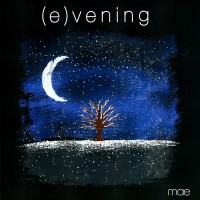
Mae: (E)vening

This may well be the last collection of music that Mae ever records.

Think about that, Mae fans.  Here is a band that's been part of your life for years, and this EP might be the last thing they ever say to you.  As sobering a thought as that is, it's the right mindset to listen to (E)vening.  This EP is certainly a departure from the first two "seasonal" EPs, and in just a year and a half, we've come a long way from the ebullient exaltation that the beginning of the day offered.

Instead, (E)vening plays out like a giant catharsis, the emotional capstone to Mae's oeuvre.  The mood is reflective and serene throughout, consistently recalling the past, asking us to remember--or not giving us words at all, just making us think.  Even the most ostensibly upbeat and energetic track on the EP, "I Just Needed You to Know," is filled with questions of "do you remember?", and the only other two tracks on (E)vening that have words are even more nostalgic.

The EP has either 7 or 9 tracks, depending on how you look at it; three tracks are movements of one larger piano piece, the appropriately named "Seasons," that forms the focus of the EP.  Counting "Seasons," over half of the album is instrumental, and nearly all of that is piano.  It's like a victory lap for Rob Sweitzer, newly reunited to Mae for this EP and the Goodbye, Goodnight tour; it's obvious that Mae is glad to have him back, and the longtime fans certainly are too.

And in the end, Mae's longtime fans are exactly the audience for (E)vening.  It's not a collection of music that's going to get much if any play outside of the most dedicated fans of the band.  Nor is it a collection of music that's really going to get you excited about Mae if you heard it in isolation; it's certainly not the rock-out Mae of "Someone Else's Arms".  But it is gorgeous and introspective and in many respects exactly the right album for Mae to leave us with.


Currently listening: "Golly Sandra," Eisley

Mae: Goodbye, Goodnight Tour

This was a concert five and a half years in the making.

(That's longer than Isoceleria has been around!)

Ever since March 2005, The Everglow has been at or very near the top of my list of favorite albums.  It's nearly impossible to describe why--I've tried in the past and failed miserably every time.  But it probably has something to do with it being a really, really good album.  The musicianship is outstanding, the scale and execution of the concept are impressive, and the emotion that drives the album (avoiding both traps of being either hipster-ironic-tongue-in-cheek or over-produced-insincere) is genuine.  It definitely has something to do with some personal factors that are even more difficult to express.

Yet, despite my five-year love affair with The Everglow, I never managed to see Mae in concert until last Wednesday.  Mae has been back and forth with their releases since then, but nothing could erase the brilliance of The Everglow, and their enthusiasm and sincerity always seemed like they would produce an excellent live show.  And somehow, I've managed to miss them in concert despite adoring their music since I've known what a concert was--not for lack of trying.

When I found out that Mae was coming to Bottom of the Hill, which has recently become my very favorite place in the Bay area to see a concert, there was no question that I'd be at that concert.  And when Mae started throwing around phrases like "Goodbye, Goodnight," suggesting that this might be their last tour as a band, I jump in it.

Opening were Windsor Drive and Terrible Things, both of which turned out to be reasonable openers for Mae.  Windsor Drive was a fine complement to Mae's gentler, acoustic side, while Terrible Things more closely matched rocker-Mae (or closer still, Anberlin).  I hadn't heard of either band prior to the concert, but seeing both bands turned out to be worth my time, something that can't necessarily be said of every opener out there.

Mae themselves turned out to be everything I've been waiting five and a half years for them to be.  Despite some fluctuation and unfortunate drama with their personnel over the last year or two, Goodbye, Goodnight Mae is Everglow Mae--and that's the only way we fans would have had it.  They were enthusiastic, energetic, and obviously grateful to their fans (to the point of taking pictures of the audience after the concert), and they sounded remarkably cohesive for having not really toured together as a band for years.

While halfway a tour in support of the (E)vening EP, Mae's set list featured songs from every album and every era of their music.  The concert was unsurprisingly Everglow-heavy--apparently there are many, many Mae fans out there who feel the same way I do about that album--with about half to two thirds of the album getting played.  We also got to hear a little over half of Destination: Beautiful, the band's first album, from all the way back in 2003.  The rest of the concert was a smattering of Singularity, the seasonal EP's, and a couple of B-sides/rarities.

Prior to the concert, I made a list of ten songs, saying if Mae was going to play just ten songs for me, I'd want it to be these ten.  I hit seven out of ten: "Embers and Envelopes" and "Sun" from Destination: Beautiful and "Suspension," "Someone Else's Arms," "The Ocean," "Breakdown," and "Mistakes We Knew We Were Making" from The Everglow.  They left off "All Deliberate Speed" from D:B (which surprised me a little, because I think it's a well-known song, and it features a sing-along-ready chorus) and "The Fisherman Song" and "Boomerang/Two Birds" from (M)orning (which surprised me less, since they're both sort of niche songs that undoubtedly took center stage at the Morning tour last year).

Hands down, the best chunk of the concert was the encore.  The main body of the concert had somehow gone by without either "Sun" or "Someone Else's Arms," so during the "let's clap for five minutes even though we all know the show isn't really over" session, I turned to a friend and asked "There's no way Mae play a concert and doesn't play 'Sun,' right?"  A minute later, I got my wish, as Dave Elkins climbed back on stage with an electric-acoustic guitar, smiled, and said "Here's an old one."

As I stood there thinking the concert couldn't get any better, the entire band rejoined Elkins on the stage and launched into the piano-heavy "We're So Far Away".  It's a nice track, and I'm not about to turn down anything from The Everglow, but it seems an odd track to include by itself in a time-constrained encore situation.  But just as it does on the album, the concert "We're So Far Away" was really just a buildup to the sheer exuberance of "Someone Else's Arms," and there was no better way that Mae could have ended the show.

Mae gave its fans more than an hour and a half of music that night, and it was an excellent capstone to the five and a half years of music they've given me already.  If Mae decides to keep on making music after this tour is finished, I'll of course eagerly await it.  But if not, it was a fitting way to say goodbye and goodnight.


Currently listening: "Mass Romantic," the New Pornographers

Thursday, November 11, 2010

The Way of Kings

Epic fantasy authors probably hate comparisons to the Wheel of Time--and Brandon Sanderson is probably more sensitive to those comparisons than any of them as the author who had the monumental task of finishing out the Wheel of Time. But let's face it: the Wheel of Time is our generation's defining fantasy epic, and it's a testament to that series' longevity and influence that every fantasy series from 1990 through 2010 (and probably beyond) is going to be compared to it.  Sanderson's new epic series, the Stormlight Archive, is no exception.

The most striking difference when comparing the Stormlight Archive (or at least The Way of Kings) to the Wheel of Time is that the central conflicts of the two settings are designed very differently.  From halfway through the first Wheel book, we know exactly what the central conflict is: the forces of the Dragon Reborn (the good guys) against the forces of the Dark One (the bad guys).  There are a lot of characters who can rightly be considered protagonists, but it's obvious from the first chapter of the first book that the central one, the most important character to the story, is Rand al'Thor, the Dragon Reborn.  And there are a lot of characters who can rightly be considered antagonists, but it's obvious from the flavor text to the prologue (not to mention his big-bad-guy name) that the big bad guy is the Dark One.

In contrast, after a book of Stormlight, we don't know who or what fills the role of central conflict, primary protagonist, or primary antagonist.  In that regard, Stormlight is closer to emulating George RR Martin's A Song of Ice and Fire, which deliberately avoids the distinction of "main character"/"big bad guy" (or really even of protagonist/antagonist at all), and whose central conflict is basically a tapestry of a bunch of smaller conflicts that all happen to influence each other.

But that's not necessarily an apt comparison either.  Stormlight, at least after one book, seems to have a central conflict--we just can't necessarily comprehend what it is yet.  It has definite protagonists in the forms of Kaladin, Shallan, and Dalinar, though we don't know which (if any) of them is the "most important".  And a conflict as climactic and apocalyptic as what's been hinted at has to have an antagonist behind it, but after the first book, we have literally no idea who that is, much less what its motives and intentions are.

It's not immediately clear whether that ambiguity is a good or bad thing, but in truth it's likely a little of both.  It's nice that we don't know exactly where the book is headed, so we have to remain invested in every character and every story arc.  But it's also a little disconcerting that there's no apparent structure or destination in mind.  Worse, even high-concept epics that do have clear destinations don't exactly have great track records of completion.

To what extent does Brandon Sanderson actually intend to finish the Stormlight Archive?  It's a cynical thing to wonder, but that cynicism is unfortunately justified in comparison to other contemporary epic fantasy series.  George RR Martin hasn't made any apparent progress on A Song of Ice and Fire in the last five years.  Terry Goodkind did finish the Sword of Truth series, but only after many more books than were probably necessary and enough shifts in setting, supporting characters, antagonist, and motivating conflict to make it seem like three or four series half strung together.  And Robert Jordan actually died before he could finish the Wheel of Time.  Obviously it's a tragedy, but it serves as a reminder that even the best laid plans of fantasy authors don't always come to fruition.

That said, the Stormlight Archive has a better-than-average change of reaching its ending.  Brandon Sanderson is relatively young (middle 30s) and seems to be in good health.  The series is slated to be comprised of ten books, and ten is such an important number in the setting that I honestly believe Sanderson will end the series at ten books.  That's not to say there won't be bloat in the later books as Sanderson (inevitably) realizes he isn't telling the story as quickly as he needs to, but the promise of a logical stopping point in the series makes its finish seem more likely.

Even more convincingly, Sanderson has progressed incredibly well in his pursuit to wrap up the Wheel of Time.  The first of Sanderson's contributions to the Wheel of Time books was scheduled to release in 2009, and we got it in November 2009.  The second was supposed to release before the end of 2010, and we got it in November 2010.  The Wheel of Time books are not small undertakings--neither in terms of pages nor the expectations of demanding fans--but Sanderson's demonstrated ability to deliver a large volume of high quality work while still maintaining a schedule is the best evidence that Stormlight will eventually reach a proper and timely conclusion.

The bigger question, of course, is do we want to read the Stormlight Archive all the way to its conclusion?  At least after The Way of Kings, the answer is mostly yes.  It's obvious that Sanderson has sunk an incredible amount of time and effort into world-building, and his effort has paid off.  I'm already invested in the setting, and I definitely want to know what's going on.  The characters are mostly good too, though at this point I think I'm more invested in the mythology than the characters.  It's a dangerous road to walk--remember how many Lost fans were disappointed when they didn't realize until too late that Lost was about the characters, not the mythology--but I don't doubt the characters will grow even more interesting as the series progresses and we've spent some time with them.

The Way of Kings has only three centrally important characters, and they're all intriguing enough to keep me reading about them.  The Kaladin chapters are generally the best, as the character development in them is both believable and interesting, but Kaladin's backstory is far too lengthy compared to the insight it gives to his character.

In fact, the biggest criticism I can give The Way of Kings is that it's too long.  The one-thousand page mark in books is sort of like the three-hour mark in movies: you better have something truly extraordinary going on, or you're not holding my attention anymore.  Way probably could have cut down to two-thirds or three-quarters its size and still been all right.  And granted, it necessarily has its share of expository elements that won't need to burden future books, important if pedantic details like explaining how the monetary system works, or noting the cultural significance of a certain style of clothing.

To come full circle and close with another Wheel of Time comparison, many readers have already wondered if Sanderson will develop "Jordanitis"--with some complaining that he already has--that is, devoting so much of the book to description and detail that very little ends up happening.  Honestly, he very well may.  But part of the reason that the readers of the Wheel of Time grew so frustrated with Robert Jordan was that we had to wait indefinitely for each book, never knowing how long it was going to take to hear more of the story.  So when a new volume was released that didn't actually tell any of the story, it was more than a little disheartening.

Where Sanderson seems to have surpassed Jordan, at least so far, is in his discipline.  As long as Brandon Sanderson remains vigilant about consistently telling his story, we will read it, even if it takes ten thousand pages over fifteen years.


Currently listening: (E)vening, Mae (review to follow)

Wednesday, October 27, 2010

The Age of Adz: Album and Concert

Sufjan Stevens' proclamation of "electronica influence" for his newest album didn't exactly instill much confidence in many fans.  We want the solemn resilience of Michigan, the understated reverence of Seven Swans, the sincere exuberance of Illinois.  The very mention of "electronic" from an artist who'd build an indie empire out of acoustic, folk, and orchestral modalities just screams "now it is time for my seventh album and I am going to do some crazy experiments with it!"  And experiments go oft awry.

But hey, in 2003, if you'd asked me what I thought of a Ben Gibbard-"electronica" collaboration, I would have said that would be a bad idea too.  And I would have been very, very wrong.  So, bring on Age of Adz and all its electronic glory.

You can tell just by looking the cover that we're not getting the joyous proclamation of America that the Fifty States Project gave us.  Instead, it's raw emotion, something that Stevens dreamed up under some combination of influences including his disenchantment with his earlier, lyrical approach to songwriting; his battle with some mysterious disease over the last year or two; and the post-apocalyptic, schizophrenic art of Royal Robertson.  It's Robertson's treatment of the End of Days that colors a lot of the aesthetic on the album, including some downright "spacey" sound effects that would have seemed miserably out of place on any of Stevens' earlier records (even when the songs were about UFO's.)

At first, I was admittedly Not A Fan of Age of Adz.  I was such a massive fan of Stevens' earlier work--Illinois in particular is easily one of my top ten favorite albums--that any drastic departure from his earlier aesthetic was a change I just did not want to deal with.  Besides, when that change is to intentionally introduce dissonances and elements that make the music sound less good, I'm immediately biased against it.  (When Mae tried it, it didn't work out too well for them either.)

Then again, I was admittedly Not A Fan of All Delighted People, Stevens' ambush of an EP earlier this year... but I warmed up to it after only two or three listens.  In much the same way, I'm warming up to Age of Adz slowly but surely.  The thing to realize here is that Stevens' music is and always has been excellent because he's a master at arranging sound.  Whether that's the banjos and guitars of Michigan, the orchestral explosion of Illinois, or even the blips and buzzes of Age of Adz, Stevens is incredibly good at taking several different sorts of sound at once and putting them all together in a way that makes sense.

Age does have some standout tracks.  "Vesuvius," especially, has quickly become one of my favorite Sufjan Stevens songs ever.  Daring to use volcano imagery, the song begins slowly and quietly before erupting into an incredibly powerful message of following your heart and doing what you feel is right even in the face of dire consequences.  The title track "The Age of Adz," "I Walked," and "Too Much," are all quite good as well.  I'm less a fan of "Get Real Get Right" and "I Want to Be Well," which strike me as experiment for the sake of experimentation rather than for the sake of making interesting and innovative music.  But all in all, Age of Adz has good stuff on it if you know where to look.

So when I had the opportunity to see Sufjan Stevens live, even though I knew most of his material would be from Age, I figured I liked enough of the album that I'd be able to appreciate the live show.  And I'm glad I went.  Stevens doesn't exactly have the reputation for being conventional, and that showed as soon as he took stage--with a dozen people.  Among his retinue were two drummers, two trombone players, a handful of multi-instrumentalists, and two women who serves as both backup vocalists and streamer-waving dancers.  On top of all of that, a video screen behind the stage showed various cosmic and apocalyptic scenes taken from or inspired by Royal Robertson's work roughly synced to the music.  Spectacle is an important reason to see a live show, and Stevens absolutely nails it.

It's true that I'm feeling better about both All Delighted People and The Age of Adz than when I first heard either--and seeing songs from both live certainly helped me appreciate both better.  But it was still a little disappointing when all of Stevens' material save two songs came from either the EP or the recent album.  Of course, Sufjan played "Chicago"--even though this is the single most recognizable artifact of an era that he's clearly trying to distance himself from, there's no way Sufjan Stevens plays a concert and the fans let him get away with not playing "Chicago".  Stevens' encore started with the opening track from Illinois, which contains "UFO" and (in true circa-2005 Sufjan Stevens style) about ten other words, and it's a nice piano piece, but I would have liked even more Illinois throughout the show.

Though seeing most of the songs live helped me appreciate them better, I'm still not convinced that "Impossible Soul" is any good at all.  It's an oblique, 25-minute sprawl that closes the album, which Stevens referred (potentially tongue-in-cheek) to as his "magnum opus".  It's the potential tongue-in-cheek nature of this entire song that bothers me.  For a few miserable minutes in the middle of it, Stevens decides it's cool to use auto-tune.  This could be for one of two reasons: either he thinks this effect actually sounds good or he's going for a supremely hipster irony in smugly referencing a pop music phenomenon.  The first reason is simply incorrect; the second is actually more dangerous because it represents a departure from the deeply emotional sincerity we've come to expect from Sufjan Stevens.

Much like a metaphor for the entire album, "Impossible Soul" has its good parts, its parts I could do without, and its parts I can't really stand to listen to.  The Age of Adz is something I can get used to--but that means it's strictly worse than Illinois, which was utterly brilliant the first time I listened to it and has remained equally as utterly brilliant the dozens of times I've listened to it since.  As I've said before, Sufjan Stevens will not and should not be an artist who re-releases Illinois six times, puts his feet up on his desk, and sips cognac.  But we wouldn't mind it if he decided to release, say, Arkansas instead of Some Galaxy Following a Supernova.


Currently listening: "Adlai Stevenson", Sufjan Stevens

Friday, October 15, 2010

Videogame Best Hits List

This is probably the best viral facebook survey I've seen in years.

The rules:  Don't take too long to think about it.  List fifteen video games that will always stick with you.  List the first fifteen you can recall in no more than fifteen minutes.  Tag fifteen friends, including me, because I'm interested in seeing what games my friends choose.  (To do this, go to your Notes tab on your profile page, paste rules in a new note, cast your fifteen picks, and tag people in the note.)

1.  Earthbound is and will always be my favorite video game of all time.  It's not the first game I played or the first one I enjoyed, and I won't even make the claim that it's the best video game ever made, but it's the first one I "discovered" (this sort of thing is important to a quasi-hipster), and it's the only one that's ever made a real impact on my life.  From 1995 until 2001, Earthbound transcended being a video game for me, and it became a way of life.  Where today, most of my creative output happens in my blog, during those years, it happened through Earthbound: making websites, writing fan fiction, discussing the game on various fansites like Starmen.net.  Earthbound has a particular culture about it--its quirky, almost trippy, aesthetic; its hilarious understated humor; its brilliant leitmotifs on its John Lennon-inspired soundtrack--all of these things make Earthbound an absolute masterpiece of a video game.

2.  The defining feature of Chrono Trigger is that it tells a linear story through a nonlinear timeline--sometimes you need to go forward in time to learn more; sometimes you need to go backwards.  And the true genius of the game doesn't reveal itself until you've already played through it once, when you can play through a second time and skip to the ending at any point to see how it changes.  It's one the few RPGs with legitimate replay value, and its reasonable approach time travel was well ahead of its time.

3.  Final Fantasy X is one of the only games that I characterize more by the number of things I didn't do (exactly two) than the number of things I did.  It is the crowning achievement in the Final Fantasy series.  VI was fantastic (and on this list), VII was truly revolutionary (and on this list), but there is no (and may never be a) better Final Fantasy game than X.  Sure, it introduced voice acting, had some innovative mechanics, and looked absolutely beautiful for its time... but the reason that X was so good was because its setting was impeccable.  It's the best example I've ever seen of a game where every detail--the game mechanics, the plot, the locations, and even the clothes the characters wear--reinforce the setting and make playing in it incredibly rewarding.

4.  Morrowind/Oblivion (/Tribunal/Bloodmoon/Knights of the Nine/Shivering Isles) are all grouped together on my list.  I know that they're technically at least two games, but they're similar in that they're set in the same universe, they're incredibly open-ended, they have a collective soundtrack that is one of the best of any video game ever, their style and tone are similar... and I sunk at least 120 hours into both of them.  They succeeded on different accounts--Oblivion was more balanced, more polished ("better produced" to use a music analogy), and better looking; Morrowind had slightly more to do and had a better story.  They're both among the greatest PC games ever, and well worth playing if you don't mind being antisocial for an entire month.

5.  The Legend of Zelda: The Ocarina of Time was the definitive game for the Nintendo 64.  I'll argue that Twilight Princess was actually the superior Zelda game, but Ocarina of Time did so much for the series and for 3D gaming in general that it's tough to pass up.

6.  Final Fantasy VI was the first Final Fantasy game I played, and it got me hooked, not only on the series, but also on JRPGs as a subgenre.  It's easily the most nonlinear of the Final Fantasy games, which makes it a lot of fun, and it probably features the best soundtrack in the series as well.

7.  I expect some resistance on this one, but I think Grand Theft Auto: Vice City is the best Grand Theft Auto game.  (Full disclosure: I haven't finished IV yet, but a few hours in, it's quite good.)  It was the first to feature voice acting from the player character and the first to include real-world music from well-known bands.  It was entirely better than GTA III, because it took everything good about it and improved it, but it avoided the trap of overextending like San Andreas.

8.  I'm not by and large a strategy fan, but I'd be remiss not to include Rise of Nations on this list.  I first played it in spring 2003, after I'd taken World History in high school (pretty much my favorite class ever), so I was on a real history kick around that time.  It implemented lots of innovative features like permanent cities and territory, it had enormous success in merging conventional RTS battles and world-domination grand strategy, and the expansion added some both fun and detailed re-interpretations of historical campaigns.

9.  Super Metroid is an absolutely classic platformer, most notable to me for being part of my friend Nicholas's self-proclaimed "best day ever".  My best friend through elementary and middle school, Nicholas's best day ever included seeing Good Burger in the theater and getting a Tamagotchi.  (Hello 1997.)  And it was the first time either of us completed Super Metroid in under the three hours necessary to see the "best ending".  (It was a team effort--I planned a course, and Nick executed it.)  Prior to that day, the goal had seemed nearly insurmountable to our ten-year-old selves.

10. Super Mario World was the very first video game I ever played and was therefore responsible for spawning one of my biggest hobbies over the past fifteen-plus years.  It helped to forge my friendship with Nicholas, and a decade later I remember playing through it as being one of the most fun things I did with my high school girlfriend Jenny (except for maybe discovering Curb Your Enthusiasm).

11.  Even though none of us had ever touched a skateboard in our lives, my friends and I spend an irrational amount of time playing Tony Hawk's Pro Skater 2 circa 2001.  (The game did spawn a short skateboard career for Nicholas, which was sadly cut short by injury.)  The soundtrack is atrocious (except in a hipster-ironic sense) and the skate culture is probably the furthest thing imaginable from my personal aesthetic, but how could you not love spelling inappropriate things in "horse" mode and pulling off the 900?

12.  GoldenEye 007 was basically the de facto go-to party game in the late 1990s.  It (along with its spiritual successor, Perfect Dark) was probably the only shooter I've ever truly enjoyed... and man, was it fun karate chopping, Moonraker lasering, and throwing-knifing all your friends.

13.  There is at least a plurality consensus among JRPG fans that Final Fantasy VII is the best in the series, and despite my mentions of X's beautiful story and setting (or VI's free-wheeling self-determination), I haven't won too many people over.  They have a point--VII pioneered 3D for console RPGs, plus it has some iconic characters and settings, the single best piece of music on any video game soundtrack ("One Winged Angel," of course), and enough secrets and side quests to occupy you for quite a while.  To add a personal note, this game is what convinced me to but a Playstation.

14.  Donkey Kong Country might not have made to this list had I not watched my friend Tom play about a quarter of it a few months ago.  I realized that, fifteen years after I'd played the game for the first time, I still instinctively know the first twelve or so stages backwards and forwards: optimal paths, locations of extra lives, how to get to secret areas.  That brought a flood of nostalgia, and I remembered just how much I'd enjoyed it back in the day.

15.  Admit it: you played Pokemon.  You only started playing because it was a fad, and you stopped playing when it became passe, but for the year or two when it was socially encouraged to play Pokemon, you had a hell of a good time.  To this day, I can't name a game that has taken such a creative spin on the RPG idea, nor one that has combined single-player and multiplayer modes so effectively.  In fact, looking back on it, you'd be hard-pressed to convince me that Pokemon was not one of the great achievements in video game design history--it was a social gaming experience five years before we knew what social media was.


Currently listening: "Sweet Talk, Sweet Talk", the New Pornographers

Wednesday, October 13, 2010

Letter in response to Blum Center protests

One of the sources of funding for my research is the Blum Center, an organization devoted to helping the quality of life in some of the world's poorest places.  Blum Hall, where the Center is based on campus, had its grand opening last week, and the point was to show the rest of campus all the good things that research funded by the Blum Center is doing.  But a bunch of asshats showed up to protest, because apparently that's what you do for an organization that's trying to bring cooking stoves to Darfur and clean water to the slums of Mumbai.  Here's my letter to the editor of the Daily Cal that expresses that same sentiment but much more professionally.


This letter is in response to the protests that occurred during the grand opening of Richard C. Blum Hall, the campus home of the Blum Center for Developing Economies.  The grand opening, last Friday, October 8, showcased some of the research that is supported by the Blum Center and featured remarks from Chancellor Birgenau, Richard Blum, Senator Dianne Feinstein, and former Secretary of State George Shultz.  It took place amidst several protests that bore messages such as "Blum, don't privatize UC" and "end poverty here first."  These protests were factually inaccurate on some grounds and logically misguided on others.

First, accepting research grants from private entities (whether corporations, individuals, or charitable organizations) in no way constitutes "privatization" of the University.  In 2008, the University accepted $120 million in research funding from private-sector or non-profit sources.  That funding has allowed the University to investigate topics as diverse as stem cells, robotics, and economic policy.  And it has enabled the University to become a world leader in biofuels and other renewable energy research.  Yet, Cal has remained a public institution and has consistently been recognized as the best public university in the country.

Second, the Blum Center's mission is to fight poverty in the developing world; construing this mission as a lack of concern for domestic poverty is a straw man fallacy. Roughly 40 million Americans live in poverty, and their situation is a serious one.  But this poverty is a fundamentally different challenge from the one that the Blum Center aims to address.  For example, among the eight million people living in the slums of Mumbai, many have no access to sanitary water; the Blum Center is funding research to develop viable and efficient solutions for ensuring a clean water supply.  As problems that require both scientific excellence and a commitment to global engagement, these are problems that the University of California is uniquely poised to solve.

Unfortunately, as Mr. Blum explained the goals of the Center to its researchers, staff, and students, he was interrupted by a loud protest.  To paraphrase Mr. Blum, apparently those involved with the protest would rather us not work toward improving the quality of life in the developing world.

In addition to interrupting Mr. Blum's speech, the protests closed an afternoon poster session to the public.  The poster session was originally intended to be an open house.  Ironically, the actions of the protesters did more to "privatize" the University's mission than did any donation from Mr. Blum.  By preventing UC students, faculty, and staff from attending this event, the protesters denied the entire UC community a chance to engage the Blum Center-supported researchers and support their creativity and social consciousness.

Berkeley has a strong tradition of free speech, often including protests, and that tradition ought to be maintained.  Protest injustices, protest unethical behavior, protest barriers that stand in the way of the University's goals.  Do not protest those of us who are trying to use our talents and our resources to make a positive change in the world.


Currently listening: "Your Hands (Together)", the New Pornographers

Tuesday, October 05, 2010

3-Sentence Reviews: September 2010 Television (part 2)

Continued from part 1...

The Big Bang Theory is the only conventional laugh-track sitcom I've liked since Seinfeld, and it's one that anybody who went to a tech-oriented school or had a lot of science-major friends will be able to appreciate.  Its fourth season is as strong as ever, and the show is on a definite upswing now that it's gotten the Leonard/Penny romance out of its system.  We're still ever closer to getting "The Sheldon Show," where everyone else is basically a supporting character, but that almost doesn't matter given how good Jim Parsons is.

I have a strange criticism of $#*! My Dad Says (pronounced "bleep my dad says"), and it has nothing to do with its unorthodox inspiration.   Instead, I don't like this show because it's nowhere near offensive enough.  The entire entertainment from the Twitter feed was the titular dad's vulgarity, bigotry, self-righteousness, and iconoclasm; at 8:30 pm on broadcast television (instead of a later timeslot or a cable channel), it can't feel anything but watered down.

While it really should have ended a year or two ago, The Office really better end after this season when Steve Carell departs.  The seventh season so far isn't as strong as the first three or four, but at least it has avoided the miserable drama of the most recent couple.  BJ Novak is still frustratingly underused, and the "Michael irrationally despises Toby" story/joke is not nearly as funny as the writers think it is, but new guy Gabe fits in perfectly, and the Dwight/Pam "we are stuck" moment was classic, hilarious, brilliant Office.

I probably would never have watched Outsourced had I not stumbled upon (and generally liked) the film of the same name (and inspiration for the television show).  This show illustrates how difficult the movie to television conversion is: the movie had about 100 interesting minutes, and when it had used them up, it ended; even though we're only on episode 2 of presumably 20-25, we've already seen 43 minutes of content from the show, and I honestly have no idea where the show might go after its fourth or fifth episode.  Still, I appreciate the change from love story to workplace comedy, and I like that the show isn't trying to make some grand statement on US/India relations, just pointing out that things one culture takes for granted are laughably bizarre to another.

In its last three seasons, The Mentalist has quietly emerged as the best procedural on television.  There's just enough House-esque snarkiness--but less abstract pontificating on the nature of lying and a whole lot less unnecessary drama with the eponymous character dating his by-the-book female boss.  Better yet, the series has finally hit its stride, including just enough Red John episodes to keep the overall arc moving forward but not so many that we get tired of it.

Alone among reality shows, The Amazing Race has redeeming value: the chance to be educated about all sorts of awesome things and places all over the world.  It's almost enough to make me want to do The Amazing Race... then I look at the ridiculous things the contestants are made to do, and I realize I really do not want to do The Amazing Race.  So far, I don't have a team I'm strongly rooting for--but then again I don't really hate many of the teams, so this season seems like it should be especially watchable.


Currently listening: "High Art, Local News", The New Pornographers

Thursday, September 30, 2010

3-Sentence Reviews: September 2010 Television (part 1)

It's that time again: television premiere season!

The ultimate irony of House is that as it's become more ostensibly character-driven, the characters have become less interesting; Thirteen's "I have Huntington's; should I stay or should I go?" two-dimensionality is a good example.  But the nail in the coffin for character-driven House, the premiere episode of season 7, and potentially for the series as a whole is "Huddy": watch that miserable excuse for a scene where House opens the champagne bottle, and ask yourself if it is ever okay for House to smile with genuine affection and happiness.  On a more positive note, the season's second episode was very strong, giving me hope that the writers have figured out how to balance "Huddy" with the House that we actually want to watch.

When you brand your show as "24 meets Lost," as The Event has done, you're not only marketing your show directly to me, you're setting some impossibly high standards as you compare yourself to my two favorite shows of the last decade.  I'm enjoying it so far: I actually like the copious nonlinearity, though I appreciate that it won't be everyone's cup of tea, and I'm not sure I needed the explicit confirmation of aliens as early as episode 2, but I'm optimistic that I'll warm up to it.  The biggest stumbling block I foresee for this show is that it could forget the Lost paradigm of characters first, mythology second.

I've never been particularly excited about theme-tribe seasons of Survivor, because they mostly end up as gimmicks.  In that one season where they divided tribes by race, it's not like we actually learned anything about racial dynamics or differential ability; in Fans vs. Favorites, we never did get a conclusive answer about whether Survivor novices or veterans are better at the game; so in this edition, I don't expect any grand revelations about old people or young people being better at Survivor.  But there are enough big personalities and potentials for explosive conflicts that I think it'll be a great season anyway.

Some seasons of Hell's Kitchen are good because the contestants are legitimately good chefs.  Others are good because they're terrible chefs.  This one looks to be good because all the contestants are complete morons, and there's no telling how much crap they're about to take from Ramsay because of it.

Criminal Minds continues to be criminally underrated by my demographic.  It's one of the best procedurals on television today.  In its sixth season, it's still excellent, and the psychological chess matches are only getting more intense.


Check back soon for shows from the rest of the week!


Currently listening: "The Bleeding Heart Show," The New Pornographers

Tuesday, September 28, 2010

Extra Lives

Paste Magazine, which to my dismay recently suspended its print run, isn't just an indie music rag--it's an indie book/game/movie rag too!  In their June/July issue, they reviewed an interesting-sounding book called Extra Lives: Why Video Games Matter.  I figured it had a colon in the title, so it had to be good, and in an overwhelming display of whiteness, I decided to check it out from the library.

In it, Tom Bissell recounts his experiences playing ten or so video games, giving his reaction to each and interspersing interviews with game designers, critics, and other video-game luminaries.  Finally, he tries to relate his experience with each game to some sort of social convention or human emotion, explaining why the game succeeds or fails as art.

Bissell's tales of playing through each game are by far the best parts of the book, especially if you're a gamer, and even more so if you've played the game he's discussing.  These anecdotes are hilarious, accurate, and instantly relatable to anyone who's sunk triple-digit hours into Oblivion or suffered the misfortune of listening to its dialog.

The book is weaker when it's trying to make connections or prove a point.  Bissell can't quite decide if he wants to apologize for his love of video games, defend it, or just revel in its geeky glory.  In truth, he takes each of those three positions depending on his audience--the same game he praises for being innovative and absorbing, he starts criticizing as soon as his girlfriend does too--and he loses some credibility to that constant change of mood.

About the only other flaw in the book is its style.  Bissell apparently has not learned the writer's lesson never to use a million-dollar word when a ten-dollar one will do (or however Strunk and White phrase it).  He has a propensity for inserting Latin phrases just to prove that he knows them, and his sometimes-creative, sometimes-baffling bending of the conventional usage of words makes me wonder if he's writing for gamers or for other writers.

Although Bissell at times tries too hard to suck up to the smugness of the art crowd, it's clear from reading his stories that he's a gamer at heart.  If you are too, you will certainly appreciate how Bissell memorializes your favorite games and sheds some light on their conception and production.


Currently listening: "Jackie, Dressed in Cobras", The New Pornographers

Monday, September 20, 2010

Three Dudes at a Paramore Concert

Admit it: however rational, respectable, and artistic the rest of your musical taste is, you have that one musical guilty pleasure hanging out on your iPod.  Disco?  Kylie Minogue?  50 Cent?  I won't judge--I can't--because I too have a musical guilty pleasure.  It's pop-punk, in all its shapes and sizes, but in particular the angsty, high-school, half-assed-rebellious glory that is Paramore.

And I'll be the first to admit it: Paramore's music is not really that special.  Their biggest hit, "Misery Business," is about as lyrically creative as an emo fifteen-year-old's Xanga account circa 2003.  Their electrically driven brand of pop-punk hasn't been original since Green Day gave us Dookie in 1994 (back when they were still good and hadn't started whining about politics).  And they only know how to write a handful of musical tempos and dynamics: loud and fast, loud and sort of fast, quieter and really slow.

Paramore transcends that heap of mediocrity to become just plain good in a way that's difficult to express or even make sense of.  They're credible musicians, if not necessarily virtuosos.  Their songs are infectiously catchy in a way that makes you want to listen to them over and over again, even though you know you're not going to get anything more out of them the second (or seventh... consecutive) time.  And Hayley Williams, the group's feisty and fire-haired girl singer is legitimately talented.

In fact, it's Hayley (yes, apparently she and I are on a first-name basis) that gives the band any distinction at all.  Without her, they'd be a competent but forgettable addition to the middle-2000s slate of pop-punk bands and entirely overshadowed by the likes of Fall Out Boy, Motion City Soundtrack, Sum 41... and just about everyone else who was making music last decade.  It's no secret that I like rock music with girl singers--in fact, I have a Pandora station called Awesome Girl Singer Stuff that prominently features Paramore (also Eisley, Vedera, Rilo Kiley, and a handful of Scottish female singer/songwriters).  It's a nice aesthetic, and it gives me an instant celebrity crush, so what's not to like?

And it was mainly the promise of seeing what sort of antics that Hayley would come up with live that got me excited about going to see Paramore in concert.  One day in May, I stumbled upon a television commercial advertising their coming tour (try finding a television commercial proclaiming the Decemberists coming to town) and I knew I'd be going to that show.  I half-jokingly floated the idea to a few friends... and four months later, there we were in downtown San Jose, three twentysomething dudes going to see Paramore in concert.  Better yet, although I was genuinely excited about seeing the band, I could still play it off as hipster irony if anyone really pressed me on it.

Nothing about the concert disappointed.  From before we even parked, we knew that our anticipation of the demographic was hilariously accurate: teenagers abounded, with about one in three concertgoers looking to be a seventeen-year-old girl or her barely-fighting-the-scowl boyfriend (who was probably secretly into the music anyway).  In true signs of the times, the massive screen above the stage showed closeups of the band during the show (which is incredibly helpful in such a massive venue as the HP Pavilion), and during the set changes, it was filled with "<3"-laden texts from high schoolers.  (Our plan, fueled by a handful of beers, to start trolling the text board with messages touting the superiority of Berkeley to their high school, never quite came to pass.)  And once Paramore actually started playing, an alarmingly piercing shriek resounded from the audience, many members of which knew every single word of everything Paramore played.

The first surprise at the concert, a pleasant one, was the sheer amount of music we got to experience.  The tickets said 6:30, but we weren't sure if that was the door time or the show time, so we arrived fashionably late at 7:30... only to find ourselves in the middle of the second of three opening bands.  Usually, "second of three opening bands" spells certain obscure doom, but in Paramore's case, they'd managed to bring along New Found Glory, a band that everyone has at least heard of.  The third opener, in a slight breach of concert protocol was the lesser-known Tegan and Sara.

I've heard about three songs each by both New Found Glory and Tegan and Sara, and I find concerts a miserable venue to learn new music, but both bands put on the sort of performance that if I were a fan, I would have enjoyed immensely.  (The best thing that Tegan and Sara did was be dryly hilarious in a way that the teenage audience didn't necessarily pick up on.  The best example was when they proclaimed that Paramore would "rock the shit out of this place," an amusingly inappropriate sentiment to deliver to a bunch of fifteen-year-olds.)

Paramore themselves came on at roughly 10:00 and played at least a solid hour of music.  Minus set changes, that meant I got three and a half hours of music, and I would have gotten another hour or so if I'd bothered to show up on time.  Unsurprisingly, the set list was weighted toward more recent material--they played nearly all of their 2009 album Brand New Eyes, a handful of the better-known tracks from 2007's Riot, and a song or two from their freshman All We Know is Falling, released in 2005.  I have a new-found appreciation for both "Emergency" and "Pressure" (from Falling)--it's amazing what six years of touring and maturation do for your sound.  The album cuts of both songs almost sounded like lo-fi garage rock in comparison to their live performances.  Unfortunately, I couldn't gain the same respect for tracks like "Misguided Ghosts" and "Playing God" (from Brand New Eyes), which are still boring even live in concert... and "The Only Exception" (also from Eyes) is still boring and infuriatingly angsty.

Paramore played a few acoustic versions of some of their songs, which I could take or leave--though I understand the necessity for slowing the tempo and lowering the volume in the middle of a high-intensity show.  They only played one cover, and it was Hayley singing a country song.  Normally, I like covers, especially if they're of super-obscure songs that I happen to know.  Not being the world's biggest country fan, I couldn't tell you if the one Hayley sang is well-known or not--but it turns out she's a pretty darn good country vocalist.  I said so to one of the guys I was with during the show, and he admitted that "she's a pretty darn good vocalist in general."

Yet another part of the concert that didn't disappoint was the appearance of several of the top concert don'ts.  Six-foot-three guy, totem pole couple, and spilling your beer all happened.  Elbowing your way to the front and "you mind if I squeeze in here?" probably did too, but in our advanced age, it wasn't like we were rocking out on the floor next to all the really enthusiastic fans.  The good thing about going to a concert populated with a bunch of only-mildly-rebellious high schoolers?  No weed cloud or getting in fights.  It seems there are worse people to sit down and listen to some generic pop-punk with.

One striking part of the show for me was  its unabashed corporatism.  It wasn't a Paramore tour, even, it was the "Honda Civic Tour with Paramore and Tegan and Sara".  It was certainly the first concert I've been to that was headlined by a car.  During set changes, we had to watch commercials for the Honda Civic--I'm not even making this up--prompting one of my friends to lament that we were "paying to watch a commercial."  "Yeah, we are," I responded.  "I'd love to see them try to get away with this in the East Bay."

For a lot of reasons, the unabashed corporatism being one, and the immense scale of the venue and the performers being another, this was not a concert that could have happened in the East Bay.  On the other hand, it was one that I was perfectly happy having to travel to the South Bay to be able to go to.  It might not be bleeding-edge indie cool to be a fan of Paramore... but it's also impossible to deny that they put on a fine show.


Currently listening: "Viola", This is Ivy League

Wednesday, September 15, 2010

The Salsa Connoisseur: Primavera Organic Roasted Tomato Chipotle Salsa

One of the (many) oddities of living in California is the apparent easier availability of organic over "regular" products.  Often, I have to double- and triple-check that the bunch of bananas I'm holding is a normal bunch of bananas, not a "have fun paying twice as much as you should with no real benefit" bunch of bananas.  But sometimes, it slips under the radar, and I end up purchasing something organic in spite of myself.

Oh, California.

Texture: a little watery.  It's true that I like my salsa fluid rather than chunky, but that comes mostly from the fineness of the vegetables.  This salsa has roughly the consistency of soup, but it holds on a chip surprisingly well.  Much better a little watery than "thick and chunky."

Heat: a solid "medium" to "hot".  There's no description of this salsa's heat anywhere on the package, which is a little odd in a market dominated by cartoons of chilis and bright colors loudly proclaiming how much heat is supposed to be packed into the salsa.  Ironically, a disproportionate number of salsas that advertise their heat think they are "medium-hot"; this salsa hits the nearest to "medium hot" of any that I've tried lately.

Flavor: definite smoky taste at the beginning, which comes from both the chipotle peppers and roasted tomatoes.  That flavor fades to generic--but good!--salsa pretty quickly.  It's slanted away from tangy yin of vinegar and tomato and toward the yang of salt and garlic, but it's certainly not overwhelming.  The ingredient list for this salsa is pretty simple: tomatoes, onions, jalapenos (which, once they are smoked, magically become chipotle peppers), garlic, oil, vinegar, and sea salt.  That's right: if it weren't hipster enough already to be eating an organic salsa made in Sonoma bought at the local independent supermarket, now you're eating one made with sea salt.  Overly complicated saline aside, the simplicity and conventionality of the ingredient list is what makes the salsa work.

Available at Berkeley Bowl; 10.5 oz for $3.29 (31 cents per ounce).  This is a fine fresh salsa that has a smoky, roasted flavor as its exactly one distinguishing characteristic.  But that's enough to make me enjoy it and want to buy it again.


Currently listening: Hurley, Weezer (with review probably to follow soon)

Tuesday, September 14, 2010

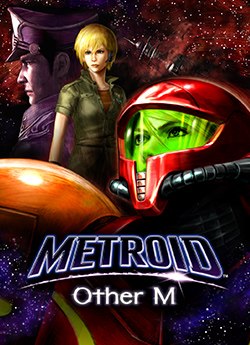
Metroid: Other M

The Metroid series may have shot itself in the foot by insisting that all its titles conform to the same unified chronology.  For a comparison, look at Nintendo's two other massive flagship franchises, and let's start by talking about Mario.

Does anyone ever debate whether Super Mario 64 or Super Mario Sunshine comes later in the timeline?  Is there any intrigue over the degree to which the universes of Galaxy and Galaxy 2 overlap?  No, because it does not matter.  We don't even know if any Mario game is a sequel, a remake, or a reboot of the game preceding it--all we know is that Bowser has done something dastardly again (often involving the Princess), and it is up to Mario to stop him.  In Mario games, we're not looking for a great deal of character development or series interconnectivity; we're looking to jump on platforms, throw Koopa shells at Goombas, and kick Bowser's ass.

Zelda functions in basically the same way.  There actually is a prescribed Zelda timeline, but nobody outside of a few dozen Zelda geeks and a handful of Nintendo employees knows it, because again, it does not matter.  The vast majority of fans are content to treat every Zelda game as a reboot of the series, accepting that it's a new retelling of the hero Link fighting the great enemy Ganon with the power of the Triforce.  In Zelda games, all we're looking to do is solve some tricky dungeon puzzles, bust out some fancy swordplay, and kick Ganon's ass.

Why can't Metroid do the same thing?  Metroid fans are looking to explore every nook and cranny of an alien planet, establish a massive arsenal by finding weapon pickups, and kick Ridley's ass.  It sounds awfully similar to Mario and Zelda... but for whatever reason, unlike those two, Metroid can't leave good enough alone.  The first three games (Metroid, Metroid II, and Super Metroid) form a logical trilogy--though Super Metroid played enough like the original Metroid that nobody would have cried foul if it had simply been presented as a remake.

The Prime games clearly formed another logical trilogy, but these games' story and style were so distinct from the original trilogy that they seemed more like a reboot than a prequel trilogy.  They didn't need to be prequels to make them fun, and them being prequels didn't enhance the series' earlier games.  In fact, they set the precedent that seemingly unrelated Metroid games need to exist in the same continuum, which rather than establishing a universal and coherent story, has led to a frustrating amount of shoehorning in every other Metroid game.

It's most apparent in Other M, which tries incredibly (at times desperately) hard to be both a sequel to Super Metroid and a prequel to Metroid Fusion.  Combine that with the Wii's fervor to be one giant logroll of a console for everything good that Nintendo has ever done.  The result is a game chock-full of references to the earliest parts of the series, with Metroid II remake bosses taking center stage, and Super Metroid enduring an almost amusing number of namedrops, from the ubiquitous Mother Brain and Zebes to the lowly Tourian, just to provide longtime fans of the series with a wink and a nudge.

The ultimate irony of Other M, then, is the vast amount of criticism leveled at it that it is "not a Metroid game".  Here's a game that's practically built on fanservice to the most beloved title in the series, and the fans are turning on it?  But speaking as a fifteen-year veteran of the series, it's easy to understand the complaint.  It has nothing to do with the combat, the graphics, the story, or even the (miserably bad) characterization.  Instead, Other M institutes a handful of gameplay mechanics that unfortunately rob Other M of seeming like a classic Metroid title.

The most egregious (and most universally lambasted) of these is the "item authorization" mechanic.  In earlier Metroid titles, one of the highlights of the game was finding new and awesome things on the alien planet or spaceship that made your character, Samus, better.  Sometimes they made you tougher, sometimes they enabled you to explore new places, and sometimes they augmented your weaponry.  So much of the joy of playing Super Metroid came from figuring out exactly what your new item let you do and where you could go that you couldn't before because you had it.

All that is out the window in Other M.  In an attempt to reconcile the need for progressive improvements to your character with the inconvenient reality that Samus is pretty damn formidable after she's been through Super Metroid, the game arrives on what was undoubtedly seen as quite the clever solution: Samus already has all the items she'll ever need (minus a few that are mostly conveniences anyway), but she can only use them after certain pre-determined points in the plot, when she is authorized to do so by a superior officer.

It's given a great deal of plot justification, with some back story about how Samus is doing this out of respect to her father figure and to prove to her squadmates that she can follow orders.  But Adam Malkovich's voice saying "huh, looks like you need some deus ex machina to complete this puzzle" is just nowhere near as satisfying as thinking "grapple beam?  Does that mean I can go back to that one room and get across it now?".  Worse, much of it doesn't even make sense.  Adam is worried about authorizing Samus to use too much firepower, which I can almost halfway buy.  Explain how that translates into barring the use of the totally non-threatening Varia Suit (which serves the sole purpose of making you not die in a hot environment).

Other infringements on the free-exploration extravaganza that ought to be Metroid include a baffling preponderance of locked doors.  It's always been standard Metroid fare to lock doors until you've met a certain condition, like killing all the monsters in a room.  Other M takes this miles further and locks doors simply because it doesn't want you going that way yet.  A third frustration in this vein is the restriction on free movement that some rooms unnecessarily impose.  If I'm in a massive cavern-style room, and I see a far-off ledge, I should be able to jump to it.  Getting halfway there and slamming into an unseen wall is incredibly disheartening.  Finally, there's the third-person over-the-shoulder style rooms, which serve no apparent purpose other than to make you handle like Bowser from the original Mario Kart.  In an oil slick.

Other M's other great failure is in its characters.  Ordinarily, it would be patently unfair to a Metroid game to judge it on its characters with the same intensity as its gameplay, but Other M makes no bones about putting its characters at its forefront.  Look no further than the menu screen: right next to the map and the list of awesome things you've found are "story" and "characters".  In the past, Samus has had very little definition to her character, so any contribution that Other M could make would be an improvement, right?  Not when it's to make Samus fraught with both mommy and daddy issues.  On top of that, she's clearly regressed in the feminist department--she's gone from a strong and capable fighter who happens to be a woman to a whiny, insecure girl.

The only characters who have any shred of humanity are Malkovich, the scientist Madeline Bergman, and (ironically) the android virtual intelligence MB.  Even they are flat: two-dimensional and static.  Anthony Higgs, who could have been far more interesting, exists only to provide Samus with a hint of sexual tension.  His squadmates, though, perform a remarkable feat in character-building: if Anthony is one-dimensional, these other characters are actually zero-dimensional, possessing no distinguishing characteristics whatsoever.

Earlier Metroid games have made use of voice acting, but Other M uses by far the most of any title in the series--and it's by far the worst.  Samus's lines in particular are horrid, scripted by someone who seems to have no idea how people actually talk, in the style of a somewhat-precocious fifteen-year-old who is intelligent enough to have a reasonable vocabulary but not wise enough to use it responsibly.  They're melodramatic, cringeworthy--and delivered in a detached style so wooden it makes the Trojan horse animated in comparison.

Does that mean Other M is a big pile of failure?  Thankfully, no.  The story, which seems overbearing and forced at first, actually unfolds into something decent, and it becomes worth caring about more as the game progresses.  The game splits up its difficulty oddly: in other Metroid games, boss fights were the only parts of the game where you were in real danger of dying, and the difficulty came in the often grueling treks between save points.  If you did die, you were in big trouble.

Now, you can expect to die on every boss, and you're in mortal danger from almost every mini-boss and some normal fights as well.  But you can continue much more easily.  Apparently this is a very Ninja Gaiden mechanic--fight the same impossibly hard fight half a dozen times before you finally figure out how the heck to beat it, and move on to the next one--and that makes sense, given that "Team Ninja" developed Other M.  But this redistribution of difficulty isn't necessarily bad, it's just different.

Rest assured that there are plenty of things about Other M that are legitimately good.  I'll be the first to speak in favor of the more combat-oriented Metroid.  Tough battles in the original trilogy pretty much followed the script of "fire missiles at it until it dies."  In the Prime trilogy, this became "fire a whole lot of missiles at it until it takes on its next form and throws some more hideous attacks at you."  But in Other M, there's a bit more strategy--and a whole lot more style--involved in a lot of the fights.  And it's much less satisfying to "fire three missiles at it" than to "fire two missiles at it, run toward it, grab its neck, and slam it into the ground."

(Overblast and Lethal Strike, the two cinematic combat elements that Other M introduces, are a bit tough to use at first, especially to Metroid veterans.  "Let me get this straight, I'm supposed to tap buttons to dodge rather than run the hell away, and then run toward it and jump on it rather than blast it from a distance?"  Yep.  Once you're over it, it becomes doable... then it becomes a whole lot of fun.)

The switch between first- and third-person control works much better than it has any right to, though like most of the control scheme, it can be a little awkward at first.  Other simplifications to the controls work very well, like making wall jumping actually possible and eliminating the need to ever do needlessly complex Morph Ball bomb jumping puzzles.

And it would be a shame to overlook the greatest strength that Other M has: it looks really pretty.  It's obviously the best-looking Metroid game to date, and it probably has some of the best graphics of any Wii game.  Samus finally looks like she should have twenty-five years ago (now that shoulder pads have been firmly out of style for ten or fifteen of those years), and Ridley looks downright scary... in a way that makes you completely respect him and the rest of the game.

Other M is not an instant classic in the same way that Super Metroid was.  It's probably not even as good as the Metroid Prime trilogy; in fact, it may even be among the worst of the Metroid games.  However, that's as much a praise of the rest of the series as it is an indictment of Other M.  It's not a long game--roughly 8 to 12 hours, depending on how good you are at it and how much effort you want to put into being a completionist (but remember that Super Metroid's ultimate goal is to finish in 3 hours).  The questionable voice acting and shallow characterization are not going to win any awards or even much praise.  If you're a Metroid purist, you will balk at parts of the game.

But the game is fun, and that's what counts.  As long as you can get over "this isn't a Metroid game," you will enjoy playing Other M.


Currently listening: "Knights", Minus the Bear

Saturday, September 04, 2010

Mass Effect: A Discussion of the Mako Tank

My last post was a review and discussion of Mass Effect, and my conclusion is that I like virtually every part of the game.

Except for one:


I am convinced that I am the worst Mako driver in the world.  A blindfolded three-year-old could easily drive this piece of trash better than I could.  If you've played the game, you know how difficult it is to flip the tank over.  I've managed to do it.  Multiple times.

My relationship with the Mako didn't exactly start out smoothly: even though almost every single button and control was explained to me perfectly reasonably, the one that never made its way into the tutorial was "how to leave the damn tank." 

On an early assignment, I needed to go to some God-forsaken planet and look for some escape pod.  Before I found the pod, I had to engage something monstrous called a "thresher maw," which translates to "Mako tank-sized mouth that, oh yeah, spits acid at you, on top of one hundred feet of neck."  Come to find out, it has the ability to burrow under the ground and instantly kill you by resurfacing directly under you.  As if the acid spitting weren't enough.

But finally, I outwitted the thresher maw and found the escape pod... then couldn't do anything with it.  I quit and reloaded the game twice to make sure that it wasn't a bug or glitch.  Still, nothing happened.  I resorted to an online walkthrough--the first and only time--and it told me to "leave the tank" then investigate the pod.  After scouring the list of controls for a few minutes, I finally found it: you press the "q" button.

Fast-forward to Feros, one of the main-plot worlds.  There's a part of Feros called the "Prothean Skyway".  Sounds cool, right?  Sure, except until you realize that "Skyway" is actually a euphemism for "highway suspended hundreds of feet in the sky."  I died more times driving my tank off the side of the Skyway than I did on all the rest of Feros combined.

A little while later, on some other planet, I drove into an ambush and saw my tank take a ton of damage.  A more reasonable player would have driven away and tried to repair the vehicle, right?  With as little faith as I had in the Mako, my plan was abandon the tank and sacrifice the admittedly greater firepower just to be rid of the thing.  (It worked.)

Finally, even after playing the game, there are some controls on it that I simply do not understand.  The first is the spacebar, which engages some mysterious thrusters on its underside that seem to be good for ejecting me from the slope of a hill and little else.  The second is left click, which fires the machine gun.  Here's a scenario: robot armed with rocket launcher is walking toward you.  Do you spray it with your dollar-store Super Soaker knockoff, or do you obliterate it with Right Click of Exploding Doom?

I really hope all these mechanics are fixed in Mass Effect 2.  Except for Right Click of Exploding Doom.  I'll keep that one.


Currently listening: "Black Magic Woman," Santana

Mass Effect: Debrief

It's true: it's taken me until now to play through Mass Effect.  Yes, it's been around for more than two years--in fact, I think I got some sort of second anniversary discount when I bought it back in May.  Yes, a veritable legion of my friends has tried to convince me to play it for those last two years--and friends whose video game opinions I generally respect.  Yes, I pretty much adore Dragon Age: Origins--and in the grand Bioware tradition, Dragon Age is basically just Mass Effect dressed up as fantasy.

I don't know why it's taken me so long.  Part of it was probably my lack of time over the last two years; part of it was that I anticipated the game having too much shooter influence for my tastes--even though shooters are de rigueur in video gaming these days, I haven't played one I really got into since Perfect Dark back in 2000.  Of course, my friends were completely right on this one.  Mass Effect is a very good video game.

I've argued before that every Bioware game plays the same, and Mass Effect is no exception.  It follows the now-familiar structure: a short in media res prologue that gets the action going; Act 1, which takes place in some beacon of civilization, establishes the central conflict of the game, and builds your party; a massive Act 2 that occupies the majority of the game and features four parallel main quests in the far reaches of the setting; a climactic Act 3, which features some major plot revelations and sets up the final battle; and a short Act 4, which is basically the final battle with a short lead-up.  There are lots of side assignments you can do, many of which involve your characters and getting to know their stories better--including some that lead to romance subplots.

At around 35 hours, Mass Effect is a little shorter than I expected it to be.  Maybe that shows the background that I game from--I grew up on JRPGs like Chrono Trigger and the Final Fantasy series that, even back in 1995, routinely lasted for 50-60 hours.  I sunk 110 hours into Final Fantasy X, 120 into Oblivion, and I don't even want to know how many (but probably at least 150) into Morrowind.  I didn't explore every nook of every isolated planet to find every side quest in the game, but I did put reasonable effort into finishing all the ones I bumped into.  You could probably stretch Mass Effect to 40-45 hours if you dragged a fine-toothed comb over it, or you could probably speed through it in as few as 20-25.

But that would be a mistake.  Bioware might come across as the poor man's Bethesda when it comes to crafting open, dynamic, and explorable worlds, but they're still far and away better at it than virtually everyone else in the business.  There's a lot going on in Mass Effect, between history, setting, and characters, and it's worth it to explore as much of it as is feasible.

Mass Effect doesn't suffer from nearly as many difficulty issues as would plague Dragon Age: Origins just a year later.  Both games scale their difficulty, so that your enemies get tougher as you do--except that the only thing that happens to your enemies is that the numbers go up.  As you become more powerful, it's not strictly about the numbers, it's also about the additional things you can do.  My mage character in Dragon Age was very much tilted toward "things" rather than "numbers," so the beginning of the game was unreasonably difficult (I would routinely die to a wolf ambush), while the end was almost trivially easy (because of all the resources at my disposal, I never felt seriously threatened by the final boss). 

It might be a different approach to the character that I took in Mass Effect that made the difficulty more even throughout, or it might be that Mass Effect is just balanced better.  Either way, the difficulty is appropriate at virtually every stage of the game, and I definitely felt seriously threatened by the final boss here.

Aesthetically, the game is decent to good.  The music is passable, but it's no Jeremy Soule soundtrack (a la the Elder Scrolls games).  As for the graphics, I turned the resolution up to 1280x1024 and all the other settings squarely to "medium," and I think it struck a nice balance of looks and performance, at least on my system.  (My computer is only about a year old, and relatively powerful--but by no means a gaming rig.  If you have a machine legitimately built for gaming, you'll be able to crank all the settings up with no problem.)

The controls are reasonably intuitive and mostly explained over the course of the "prologue" act, with a the exceptions of a handful of the minigames and a couple vagaries of the Mako tank.  (In fact, there are plenty of vagaries of the Mako tank.)

But what you're really playing this game for is the story, which is executed brilliantly.  It unfolds entirely sensically from the prologue to the final act, and even though you're clearly dealing with some world- (or galaxy-) changing stuff, you never really feel overwhelmed or in over your head.  The plot toes the line between a self-contained story with an exciting climax and satisfying resolution and a first installment of a trilogy that's obviously part of something much bigger than itself.  It works on both levels, and the best sign of its success is how excited I am about playing Mass Effect 2.


Currently listening: "Somebody Told Me", the Killers

Tuesday, August 31, 2010

All Delighted People EP

There's a note of irony in Sufjan Stevens' career that any hipster among his fans is sure to appreciate.  His greatest success by any measure--commercial, critical, or artistic--came from the same subset of his music that spurred a career-jeopardizing existential crisis.

Michigan (2003) wasn't Stevens' first album--it was his third--but it was the first one that anyone paid attention to.  The Avalanche (2006) was the most listenable B-sides/rarities/outtakes album since the mid-1990s' Beatles Anthology series, plus it was Stevens' only album to date to crack the mainstream Billboard charts.  And Illinois, released in 2005, has already taken its place among the greatest indie albums of the last decade, possibly of all time.

Together, these three form the beginning--or what ought to have been the beginning--of Stevens' supremely ambitious "Fifty States Project."  Now, tragically, these three appear like they're forming the entirety of the project.  The grand plan was to write albums inspired by each of the fifty states, of which Michigan and Illinois were the first two, and The Avalanche carried the momentum of Illinois to become its partner or sequel album.

Sufjan Stevens hasn't necessarily been forthcoming about his intentions for the future of the project.  2006 gave us "yes, of course I'm serious about finishing it."  In 2008, we got the sea change of an opinion to "no, I'm not going to finish it, and I was pretty much joking the whole time."  And by 2010, these prognostications more or less moderated to "I probably won't finish it, but I won't rule out working on it more in the future."

It would be a shame if he didn't put more work into it.  While 2004's Seven Swans remains popular, and undoubtedly A Sun Came!, Enjoy Your Rabbit/Run Rabbit Run, and even The BQE enjoy their own followings, it's the Fifty States Project that put Sufjan Stevens on the map and has produced his best work.  But it's possible that like many artists' magna opera, Stevens poured just a little too much of himself into it.

The self-destruction that threatened to follow saw Stevens giving quotes like "I've lost faith in the album" and of the song as units of musical expression.  Nowhere did the breakdown appear more evident than in 2009's The BQE a mess of an orchestral tribute to the Brooklyn-Queens Expressway, which was somewhere between horror and genius--but even fans have nowhere where to place it.  We had no idea whether or not Stevens would release a conventional album with words ever again.

Therefore, the ambush of a release of All Delighted People was even more of a shock to fans.  (And if that weren't enough, a full-length is planned for October.)  Conventional it is not--apparently Stevens wasn't kidding when he hinted at abandoning the traditional song/album structure--but it does have words, it has a few remnants of convention about it, and it has a whole lot of content.  The EP weighs in at 8 songs that last a total of more than 57 minutes (which many artists would be content to market as a full-length album).  Do the math, and you'll find that the average song length is more than seven minutes--which isn't to say that Stevens has mundanely released an EP with eight seven-minute songs.  Rather, the shortest is barely three minutes, the second-longest is eleven, and the longest is a hefty seventeen-minute jam session.

The middle of the album, tracks two through five, are where the album is at its most conventional and immediately accessible.  "Enchanted Ghost" is the shortest track and seems the most like material that might have made it onto Seven Swans or Michigan.  It's still my favorite track on the album, and while the following few tracks occasionally lose energy or direction, fans expecting Stevens' earlier work will be the most at home in this chunk of music.

"All Delighted People" makes its appearance as two tracks, which are not precisely the same song in terms of content and are drastically different songs in terms of style.  Both, but particularly the first title track, feature some jarring dissonances and abrupt stylistic changes.  It wasn't the sort of thing I was sure I liked at first; in fact, one of my first thoughts was "this will take some getting used to."  But here's the thing: by the second time I played through the EP, I wasn't just used to it--I was into it.

Aside from more dissonance and sharper transitions than we're used to, a few stylistic departures from Stevens' earlier work pervade the EP.  Electronic effects and wailing, meandering electric guitar solos show up more in "Djohariah", the seventeen-minute track that closes the album, than in Stevens' past seven studio albums combined, and they show up throughout the rest of the album as well.  Stevens' falsetto, very much a part of all the music he has released, shows up in All Delighted People as a frailer yet more pronounced version of its old self, less agile and more obvious than it was in the past.

All Delighted People is not Illinois.  Not that anyone really expected it to be--as The Avalanche showed, Stevens clearly could have made the rest of his career into re-releasing Illinois about five times, and he would have been plenty successful doing so.  But there's always been a sense of boundary-pushing in Sufjan Stevens' music, and All Delighted People carries that tradition further than any of his previous albums.


Currently listening: "Magpie to the Morning", Neko Case