Monday, February 28, 2011

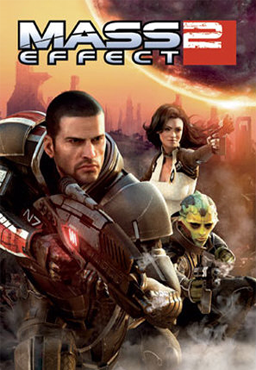
Mass Effect 2: Less Than A Year Late

If Dragon Age: Origins was the game that got me to re-think my stance on Bioware, and the original Mass Effect was the game that finally tipped me over the edge to being a full-fledged Bioware fanboy, then Mass Effect 2 is the game that makes me glad to be there.  It picked up where its predecessor left off, did a bunch more things right (and ME did plenty right on its own), and resulted in perhaps the best hybrid RPG ever.

Fans of the original, and of RPGs in general, will immediately notice that ME2 is less RPG-y than the original and than most of Bioware's earlier RPGs.  The inventory system was one of the few weaknesses in the original; at times, it felt more like we were playing Spreadsheet: The RPG.  Of course, whether to use Incendiary Ammo VII or Cryogenic Ammo VI would probably make such a slight sliver of difference to the gameplay that you'd really have to be looking for it to notice it, but let's face it: I spent far too long optimizing everyone's ammo upgrades on their tertiary weapons, and you did too.

ME2 doesn't waste time with those details.  Every character has a handful of weapons, of which they'll ever use two at the most.  Shepard's armor is customizable, but in a "hey, that's a cool bonus" sort of way as opposed to "I must squeeze every possible point of defense out of this."  And gone are the multitude of skills that you may or may not ever use; each character has three plus a bonus that's unlockable over the course of the game.  The result is something that doesn't feel exactly like an RPG, certainly less so than the first game did, but then again doesn't really sell itself as one or claim to be one.

All of those simplifications are things that could make the RPG purist whine, and fair enough to that.  (We still have the RPG-tastic Elder Scrolls series--and Bioware's own Dragon Age--to console us.)  But look at the other side of the coin: think of the pain that shooter purists must be feeling!  There's no barrel-aim acceleration, no "realistic" obstacles to hitting your target like your character's breathing or footsteps, and no fancy scopes or aiming reticules.  But as much as each of those is a sine qua non to a shooter person, they just represent inaccessibility to the rest of us.

So Mass Effect 2 manages to do something that's very rare indeed in the realm of game design: it hybridizes two genres to the satisfactions of all parties.  It strips down both genres and figures out what's fundamentally fun about each with little regard for attaching either side's sacred-cow strictures.  Then it combines all that fun into a game that turns out to be... fun.

The other thing that Mass Effect 2 does remarkably well is stray from the Bioware Path.  The in media res prologue is still there, and so is the climactic final "dungeon", but gone is the almost amusingly tried-and-true "here are four parallel tasks that you must accomplish and which take place in different corners of the world" formula that literally every other Bioware game has followed.  ME2 is stronger for pursuing its own identity.  There's no artificial unfolding of the plot and very little railroading; instead, the endgame is laid out plainly after only a few hours of gameplay, and you can choose whichever path you see fit to get there.

It's a trend in modern video gaming to make games a reflection of a story that you want to tell rather than what the developers want to tell, and no game out there accomplishes this better than ME2.  Although every playthrough of the game ends up in the same place, it's entirely up to you to get there, and your version of the game is the result of dozens of decisions that you make.  It's an engaging and ultimately more rewarding experience than playing through someone else's version of the game.

And it's that immersive storytelling that really sets Bioware apart from other game studios.  Bethesda builds worlds and lore better.  Nintendo is more prolific and has a virtual monopoly on classic franchises.  But if Bioware can make their trilogy's middle volume one of the best games in years, then consider me a fan.


Currently listening: The Valley, Eisley (review to follow!)

Thursday, February 17, 2011

Birthday Cake

My old friends the Decemberists decided they'd play a show in Oakland for my birthday, which was really nice of them, except that 1) it's impossible to get my friends excited about the Decemberists, and 2) while I'm perfectly comfortable going to concerts alone, doing that on my birthday just seemed sort of depressing.  So, I decided on the next-best thing: go to see Cake (which I could motivate some friends to go to see) the day after my birthday.

Cake is one of those bands, like, say, Guster or the Juliana Theory, that I rarely think "yes, awesome, I need to listen to this band immediately."  But when I do listen to them, I always scold myself for not being more into them, because they are awesome.  Cake has been at this a long time--they're pushing two decades--and none of their albums represent much of a departure from any of their other albums, but there's something to be said for their consistency.

So Cake has never been at the top of my List Of Bands I Must See In Concert (it exists, and Death Cab for Cutie, Rilo Kiley, and the New Pornographers are all somewhere towards the front)... but now that I've seen them, I'm scolding myself for not putting them up there.  In a reflection of their albums, their show isn't one that blows you away and leaves you, slack-jawed, gazing at the stage at the Fillmore and unable to move.  Instead, it's a show full of really solid material that comes with just enough wry humor and audience participation to make you appreciate the hell out of the band.

(Another thing that makes me, at least, appreciate them is their extensive use of the trumpet.  Trumpeter Vince DiFiore doesn't play a lot of difficult parts, though he plays them really well.  It's when he launches into improv, something you don't get to hear a lot of on the albums, that's when you really start to understand how good he is--and how you're benefiting from seeing Cake live instead of just listening to them in your room.)

The band described their own show as playing two sets, but it felt more like a long set and a half, or like Cake was opening for themselves.  The first half of the show featured some reasonably well-known older material ("Frank Sinatra") and some tracks from their new album, but it wasn't until the second half of the post-intermission set that they launched into iconic Cake, including "Love You Madly," "Sheep Go to Heaven," and "Short Skirt Long Jacket," finally ending the encore with "The Distance".

It's always a nice touch when bands make the audience sing, and it's even better when the audience plays along.  The Cake-going crowd was game enough to provide background vocals on a few tracks, which was fun.  Cake took their audience participation a step further, giving away cool stuff in exchange for knowing the answers to obscure trivia questions, including the date that Gutenberg was credited for inventing the printing press (1440; the prize was a printed page, signed by the band, from a book that Cake put together) and the identity of a mysterious tree on the stage (lemon; the prize was the tree itself).

One thing that made Cake stand out even more: throughout that trivia contest, and throughout the entirety of the show, Cake worked hard to maintain an air of civility, humility, and courteousness.  It's a lesson that a lot of rock bands would benefit from taking to heart, and coupled with some excellent music, it made for a great (if slightly belated) birthday dessert.


Currently listening: "The Only Living Boy in New York," Simon and Garfunkel

Tuesday, February 01, 2011

Black Swan: Not the Best Movie of 2010

Granted, I'm a bad choice of person to ask what the best movie of the year is.  (After all, I'm one of like six people in my demographic who still hasn't seen Inception.)  But I'm pretty sure that best movie is not Black Swan.

There's not much to be said for the plot of the movie.  As a character study of a slowly developing insanity, it's fine, but "protagonist seeks impossible goal and goes insane" has been done to death over the last five centuries.  Shakespeare did it with Hamlet, Cervantes with Don Quixote, Dostoevsky with Crime and Punishment, and Joseph Conrad with Heart of Darkness (probably the best "descent into madness" thriller out there).  Black Swan draws from this fertile ground of storytelling but doesn't leave much of its own impact.

And let's be honest: from the moment that Natalie Portman's character Nina explains the plot of Swan Lake for the first time, we all know what's going to happen in the end.  Portman's Nina--whose "White Swan" allegory couldn't be made more obvious if she wrote "white swan" on her forehead (naturally, with white marker)--is obviously destined to die by her own hand.  (Black Swan did do legions of theatergoers the service of informing them how stupid the plot of Swan Lake is: girl is transformed into a swan and ends up killing herself because the guy she's after falls in love with the wrong girl?  Whatever you say, Pyotr Ilyich.)

Thematically, amateur critics could have a field day throwing out allegations of "symbolism" with Swan's black-and-white drenched mise en scene.  But in order to be symbolic, the supposed symbol must actually symbolize something.  Any viewer could make the argument that any given black or white item had some deeper significance behind it.  For a handful of costume pieces and important props, that's of course the intention, but it would be possible to seek your own impossible goal and reach your own madness trying to assign a symbolic interpretation to everything that is white or black.  Sorry, but the black doorframes do not represent unrestrained passion.  They're just part of the black/white motif--and that's totally fine--but let them be doorframes and don't make them more than they need to be.

Finally, that Natalie Portman should be lauded as heavily as she has been for her performance is baffling.  She carries the role of Nina just fine, and her dancing skills are certainly legitimate and praise-worthy, but the problem is that her character is just not interesting.  That's not Natalie Portman's fault, of course, but it feels counter-intuitive to heap awards on acting out a character based on deer-in-the-headlights stares and a frailty that comes across less as fragile vulnerability and more as bland weakness.

Black Swan isn't terrible.  Vincent Cassel plays the manipulative, twisted-artist role to perfection (and pulling off a straight French ballet director should be award-worthy in its own right), and it's entertaining enough to sort through Nina's psyche to figure out which parts of the movie are real and which ones all in her head.  Where the movie succeeds most is in giving an unflinching look at dancer culture; with its pressures and infighting, it's easy to believe that this is the kind of thing that could drive Nina mad.

It's entertaining and probably worth seeing if you're up to the challenge of putting together a few pieces yourself, but Black Swan just doesn't pave enough new ground or come together in the right places to legitimately be the best movie of its year.


Currently listening: "Pretend You're Alive," Lovedrug

Friday, January 28, 2011

The Elder Scrolls V: Skyrim, Game Informer For Free

That we're still more than nine months away from the release of Skyrim is excruciating, but at least the good folks over at Game Informer have dedicated more or less the entire month of January to the cause.  They've posted about a dozen fascinating articles about the game, ranging from insights into its development process to previews of its mechanics--but naturally, with them being a business and all, there's plenty more content in the physical magazine, in its February 2011 issue.

I'm nowhere near as big a video gamer as I was ten years ago, and my days of subscribing to video game magazines are long over... but this is Skyrim we're talking about.  I decided I needed to own a copy of this issue.  There were disappointingly few places I could have bought it on the internet, with the exception of eBay, and after shipping, it would end up costing me more money to buy a used copy than just to find my own.

"Easy," you might say.  "Go to a bookstore."  That would be a fine idea but for living in Berkeley.  There's not exactly a Barnes and Noble down the street, and it's not like the hippies at the local independent bookstore carry a vast selection of video-gaming magazines.  BART is always an option--but then I'd be spending more on my trip than on the magazine--and I have friends with cars, but I like to save my begged-for rides for things that really count, like trips that involve forty pounds of dirt from Home Depot.

But, upon entering my apartment yesterday, I noticed something: the February 2011 issue of Game Informer sitting on the shelf below my building's mailboxes.  That shelf has come to be used for abandoning pieces of mail that belong to people no longer living in your apartment--and living in a student-heavy area, that happens quite a lot.  I checked the name on the label against the name on Apartment 2's mailbox, and it was way off.  Still, there's the vague thought of the phrase "federal crime" when you steal someone else's mail, and maybe there was a perfectly good explanation for why the magazine was outside its mailbox?

I didn't have to debate postal ethics for long, though.  I opened my own mailbox to find the exact same issue of Game Informer had magically shown up in my mailbox.  There is surely no Phillip Van Sant living in Apartment 12, and between shelving the magazine next to its twin or adopting it, the choice became easy.

Here's the thing, though: my apartment has never received an issue of Game Informer prior to January 27, 2011, and I've been leaving there for nearly a year and a half.  I assume Mr. Van Sant is a prior tenant, but I've never gotten any of his mail before now.  It seems downright bizarre that the first and only one that shows up happens to be the exact magazine I'm interested in.

I must have cashed in some seriously good karma for something.  And, to keep the cycle going, Mr. Van Sant, the magazine is yours if you want it.


Currently listening: Tartini, Concerto in D, as performed by Maurice Andre

Tuesday, January 18, 2011

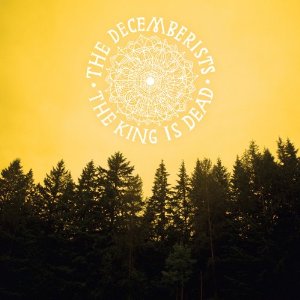
The Decemberists: The King is Dead

Now that they've been making albums for ten years, it doesn't look like a completely consistent Decemberists album, one that's just plain good from start to finish, is ever going to be in the cards.  Look at literally any of their six full-length albums (and many of their EPs and other assorted releases), and you'll see that half to two thirds of it is amazing, bordering on brilliant, and the remainder is... not.  Sometimes it tries too hard and becomes the indie cliche that the Decemberists are often accused of being.  Sometimes it doesn't try hard enough, and what would otherwise be a halfway decent track is lost to much better material to either side of it.  And sometimes it's just boring.

The weird thing about the Decemberists is that however they dress their music up, it turns out this same way.  Whether they're set in medieval Japan or Arthurian England, every Decemberists album follows the pattern.  So forget the "blah blah blah REM" hype, and lay the "hey look, this album was recorded in a barn, so it is rustic" to rest.  It's still a Decemberists record.  It's still indie pop with strong folk influences and a pinch of hard rock to make it interesting.  It still features Colin Meloy using words that you didn't know existed.  And it still features six or seven outstanding tracks and a handful of entirely forgettable ones.

That's not to say that The King Is Dead is the same album as any of the Decemberists' past releases--least of all The Hazards of Love.  Where Hazards was high-concept rock opera (and really cool, though not everyone's cup of tea), King is toned down a bit.  The only major "theme" on this album, if one exists at all, is the passage of time: seasons turn, calamities happen, we reminisce, we fight in wars... and everything goes on.  But the Decemberists are rarely ones to make a statement ("16 Military Wives" being possibly the sole exception).  They're content to sing songs, and that's what's great about them.

What works on King?  For starters, everything involving that "turn of the seasons" motif: "Don't Carry It All" is an upbeat way to start the album, a sincere paean to lending a helping hand.  "January Hymn" has an austere beauty that executes Fleet Foxes' concept better than Fleet Foxes can, and "June Hymn" is as unpretentious an indie-pop tune you'll ever find, reveling in some simplicity that evokes some almost-real Springville Hill.

My favorite track, strangely, is "Rox in the Box."  It has an irritating title, and the first two lines of it sound like they should be from a Charles Barkley commercial for Taco Bell, but it evolves into a complex tune with layers of bluegrass and old-style American folk that very few bands could pull off.  "All Arise!" is another stylistic experiment, mixing in zydeco harmonica, accordion, and fiddle--and like "Rox," it borrows heavily from the aesthetic of the Decemberists' so-called side project, Black Prairie.  And "Down By the Water" is a fine first single; what it lacks in usual Decemberists flamboyance, it makes up for with Gillian Welch's vocal performance.  (Welch is featured on around half of the album's tracks, but her talents are used most effectively in "Water".)

King's biggest problem is that its pacing is just a bit askew.  It's not a long album, weighing in at under 40 minutes, and every time it finishes, I want there to be more--which speaks highly for the album.  Still, it drags in parts: both "Rise to Me" and "Dear Avery" are nearly five minutes long, and neither is interesting enough to warrant that much length.  "Dear Avery" in particular is a curious, unexpectedly low-key end to the album.  It's not quite as dull as "Of Angels and Angles," the mind-numbingly emo finale to 2005's Picaresque, but it doesn't build to any sort of climax that gets me excited about the last eight minutes of the album.

But it's the Decemberists, after all, and we can't expect every single track to be a winner.  Six or seven brilliant out of ten is nothing to sneeze at.


Currently listening: "Apologies", Christie DuPree

Thursday, January 06, 2011

The Case Against a College Football Playoff

It's that time of the college football season again.  Time to watch the best teams play each other, to celebrate the achievements of the student athletes--and to argue about how we could do it all better.  It's awfully trendy these days to argue in favor of a college football playoff, but in reality, a playoff solves few of the problems it's ostensibly designed to fix, and introduces plenty of its own.

1. Someone still gets left out

One circumstance that sparks a particularly impassioned rallying cry among the football playoff's supporters is when a team gets left out.  Maybe there are three undefeated teams, only two of which can play for the national title.  Maybe there is only one undefeated team but three teams with one loss.  Supporters of the playoff argue that a playoff is inherently more fair simply because there are more slots, giving more teams a chance to contend for the title.

Admittedly, even expansion to a modest four-team playoff does allow every undefeated team to contend for the title in most years.  Expansion to a more ambitious eight-team playoff virtually guarantees that all the undefeateds will be in, barring the vanishingly rare case of enormous imparity in every football conference.  However, unless there are exactly four, or exactly eight, undefeated teams, some team with the next-best record is still going to get left out.  I'll use the 2010-2011 season as an example, referencing rankings and records as of the final BCS standings, but you can perform the same analysis on any college football season and come up with pretty much the same conclusions.

This year was an unfortunate example of the "three undefeated teams" version of the "someone gets left out" argument.  Auburn (13-0) and Oregon (12-0) are outstanding football teams and the natural choices to contend for the title.  But in letting them play in the title game, you're keeping out TCU (12-0), who essentially had no chance at ever making it to the title game unless Auburn or Oregon lost, and who showed in the Rose Bowl that they're every bit tough enough to "play with the big boys."

A four-team playoff would have allowed TCU to play for the national title.  It also would have allowed Stanford (11-1) that same chance while denying it to Wisconsin (11-1) and Ohio State (11-1).  While Stanford is also without question very good, you could make the argument that Wisconsin and Ohio State deserve the chance more because Stanford already lost to Oregon.

Want to expand to eight teams?  Okay, but now you're letting in Oklahoma (11-2) but not Michigan State (11-1) or Virginia Tech (11-2).  You're letting in Arkansas (10-2) but not LSU (10-2) or Missouri (10-2).  And you're entirely neglecting Boise State (11-1) and the only team that figured out how to beat them, 12-1 Nevada.

In summary, although a playoff is a step in the right direction toward ensuring that no undefeated team gets left without a shot at the title, it still involves drawing an arbitrary line through a cluster of teams with similar records--and the teams on the wrong side of that line get left out.

2. Bowl coexistence

The bowls are an integral part of college football history, tradition, and culture.  Fortunately, not even the most strident playoff supporters advocate getting rid of the bowls, so it's obvious that a hypothetical playoff would have to coexist with them.  There are a number of ways to do this, but none of them are particularly satisfactory.

The BCS has tried two methods of reconciling itself with the classic "major bowls".  Until 2006, the national championship rotated among the Sugar, Fiesta, Orange, and Rose Bowls.  It's easy to envision a scenario where one year, the Rose Bowl is the national championship game, and the Orange and Sugar are national semifinal games; then the next year, the Orange is the national championship, and the Sugar and Fiesta are national semifinals, etc.

But it didn't really work when the BCS tried it, and there's no reason to think it would work any better under a playoff system.  It's confusing--and it takes power out of the hands of the bowls and gives it to the playoff bracket.  These "major" bowls are classics for a reason.  The Rose Bowl is supposed to feature the best West Coast team against the best Midwest team.  The Sugar Bowl is supposed to give the SEC a chance to defend its reputation on a national stage.  College football is better off if it preserves as many of these traditions as possible.

A second option might be sending all the best teams to bowls at the end of the season... except for the really good teams, who get to enter the championship bracket.  Now, the Fiesta Bowl features the best team in the Big XII... except for those two teams that were better and got to play in the playoff.  You're watering down the bowls--they become the less exciting and less meaningful cousin to the playoff, which is fair neither to the student athletes that play in them nor to the culture of the sport.

Finally, it's conceivable to separate the bowls from the playoffs entirely; to play the bowls as they're traditionally done, then re-rank, then seed the top four or eight teams into a playoff.  That idea has the advantage of preserving the sanctity of the bowl system, but it introduces yet another wrinkle: season creep.

3. Season creep

The college football season is already pushing the limit of how long it can reasonably be.  For a long time, the climactic high point of the season was New Year's Day and the Rose Bowl.  In the BCS era, we've tolerated some early January bowls.  And now that the national championship game is its own entity, we've allowed it to take the place of honor as the very last bowl game--but it's pushing middle January.

Middle January is when virtually every college starts its spring semester--some, including my proud alma mater Georgia Tech, will have already started its semester by the time the national championship game is played.  If a hypothetical playoff added any time at all to the season, then the season will extend at least a week or two into virtually every college's spring semester.  That's okay for us fans, but it's not okay for the student athletes involved.  Commitment over an entire semester is enough; there's no justification for stretching it into another one.


In conclusion, there exists no practical approach to a college football playoff that results in both the bowl season maintaining its tradition and excitement and the playoff not encroaching into middle to late January.  And even if there were, it would rarely if ever solve the "fairness" problem that the current system presents.  We can argue all day long that the BCS is broken, but a tacked-on four- or eight-team playoff is not the way to fix it.


Currently listening: Foo Fighters, self-titled album

Friday, December 17, 2010

The Elder Scrolls V: Skyrim, First Impressions

We've only been waiting four and a half years for it, but we finally got it, and it is phenomenal.  And even though we know hardly anything about it yet, speculation about and anticipation of the new Elder Scrolls game, Skyrim, is going to occupy an unhealthy portion of the next eleven months of my life.

What do we know?  The story sounds epic--and very Morrowind.  The prophesied hero, incarnation of an ancient great power, comes to a remote province of the empire to save the day from a newly-reawakened evil.  Call it Nerevarine or call it Dovahkiin, it's a classic plot within the Elder Scrolls universe, and it's consistently fun to play through.  It's set to involve dragons, and while we know from the lore that dragons are a part of the history of Tamriel and especially Skyrim ("...and then came the northern men to help Kagrenac and they brought Ysmir again," 36 Lessons of Vivec, Sermon 36) we've never seen them in-game.

Much has been made of some comments from the developers, but in reality it's far too early to say anything about what they mean.  In particular, Skyrim has been construed as a "direct sequel" to Oblivion, leading to a lot of speculation about how closely related the two titles will be.  But as a longtime fan of the series, it's intuitive that Skyrim and will be about as closely related to Oblivion as Oblivion was related to Morrowind.  All the games take place in the same setting, and the setting being as lore-intensive as it is, the events in the previous game are naturally going to have some impact on the next game.  But a "direct sequel" to Oblivion would necessarily be set in the Imperial Province, involve the Oblivion gates crisis, and have Mehrunes Dagon as its antagonist.  It's clear already that Skyrim will do none of that.

That said, because this is the Elder Scrolls universe, it is prudent to wonder just how much the events of the previous game are going to change the setting.  A lot of crap went down in Oblivion.  The Imperial City got sacked, a Daedric Prince was defeated, and the Septim line of emperors ended.  At the very least, Tamriel is going to have a new ruling dynasty--and it's entirely possible that the Empire will have collapsed completely.  Is Mehrunes Dagon permanently destroyed, or merely rebuffed from the mortal world?  All this remains to be seen.

Finally, the announcement of Skyrim has re-ignited the senseless debate among Elder Scrolls fans about whether Morrowind or Oblivion was a better game.  I don't know why we can't all agree that Morrowind had a more immersive experience and a better story, Oblivion had a more polished structure and prettier landscapes, and they were both incredibly enjoyable games.  There are people who will insist that Morrowind is better because it has medium armor, the short blade/long blade distinction, and more attractive faces.  On the other side of the coin, Oblivion's diehards protest that Morrowind was too hard and lacked horses.

Micromanagers and effort-averse aside, most Elder Scrolls fans do agree that both Morrowind and Oblivion were excellent.  Even though we don't know much about Skyrim yet, if it builds on their successes, my social life is going to collapse next November.

A few assorted points:

--In the chorus at the end of the trailer video, a figure named "Hrothgar" is mentioned.  I thought that Hrothgar sounded familiar, so I checked him out on the Elder Scrolls Wiki.  Turns out the only mention they have of Mr. Hrothgar is that his name lives on as a mountain in Skyrim.  But!  Hrothgar is an actual mythic figure from Anglo-Saxon myth, most notable as the king in Beowulf.  It wouldn't be the first time that an Elder Scrolls myth has drawn name inspiration from a real-world myth.

--It's probably a hope in vain because level scaling is pretty much de rigeur in RPG design these days, but I really, really hope that Skyrim either eliminates or overhauls Oblivion's approach to level scaling.  Roadside bandits instantly getting tougher the second you do destroys the realism that the Elder Scrolls series tries very hard (and mostly succeeds) to create.

--Bethesda trademarked the name "Skyrim" way back in 2007, suggesting they've been planning this for a very long time indeed.  Of course, suspicion that Skyrim would be the setting for the next Elder Scrolls game started back then, which is why it isn't really a surprise that this game has that setting.  Looking at Tamriel, we've had games set in Hammerfell, High Rock, Morrowind, Cyrodiil, and now Skyrim.  Unless we really want to set a game in Argonian-land or Khajit-land, that leaves Valenwood (Bosmer) and the Summerset Isles (Altmer) as the logical choices for the next Elder Scrolls game.

--So I got to thinking: wouldn't it be totally awesome if there were an Elder Scrolls game set in Summerset, where you could go to Artaeum, visit the Crystal Tower, and join the Psijic Order?  Yes, it would.  You heard it here first: Elder Scrolls VI: Artaeum, summer 2016.


Currently listening: "Letter from an Occupant", the New Pornographers

Wednesday, December 08, 2010

The Wheel of Time: Towers of Midnight

Holy crap, Wheel of Time fans.

We're actually looking at the penultimate book of this series.  It is going to be finished in the next volume.  Twenty years later, and we can finally see the light at the end of the tunnel.  It took fourteen books, not the putative twelve; it took struggling through some real quagmires around book 10; it took two of the most accomplished fantasy authors of our generation.  But the Last Battle is really, truly about to happen.

Towers of Midnight is the second of Brandon Sanderson's three contributions to the series.  The first, The Gathering Storm, was the best Wheel of Time book probably since The Dragon Reborn, and it represented a clear return to the brilliant form of the first few books in the series.  Towers lags a little compared to Storm, but it still probably ranks among the better books in the series--and besides, it's the middle volume of a trilogy, so it's allowed to lag a little.

After having read three of Sanderson's books (his two Wheel of Time books and The Way of Kings), a few clear patterns have emerged.  Sanderson likes to spend about four hundred pages developing a few protagonists and setting up their respective conflicts, then resolving those conflicts in the three to five hundred pages that remain.  The result is that each protagonist's story--while well-developed, entertaining, and following a clear beginning/middle/end arc--is about twenty to thirty percent longer than it needs to be.

For instance, in Towers, Perrin's decisive battle with Slayer and the destruction of the Tar Valon dreamspike is necessary and entertaining; his earlier string of stalemates with Slayer are not.  Mat's decisive battle with the gholam where he sends it through the gateway to nowhere is necessary and entertaining; his earlier string of stalemates with the gholam are not.  Aviendha's vision at Rhuidean is necessary and entertaining; her introspection along the road there is not.  Elayne's accession to the throne of Andor is (presumably) necessary and (marginally) entertaining; her oh-so-subtle political maneuvering to get there iscertainly not.

Speaking of Elayne, will some Wheel of Time fan please convince me that her story is either necessary or entertaining?  She's not a terribly interesting character--at best, she's a slight variation on the "spoiled princess" archetype, and her most intriguing trait is her ability to assay and create ter'angreal, which has nothing to do with Andor at all.  And her story lacks an exciting quality that most of the rest of the characters' stories have at least sometime--even Perrin's!  We want Elayne to do something awesome; this is epic fantasy, not Machiavelli.

Elayne being about as interesting as the attendant who brushes her hair is more Robert Jordan's fault than Brandon Sanderson's.  But Sanderson makes one apparent gaffe that's all his own.  In bringing Graendal back from apparently being dead, he breaks the Megatron rule: if a villain appears to be defeated at the end of one installment, it is almost always wrong to retcon that villain into the next installment.  Sanderson has latched on to Graendal as the primary villain for his trilogy, and that's fine, but she had better play a critically important role in the last book to merit being brought back in this one.

Sanderson still does a lot right in this book.  The Tower of Ghenjei adventure is a nice antidote to the Elayne mess; it feels like a campaign in a heroic roleplaying game, and it's a fulfillment of one of the series' long-standing promises.  Exactly what point Moiraine is destined to play in the final battle remains to be seen, but a little like Graendal, she had better be important to have invested so much of the series into this rescue.  It's nice to see that Perrin, Mat, and Lan have finally decided to be real leaders, and the very last scene where Lan assumes the (figurative) throne of Malkier, raises the Golden Crane, and charges the Trolloc army at Tarwin's Gap is incredibly fulfilling.

Aside from telling a fine story, Sanderson continues to organize his narrative well.  In the latter half of his part of the Wheel of Time, Robert Jordan more or less dispensed with traditional novel structure, instead releasing collections of chapters with little holding them together as books.  While to some extent every volume in a serial is just a continuation of the story, each volume also needs to have enough internal structure to make them satisfying by themselves.  (The best episodes of Lost both contributed to the overall plot and were compelling stories in their own right.)  Fortunately, Brandon Sanderson is very good at this; reading Towers of Midnight felt like both reading a novel and continuing a series.

It's increasingly obvious that Brandon Sanderson is exactly the right person to continue the series to its conclusion.  The Gathering Storm was excellent.  Towers of Midnight was a little down but still great.  If Towers of Midnight ends up being Sanderson's Two Towers, then we're in great shape for A Memory of Light.


Currently listening: Several Arrows Later, Matt Pond PA

Midnight Harry Potter, Two Weeks Late

First thought: "This movie is going to end way past my bedtime."
Second thought: "Ah, what do I care.  When else besides grad school am I going to have the means and opportunity to watch movies at midnight?"
Third thought: "Good Lord, what have I gotten myself into?"

Now, I like Harry Potter.  I've read all seven books.  I've seen the first seven movies, and I'll undoubtedly see the eighth.  I'll even give the series credit for forming and strengthening some friendships.  I would call myself a Harry Potter fan.

There aren't many of us.

Harry Potter tends to attract not just fans, but fanatics.  Every hobby, every form of entertainment has them: people who own special clothing, who can recite lists of minor information, who spend time in the meta-community talking about the activity rather than doing it, who can engage in a half-hour conversation and not be abashed by its utter nerdiness but just be left wanting more.  (Think me with Lost.)  Whether it's gardening or Batman or Ke$ha or the New York Mets, somebody is going to go all out.  But for whatever reason, a lot more people go all out with Harry Potter than with any other hobby or activity or entertainment that I know of.

Combine me being a mere Harry Potter fan with me being Not A Movie Person, and it was strange indeed to find myself in a midnight screening of Deathly Hallows Part 1.  But I'm glad I went--because seriously, why not--because it turned out be one of the better Harry Potter movies so far.  Only a few scenes fell short.

The only truly weak part of the film is the middle-to-late "Ron has left us; what are we to do?" section.  It lasts too long with not enough happening.  I don't remember the "Harry and Hermione dance" scene from the book at all, but man was it boring and inconsequential in the movie.  One of the biggest differences in reading the book and watching the movie is that in the book, you don't know if or when Ron will come back--and it leads to an emotionally devastating few chapters.  After you've read the book, you know that Ron does come back, and that the plot really doesn't advance until he does.  With that in mind, the scenes in between go from powerful to filler pretty quickly.

Quibbles with other parts of the movie are even more minor.  As in the book, I wish that more had been made of Hedwig's death scene.  I'm probably alone among Harry Potter fans in saying this, but forget Dobby--I think Hedwig's death is the real tragedy.  It's more than just a character dying; it's a symbol that Harry really isn't going back to Hogwarts anytime soon, and it's a clear sign that the Bad Guys are Not Messing Around, when they're totally okay with killing defenseless creatures.

And speaking of our friend Dobby, the funeral scene seemed a little odd, with Harry and company carrying around a white-sheeted bundle meant to contain Dobby's corpse.  It's the only time in the movie where my suspension of disbelief utterly failed, and I started thinking in terms of actors and filmography rather than the story being told.

Finally, the intensity could have been turned way up in the Malfoy Manor scene.  Once again, this scene serves some important literary purposes: it's more evidence for Bellatrix's complete insanity and hatred for non-pureblooded wizards, and it's probably the first strong piece of evidence for Lucius Malfoy's wavering loyalty.  Sure, he's a bad guy, but the manor scene demonstrates that maybe he isn't okay with Voldemort using his place as a de facto base camp, and maybe he follows him more out of necessity than fervor.

The more potent the Malfoy Manor scene, the stronger the development of these character traits becomes.  On top of all that, we need to feel like Hermione is really in danger of dying.  This might be yet another function of having read the book and knowing what happens next, but the whole ordeal at the manor seemed started then finished in the matter of a few minutes.  Obviously there are limits to how far you can push a PG-13 rating (and clearly it makes economic sense to avoid the R rating), but it's scenes like this one that I like to point to when Harry Potter skeptics accuse the series of being "children's literature".

As usual, though, when a review comes down to criticizing a few specific scenes, that means the rest of the movie worked reasonably well.  I absolutely love Luna's character--in fact, her character is much better in the movies than in the books--and her humor (where you're never quite sure if she's being flaky or unexpectedly insightful) is one of the few instances of comic relief that is genuinely funny.  The movie is quite faithful to the book--not that it's difficult to be, with two and a half hours to cover less than 400 pages of the novel, there would be no excuse for any drastic departures.  And most importantly of all, the lovely Miss Emma Watson turns in clearly her best performance so far.

Bottom line: if you're out of the Harry Potter loop, there's no way you're going to see this movie, because it simply will not make any sense to you.  And if you're in the Harry Potter loop, even if the movie were truly horrible, it probably wouldn't cross your mind not to see it.  But here's the thing: this movie is good.  It is both a worthy followup to the first six movies and a faithful translation of the seventh book (or at least the first chunk of it).  So even all those fanatics that Harry Potter inexplicably attracts won't be disappointed.


Currently listening: Broken Bells, self-titled album

Monday, November 22, 2010

Eisley: Over the River and Through the Wood Tour

My first experience with the musical side of Web 2.0 was in fall 2007, when I discovered both Last.fm and Pandora.  Frustratingly, I found that I needed both of them: Last.fm was more diligent in giving me useful recommendations, but its "type an artist and we'll play more music that sounds like that artist" mode was (and remains) nowhere near as strong as Pandora's.  One shared victory of both sites was Eisley: throw in a generous helping of Rilo Kiley along with a pinch of random indie pop and a dash of female-vocalist rock, and the good folks running both systems decided Eisley was a can't miss.

They were totally right.  Fall 2007 saw me listen to entirely too much Eisley, so much so that my Last.fm charts never recovered from my binge.  "Invasion," from Eisley's second album Combinations, will forever be the song I associate with fall 2007, in the same way that Mae's "The Ocean" is summer 2005, or The New Pornographers' "Sing Me Spanish Techno" is fall 2010.  And in the height of that infatuated season, I had the opportunity to see Eisley in concert, though I never ended up going--in part because I couldn't convince any friends that they, too, wanted to go see Eisley in concert.

Part of that is because Eisley's music is awfully tough to categorize.  The right place to start is probably "pop/rock," which is sufficiently broad as to be useless.  There's a dose of acoustic rock, flirting with but never actually touching folk.  A number of their songs have a dreamy, surreal feel to them, but "psychedelic" is not even close to the right word.  Other influences might include "singer/songwriter," which I've only recently accepted as a genre, and "alternative," which I still stubbornly do not.  Finally, there's a strong indie pop element throughout most of Eisley's work.

That raises the question of that now-cliche label, "indie".  To a musical literalist, Eisley is an indie band now, because they're not signed to a major label.  (This is a recent change; up until early 2010, Eisley was signed to a division of Warner Brothers.)  But plenty of music critics will argue that "indie" has evolved from a label of a band's signing status into a genre of its own.  I suspect that whether Eisley is an "indie band" is largely a matter of perspective: if you're someone who memorized every track on Mass Romantic in 2001 but gave up on The New Pornographers by 2005 because Twin Cinema was too popular, then the notion of Eisley as indie is frankly laughable.  But if you're someone to whom "2010 in music" suggests a steady diet of Drake and Ke$ha, then Eisley is probably just another band that you don't hear on the radio.

All this genre-bending and label-defying can be a good thing--if there's one thing that Eisley is not, it's generic--but it can make their music nearly impossible to describe:
"Sure, I might go to that concert with you.  What sort of music do they play?"
"Uh, well, I guess it's mostly rock, but there's a lot of indie pop in it too, not that they're necessarily an 'indie band'... you really just have to hear it."
"Okay... what are their songs like?"
"I mean, they sing a lot of songs about love and happy people, but then there's this surrealist element that shows up when they start singing about animals growing out of the garden or aliens taking over your body."
I'm pretty sure I've given this actual pitch to try to convince a friend to see Eisley with me.  It wasn't any more convincing then.

Thanks in part to a greater sense of independence in concert-going (but mostly to living in a city that has more abundant public transportation in the part of the city where the concert venues are), I decided it was totally okay for me to go to this Eisley concert on my own.  I'm very glad that I did go, because the combination of venue, opener, and set list is something I doubt I'd ever be able to experience again.

 As Eisley is a band of four DuPree siblings and one cousin, it's fitting that another DuPree, younger sister Christie, opened for them.  (Christie was backed up by yet another DuPree sibling, younger brother Colin.)  Christie DuPree's six or seven songs' worth of opening set were probably the loveliest and lowest-key experience of my concertgoing career.  Both Christie and her music are impressive in how genuine and sincere they are.  The natural comparison, of course, is to her older sisters: her singing voice is a natural contralto, lower than either Stacy's or Sherri's voice.  But her vocal resemblance to Stacy in particular is striking, especially in the soprano register or through sustained notes.

The only knock on Christie DuPree that I've heard is that she hasn't developed as a songwriter enough yet to distinguish herself from the army of acoustic-guitar-wielding female singer/songwriters that patrol the nation's coffeehouses.  I disagree, but to the extent that these critics are correct at all, give her time.  She's young--only twenty--and she's only been at this for a couple of years.  Christie DuPree already has the raw vocal talent, and she comes from a family where "writing good music" comes in the genetics, so I'm already expecting some big things.

On top of that, she's a fantastically nice person, something far too often overlooked in the development of young independent artists.  (Career-development-wise, I suppose it doesn't matter how friendly Jason Derulo is when he's on the radio every time you turn it on.)  After she finished her set, I had the chance to chat with her for a few seconds (sorry, Haley Williams, but your tenure as my biggest girl singer crush is ended) and buy her EP (possibly the indiest thing I've ever purchased: this was a CD-R in a plastic sleeve with the words "Christie DuPree EP" handwritten in black pen), and that alone would have made the evening totally worth it.

But then I wouldn't have gotten to hear Eisley, and that would have been a real shame.  Eisley wasn't touring in support of a new album, instead doing a good old-fashioned romp across the US to play some music.  That, along with Eisley's rather limited catalog, really puts them in a sweet spot for touring: they easily have enough content to put on a satisfying show, but they're more likely than not to play any given song.  (Lesson learned: if you're the sort of person who goes to a concert and figures to be heartbroken if you don't hear one specific song, go see that concert immediately prior to the release of the band's third album.)

Eisley's set list was weighted toward music off their full-length albums, but that was about the only bias in their music selections.  They played half to two-thirds of both Room Noises and Combinations, which took up the majority of the show.  It was fun to see Eisley delve into tracks from old EPs, but as a fan, the most encouraging thing about the show was their new material.  Three of the songs Eisley played were new, slated to appear on their third album (which should release in the spring), and if these songs are any indication, that new album is going to be very, very good.  "Ambulance" in particular is easily one of the strongest things that Eisley has ever written.

But the most distinguishing thing about this concert wasn't the inclusion of new music, it was that the show was entirely acoustic.  (Fans of the band probably noticed a surprising lack of Garron and Weston, the bassist and drummer, in that picture.)  When polled, two-thirds to three-quarters of the audience (including myself) admitted to never having seen Eisley in concert before.  The expressions of the DuPree sisters changed from delight to surprise, then to embarrassment, when they started counting those raised hands.  Sherri even apologized to the fans, saying this probably wasn't the best circumstance to see Eisley for the first time, and Stacy lamented that they weren't "very badass" that evening.

Badass Eisley is great, no question about it.  But toned-down, intimate Eisley is in some ways better.  The show was so relaxed that both Stacy and Sherri took some liberties with their vocals, trying a little improvisation and playing with the rhythms a little.  Stacy tended to overdo it a little, but then again, if I wanted to listen to the album cut of each of their songs, I could just as easily sit in my room and do it.  If it's going to give me a unique concert experience, I'll tolerate some mixed-results experimentation.

One more thing that deserves mention in that "unique concert experience" category was the venue, Swedish American Hall.  I love this venue.  It's easily the least pretentious and most charming venue I've seen in the Bay area.  It's a century old and features some beautiful architecture.  There wasn't any alcohol for sale, which might have been a deterrent for some concertgoers but suited me just fine.  Best of all, their were chairs, so I could enjoy my live music in comfort rather than stand in an awkward semicircular clump around the state and be subject to the whims of six-foot-three guy.

In fact, thinking back on it, none of the nine unforgivable concert fouls were committed at this show.  I'll conclude by leaving you in jealous contemplation of a concert full of good music but sullied by neither weed cloud nor totem-pole couple.


Currently listening: "Sun's Light and Willow's Shade", Christie DuPree
Sunday, November 14, 2010

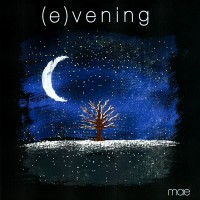
Mae: (E)vening

This may well be the last collection of music that Mae ever records.

Think about that, Mae fans.  Here is a band that's been part of your life for years, and this EP might be the last thing they ever say to you.  As sobering a thought as that is, it's the right mindset to listen to (E)vening.  This EP is certainly a departure from the first two "seasonal" EPs, and in just a year and a half, we've come a long way from the ebullient exaltation that the beginning of the day offered.

Instead, (E)vening plays out like a giant catharsis, the emotional capstone to Mae's oeuvre.  The mood is reflective and serene throughout, consistently recalling the past, asking us to remember--or not giving us words at all, just making us think.  Even the most ostensibly upbeat and energetic track on the EP, "I Just Needed You to Know," is filled with questions of "do you remember?", and the only other two tracks on (E)vening that have words are even more nostalgic.

The EP has either 7 or 9 tracks, depending on how you look at it; three tracks are movements of one larger piano piece, the appropriately named "Seasons," that forms the focus of the EP.  Counting "Seasons," over half of the album is instrumental, and nearly all of that is piano.  It's like a victory lap for Rob Sweitzer, newly reunited to Mae for this EP and the Goodbye, Goodnight tour; it's obvious that Mae is glad to have him back, and the longtime fans certainly are too.

And in the end, Mae's longtime fans are exactly the audience for (E)vening.  It's not a collection of music that's going to get much if any play outside of the most dedicated fans of the band.  Nor is it a collection of music that's really going to get you excited about Mae if you heard it in isolation; it's certainly not the rock-out Mae of "Someone Else's Arms".  But it is gorgeous and introspective and in many respects exactly the right album for Mae to leave us with.


Currently listening: "Golly Sandra," Eisley

Mae: Goodbye, Goodnight Tour

This was a concert five and a half years in the making.

(That's longer than Isoceleria has been around!)

Ever since March 2005, The Everglow has been at or very near the top of my list of favorite albums.  It's nearly impossible to describe why--I've tried in the past and failed miserably every time.  But it probably has something to do with it being a really, really good album.  The musicianship is outstanding, the scale and execution of the concept are impressive, and the emotion that drives the album (avoiding both traps of being either hipster-ironic-tongue-in-cheek or over-produced-insincere) is genuine.  It definitely has something to do with some personal factors that are even more difficult to express.

Yet, despite my five-year love affair with The Everglow, I never managed to see Mae in concert until last Wednesday.  Mae has been back and forth with their releases since then, but nothing could erase the brilliance of The Everglow, and their enthusiasm and sincerity always seemed like they would produce an excellent live show.  And somehow, I've managed to miss them in concert despite adoring their music since I've known what a concert was--not for lack of trying.

When I found out that Mae was coming to Bottom of the Hill, which has recently become my very favorite place in the Bay area to see a concert, there was no question that I'd be at that concert.  And when Mae started throwing around phrases like "Goodbye, Goodnight," suggesting that this might be their last tour as a band, I jump in it.

Opening were Windsor Drive and Terrible Things, both of which turned out to be reasonable openers for Mae.  Windsor Drive was a fine complement to Mae's gentler, acoustic side, while Terrible Things more closely matched rocker-Mae (or closer still, Anberlin).  I hadn't heard of either band prior to the concert, but seeing both bands turned out to be worth my time, something that can't necessarily be said of every opener out there.

Mae themselves turned out to be everything I've been waiting five and a half years for them to be.  Despite some fluctuation and unfortunate drama with their personnel over the last year or two, Goodbye, Goodnight Mae is Everglow Mae--and that's the only way we fans would have had it.  They were enthusiastic, energetic, and obviously grateful to their fans (to the point of taking pictures of the audience after the concert), and they sounded remarkably cohesive for having not really toured together as a band for years.

While halfway a tour in support of the (E)vening EP, Mae's set list featured songs from every album and every era of their music.  The concert was unsurprisingly Everglow-heavy--apparently there are many, many Mae fans out there who feel the same way I do about that album--with about half to two thirds of the album getting played.  We also got to hear a little over half of Destination: Beautiful, the band's first album, from all the way back in 2003.  The rest of the concert was a smattering of Singularity, the seasonal EP's, and a couple of B-sides/rarities.

Prior to the concert, I made a list of ten songs, saying if Mae was going to play just ten songs for me, I'd want it to be these ten.  I hit seven out of ten: "Embers and Envelopes" and "Sun" from Destination: Beautiful and "Suspension," "Someone Else's Arms," "The Ocean," "Breakdown," and "Mistakes We Knew We Were Making" from The Everglow.  They left off "All Deliberate Speed" from D:B (which surprised me a little, because I think it's a well-known song, and it features a sing-along-ready chorus) and "The Fisherman Song" and "Boomerang/Two Birds" from (M)orning (which surprised me less, since they're both sort of niche songs that undoubtedly took center stage at the Morning tour last year).

Hands down, the best chunk of the concert was the encore.  The main body of the concert had somehow gone by without either "Sun" or "Someone Else's Arms," so during the "let's clap for five minutes even though we all know the show isn't really over" session, I turned to a friend and asked "There's no way Mae play a concert and doesn't play 'Sun,' right?"  A minute later, I got my wish, as Dave Elkins climbed back on stage with an electric-acoustic guitar, smiled, and said "Here's an old one."

As I stood there thinking the concert couldn't get any better, the entire band rejoined Elkins on the stage and launched into the piano-heavy "We're So Far Away".  It's a nice track, and I'm not about to turn down anything from The Everglow, but it seems an odd track to include by itself in a time-constrained encore situation.  But just as it does on the album, the concert "We're So Far Away" was really just a buildup to the sheer exuberance of "Someone Else's Arms," and there was no better way that Mae could have ended the show.

Mae gave its fans more than an hour and a half of music that night, and it was an excellent capstone to the five and a half years of music they've given me already.  If Mae decides to keep on making music after this tour is finished, I'll of course eagerly await it.  But if not, it was a fitting way to say goodbye and goodnight.


Currently listening: "Mass Romantic," the New Pornographers

Thursday, November 11, 2010

The Way of Kings

Epic fantasy authors probably hate comparisons to the Wheel of Time--and Brandon Sanderson is probably more sensitive to those comparisons than any of them as the author who had the monumental task of finishing out the Wheel of Time. But let's face it: the Wheel of Time is our generation's defining fantasy epic, and it's a testament to that series' longevity and influence that every fantasy series from 1990 through 2010 (and probably beyond) is going to be compared to it.  Sanderson's new epic series, the Stormlight Archive, is no exception.

The most striking difference when comparing the Stormlight Archive (or at least The Way of Kings) to the Wheel of Time is that the central conflicts of the two settings are designed very differently.  From halfway through the first Wheel book, we know exactly what the central conflict is: the forces of the Dragon Reborn (the good guys) against the forces of the Dark One (the bad guys).  There are a lot of characters who can rightly be considered protagonists, but it's obvious from the first chapter of the first book that the central one, the most important character to the story, is Rand al'Thor, the Dragon Reborn.  And there are a lot of characters who can rightly be considered antagonists, but it's obvious from the flavor text to the prologue (not to mention his big-bad-guy name) that the big bad guy is the Dark One.

In contrast, after a book of Stormlight, we don't know who or what fills the role of central conflict, primary protagonist, or primary antagonist.  In that regard, Stormlight is closer to emulating George RR Martin's A Song of Ice and Fire, which deliberately avoids the distinction of "main character"/"big bad guy" (or really even of protagonist/antagonist at all), and whose central conflict is basically a tapestry of a bunch of smaller conflicts that all happen to influence each other.

But that's not necessarily an apt comparison either.  Stormlight, at least after one book, seems to have a central conflict--we just can't necessarily comprehend what it is yet.  It has definite protagonists in the forms of Kaladin, Shallan, and Dalinar, though we don't know which (if any) of them is the "most important".  And a conflict as climactic and apocalyptic as what's been hinted at has to have an antagonist behind it, but after the first book, we have literally no idea who that is, much less what its motives and intentions are.

It's not immediately clear whether that ambiguity is a good or bad thing, but in truth it's likely a little of both.  It's nice that we don't know exactly where the book is headed, so we have to remain invested in every character and every story arc.  But it's also a little disconcerting that there's no apparent structure or destination in mind.  Worse, even high-concept epics that do have clear destinations don't exactly have great track records of completion.

To what extent does Brandon Sanderson actually intend to finish the Stormlight Archive?  It's a cynical thing to wonder, but that cynicism is unfortunately justified in comparison to other contemporary epic fantasy series.  George RR Martin hasn't made any apparent progress on A Song of Ice and Fire in the last five years.  Terry Goodkind did finish the Sword of Truth series, but only after many more books than were probably necessary and enough shifts in setting, supporting characters, antagonist, and motivating conflict to make it seem like three or four series half strung together.  And Robert Jordan actually died before he could finish the Wheel of Time.  Obviously it's a tragedy, but it serves as a reminder that even the best laid plans of fantasy authors don't always come to fruition.

That said, the Stormlight Archive has a better-than-average change of reaching its ending.  Brandon Sanderson is relatively young (middle 30s) and seems to be in good health.  The series is slated to be comprised of ten books, and ten is such an important number in the setting that I honestly believe Sanderson will end the series at ten books.  That's not to say there won't be bloat in the later books as Sanderson (inevitably) realizes he isn't telling the story as quickly as he needs to, but the promise of a logical stopping point in the series makes its finish seem more likely.

Even more convincingly, Sanderson has progressed incredibly well in his pursuit to wrap up the Wheel of Time.  The first of Sanderson's contributions to the Wheel of Time books was scheduled to release in 2009, and we got it in November 2009.  The second was supposed to release before the end of 2010, and we got it in November 2010.  The Wheel of Time books are not small undertakings--neither in terms of pages nor the expectations of demanding fans--but Sanderson's demonstrated ability to deliver a large volume of high quality work while still maintaining a schedule is the best evidence that Stormlight will eventually reach a proper and timely conclusion.

The bigger question, of course, is do we want to read the Stormlight Archive all the way to its conclusion?  At least after The Way of Kings, the answer is mostly yes.  It's obvious that Sanderson has sunk an incredible amount of time and effort into world-building, and his effort has paid off.  I'm already invested in the setting, and I definitely want to know what's going on.  The characters are mostly good too, though at this point I think I'm more invested in the mythology than the characters.  It's a dangerous road to walk--remember how many Lost fans were disappointed when they didn't realize until too late that Lost was about the characters, not the mythology--but I don't doubt the characters will grow even more interesting as the series progresses and we've spent some time with them.

The Way of Kings has only three centrally important characters, and they're all intriguing enough to keep me reading about them.  The Kaladin chapters are generally the best, as the character development in them is both believable and interesting, but Kaladin's backstory is far too lengthy compared to the insight it gives to his character.

In fact, the biggest criticism I can give The Way of Kings is that it's too long.  The one-thousand page mark in books is sort of like the three-hour mark in movies: you better have something truly extraordinary going on, or you're not holding my attention anymore.  Way probably could have cut down to two-thirds or three-quarters its size and still been all right.  And granted, it necessarily has its share of expository elements that won't need to burden future books, important if pedantic details like explaining how the monetary system works, or noting the cultural significance of a certain style of clothing.

To come full circle and close with another Wheel of Time comparison, many readers have already wondered if Sanderson will develop "Jordanitis"--with some complaining that he already has--that is, devoting so much of the book to description and detail that very little ends up happening.  Honestly, he very well may.  But part of the reason that the readers of the Wheel of Time grew so frustrated with Robert Jordan was that we had to wait indefinitely for each book, never knowing how long it was going to take to hear more of the story.  So when a new volume was released that didn't actually tell any of the story, it was more than a little disheartening.

Where Sanderson seems to have surpassed Jordan, at least so far, is in his discipline.  As long as Brandon Sanderson remains vigilant about consistently telling his story, we will read it, even if it takes ten thousand pages over fifteen years.


Currently listening: (E)vening, Mae (review to follow)

Wednesday, October 27, 2010

The Age of Adz: Album and Concert

Sufjan Stevens' proclamation of "electronica influence" for his newest album didn't exactly instill much confidence in many fans.  We want the solemn resilience of Michigan, the understated reverence of Seven Swans, the sincere exuberance of Illinois.  The very mention of "electronic" from an artist who'd build an indie empire out of acoustic, folk, and orchestral modalities just screams "now it is time for my seventh album and I am going to do some crazy experiments with it!"  And experiments go oft awry.

But hey, in 2003, if you'd asked me what I thought of a Ben Gibbard-"electronica" collaboration, I would have said that would be a bad idea too.  And I would have been very, very wrong.  So, bring on Age of Adz and all its electronic glory.

You can tell just by looking the cover that we're not getting the joyous proclamation of America that the Fifty States Project gave us.  Instead, it's raw emotion, something that Stevens dreamed up under some combination of influences including his disenchantment with his earlier, lyrical approach to songwriting; his battle with some mysterious disease over the last year or two; and the post-apocalyptic, schizophrenic art of Royal Robertson.  It's Robertson's treatment of the End of Days that colors a lot of the aesthetic on the album, including some downright "spacey" sound effects that would have seemed miserably out of place on any of Stevens' earlier records (even when the songs were about UFO's.)

At first, I was admittedly Not A Fan of Age of Adz.  I was such a massive fan of Stevens' earlier work--Illinois in particular is easily one of my top ten favorite albums--that any drastic departure from his earlier aesthetic was a change I just did not want to deal with.  Besides, when that change is to intentionally introduce dissonances and elements that make the music sound less good, I'm immediately biased against it.  (When Mae tried it, it didn't work out too well for them either.)

Then again, I was admittedly Not A Fan of All Delighted People, Stevens' ambush of an EP earlier this year... but I warmed up to it after only two or three listens.  In much the same way, I'm warming up to Age of Adz slowly but surely.  The thing to realize here is that Stevens' music is and always has been excellent because he's a master at arranging sound.  Whether that's the banjos and guitars of Michigan, the orchestral explosion of Illinois, or even the blips and buzzes of Age of Adz, Stevens is incredibly good at taking several different sorts of sound at once and putting them all together in a way that makes sense.

Age does have some standout tracks.  "Vesuvius," especially, has quickly become one of my favorite Sufjan Stevens songs ever.  Daring to use volcano imagery, the song begins slowly and quietly before erupting into an incredibly powerful message of following your heart and doing what you feel is right even in the face of dire consequences.  The title track "The Age of Adz," "I Walked," and "Too Much," are all quite good as well.  I'm less a fan of "Get Real Get Right" and "I Want to Be Well," which strike me as experiment for the sake of experimentation rather than for the sake of making interesting and innovative music.  But all in all, Age of Adz has good stuff on it if you know where to look.

So when I had the opportunity to see Sufjan Stevens live, even though I knew most of his material would be from Age, I figured I liked enough of the album that I'd be able to appreciate the live show.  And I'm glad I went.  Stevens doesn't exactly have the reputation for being conventional, and that showed as soon as he took stage--with a dozen people.  Among his retinue were two drummers, two trombone players, a handful of multi-instrumentalists, and two women who serves as both backup vocalists and streamer-waving dancers.  On top of all of that, a video screen behind the stage showed various cosmic and apocalyptic scenes taken from or inspired by Royal Robertson's work roughly synced to the music.  Spectacle is an important reason to see a live show, and Stevens absolutely nails it.

It's true that I'm feeling better about both All Delighted People and The Age of Adz than when I first heard either--and seeing songs from both live certainly helped me appreciate both better.  But it was still a little disappointing when all of Stevens' material save two songs came from either the EP or the recent album.  Of course, Sufjan played "Chicago"--even though this is the single most recognizable artifact of an era that he's clearly trying to distance himself from, there's no way Sufjan Stevens plays a concert and the fans let him get away with not playing "Chicago".  Stevens' encore started with the opening track from Illinois, which contains "UFO" and (in true circa-2005 Sufjan Stevens style) about ten other words, and it's a nice piano piece, but I would have liked even more Illinois throughout the show.

Though seeing most of the songs live helped me appreciate them better, I'm still not convinced that "Impossible Soul" is any good at all.  It's an oblique, 25-minute sprawl that closes the album, which Stevens referred (potentially tongue-in-cheek) to as his "magnum opus".  It's the potential tongue-in-cheek nature of this entire song that bothers me.  For a few miserable minutes in the middle of it, Stevens decides it's cool to use auto-tune.  This could be for one of two reasons: either he thinks this effect actually sounds good or he's going for a supremely hipster irony in smugly referencing a pop music phenomenon.  The first reason is simply incorrect; the second is actually more dangerous because it represents a departure from the deeply emotional sincerity we've come to expect from Sufjan Stevens.

Much like a metaphor for the entire album, "Impossible Soul" has its good parts, its parts I could do without, and its parts I can't really stand to listen to.  The Age of Adz is something I can get used to--but that means it's strictly worse than Illinois, which was utterly brilliant the first time I listened to it and has remained equally as utterly brilliant the dozens of times I've listened to it since.  As I've said before, Sufjan Stevens will not and should not be an artist who re-releases Illinois six times, puts his feet up on his desk, and sips cognac.  But we wouldn't mind it if he decided to release, say, Arkansas instead of Some Galaxy Following a Supernova.


Currently listening: "Adlai Stevenson", Sufjan Stevens

Friday, October 15, 2010

Videogame Best Hits List

This is probably the best viral facebook survey I've seen in years.

The rules:  Don't take too long to think about it.  List fifteen video games that will always stick with you.  List the first fifteen you can recall in no more than fifteen minutes.  Tag fifteen friends, including me, because I'm interested in seeing what games my friends choose.  (To do this, go to your Notes tab on your profile page, paste rules in a new note, cast your fifteen picks, and tag people in the note.)

1.  Earthbound is and will always be my favorite video game of all time.  It's not the first game I played or the first one I enjoyed, and I won't even make the claim that it's the best video game ever made, but it's the first one I "discovered" (this sort of thing is important to a quasi-hipster), and it's the only one that's ever made a real impact on my life.  From 1995 until 2001, Earthbound transcended being a video game for me, and it became a way of life.  Where today, most of my creative output happens in my blog, during those years, it happened through Earthbound: making websites, writing fan fiction, discussing the game on various fansites like Starmen.net.  Earthbound has a particular culture about it--its quirky, almost trippy, aesthetic; its hilarious understated humor; its brilliant leitmotifs on its John Lennon-inspired soundtrack--all of these things make Earthbound an absolute masterpiece of a video game.

2.  The defining feature of Chrono Trigger is that it tells a linear story through a nonlinear timeline--sometimes you need to go forward in time to learn more; sometimes you need to go backwards.  And the true genius of the game doesn't reveal itself until you've already played through it once, when you can play through a second time and skip to the ending at any point to see how it changes.  It's one the few RPGs with legitimate replay value, and its reasonable approach time travel was well ahead of its time.

3.  Final Fantasy X is one of the only games that I characterize more by the number of things I didn't do (exactly two) than the number of things I did.  It is the crowning achievement in the Final Fantasy series.  VI was fantastic (and on this list), VII was truly revolutionary (and on this list), but there is no (and may never be a) better Final Fantasy game than X.  Sure, it introduced voice acting, had some innovative mechanics, and looked absolutely beautiful for its time... but the reason that X was so good was because its setting was impeccable.  It's the best example I've ever seen of a game where every detail--the game mechanics, the plot, the locations, and even the clothes the characters wear--reinforce the setting and make playing in it incredibly rewarding.

4.  Morrowind/Oblivion (/Tribunal/Bloodmoon/Knights of the Nine/Shivering Isles) are all grouped together on my list.  I know that they're technically at least two games, but they're similar in that they're set in the same universe, they're incredibly open-ended, they have a collective soundtrack that is one of the best of any video game ever, their style and tone are similar... and I sunk at least 120 hours into both of them.  They succeeded on different accounts--Oblivion was more balanced, more polished ("better produced" to use a music analogy), and better looking; Morrowind had slightly more to do and had a better story.  They're both among the greatest PC games ever, and well worth playing if you don't mind being antisocial for an entire month.

5.  The Legend of Zelda: The Ocarina of Time was the definitive game for the Nintendo 64.  I'll argue that Twilight Princess was actually the superior Zelda game, but Ocarina of Time did so much for the series and for 3D gaming in general that it's tough to pass up.

6.  Final Fantasy VI was the first Final Fantasy game I played, and it got me hooked, not only on the series, but also on JRPGs as a subgenre.  It's easily the most nonlinear of the Final Fantasy games, which makes it a lot of fun, and it probably features the best soundtrack in the series as well.

7.  I expect some resistance on this one, but I think Grand Theft Auto: Vice City is the best Grand Theft Auto game.  (Full disclosure: I haven't finished IV yet, but a few hours in, it's quite good.)  It was the first to feature voice acting from the player character and the first to include real-world music from well-known bands.  It was entirely better than GTA III, because it took everything good about it and improved it, but it avoided the trap of overextending like San Andreas.

8.  I'm not by and large a strategy fan, but I'd be remiss not to include Rise of Nations on this list.  I first played it in spring 2003, after I'd taken World History in high school (pretty much my favorite class ever), so I was on a real history kick around that time.  It implemented lots of innovative features like permanent cities and territory, it had enormous success in merging conventional RTS battles and world-domination grand strategy, and the expansion added some both fun and detailed re-interpretations of historical campaigns.

9.  Super Metroid is an absolutely classic platformer, most notable to me for being part of my friend Nicholas's self-proclaimed "best day ever".  My best friend through elementary and middle school, Nicholas's best day ever included seeing Good Burger in the theater and getting a Tamagotchi.  (Hello 1997.)  And it was the first time either of us completed Super Metroid in under the three hours necessary to see the "best ending".  (It was a team effort--I planned a course, and Nick executed it.)  Prior to that day, the goal had seemed nearly insurmountable to our ten-year-old selves.

10. Super Mario World was the very first video game I ever played and was therefore responsible for spawning one of my biggest hobbies over the past fifteen-plus years.  It helped to forge my friendship with Nicholas, and a decade later I remember playing through it as being one of the most fun things I did with my high school girlfriend Jenny (except for maybe discovering Curb Your Enthusiasm).

11.  Even though none of us had ever touched a skateboard in our lives, my friends and I spend an irrational amount of time playing Tony Hawk's Pro Skater 2 circa 2001.  (The game did spawn a short skateboard career for Nicholas, which was sadly cut short by injury.)  The soundtrack is atrocious (except in a hipster-ironic sense) and the skate culture is probably the furthest thing imaginable from my personal aesthetic, but how could you not love spelling inappropriate things in "horse" mode and pulling off the 900?

12.  GoldenEye 007 was basically the de facto go-to party game in the late 1990s.  It (along with its spiritual successor, Perfect Dark) was probably the only shooter I've ever truly enjoyed... and man, was it fun karate chopping, Moonraker lasering, and throwing-knifing all your friends.

13.  There is at least a plurality consensus among JRPG fans that Final Fantasy VII is the best in the series, and despite my mentions of X's beautiful story and setting (or VI's free-wheeling self-determination), I haven't won too many people over.  They have a point--VII pioneered 3D for console RPGs, plus it has some iconic characters and settings, the single best piece of music on any video game soundtrack ("One Winged Angel," of course), and enough secrets and side quests to occupy you for quite a while.  To add a personal note, this game is what convinced me to but a Playstation.

14.  Donkey Kong Country might not have made to this list had I not watched my friend Tom play about a quarter of it a few months ago.  I realized that, fifteen years after I'd played the game for the first time, I still instinctively know the first twelve or so stages backwards and forwards: optimal paths, locations of extra lives, how to get to secret areas.  That brought a flood of nostalgia, and I remembered just how much I'd enjoyed it back in the day.

15.  Admit it: you played Pokemon.  You only started playing because it was a fad, and you stopped playing when it became passe, but for the year or two when it was socially encouraged to play Pokemon, you had a hell of a good time.  To this day, I can't name a game that has taken such a creative spin on the RPG idea, nor one that has combined single-player and multiplayer modes so effectively.  In fact, looking back on it, you'd be hard-pressed to convince me that Pokemon was not one of the great achievements in video game design history--it was a social gaming experience five years before we knew what social media was.


Currently listening: "Sweet Talk, Sweet Talk", the New Pornographers

Wednesday, October 13, 2010

Letter in response to Blum Center protests

One of the sources of funding for my research is the Blum Center, an organization devoted to helping the quality of life in some of the world's poorest places.  Blum Hall, where the Center is based on campus, had its grand opening last week, and the point was to show the rest of campus all the good things that research funded by the Blum Center is doing.  But a bunch of asshats showed up to protest, because apparently that's what you do for an organization that's trying to bring cooking stoves to Darfur and clean water to the slums of Mumbai.  Here's my letter to the editor of the Daily Cal that expresses that same sentiment but much more professionally.


This letter is in response to the protests that occurred during the grand opening of Richard C. Blum Hall, the campus home of the Blum Center for Developing Economies.  The grand opening, last Friday, October 8, showcased some of the research that is supported by the Blum Center and featured remarks from Chancellor Birgenau, Richard Blum, Senator Dianne Feinstein, and former Secretary of State George Shultz.  It took place amidst several protests that bore messages such as "Blum, don't privatize UC" and "end poverty here first."  These protests were factually inaccurate on some grounds and logically misguided on others.

First, accepting research grants from private entities (whether corporations, individuals, or charitable organizations) in no way constitutes "privatization" of the University.  In 2008, the University accepted $120 million in research funding from private-sector or non-profit sources.  That funding has allowed the University to investigate topics as diverse as stem cells, robotics, and economic policy.  And it has enabled the University to become a world leader in biofuels and other renewable energy research.  Yet, Cal has remained a public institution and has consistently been recognized as the best public university in the country.

Second, the Blum Center's mission is to fight poverty in the developing world; construing this mission as a lack of concern for domestic poverty is a straw man fallacy. Roughly 40 million Americans live in poverty, and their situation is a serious one.  But this poverty is a fundamentally different challenge from the one that the Blum Center aims to address.  For example, among the eight million people living in the slums of Mumbai, many have no access to sanitary water; the Blum Center is funding research to develop viable and efficient solutions for ensuring a clean water supply.  As problems that require both scientific excellence and a commitment to global engagement, these are problems that the University of California is uniquely poised to solve.

Unfortunately, as Mr. Blum explained the goals of the Center to its researchers, staff, and students, he was interrupted by a loud protest.  To paraphrase Mr. Blum, apparently those involved with the protest would rather us not work toward improving the quality of life in the developing world.

In addition to interrupting Mr. Blum's speech, the protests closed an afternoon poster session to the public.  The poster session was originally intended to be an open house.  Ironically, the actions of the protesters did more to "privatize" the University's mission than did any donation from Mr. Blum.  By preventing UC students, faculty, and staff from attending this event, the protesters denied the entire UC community a chance to engage the Blum Center-supported researchers and support their creativity and social consciousness.

Berkeley has a strong tradition of free speech, often including protests, and that tradition ought to be maintained.  Protest injustices, protest unethical behavior, protest barriers that stand in the way of the University's goals.  Do not protest those of us who are trying to use our talents and our resources to make a positive change in the world.


Currently listening: "Your Hands (Together)", the New Pornographers

Tuesday, October 05, 2010

3-Sentence Reviews: September 2010 Television (part 2)

Continued from part 1...

The Big Bang Theory is the only conventional laugh-track sitcom I've liked since Seinfeld, and it's one that anybody who went to a tech-oriented school or had a lot of science-major friends will be able to appreciate.  Its fourth season is as strong as ever, and the show is on a definite upswing now that it's gotten the Leonard/Penny romance out of its system.  We're still ever closer to getting "The Sheldon Show," where everyone else is basically a supporting character, but that almost doesn't matter given how good Jim Parsons is.

I have a strange criticism of $#*! My Dad Says (pronounced "bleep my dad says"), and it has nothing to do with its unorthodox inspiration.   Instead, I don't like this show because it's nowhere near offensive enough.  The entire entertainment from the Twitter feed was the titular dad's vulgarity, bigotry, self-righteousness, and iconoclasm; at 8:30 pm on broadcast television (instead of a later timeslot or a cable channel), it can't feel anything but watered down.

While it really should have ended a year or two ago, The Office really better end after this season when Steve Carell departs.  The seventh season so far isn't as strong as the first three or four, but at least it has avoided the miserable drama of the most recent couple.  BJ Novak is still frustratingly underused, and the "Michael irrationally despises Toby" story/joke is not nearly as funny as the writers think it is, but new guy Gabe fits in perfectly, and the Dwight/Pam "we are stuck" moment was classic, hilarious, brilliant Office.

I probably would never have watched Outsourced had I not stumbled upon (and generally liked) the film of the same name (and inspiration for the television show).  This show illustrates how difficult the movie to television conversion is: the movie had about 100 interesting minutes, and when it had used them up, it ended; even though we're only on episode 2 of presumably 20-25, we've already seen 43 minutes of content from the show, and I honestly have no idea where the show might go after its fourth or fifth episode.  Still, I appreciate the change from love story to workplace comedy, and I like that the show isn't trying to make some grand statement on US/India relations, just pointing out that things one culture takes for granted are laughably bizarre to another.

In its last three seasons, The Mentalist has quietly emerged as the best procedural on television.  There's just enough House-esque snarkiness--but less abstract pontificating on the nature of lying and a whole lot less unnecessary drama with the eponymous character dating his by-the-book female boss.  Better yet, the series has finally hit its stride, including just enough Red John episodes to keep the overall arc moving forward but not so many that we get tired of it.

Alone among reality shows, The Amazing Race has redeeming value: the chance to be educated about all sorts of awesome things and places all over the world.  It's almost enough to make me want to do The Amazing Race... then I look at the ridiculous things the contestants are made to do, and I realize I really do not want to do The Amazing Race.  So far, I don't have a team I'm strongly rooting for--but then again I don't really hate many of the teams, so this season seems like it should be especially watchable.


Currently listening: "High Art, Local News", The New Pornographers