Wednesday, May 16, 2012

Yogurt Chronicle: Fridge Clean-Out Edition

I've found a bunch of stuff in my fridge (and my pantry) over the last month that was sort of sitting around, forgotten or about to go bad or just without enough of it left to do much of anything with... except make yogurt.  Here, the last three or four chocolate coins, stubbornly hanging out since Christmas, made their way into mocha latte yogurt.  I Microplaned the coins and stirred them in along with a spoonful of ground coffee and 2 spoonfuls of sugar.  The taste was among the best of anything I've made so far, though the coffee was a little coarse and I still wasn't happy with the distribution and quality of mixing.  This was, however, the first yogurt I've ever had that woke me up.

 Several months ago, my roommate went on a fruit-preserves making binge, and our apartment ended up with at least five Tupperware containers full of blackberry jam.  It's delicious stuff, though our apartment's demand for preserves never quite caught up with its supply, and now we're stuck in surplus-land.  I attacked the problem by mixing up some blackberry preserve yogurt, with about two heaping tablespoons of preserves, and I was really pleased.  The preserves are already both sweet (so no need to add more sugar) and smooth (so I didn't have any mixing or consistency issues to complain about).  It's not the most exotic thing I've ever made, and I'm sure you can find commercial blackberry yogurt plenty of places, but this is the first one I've made that had the taste and feel of something you'd actually pay money on.

Every trip I take to Berkeley Bowl results in at least fifteen dollars' worth of things I never intended to buy making their way into my shopping cart anyway because they look so delicious.  One late April's result was a bag of cinnamon sugar almonds; once the bag was nearly depleted, the rest got ground up in the mortar and pestle to produce about a quarter cup of ground nuts, which then became candied almond yogurt.  These nuts were delicious, and sweet, anyway, so the resulting yogurt tasted pretty good, but my old enemy texture reared its ugly head again.


A bag of herbs just a few days out from turning brown was the inspiration for southeast Asian herb yogurt.  I chopped up about a tablespoon each of fresh cilantro and fresh basil.  Then, because the "packaged on" date for my tub of honey ended in "2010," I decided to add the rest of it (around 2 tablespoons) to this yogurt, even though that hasn't proven to be the best idea in the past.  It was a better fate for my herbs than throwing them away, though I probably wouldn't try this again--the "herbs and honey" phase of my yogurt never actually became part of the "yogurt" phase, and it had both an odd flavor and texture as a result.

The lovely pink color in this batch comes from fresh strawberries, which I chopped up and mixed into the yogurt without adding anything else.  I thought the natural sugars from the strawberries would sweeten the yogurt enough, but if I try this again, I'll definitely need to supplement it.  The strawberries weren't so finely chopped, but I didn't mind that texture so much because they were already mushy, and it didn't turn crunchy.  Aesthetically, this might have been among my more successful yogurts--it looks nice and smells pleasant too.

Monday, May 07, 2012

Leaving Through the Window: Celebrating Ten Years

Everyone has one, and if you're lucky, you might have more: an album that instantly transports you to a time and place; one that you forget about for months at a time, and every time you remember it, you smile in a wave of nostalgia.  Somehow, it hasn't grown stale through the years.  Even though nobody--no, not even you--would call it truly great music, it's brilliant to you, and that's all that matters.

Leaving Through the Window, Something Corporate's first and probably best-known commercial release, was (astoundingly) released a decade ago today.  It's an album that probably only could have come from the year 2002: some fusion of pop-punk and emo and piano-rock with its roots in every artistic movement popular during my high school years.  Something Corporate neither invented nor reinvented nor dominated the genre; Leaving Through the Window is not what most would turn to when remembering an album that typifies the culture.

But they're the ones who dominated the genre to me, and it's the album that I turn to immediately.  And no wonder--I listened to Leaving Through the Window hundreds of times in high school, in basements with friends playing Nintendo 64, in cars with girls I had crushes on, in living rooms with guys who started new bands every few weeks (where I could always say "you guys should play something by Something Corporate" and look like I knew what I was talking about).

There's a theory that the music you hear at age 14 or 15 is the music you most strongly associate with the rest of your life.  If that's true, it looks like I'm stuck with Leaving Through the Window for a very long time.  I can't imagine a better fate.

Saturday, April 21, 2012

The Talking Pineapple Nonsense: Why Reading Comprehension Tests Suck

From eighth-grade classrooms in New York comes the incredible story of a talking pineapple, the protagonist of an utterly incomprehensible reading-comprehension question on a standardized test.  Teachers, students, parents, and administrators alike admitted they had no idea what the question was supposed to be asking.  Even Ken Jennings was brought in to discern whether the question was possible, and his answer was a resounding "no."  Soon after people from all across the country started mocking it, the pineapple question was stricken from the test.  That was a good move, but the controversy has brought to light a systemic weakness of reading-comprehension questions on standardized tests: many of them are wholly subjective, yet they demand test-takers to shoehorn in objective answers.

Math and science questions have right answers.  You can't argue that if 2x + 3 = 7 then x does not equal 2.  There's no debate that the Earth's mantle lies between its crust and its core.  Most English questions have right answers, too.  Regardless of context, "stingy" is a pretty good antonym for "generous".  But in reading comprehension--and in the larger field of literary criticism--things are not so black and white.  Good literary critique is all about formulating an idea then finding evidence from the work to support it.  It's why people today can read Crime and Punishment or Moby-Dick and have new discussions about them, interpret them in different ways, find personal meaning in them.  If subjective personal meaning and novel interpretation make language education a valid discipline in the first place, then why are we testing proficiency in that discipline with ostensibly objective multiple-choice questions?

I noticed it as an eighth-grader taking these tests.  I was fine with questions like "what did this character mean?" or "in what order do these events take place?".  Questions that asked me to interpret how a character was feeling or his motivation for doing something always felt a little hazy.  But by far the worst were the questions that asked me to straight-up speculate.  Talking Pineapple has one of the worst I've ever seen: "What would have happened if the animals had decided to cheer for the hare?"  We don't know for sure, because that's not what happened.  The author, the test-writer, and the test-taker might all have very different answers to that question, none of which would necessarily be "wrong" as long as their answer made sense based on the rest of the story.

But the "what would have happened" question asks the test-taker to give an objective answer based on a hypothetical situation.  There is no way that any answer to this question should ever be scored as "correct" as x = 2, or as "incorrect" as x = 5.  Yet that's exactly what multiple-choice questions on reading-comprehension tests do.  And although Talking Pineapple gave one of the most public, and egregious, examples of this forced objectivity, it's been a mainstay of standardized tests for decades.

It seems obvious that in a field where reasoned argument is a critical skill, we should be testing students' abilities to make reasoned arguments.  A binary, "either you're entirely correct, or you're entirely incorrect" bubble on a Scantron sheet doesn't test that ability at all.  (In the worst case, it tests the ability to guess an answer at random out of four or five.)  So why not allow test-takers to make their arguments?  What would be wrong with asking "What would have happened if the animals had decided to cheer for the hare?  Pick an answer A-D and explain your answer."  Then, don't score the answer at all, but score how well that answer was supported from textual evidence.

Of course, the reason that's not done is expedience: it takes a lot more effort to score thousands of short-answer essays than thousands of multiple-choice bubbles.  But these are high-stakes tests.  If they're going to be used to determine whether a student is allowed to go to high school, or whether a teacher is performing adequately, then both the students and the teachers deserve a little extra effort from the scorers.  Regardless of the stakes of the test, though, putting questions like these in any sort of exam shows a complete lack of understanding of the very discipline it's claiming to test.  Reducing literary comprehension and critique to a series of multiple-choice questions isn't just a simplification; it's antithetical to the skills that classes about language education should be teaching.


Currently listening: "Blue," First Aid Kit

Saturday, April 14, 2012

Yogurt Chronicle: Herbs and Spices Edition

I started my latest round of yogurt flavoring with nutmeg, a suggestion from Steph.  It's her new favorite spice, and I realized that outside of October, November, and my mom's ricotta-cheese pasta filling, I don't encounter nutmeg much at all.  For a cup of yogurt, I went with about a teaspoon of sugar and a dusting of nutmeg, just enough for a slight brown swirl to show up when I stirred it.  It's tough to see in the picture, but nutmeg isn't one of those spices where you have to see it to know it's there.  This one turned out really well, possibly my favorite batch so far.  The nutmeg was subtle, present but not overpowering, and it's given me about half a dozen other spice-yogurt ideas.

Next up was another Steph suggestion: chai yogurt.  As anyone familiar with the authentic stuff will adamantly tell you, real chai contains five ingredients: water, milk, tea, cardamom, and sugar.  Yogurt starts from milk anyway, so it seemed a natural fit.  I think I've found my sweetener:yogurt ratio, so I added 2 teaspoons of sugar to two cups of yogurt, then I ground up four cardamom pods in my mortar and pestle and threw those in too.  The toughest ingredient to add turned out to be the tea.  I put in a teaspoon of loose-leaf tea, and it just sort of sat there, not mixing into the yogurt well at all (those are the large brown flecks throughout).  So I ground up another teaspoon worth and added it too, and it mixed a little better that time.  Chai yogurt didn't turn out quite as successful as I'd hoped: the crunch from the whole tea leaves provided a weird texture without imparting much flavor, and the cardamom was a little overpowering.  I'd try this again but cut the cardamom in half, and maybe brew the tea leaves first and mix them into the yogurt when they were still warm to try to "brew" the yogurt a bit.

The leg of lamb I'd cooked on Easter was the unlikely source of inspiration for this one.  The combination of fresh rosemary and mint was so delicious on the lamb, why wouldn't it work in yogurt?  I added two teaspoons of sugar like usual.  Then, I chopped up some fresh rosemary (maybe a teaspoon) from my balcony garden and some fresh mint (maybe two teaspoons) from my refrigerator garden and stirred it all together.  About the only thing that didn't work was a bit of unwanted texture from the rosemary: while all the flavors transitioned from lamb to yogurt surprisingly well, every spoonful had just a little crunch, which is still something I don't know that I need in my yogurt.

Tuesday, April 03, 2012

3-Sentence Reviews: Music from Spring 2012

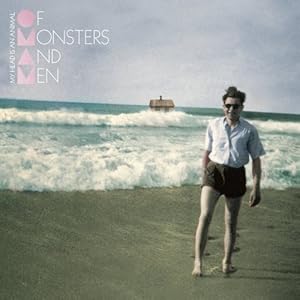
Big surprise here: the US release of Of Monsters and Men's album My Head is an Animal is still good.  It features a couple extra songs added to its Icelandic release, with "Mountain Sound" in particular making this already amazing album even better than it was before.  What scores the band the most points, though, is that they're awesome people, taking time to mingle with their fans after a concert and having a blast playing through their first US tour.


For a band whose first album had hints of breaking through into something truly great, it's a little disappointing to hear The Vespers' sophomore album The Fourth Wall be merely different rather than brilliant.  It's not necessarily an improvement on Tell Your Mama, more of a stylistic shift to encompass more overtly Christian themes and embrace its Deep-South spiritual roots, with the few infectiously sunny up-tempo pieces seeming further out of place the more you listen to the album.  Sooner or later, The Vespers will need to pick a stylistic direction and stay with it--or, better yet, release multiple albums in multiple styles--but it's tough not to like the quartet's ambition in drawing from so many genres, and their mastery of vocal harmony is among the best there is.

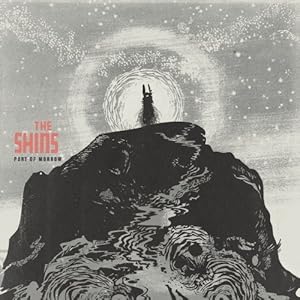
Every Shins album so far, including Port of Morrow, has seen increasing levels of production: Oh, Inverted World suffered for its low production and lo-fi-ness in general; Chutes Too Narrow had more production and was a better album because of it; Wincing the Night Away really hit a sweet spot and was easily the greatest thing the Shins have done so far.  The term "overproduced" is enough overused that it's basically meaningless, but the fresh, indie-pop hooks of Wincing have largely been replaced by a smooth gloss that doesn't offend but doesn't easily excite either.  "For A Fool" and "It's Only Life" are entirely forgettable, medicore-at-best attempts at something mid-tempo; fortunately "The Rifle's Spiral" and "No Way Down" keep some of the old pop brilliance, and "September" is among the most heartfelt and lovely things James Mercer has come up with.

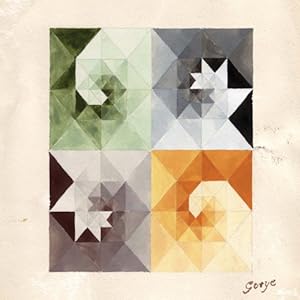
Making Mirrors, by an artist who calls himself Gotye and pronounces it "go-tee-ay," is one of those odd albums that somehow decided to choose its very worst song for its breakout radio single.  Like probably a majority of listeners familiar with him, I was first introduced to Gotye by having "Somebody That I Used to Know" forced on me by FM radio (Live 105.3, I'm looking at you), and from it, I erroneously concluded that Gotye was mumbly and boring.  It's not as standout an album as some would proclaim, filled with bizarre auditory non sequiturs and containing an unfortunate miscue in the form of an autotuned reggae track called "State of the Art," but "I Feel Better" and "In Your Light" take all the best elements of 60s-70s Motown, funk, and even Southern rock to turn out music I actually want to listen to.

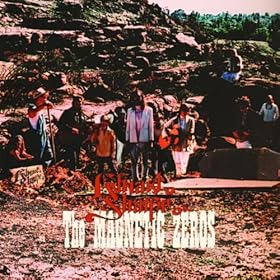
This month's "late to the party" entry comes from Mr. Edward Sharpe & the Magnetic Zeros, which given my general enthusiasm for all things indie folk is about as egregious an omission as Fleet Foxes were a few months ago.  It's actually not as folky as it could have been given its standout single "Home" (they got this one right; except for the irritating spoken-word passage, it's by far the best track on the album).  A liberal application of horn section and the occasional harmonica works really well; some unfortunate vocal quirks (spoken passages, changes in register, deliberate not-quite-on-the-beat singing) are nowhere near as clever as they think they are; and the constant genre experiments might either be refreshing or exhausting depending on your mood.

Wednesday, March 21, 2012

Yogurt Chronicle, Part III

After making yogurt and experimenting with some basic flavorings, I've decided to take more of the advice of my yogurt-making instructions to flavor it in new and exciting ways.

My first try was with raspberry jam; the suggestion was 1 tablespoon per cup of yogurt, and 2 tablespoons for my 2 cups ended up being about right.  This is the best one I've tried so far--the jam was both sweet enough to overcome the tartness of the yogurt and had a tasty flavor.  It mixed into the yogurt more easily than the honey did, and you can see from the picture that the whole thing took on a pinkish (if not exactly homogeneous) shade.

One odd thing I noticed was that the instructions suggested sugar-free jam.  That didn't make sense to me, because ahead of any flavoring, the first thing this yogurt needs is sweetness.  Maybe it has something to do with the fermentation process, but in the fridge, that should be slow enough not to matter.  I ignored the suggestion and used sugar-full jam, and it turned out great.

Next up was apricot jam.  I'd never had apricot yogurt, but because yogurt works with pretty much any fruit, I figured it couldn't be too bad.  Again, I had some consistency issues--the apricot jam was much more of a solid gel texture than the much runnier raspberry jam, but where I got sufficient apricot flavor, it was really good too.  There weren't any over-apricotty bites, so I think if I try a flavoring with this texture again, I'll just add more of it.

My most recent effort was vanilla extract.  It's a little tough to make out, but there's a subtle brownish swirl in the picture.  This was nowhere as sweet as I wanted it to be--which makes perfect sense, considering vanilla extract is basically an aromatic bitter.  To its credit, the instructions sheet did list vanilla as a "flavor" instead of a "sweetener," so I think the better way to go is to add vanilla along with some sort of sweetener.


What have I learned so far?  Combination sweetener-flavors are more effective than either alone; the more liquid an additive is, the better texture the yogurt ends up with; and if anything, lean toward more flavoring/sweetening than is suggested.

What's on board next?  Smaller batches of more "out-there" flavors (any suggestions?).  And, eventually, frozen yogurt!

Monday, February 27, 2012

Yogurt Chronicle, Part II

I have made yogurt, and now I'm ready to eat it.

Wednesday, February 22

My "production-scale" culture has indeed "set," and it looks ready to eat!  But I'm fasting today, so the sampling will have to wait until tomorrow.

Thursday, February 23

I finally get around to tasting my yogurt.  It's a little thicker than the "starter" batch, which is good--it has a better yogurty consistency.  The taste is decidedly sour, a bit tarter than I would have imagined.  It's not at all bad, definitely edible, but at this stage, it's missing something to make it truly tasty.


Monday, February 27

Time flies when you're making yogurt, and I'm already a day away from needing to propagate the culture.  I go ahead and do it today: the same one tablespoon of yogurt to one cup of milk ratio, and I should have production-scale batch number 2 ready to go tomorrow.

Now that I've propagated the culture, I think it's time to experiment with adding flavor.  First on the list of suggested added flavors is honey.  The recommendation is 1-2 teaspoons per cup of yogurt; my yogurt needs all the sweetness it can get, and I figure there's around a cup and a half left, so I add a tablespoon of honey.

It's tough to dissolve honey in cold, viscous milk.

The chemical engineer in me completely should have seen that coming, and I find myself wishing for some lab equipment.  (Who does microbiology work without a good shaker?)  But a few minutes with a spoon later, and the well-mixed assumption is no longer so invalid.

The yogurt has improved a lot with the added sweetness, though it's still not as homogeneous as I might have liked.  Next time I try adding a sweetener--and adding a sweetener is definitely the way to go--I'll let the yogurt warm up a little first.

Once Batch 2 is ready to go, in a day or two, I'll give the next sweetener a shot: fruit jam.

Tuesday, February 21, 2012

Yogurt Chronicle, Part I

My girlfriend Stephanie got me a yogurt starter culture for my birthday.  You know you're in a good relationship when your girlfriend gives you bacteria for your birthday and you're excited about it!  (She also got me a kombucha starter; I fully anticipate a Kombucha Chronicle, but that one takes longer to grow.)

Sunday, February 19

I start the culture.  The first instruction is to dump 1/8 teaspoon of dehydrated bacteria (presumably some Lactobacillus species) into a cup of milk and let it sit for 12-48 hours.  Eventually, this will be my "starter batch," and I'll be able to add it to milk to make more yogurt faster.  But for now, I'm stuck waiting through however many room-temperature doubling times it will take to turn my milk into yogurt.  The rubber-banded coffee filter it to allow oxygen exchange without leaving the culture open to all sorts of other nasty contamination.

At some point, the culture is supposed to "set," and the milk will show coagulation and more solid-like behavior.  For now, it just seems liquidy.


Monday, February 20

My starter batch isn't close to "setting".  It's maybe slightly more viscous but still definitely a liquid and definitely no coagulation.  But I'm still in the early range of that culturing time, so I'll let my bacteria have at it and wait until tomorrow.

Tuesday, February 21

Amazingly, the culture set overnight!  I put it in the fridge in the morning to make the bacteria quit multiplying so fast...

...and six hours later, I'm ready to start my first "production-scale" batch.

Two tablespoons of starter batch to two cups of milk should, in theory, become (very slightly more than) two cups of yogurt in less than a day.  Check back tomorrow to see if that actually happens.

Monday, February 13, 2012

3-Sentence Reviews: Scandinavian Indie Folk Special Edition

Every once in a while, perhaps as rarely as a few times per indie-music-listening career, you may encounter the chance to like something really big before it was popular, and I believe Of Monsters and Men might be the best chance I've ever gotten at that.  They're the sort of ensemble you couldn't make up if you tried: six Icelandic dudes (actually five dudes, one of whom is actually named Kristján Kristjánsson, and a woman) on a stage playing guitars and horns and whatever percussion they can drum up.  Called Iceland's Mumford and Sons and the new Arcade Fire, Of Monsters and Men are probably better than either band, featuring a bright, energetic indie folk and probably the coolest music video I've ever seen; they're so indie that you can't actually buy their full-length My Head is an Animal in the US yet, but expect big things once you can.

I'm a little incredibly late to the party with Fleet Foxes' Helplessness Blues, but I was entirely apathetic to the isolated monotone of their first album and expected more of the same with their second.  It's a much better--and much more interesting--album, featuring their trademark harmonized "ooh"s over acoustic folk ("Sim Sala Bim"), 60s-style pop ("Bedouin Dress"), and even Appalachian-flavored pentatonics ("The Shrine").  Like on the first album, all these songs are the same in tempo and instrumentation, but unlike on the first, they differentiate themselves into an entire album of things worth listening to.

I first heard of First Aid Kit via Ben Gibbard's Twitter, and if you can't take indie music advice from the guy behind the most successful indie band ever, who can you take it from?  Like so many bands with promise, the (surprisingly country-sounding) Swedish folk-singing sisters aren't as good as their best song ("The Lion's Roar"), offering impressive and impeccable harmonies on all their music but enough hooks to make it compelling on only about half.  Their 2010 debut The Big Black and the Blue is a tiny bit better than its follow-up, 2012's The Lion's Roar, but both contain enough to promise that First Aid Kit can eventually release a truly brilliant album.

On the advice of my girlfriend Stephanie, and on the strength of a standout eventual first single "1957", I went to see Milo Greene in concert last weekend.  It's potentially the indiest show I will ever see: Milo Greene hasn't even released an album yet, and their own website lists only four songs.  Thanks to a fall 2011 tour opening for the Civil Wars, they'll be forever linked with and compared to that band; the Civil Wars' Barton Hollow had flashes of brilliance amidst a field of decent songs that didn't really go anywhere, so hopefully Milo Greene's eventual debut album takes after "20 Years" or the title track instead of the rest of Barton Hollow.

Opening for Milo Greene was the slightly more established band Family of the Year, who apparently already has three EP's and a full-length album in its three-year musical career, with another full-length coming this year.  Like Milo Greene, their sound is vaguely indie-folk with guy singer/girl singer harmonies; FotY is a little less down-to-earth, including more experimentation with 70s post-psychedelic and rock influences, a few passages of borderline spoken-word, and song titles that might be steeped in a little too much irony for their own good ("Putting Money and Stuff", "I Played Drums on This").  Their willingness to draw off so much inspiration might leave the band without a unique sound if they're biting off more than they can chew, but songs like "Summer Girl" prove these guys are still worth watching to see if this family can grow up a little bit.


Currently listening: "Toccata," from Orfeo, Monteverdi

Tuesday, January 31, 2012

Probably the best spam comment I've ever gotten

I use comment moderation on this blog because every once in a while, I got a lot of spam in the comments.  Usually, these comments are the boring type or the gibberish type, but sometimes I come across a true gem.  Not wanting to post it as a comment, I've decided to legitimize the spammer on my own terms:

The Discount Cigarettes With Virginia Stamp is, if you exactly after "evening banquet" thought that the time is "the unforgettable time", you are the choice pull out Double Coronas or Giant Double Coronas? Or is both pulls out together? If business is arduous, meets the company share circuit breaker or Kenneth lai such faces likely goes out of business safely lets the human is badly battered, is sure not to light the cigar, because smokes the cigar is enjoys the leisure time whiling away the time. The cool evening, is burning the prill on the lawn, on the frame calmly is lying down the fresh and tender pink beefsteak, is assisting the very good red Newport Cigarettes.
The food finishes, lights a vandyck brown big cigar, attracts one, puts out freshly, moist, sends the blue color slightly the smog, no matter these blue smokes are for the time being flutter from a 400 Yuan David Du in husband (Davidoff), flutters from 300 Yuan Mcknew Du (MacanuDc), or is 90 Yuan P G C Hajenius, you


Now I know what's been missing all those cool evenings when I was burning the prill on the lawn.

Currently listening: "Annie Waits," Ben Folds

Wednesday, January 18, 2012

My take on SOPA

If you so much as used the internet today, you might have gotten the distinct impression that the internet is literally going to end because of SOPA.  Its opponents would say that's only a mild exaggeration.  It's easy to read the anti-SOPA offerings on Wikipedia and Google and be swayed into opposing SOPA.  They are persuasive arguments.  And at first pass, it's easy to conclude that SOPA represents a grave threat to the internet as we know it.

But there's an intellectual problem with supporting or opposing any measure before hearing every argument for or against it.  There are two sides--often many more--to any story.  As its critics accuse SOPA of being distinctly anti-internet, it's easy to go on the internet and find the ways in which SOPA is or might be bad.  What the internet has done a less good job of doing is exploring the ways in which SOPA is or might be good.  "That's because it's not," an opponent might argue; "everything about SOPA is bad."  But somebody thinks it's good.  It has sponsorship in both houses of US Congress (under the name PIPA, and with slightly differently wording, in the Senate), enjoys bipartisan support, and has extensive lobbyist funding.

As the internet becomes more riled up about what the bill might be, or might become, it's more important for supporters of SOPA to deliver their arguments clearly and rationally.  Often, SOPA is accused of being pushed by "old-media people" who "don't understand how the internet works."  It would be enlightening--and, by this point, essential--for a "new-media person" who does understand how the internet works but nevertheless supports SOPA to offer a rebuttal.  Such a person may or may not exist.  At the very least, authors and supporters of the bill need to respond quickly and specifically to the concerns raised in various parts of the internet.

Here's a paraphrase of a common example used to illustrate the perils of SOPA.  Say a Google search turned up a site that hosted pirated copyrighted content.  Under SOPA, its opponents claim, the holder of that copyright would be able to sue and get an injunction against Google.  In turn, the attorney general would be able to enact that injunction to temporarily shut Google down.  Google would then be faced with the prospects of frequent outages--clearly denying its customers the chance to use its services--or actively policing all its indexed search content, a time- and money-intensive process.

This seems bad, if it is true.  Without hearing any arguments to the contrary, I'm forced to conclude that it's both true and bad.  What this debate needs desperately is for SOPA supporters to explain whether or not that's a fair characterization of SOPA and if it is, why it is not bad.  The longer they fail to do so, the more ground their position will lose.

In the vacuum of counter-evidence that is the internet, SOPA does indeed appear threatening and dangerous.  It's possible--even likely--that all the pro-SOPA argument in the world wouldn't change that appearance.  But to snap to conclusions about what the bill might become without even having heard the argument is irresponsible.


Currently listening: "1957," Milo Greene

Tuesday, January 10, 2012

3-Sentence Reviews: Movies I Saw Over Christmas

I'm surprised I liked The Help as much as I did. It's the closest thing I've seen to a chick flick in a long, long time (there are approximately two male characters with lines), but it won points for not being too relationship-y or sappy, instead focusing on a solid script and a well-told story.  It also won points for starring Emma Stone, whom I may have a bit of a celebrity crush on.

Following in the welcome trend of Slumdog Millionaire and The Hurt Locker, The King's Speech was a Best Picture winner that was entertaining, well-made, and wholly deserving.  It's a World War II movie that's about so much more than the war; it reminds us that for all their royal trappings, the Kings and Queens of England are people too.  Colin Firth and Geoffrey Rush are brilliant, and Helena Bonham Carter delivers the best performance of her career.

The Girl with the Dragon Tattoo may have pulled off the rarest feat in book-to-film adaptation: being more entertaining than its novel counterpart.  Minutiae of 1970s Swedish politics are part of what gives the Millennium trilogy its unique "charm," but they make for a much better reading than viewing experience.  Instead, we get all the action and intrigue (and yes, disturbing graphicness) of the book, distilled into about two and a half hours of movie that don't seem nearly that long.

Considering all the possible stakes for losing a particular bet, forcibly watching Ghostbusters is far from the worst thing that could have happened.  It suffers a bit from Lethal Weapon syndrome, in that it's a product of the '80s, and boy, can you tell.  But the comedic talents of Bill Murray and Dan Aykroyd (not to forget perennial third-man Harold Ramis!) keep it afloat, and if the the aesthetic trappings seem egregiously dated, the "just this side of absurd" humor is oddly timeless.

I often describe myself as more of an Atlanta Braves fan than a baseball fan, but I think you have to have at least a little baseball fan in you to appreciate Moneyball. The human element to the story is fine--and if Jonah Hill doesn't win a Supporting Actor Oscar based on this movie, then the system is totally invalidated--but in the end it takes a back seat to a fascinating look at a transformation of America's pastime. For anyone who's ever wondered why we suddenly care about OPS and WAR in baseball, Moneyball explains it and tells a compelling story at the same time.  

The James Bond franchise was "rebooted" after Die Another Day, and it's easy to see why. By the mid 2000s, Pierce Brosnan's 007 had become so smug and over-the-top that the franchise was in danger of becoming a vehicle for one-liners and CGI explosions. To its credit, Die Another Day has some downright spectacular CGI explosions, and there are far worse Bond films out there (I'm looking at you, anything starring Timothy Dalton), but there are far better ones too.

Currently listening: "Simple Song," the Shins

Friday, January 06, 2012

Pyongyang Pikas Postgame: Season Recap

The most hilarious thing about a four-team fantasy football league is that every team makes the playoffs.  The regular season matters for about nothing.  Sure, there's an attempt at seeding, such that the nominally best team in the league plays the nominally worst.  But any team can pull a 2008 Detroit Lions, losing literally every game, then get hot at the right time and win it all.

Nothing quite so dramatic happened in the Pikas' fantasy league, but Zach's Beat Tom was close.  Long occupying the number four spot on the ladder, Beat Tom had a late-season surge to make things interesting.  BT beat the Pikas in Week 13, the last game of the regular season, to drop the Pikas to a losing record overall.  But--in another amusing side effect of a four-man league--their 6-7 mark was enough to earn the #2 seed for the playoffs.  (In retrospect, looking the the records going into the playoffs, it should have been immediately obvious what would happen.  Only Tom's 2MuchJohnson4U had a winning record, an impressive 9-3-1.)

That was a double-edged sword for Pyongyang, though, as the surging Beat Tom claimed the #3 seed.  In a couple of mid-December games that the Pikas would just as soon forget, Beat Tom blew out the Pikas 235-182.  But the Pikas' season wasn't over yet: Christmas and New Years' weekends held the third-place consolation match against Josh's North Dakota Narwhals.  On Christmas Eve, Aaron Rodgers (as usual) and Brandon Marshall had huge games, putting up 32 and 21 points.  Cam Newton had 30 of his own, but the Pikas eked out an 8-point lead.

But playoff games last two weeks in fantasy-land, and third place wouldn't come so easily.  The Pikas made their last stand on the first day of 2012.  Their early games were marked by inconsistency, with 49ers running back Frank Gore scoring exactly zero points (a mere 9 yards on 7 carries) but Michael Turner having his best game of the season, putting together 172 yards and 2 touchdowns for a fantastic 29 points.  It all came down to the last game of the season, a Giants-Cowboys contest that, in true fantasy fashion, I wouldn't have cared about at all but for fantasy.

The game started with the Pikas down 99-79, with one Pika (backup quarterback Eli Manning) and one Narwhal (tight end Jason Witten) to play.  Eli, playing because the Packers were resting Aaron Rodgers, needed to outscore Witten by more than 12.

He scored 26 in a veritable Aaron Rodgers-esque clinic.  Witten scored 6, and the Pikas claimed the third-place "honors" in the league.

Pikas final record: 6-7, 3rd place in playoffs

Pikas MVP: Aaron Rodgers, Green Bay Packers QB.  No question here.  Rodgers was the league's highest-scoring player despite sitting out the last week.  The one week he scored under 20, it was shocking, and his best game was a mind-blowing 45 points.

It's been sometimes fun, sometimes stressful, and always enlightening running a fantasy team.  It's also an excuse to drink bad beer and trash-talk your friends, which I've grown to appreciate is the real point of fantasy.


Currently listening: "Calamity Song," the Decemberists

Friday, December 02, 2011

Pyongyang Pikas Postgame: November Recap

It's been a month of ups and downs for the Pikas, who won two out of their last four to go to 6-6 with one game left in the regular season.

Week 9 saw some strong efforts by a few Pikas, including quarterback Aaron Rodgers (30 points) and newly-healthy tight end Antonio Gates (15) to bring the score against Tom's 2MuchJohnson4U to 96-83 at the end of Sunday.  Both teams had one player left to play: Pikas star running back Matt Forte needed to get no worse than 12 points fewer than 2MuchJohnson4U star running back LeSean McCoy to give the Pikas their first win over Tom's team.  McCoy made it interesting, scoring an impressive 17 during the Monday night game, and even though Forte scored only 10, it was enough.

Final score: Pikas 106, 2MuchJohnson4U 100

Another close game followed in Week 10, but sadly it didn't go the Pikas' way.  Many of the Pikas simply didn't show up in Week 10, with the wide receiver duo of Wes Welker and Mike Wallace only scoring a total of 12 points, and the usually stalwart Ravens defense scoring a miserable 1.  The Pikas were down 87-64 heading into Monday night, where the Pikas played Aaron Rodgers at quarterback and Zach's Beat Tom team played Greg Jennings at wide receiver.  Rodgers had a typically stellar night, racking up 4 touchdowns and a total of 28 points; sadly for the Pikas, one of those touchdowns was to Greg Jennings, and that made the difference in the game.

Final score: Beat Tom 96, Pikas 92

The Pikas were completely demolished in Week 11, scoring by far their lowest point total of the season.  New recruit Brandon Marshall was supposed to bolster the receiving corps but scored no points at all.  Worse for the Pikas, running back Fred Jackson, a key early-season acquisition, was injured during the game and his season finished.  Once that was combined with three Narwhals players scoring more than 20 points each, the Pikas suffered a good old-fashioned blowout.

Final score: North Dakota Narwhals 128, Pikas 76

Fortunately, the Pikas righted the ship in Week 12 starting with an auspicious Thanksgiving Day.  Quarterback Aaron Rodgers had his toughest matchup of the season but still score 20 points.  The Ravens defense put on a clinic against the 49ers, piling up nine sacks and scoring 18; the only points the 49ers scored came off the foot of new Pikas kicker David Akers, who netted 9.  Things fell into place even more nicely on Sunday, with Wes Welker bouncing back from two miserable weeks to get 22 points and Roddy White adding 18 of his own.   2MuchJohnson4U's last hope on Monday night was Jimmy Graham, the New Orleans tight end who is arguably the best in the league.  Graham scored 20, as much as an owner could ever expect a tight end to score, but it wasn't quite enough.

Final score: Pikas 112, 2MuchJohnson4U 98.  Pikas record: 6-6 (3-1 in division)

Only one final matchup with divisional rival Beat Tom remains before the playoffs!


Currently listening: "The Angels Hung Around," Rilo Kiley

Wednesday, November 23, 2011

3-Sentence Reviews: November Sweeps 2011

Rather than reviewing television shows at the beginning of the season, this year I've waited until the November sweeps to see what survived, both in terms of my interest and the ratings.

The promise of "Steven Spielberg does dinosaurs on TV" was enough to draw me into Terra Nova, and a month or two in, there's not much keeping me there.  Shows have tried very hard to claim the "spiritual successor to Lost" title and largely failed because they never learned the lesson that Lost was more about the characters than the setting or mythology.  Dinosaurs, time travel, and mysterious antagonists are fine and good, but this show is going to need interesting characters besides Commander Taylor if it wants to survive.

It's been clear to me for some time that eventually, at some point, I would stop being able to bring myself to care about the psychological insecurities of doctors on House, and that point is now.  Park and Adams are okay--and this season is much better than that disaster of a seventh season we just had to endure--but the show has been in decline since the end of the third season.  With any luck, this eighth season will be the last, and the announcement of an end date will spark a return to form for the rest of the year.

Zooey Deschanel vehicle New Girl knows it's a Zooey Deschanel vehicle, and at least it's been true to its mission.  While none of the characters are as interesting as Deschanel's Jess, the show has enough laugh-out-loud moments per episode that I'm still watching.  Its biggest trap is going to be becoming too relationship-y; The Big Bang Theory went from excellent to awful when it became "geek Friends," and New Girl desperately needs to avoid becoming "quirk Friends".

That The Office has managed to keep itself afloat without Michael Scott says a lot for the quality of the writing and the rest of the ensemble.  The old tone and character is still there, and the brilliant Ed Helms portrays boss-Andy just as engagingly as he did worker-Andy.  My only reservation is new big-boss Robert California; instead of the comedic ineptitude that we're used to from the show, he gives us unsettling corporatism.

Points for my new favorite show of the year go to Person of Interest, a very CBS procedural starring Jesus and Ben Linus Jim Caviezel and Michael Emerson.  It's disorienting but refreshing to hear Michael Emerson not lie whenever he talks, and if nobody has managed to become to spiritual successor to Lost yet, Caviezel's Mr. Reese may well have become the spiritual successor to Jack Bauer.  I'm not sure I need the Detective Carter storyline, and we'll wait to judge the overarching Elias plot until the end of the season; for now, I'm just enjoying the weekly antics of Finch and Reese.

I'm a little angry at The Mentalist for (apparently) breaking the Megatron Rule; in keeping antagonist Red John alive, they've completely negated the impact of the show's best episode, last year's season finale.  Maybe the show will finally move past Red John at some point.  But even if it doesn't, it remains one of TV's best procedurals, with trademark deadpan, snarky tone, and one of the most memorable and likeable leading characters on TV.


Currently listening: "Congratulations," the Juliana Theory

Friday, November 04, 2011

Mylo Xyloto (and a Coldplay retrospective)

I suppose I consider myself a Coldplay fan, though my road to Coldplay fandom is definitely the one less traveled by.

There are two sorts of Coldplay fans.  The first one listened to Parachutes on repeat back in 2000, proclaiming it brilliant, and A Rush of Blood to the Head on repeat back in 2002, proclaiming it slightly less inspired but still wonderful.  2005 brought X&Y, and with it, a disliked new direction and a hated mainstream popularity.  Fans of early Coldplay became Not Fans of later Coldplay, and even though Viva la Vida is inarguably the band's greatest achievement musically, critically, and commercially, they were long finished with the band by 2008.

Fortunately for Coldplay, the second sort of fan decided to show up circa Viva la Vida.  This fan probably heard "Speed of Sound" a couple dozen times on the radio between May and October 2005--with maybe the occasional "Talk" or "Fix You" thrown in for good measure--and forgot about Coldplay, only be be inundated again three years later.  "Viva la Vida" pervaded every aspect of media and pop culture for a summer, and it attracted an entirely new cohort of Coldplay devotees.  For this second sort of fan, "Violet Hill" is more quintessentially Coldplay than "Clocks," and "Yellow" is a color, not a song.

Where was I in all of this?  I was a bit young to know what Parachutes was when it was released, but by Rush of Blood, I'd caught on to the band's existence.  The difference between me and the cool-kid early adopters was that I didn't actually like Rush of Blood, and I liked Parachutes even less when I went back and listened to it.  It's not that I actively disliked it; early Coldplay simply occupies the "inoffensive but uninteresting" musical domain alongside electronica and classic rock.

It's a little odd, then, how eager I was to grab X&Y in 2005, and even more odd how much I liked it.  I might be the only person on the planet who liked X&Y; everyone else had either abandoned Coldplay or not caught on to them yet.  But even it lost its charm after a few years, and I was decidedly less interested in keeping up with the band immediately prior to Viva la Vida.  I didn't know there was a new Coldplay album, and I didn't know that this "Viva la Vida" song I'd been bombarded with was theirs.  But my mom vouched for the album, and I picked it up and enjoyed just about every thing about it. "Viva la Vida" is a fine song, and its success in bringing new fans to Coldplay is a testament to its quality, but Viva la Vida succeeds on so many levels beyond just its title track that it's clearly the greatest thing the band has ever done.

But now it's 2011, and Coldplay has painted itself into a bit of a corner.  They've released four albums, each consistently--even exponentially--better than the last.  Is it fair to expect the fifth album to outdo Viva la Vida by the same margin that Viva la Vida outdid X&Y?  Is it even possible?  Viva la Vida is a legitimate magnum opus, the sort of album that's a ceiling on achievement for virtually any band out there.  Realistically, the best that Coldplay fans could expect was that they would move laterally along that ceiling for their fifth album, giving us an album that's equally good but that explores different musical territory.

And for a brief, shining moment, it looked like we might get it.  The second single from the still-mysterious Mylo Xyloto was a song called "Paradise," and we knew Coldplay had it in them.  Forget "Viva la Vida"--forget Viva la Vida, for that matter; this was clearly the the greatest thing the band has ever done.  "Paradise" is not only the best song in Coldplay's discography, it's the greatest thing to have come out of the pop/rock mainstream this decade, and it's an example to the rest of the genre what contemporary mainstream pop/rock can and ought to be.  There's lavish orchestration, but not for a second does it sound overproduced; the secret is that the production leaves Chris Martin's voice alone and lets him just sing, displaying both his trademark falsetto and his increasingly competent tenor.  There are interesting melodic devices: major/minor inversions, octave jumps, modal and pentatonic themes.  And the hook draws you in, and despite being played a few too many times, never actually overstays its welcome.

Unfortunately--perhaps predictably--the rest of Mylo Xyloto can't quite live up to "Paradise".  Little of it is actually bad, instead creating a confused jumble of strange decisions.  Two of the strangest are the concept and the ventures into some decidedly 2011 genres.

Apparently Mylo Xyloto is in fact a concept album, an urban-dystopian love story.  While songs like "Us Against the World" and especially "Major Minus" make the 1984 influence all too clear, that the album is supposed to tell a coherent story can really only be deduced once you know the concept is supposed to be there.  There are clues here and there, and points to Coldplay for giving the story a happy ending, but like Halloween costumes, the best concept albums are the ones that require the least explanation.

Aside from the (supposed) concept, Mylo Xyloto is at its weirdest (but not necessarily its worst) when it tries to stray too far from Coldplay and too much into "things you would hear on the radio in 2011".  "Every Teardrop is a Waterfall" sounds like it wants to be a collaboration with either Lady Gaga (judging from its first thirty seconds of dance-poppiness) or Rebecca Black ("I turn the music up, I got my records on/ I shut the world outside until the lights come on") but is a pretty decent song once you forgive it that.  "Princess of China" sounds like it should be is a collaboration with Rihanna, which is one of the most perplexing musical crossovers of the century, but again not exactly bad if you're into that sort of thing.

The worst moments of the album have to be its interspersed ballads, which hit more like musical roadblocks than emotional weights.  "Us Against the World" in particular is an unfortunate flirtation of Martin with the dregs of his vocal register, and "Up With the Birds" is as blandly generic a way to end the album as could probably be conceived.

It's not all bad outside "Paradise": both "Hurts Like Heaven" and "Charlie Brown" are fine songs.  Incidentally, they're the songs that come immediately before and immediately after "Paradise," which brings up an interesting point.  Does "Paradise" polarize the rest of the album; does it make the mediocre songs seem relatively better and the tepid to bad songs seem relatively worse?  The best way to answer this question is to make your very own Mylo Xyloto remix:

  1. Make a playlist that contains all of the songs on Mylo Xyloto.
  2. Delete "Paradise".
  3. Listen to the playlist.


How does it sound?  There's little you don't want to listen to, but more importantly, there's little to nothing that gets you excited about it.

Mylo Xyloto proves that Coldplay has come a long way in the last decade.  They're making sounds, exploring styles, and covering entirely different musical spectra than they would have dared to in the early 2000s.  However, in some sort of ironic way, Mylo Xyloto is the most Parachutes-y album since Parachutes.  It has more definitely good tracks and more definitely bad tracks, but the bulk of the album is back to "inoffensive but uninteresting," familiar ground indeed for Coldplay.


Currently listening: "New Frame of Mind," Kathryn Calder

Tuesday, November 01, 2011

Pyongyang Pikas Postgame: Week 8 and Midseason Analysis

The Pikas were destined to lose their Week 8 game from before the season even started, when the Pyongyang front office noticed "there sure are a lot of players on bye in Week 8."  With Aaron Rodgers, Michael Turner, and Matt Forte not playing, an average of 58 points evaporated from the Pikas scorecard, and it proved impossible to fill the holes.

With backup quarterback Philip Rivers not producing this entire season, the Pikas turned to the free agent market to replace Rodgers, and the best option available was Eli Manning.  Eli, to his credit, threw together 21 fantasy points, suggesting that he has a future as Rodgers' backup on the Pyongyang bench.  The resurgent Frank Gore had a nearly Matt Forte-esque game, earning 19 points, but Chris Johnson once again derailed the Pikas at running back, scoring only 3.  (Fortunately for the Pikas, Chris Johnson should never have to start again.)

At wide receiver, neither Mike Wallace nor Wes Welker seemed interested in playing against each other's team, with the Steelers/Patriots game only netting the Pikas 10 points between the two.  One bright spot was Antonio Gates at tight end; despite having to come back from injury and a lackluster Phillip Rivers throwing to him, Gates looked good and scored respectably.

But against Ray Rice and Adrian Peterson scoring 27 points each, the Pikas' replacement-filled roster really couldn't compete, and they suffered their fourth loss of the year.

Final score: North Dakota Narwhals 129, Pikas 95 Pikas record: 4-4 (3-0 in division)

With any luck, and maybe some help from a Calvin Johnson bye, the Pikas will break the "Tom's Team" curse next week and finally defeat 2MuchJohnson4U.

Now that it's the middle of the season, what's working and what's not on the Pikas roster is finally taking shape.

Quarterback: Aaron Rodgers has been the Pikas' most consistent and most prolific scorer, never slipping below 20 and averaging 26.  He's the league's highest-scoring player in terms of points per game; because he's already had a bye, barring a disastrous injury, there won't be a reason to start a quarterback besides Rodgers for the rest of the season.  It's a good thing, because backup Philip Rivers hasn't impressed at all this season.  At other positions, or for other teams, it makes sense to have a backup in case of bad matchups.  Rodgers has shown that there is no bad matchup against him.

Running back: RB has turned into a strength for the Pikas, though the depth chart looks a little different than it did in the preseason.  At the beginning of the season, the Pikas started Chris Johnson, Frank Gore, and Michael Turner, with Matt Forte as a nice bench option in case of an injury, bye, or bad matchup.  But when Johnson proved totally ineffective, and Gore sustained an injury, the Pikas were forced to look elsewhere.  Simultaneously, though, Matt Forte decided to have a breakout season, and the Pikas were able to make a key acquisition of Fred Jackson.  Now, the Pikas start Jackson (the league's #2 scorer in terms of points per game), Forte (#5), and Turner (#6), with Gore as the bench option now that he's healthy and playing like he's supposed to.

Wide receiver: Falcons star Roddy White was supposed to be the Pikas standout at WR with Mike Wallace backing him up.  They're a fine combination, with White disappointing a little but Wallace scoring in the league's top five wide receivers.  But the Pikas got an unexpected boon early in the season when Tom's team released Wes Welker, who has had a solid season interspersed with a couple of monstrous games to become the league's #2 wide receiver.  The Pikas plan going forward is to start wide receiver by committee: choose the two most promising of those three in any given week.

Tight end: TE has been one of the few real disappointments for the Pikas so far.  Starter Antonio Gates missed most of the first half of the season due to injury; backup Jermichael Finley, taking away one colossal 26-point performance, has been a little flat.  The good news is that Gates is healthy and playing like the athlete he is, but if any doubt lingers, it's that Philip Rivers' season has been considerably less than impressive.  Gates is a playmaker catching the football, but he needs a playmaker throwing the football to be effective.

Kicker: This is a tough position to analyze in fantasy because there's so much variance, but Patriots kicker Stephen Gostkowski has been fine so far.  An offense that gets a lot of yards needs a lot of placekicks, either from field goals or PATs, and Gostkowski has done his job well.

Defense/Special Teams: The Ravens defense can do it all: prevent a team from scoring, force fumbles, get a half-dozen sacks per game.  It's a fun defense to watch, with (alleged) murderer Ray Lewis leading the way and getting fired up about all sorts of things.

Outlook: The Pikas have a roster built to win football games.  As long as everyone does their part, shows up each week, and doesn't get hurt, Pyongyang is a legitimate title contender.


Currently listening: "Younger Than We've Ever Been," Kathryn Calder

Tuesday, October 25, 2011

Pyongyang Pikas Postgame: Weeks 6 and 7

After a frustrating loss to Tom's 2MuchJohnson4U in Week 6, the Pikas rebounded to reclaim a winning record with a victory over Zach's Beat Tom in Week 7.

The Pikas are now 0-2 against Calvin Johnson and company, losing to Tom's team in Week 3 by 4 points and in Week 6 by 5 points.  In Week 3, the loss came down to a bad decision to bench Aaron Rodgers; in Week 6, the Pikas could have started Frank Gore over Matt Forte, or Mike Wallace over Roddy White, or the Bears D/ST over the Ravens, and they would have pulled out the victory.  The Pikas front office never seriously considered any of those moves, though, and the Pikas actually had the lead going into the Monday night game.

Monday night turned into the most amusing construct of fantasy football yet.  Say the fantasy team you're playing against starts a certain defense; we'll call it the Jets defense.  And say the Jets are playing a certain offense; we'll call it the Dolphins.  Naturally, you want the Dolphins to score a lot of points, so that the Jets defense loses fantasy points, and you win.  But at some point, if the Jets defense is good enough (and oh, is it), the 10 points for a shutout start looking a whole lot better than the flood of points they could score if they yield a couple of field goals but rack up some sacks and turnovers along the way.

That's the situation the Pikas faced on Monday night of Week 6.  A comfortable 15-point lead quickly turned into a point short of a tie as the Jets defense picked up a quick fumble return for a touchdown--but that would have been okay, assuming the Dolphins offense scored any touchdowns at all.  Frankly, that would have been even have been okay assuming the Dolphins did literally nothing else on offense.  It would have been better for the Pikas had the Dolphins just swum away from the game and taken knees on every play.

But they didn't.  They tried--and failed--to score more points, and the Jets defense was all too happy to scoop up the football three more times on those failed attempts.  The Jets D/ST turned into 2MuchJohnson4U's biggest scorer, and the Pikas fell to .500 on the season.

Final score: 2MuchJohnson4U 115, Pikas 110

Fortunately, in Week 7, the Pikas found their way to their favorite patch of fresh grass: Zach's Beat Tom team.  Beat Tom has been kind to the Pikas so far, and Week 7 was no exception.  Aaron Rodgers led the effort with 25 fantasy points, but it wasn't a single-player effort: of the Pikas' nine players, six scored 11 points or more, and Jermichael Finley at tight end had a respectable 7.  A backup kicker (with New England's Stephen Gostkowski on bye) managed only 3, but kickers in this league are notoriously swingy.

The sole disappointment was early-season goat Chris Johnson, who was forced to start because new favorite Fred Jackson was on bye.  He hasn't picked his game up at all, cobbling together a mere 3 points.  Fortunately, it didn't hurt the Pikas in Week 7--but it could pose a problem in Week 8.

Beat Tom tried to make things interesting in the late games, with New Orleans wide receiver Marques Colston coming back from injury to score 21 points, but it was too little, too late.  And although the Ravens suffered a pretty humiliating defeat at the hands of the Jacksonville Jaguars, their defense was still good for 11 points to end the week's action.

Final score: Pikas 112, Beat Tom 87  Current record: 4-3 (3-0 in division)

The Pikas are not looking forward to Week 8.  Five of their players have byes, including the league's best quarterback (Aaron Rodgers) and best running back (Matt Forte).  Fortunately, the league's second-best wide receiver (Wes Welker) and second-best running back (Fred Jackson) have gathered enough fresh grass for the time being and are back in action this week.  Hopefully that will be enough to go up two games to one in the season series against the North Dakota Narwhals.


Currently listening: "Santa Fe," Beirut

Friday, October 21, 2011

Conference Chronicle: 2011 AIChE Annual Meeting

One of the most ridiculous parts of grad school--or any job that involves research, I suppose--is the conference, where you shuttle yourself and your flash drive around the country and pretend like you've broken some academic ground.  It's sort of like vacation, in that you get to go to new and exotic locations, except that your employer is paying for it, so you feel a little guilty about having too good a time.  Also, it's usually colder than real vacation.

That was certainly the case in Minneapolis last week, where I found myself for less than 48 hours in the name of promoting plasma medicine.  And I was determined to make those 48 hours count.

October 15, 2011
9:30 pm (PDT), Berkeley CA: BART doesn't run on Sunday before 8 am.  This is a Big Problem.  My flight to Los Angeles (a natural layover for a flight to Minneapolis) leaves Oakland at 9:30, so I need to be at Oakland by 8:30 am at the earliest.  I scour Google Maps for about half an hour and finally concede that my best option is to take the 6:45 am 1 bus.

October 16, 2011
7:30 am, Oakland CA: International Boulevard in Oakland lives up to its name.

8:30 am: I am stuck behind six Chilean guys in the TSA line at the Oakland airport.  There are plenty of TSA personnel, but instead of opening up more lines, TSA decides they need to be rolling three deep at every check point.

11:30 am, Los Angeles CA: LAX doesn't make any sense.  This airport is completely incomprehensible.  Say what you will about ATL, but at least it's possible to navigate.  I land in Terminal 5 and apparently have to go to Terminal 6.  The catch?  Terminal 5 does not connect to Terminal 6.  I get on a shuttle bus that drives around a few tarmacs and really hope the driver knows what he's doing.

11:33 am: Terminal 6 looks like a postmodern art installation.  There are exposed rafters, insulation hanging from the ceiling, and approximately two signs to direct me to my gate.

6:53 pm (CDT), Minneapolis MN: Minneapolis has pleasantly surprised me.  Its light rail is a sensible, straightforward, and cheap way to get from its airport to its downtown.  The only other cities I know of that can claim that are San Francisco (which charges an arbitrary $4 for the privilege of going to the airport), Washington (which gives you the extra added adventure of decoding this), and Atlanta (which takes you through a stretch of the city you might call "the hood").

7:48 pm: I arrive at the Minneapolis Convention Center, all ready to print my badge. The "thank you for registering email" told me "The registration area will be open beginning at 7:30 AM on Sunday, October 16."  Anything in there about it closing?  Nope.  So imagine my surprise to find that the registration is closed for the evening and won't reopen until the next day at 7 am.

8:23 pm: For the amount of money I'm my department is paying for me to stay at this Radisson, it damn well better have free internet.  It does, but its bandwidth is straight out of 1998.  I manage to cobble together about an hour's worth of Skype with my girlfriend, and it's sort of lucky that she has to leave, because I'm not sure how much more that poor connection could have handled.

October 17, 2011
6:01 am: I'm awake this early for only the second time this year.

7:20 am: It's 41 degrees outside.  It's October.  What's wrong with this picture?  Luckily, I unearthed a Starbucks gift card from the depths of my desk drawer before I left.  It hasn't run out yet, which is fortunate, because "cold and early" is a combination that pretty much begs for coffee.

8:30 am: My session at the conference starts.  There are twelve people here, including two session chairs and seven speakers.  Frankly, that's about three more than I expected to show up.

8:55 am: I chat about plasma for a while.

12:47 pm: Back in my hotel room, eating a Cuban sandwich, watching some trashy daytime TV.  Not necessarily wearing pants.  Living the dream.  But it is pretty cool that the view from my lucky-thirteenth floor room looks like this:

2:23 pm: Okay, I think.  Gave a talk, sat through the rest of my session, went to a plenary... sounds like enough conference to me.  I decide to check out the Mall of America.  It's as ridiculous as I could have hoped.


Yes, there really is a roller coaster in the middle of this mall.


This turf war has to be intentional.


Approximately fifteen years ago, it would have been literally impossible to remove me from here.
 

7:01 pm: I head down to the waterfront to see if I can get an Obligatory River Shot of the Mississippi.  I notice a strange phenomenon: there's an abundance of people wearing Packers jerseys in this city.  It's not as intense a rivalry as, say, Packers/Bears, but the Packers and Vikings are not exactly best friends either.  Would you expect to walk around Philadelphia on game day and see more Giants than Eagles jerseys?

7:03 pm: Perplexed though I am, I do manage to see the Mighty Mississippi at sunset.


October 18, 2011
8:39 am: In my first serious attempt to navigate the Minneapolis Skyway, I get completely lost.  Turns out "Macy's" is not nearly as descriptive a landmark as "the intersection of 8th Street and 1st Avenue".

11:06 am: I've managed to get un-lost and ride back to the airport. I get the opportunity to gate check my bag, which is a little like opening a cereal box and getting two prizes, or pressing the "up" button on an elevator and having the doors immediately open.  You reduce your hassle by about 50% and save $20 at the same time!

12:56 pm (PDT), Phoenix AZ:  Phoenix is probably the second-most logical connection city for my route, after Los Angeles.  This airport sucks a lot less, but I manage to spend seven dollars on this:

Notice 1) the halfhearted-at-best attempt at slicing and 2) the crust tumor growing from the pizza's bottom-left.  What you can't notice is the two minutes of under-cooking.

3:30 pm, Oakland CA: I arrive back in Oakland, exactly on time, which is a feat previously unaccomplished by US Airways.


Currently listening: "Fletcher," Blitzen Trapper

Friday, October 14, 2011

Pyongyang Pikas Pastgame: Week 5

Week 5 delivered a thrilling matchup between the Pikas and Josh's team, the newly christened North Dakota Narwhals.  With the league-leading Ravens defense on a bye this week, the Pikas drafted the New York Giants defense based solely on an ESPN projection, but other than that, the Pikas roster featured all of its starters.

After an astounding Week 4, the Pikas were virtually guaranteed to regress a little.  Aaron Rodgers' 45 points in Week 4 were clearly unsustainable, but a Sunday night effort of 23 points was nothing to complain about.  In the same Sunday night game, Roddy White (11), Michael Turner (11), and Jermichael Finley (6) all underperformed a little but not enough to doom the Pikas.  Wes Welker's 12 landed him in the same "not a disappointment but not a breakout" spot.  And the draftee Giants defense was mediocre at best, piling up 6 sacks but allowing 36 points to claim a total of 6 fantasy points.

Only a couple of Pikas had breakout weeks: Stephen Gostkowski turned in a whopping 13 at the kicker position, and early-season acquisition Fred Jackson continued to deliver at running back with 25 points.

While the Pikas played consistent (if not outstanding) football throughout their roster, the Narwhals had some players falter--and one truly memorable performance to balance them out.  In three wide receiver slots, the Narwhals combined for a mere 22 points, and running back Darren Sproles was a mild disappointment at 9.  But Adrian Peterson once again had his day, raking in 30 points, 22 of them coming in the first quarter alone.

Peterson's performance was so strong that the Narwhals actually led the Pikas entering the Monday night game, but the Pikas had one more weapon: running back Matt Forte, coming off a career day last week.  The stakes were high, and the math was straightforward: if Forte could run for at least 100 yards, the Pikas could carry the day.  It was demanding but not impossible, and if Forte could reach the end zone at least once, the numbers became a lot more relaxed.

Forte never scored his touchdown, but he did rush for 116 yards (and threw in 35 receiving yards for good measure) to secure the victory for the Pikas.

Final score: Pikas 121, Narwhals 116  Pikas record: 3-2 (2-0 in division)

In Week 6, the Pikas play the ever-formidable 2MuchJohnson4U, the newest moniker of Tom's team, highlighting the remarkable ability of Calvin Johnson to catch footballs.  The ESPN projection has the Pikas ahead, but Johnson--along with Tom Brady and LeSean McCoy--are sure to keep things interesting.


Currently listening: "Solid," the Dandy Warhols