Tuesday, April 19, 2011

No Other Show Like It Round Here: The New Pornographers in Concert

I haven’t been a fan of the New Pornographers for nearly as long as I should have been, or nearly as long as you might guess based on what I feed into Pandora and Last.fm on a daily basis. One play of “Sing Me Spanish Techno” last September on my “Indie Pop Bonanza” Pandora station, though, and I was A Fan.  Call them whatever adjective of indie you like, or invoke the “supergroup” label if you must, but it doesn't matter.  These guys make the exact brand of music I like: happy, poppy music with conventional tonality and familiar structure but themes and vocabulary that are anything but ordinary.

The only complaints I can make about this show pertain to things that happened before the New Pornographers themselves started playing.  One of the biggest issues with the show was the merch stand, of all things—and when the merch stand is among your biggest complaints, you’re attending a fine concert indeed.  (Bands, do your male fans a favor and make your shirts available in men’s sizes other than small.)  Dejected (but twenty bucks less poor), I sat through forty-five minutes of opener and half an hour of set change before Neko, A.C., and company finally took the stage.

It's my policy not to comment on openers unless they're any good, so I'll skip to my Concert Gripe of the Day: unnecessarily long set changes.  Clear some guitars out of the way, put some new ones out.  Drag a drum kit twenty feet.  Arrange stools, microphones, bottles of water.  Then let the band play.  It really shouldn't take more than ten or fifteen minutes, and it rarely does, but for reasons that can only be related to the venue wanting to drum up drink sales, we're forced to gaze at the empty stage for fifteen more minutes.

But after the wait always comes good music, so it's something the concertgoer must be willing to endure... and if nothing else, the New Pornographers make good music.  The opening number, "Moves," played out almost like an extended sound-check (something that theoretically could have been done during that fifteen minutes of nothing).  Neko Case in particular took charge of the stage like a general on her battlefield, giving cryptic hand signs to offstage sound guys and sprinting to bark a few seconds of orders in between most of the first six or seven songs.

It was good to see Neko finally start rocking a few songs into the set--"tentative" is not exactly the word you'd usually associate with the woman responsible for the vocals on "Letter From An Occupant," but for the first ten minutes, she seemed strangely out of her element.  It seems utterly ludicrous to associate stage fright with someone who's been at this for at least ten years, but whether it was nerves, an overriding concern for the sound balance, or second-guessing where she'd told the Second Cavalry to make its charge, she settled down soon enough.  By the time they started jamming about "The Slow Descent into Alcoholism," the entire band was brimming with an energy that lasted another entire hour.

Along the way, the New Pornographers completely nailed "Mass Romantic," "It's Only Divine Right," "Crash Years," "Jackie, Dressed In Cobras," and probably a dozen more songs I'm forgetting.  "Sweet Talk, Sweet Talk" still has never failed to make me smile.  "The Bleeding Heart Show" was exactly the right way to end the show (though the band missed a golden opportunity for audience participation in the "hey-la" out-tro), "Challengers" was the encore song I never knew I always wanted to hear, and "Sing Me Spanish Techno" made a triumphant actual end to the show.

Three more things made this show awesome.  First, even people who weren't too familiar with the band had a great time, which is a sure sign the band is doing something right.  Second, blessedly few concert fouls were committed--even the weed cloud kept itself at bay until nearly the end of the show.  And third, like any "hey, let's get together and tour for fun and profit" shows, it wasn't tied to an album, and there was a legitimate chance the band will play any given song in their discography; if I'd made a wish list of, say, ten songs I would have wanted the New Pornographers to play, they would have hit at least eight of them.


Currently listening: "Home Is A Fire," from the soon-to-be-released Death Cab album

Sunday, April 03, 2011

Ke$ha Week 2011: Day 7, or The Conclusion

It's been a fun week, Ke-dollar sign-ha, but it's back to the land of indie rock and pre-baroque polyphany for me.  Today, I'll look back at the hits and misses of the week plus talk about some things I wish had shows up but didn't.

Ke$ha Week, Day 7: April 2, 2011

Ke$ha "hit" that never showed up (much to my dismay): "Dinosaur".  How can you not love a song that starts with "D I/ N O/ S A/ you are a dinosaur" and is basically about Ke$ha's distaste for older men hitting on her?  I feel like I got every Ke$ha song out there except for this one... and next to "Blow," it's easily my second-favorite Ke$ha song.

Saving graces that never showed up (even though I thought they had a pretty good chance): anything at all by either Metric or Paramore.   Metric is sort of, kind of, almost dance pop (though there's probably a veritable army of Canadian indie kids who would berate me for applying that label); both Avril Lavigne (who Pandora associates very closely with Paramore... ask me how I know) and Haley Williams herself (though B.o.B.) showed up on the station.  Both bands have female vocalists. And both bands are responsible for songs that I thumbed-up or seeded on other stations.  Now, I haven't been able to confirm this, but I swear that Pandora does this thing where it looks at your stations and subtly pulls in music from them to other stations.  I had my fingers crossed that would happen here.  But apparently Pandora was in on the wager, because it was having none of that.

Pandora trend that I'm just now picking up on: its distribution of well-known songs versus deeper cuts.  If you seed a station with a single artist (as I've done here), the station will play anything and everything by that artist.  Then, it'll try to find artists that are similar to your seeded artist... but it only plays their better-known tracks.  For example, I came across "Sleazy" by Ke$ha (which certainly lives up to its name), which is track 3 off of Cannibal, a song I'd never heard before and would never expect to hear on the radio.  But for all the Jason Derulo the station figured I needed to hear, I only got "Whatcha Say," "In My Head," and "Ridin' Solo," Derulo's three massive hits, but about six times apiece.

Did "Like A G6" show up?  No... for the first time this week.  I was shocked too.

Last song of Ke$ha Week 2011: "Tik Tok," Ke$ha.  Couldn't have asked for a more appropriate note to exit on.

Saturday, April 02, 2011

Ke$ha Week 2011: Day 6, or: Actually, This Station is Pretty Good

You know, after six straight days of listening to Ke$ha and similarly dance-poppy music, it's really starting to grow on me.  I've already bought Lady Gaga's The Fame and pre-ordered Born This Way, and I think I'm headed to the club tonight in hopes of hearing a little Taio Cruz or Iyaz.  And I was really pumped when I got to hear Jason Derulo on the radio yesterday!

Ke$ha Week, Day 6: April 1, 2011

Ke$ha hit of the day: Your Love Is My Drug (remix).  This song paints a very real and intimate picture of Ke$ha's psyche.  She shows vulnerability when she talks about her "sick obsession," and she crafts a subtle and evocative metaphor throughout the song, equating her feelings to a physiological addiction.  By far, the most touching lyric is "my esteem is gonna get affected/ if I keep it up like a lovesick crackhead," where she demonstrates her inability to function separately from her emotions.

Most heartfelt, relatable themes: "Waking Up in Vegas," Katy Perry.  Who among can't relate to slightly awkward circumstances like these: "why are these lights so bright/ did we get hitched last night?"  Repetitive, catchy choruses bring us all back to the times we've had to shake off the glitter in our clothes after waking up somewhere we didn't plan on.

Best example of pop music as art: "Bad Romance," Lady Gaga.  If you haven't seen the video, you're really missing out--it's a stunning artistic vision, combining abstract symbolism with dance pop hooks and dark, minor modalities.

Most inspired chorus: "Iyaz," Replay.  "got me singin' like/ na na na na everyday/ it's like my iPod stuck on replay."  Too few artists pay tribute to the physical medium of music anymore.  Iyaz offers the insight that he's deeply connected to how his fans listen to his music--and with a clever double meaning, succeeds in getting his own song stuck in our heads like all of our respective iPods are stuck on replay.

Did "Like A G6" show up?  Yes, but I had to wait over an hour for it!  The undisputed party anthem of 2010 dares to imagine a universe in which there's something "flyer than a G4" and revels in its electrosynth glory.


Happy April Fool's, everyone.  Stay tuned for the thrilling conclusion of Ke$ha Week 2011.

Ke$ha Week 2011: Day 5, In Which My Patience For Rihanna Wears Thin

Prior to the beginning of this ordeal, one of the artists likely to show up on the Ke$ha station that I  would have said I didn't so much mind was Rihanna.  Not that I liked Rihanna necessarily--although I'll readily admit to thinking "Disturbia" is a fine song--but that compared to the likes of 3OH!3, a little Rihanna isn't so bad.

I have changed my mind.

Ke$ha Week, Day 5: March 31, 2011

Ke$ha "hit" of the day: "We R Who We R".  Again, this isn't one of her more outrageous songs, but it does contain the requisite amount of sleaze: "stockings ripped all up the side/ looking sick and sexy-fied."

Song I would actually be okay with never hearing again because I've had to endure so much of it: "Love the Way You Lie," Rihanna.  Over the last five days, it has shown up at least half a dozen times in its various incarnations--I didn't know this before I started my endeavor, but there are actually two "parts" to this song; the one you heard every day on the radio in 2010 is the first.  Honorable mentions for outstanding contribution to my Rihanna saturation go to "Only Girl (In the World)" and "S&M".

Peak ridiculousness: "My First Kiss," 3OH!3 feat. Ke$ha.  In retrospect, I shouldn't have expected anything but peak ridiculousness from a song by 3OH!3 that feats Ke$ha.  My favorite lyric has to be "your kiss is like whiskey; it gets me drunk," because it's so amusingly straightforward.  The dance poppy chorus is actually not that bad, but Ke$ha making kissing noises is just weird.

Song that I skipped: "Starrstrukk", 3OH!3.  If Day 5 was responsible for wearing down my Rihanna buffer, it also made me realize that I had absolutely no 3OH!3 buffer.  Besides, if I wanted to hear douchebag white guys yell at me and pretend they're good rappers, I could just listen to Eminem's part of "Love the Way You Lie."

Is David Guetta is still bad?  Yes, if you believe "Who's That Chick".  Aside from being irritatingly overproduced--I don't think there's a single audio element of this song that's not electronic in some form--includes such inspired lyrics as "urrbody's gettin' low."

Friday, April 01, 2011

Ke$ha Week 2011: Day 4, or: "This Place About to Blow"

The halfway point in the Ke$ha marathon marked both the first time that Ke$ha herself didn't start the day (usually, when you start a station based on a single artist, Pandora makes some effort to play a song by that artist first) and the first time I've heard a Ke$ha song and its remix in the same day.

Ke$ha Week 2011, Day 4: March 30, 2011

Ke$ha "hit" of the day: "Blow" (plus its remix).  The best lyric is "Throw some glitter, make it rain," but the lyrics aren't the best part of "Blow"--it's the video.  Please watch this video.  It's simultaneously terrifying and the greatest music video I've seen this year.

Today's overexposed artist: Katy Perry.  Pulling a Lady Gaga move, Ms. Perry hasn't been featured this week nearly as much as I thought she would have--until today.  My first song of today was "Teenage Dream," which would almost not be a terrible song, but for lyrics like "get your heart racing in my skin-tight jeans."  In the span of less than an hour, I also got hit with "California Gurls," and "I Kissed A Girl".  Later, because I apparently hadn't had enough Katy Perry, Pandora decided I need a "Teenage Dream" encore.

Most hilarious reimagining of an 80's hit: "Right Round," Flo Rida.  Of course, this song appears on the station because it's more correctly "Flo Rida feat. Ke$ha."  Only us true fans know that this song is how she got her big break.

Song that inspired the best Hanukkah-themed parody: "Dynamite," Taio Cruz.  If you missed "Candlelight" last Hanukkah, now would be a great time to catch up--particularly because the Maccabeats have a new song for Purim!

First time that the ATL has gotten some props on this station: "Break Your Heart," Taio Cruz feat. Ludacris.  It's not a great song (nor is it a bad song by the standards of this station), but I can't help but cut Luda some slack.  After all, this is the genius responsible for "What's Your Fantasy," "Pimpin' All Over the World," and of course "Welcome to Atlanta"... and he never misses an opportunity to rep the Dirty South.

Wednesday, March 30, 2011

Ke$ha Week 2011: Day 3, or: Lady Gaga's Revenge

My journey through the soundscape of trashy dance-pop has been surprisingly Lady Gaga-free for the past couple of days.  A couple of songs over a couple of hours yesterday, and exactly zero on Day 1.

That all changed today, when Lady G made her presence known four times in just over an hour.

Ke$ha Week 2011, Day 3: March 29, 2011

Ke$ha "hit" of the day: "Animal".  This song is really tame by Ms. Sebert's standards.  It's more nonsensical than unintentionally hilarious... no mention of "little bitches" or "keeping it in your pants" here.  Lyric: "our world is spinning at the speed of light" (which I sincerely hope that it is not).

Songs until I had to hear Lady Gaga: 3.  "Poker Face" was the first time she showed up, and not the (vastly superior) Eric Cartman version.  I also got "Telephone" around half an hour in.  I never realized about this, but somehow Lady Gaga managed to make a single (peaking at #3 on Billboard!) out of complaining that too many people call her, and that she would rather dance than talk on the phone.  "Alejandro" decided to roll after about 45 minutes, and I just missed the tail end of "Just Dance" because I had a meeting.

Does Jason Derulo announce his name at the beginning of all of his songs?  Yes, see also either "Whatcha Say" or "In My Head," both of which I got to hear today.

Peak ridiculousness: "Sexy Bitch," David Guetta feat. Akon.  "Sexy Bitch" contains both of these lyrics: "I'm trying to find the words to describe this girl without being disrespectful" and "damn you's a sexy bitch."  Now, I was (and remain) willing to consider the notion that this song is tongue-in-cheek, an ironic commentary on the limited vocabularies of other hip-hop artists, meant to offer a deliberate juxtaposition of vulgarity and respect.  But I'm skeptical: this song is so far out of the realm of good taste that if it is in fact a joke, it's an ill-conceived one.

Actually not that bad: "Everytime We Touch," Cascada.  It's pretty standard dance-pop, derivative and relatively uninspired, but at least it's energetic, and there's nothing offensive about it.  After "Sexy Bitch," Cascada suddenly starts sounding really good.

Tuesday, March 29, 2011

Ke$ha Week 2011: Day 2, or: "Club Can't Handle Me"

Yesterday's selection featured much more of a dance club-ish vibe, rather than the shotgun spread of whatever was on the radio circa 2010 that surfaced on Sunday.  (Miss what all this is about?)

Ke$ha Week, Day 2: March 28, 2011

Ke$ha "hit" of the day: "Kiss n Tell".  I hadn't come across this masterpiece until around 11 am yesterday.  It's full of lyrical brilliance, but its standout lyric is without a doubt "you really should have kept it in your pants; I'm hearing dirty stories from your friends."

Worst song: "Cooler Than Me," Mike Posner.  This song has exactly twelve words, six of which are "you think you're cooler than me."  I know I'm cooler than whoever wrote the drum part on this song, because he only knows two rhythms.

Saving grace: "Airplanes," B.o.B.  Dearest Hayley Williams, I've never been so happy to hear your voice.  I could really use a wish right now, too.  It involves not hearing any more Mike Posner for the rest of the week.

Should Britney Spears sings dubstep? No, as we hear in "Hold it Against Me".  (Actually, it's doubtful that anyone should ever sing dubstep.)  Here's a sample lyric: "you feel like paradise, and I need a vacation tonight, so if I said I want your body, would you hold it against me?"  Get it?  You're so clever, Britney Spears Britney Spears' songwriter.

Songs until I had to hear Lady Gaga: 3 ("Born This Way").  "Lovegame" also made an appearance. (Lady Gaga wants to take a ride on my disco stick.)

Song I skipped: "Bass Down Low" by someone who calls herself "Dev".  She sounds like a second-rate Ke$ha, and this song pulls off the unlikely feat of making me wish "Kiss n Tell" would show up again.

Monday, March 28, 2011

Ke$ha Week 2011: Day 1

I lost a bet recently.

The details aren't as important as the wager.  If I lost (and I narrowly but decisively did), I would have to listen to Kesha Radio on Pandora for a week.  Whenever I sat at my computer and otherwise would have been inclined to listen to iTunes or Last.fm or one of my own Pandora stations, I got nailed with Ke$ha instead.

And I couldn't count on exploiting any loopholes: Two skips per hour.  (No skipping if our dollar-signed friend herself showed up.)  And no manipulating the playlist with thumbs-upping/downing.

It's a tall order, but I'm honor-bound to go through with it.  Ever wondered what a Ke$ha Pandora station is like, but a little too scared (or proud) to investigate it for yourself?  You can live vicariously through me!

Ke$ha Week, Day 1: March 27, 2011

Ke$ha "hit" of the day: "Blah Blah Blah".  This song is so inspired that it's hard to pick out the best lyric, so here are two: "don't be a little bitch with your chitchat," "I wanna be naked, and you're wasted."

Worst song of the day: "3", Britney Spears.  Lyric: "1, 2, 3/ Not only you and me,/ Got one eighty degrees,/ And I'm caught in between."  This song is about having a threesome.  It is so overproduced that Britney actually sings autotuned harmony with her autotuned self.  

Did "Like a G6" show up?  Yes, around the sixth song.  It might have been a remix, because the album was listed as Far East Movement Remixes, but nobody announced "remix!" at the beginning, so I wasn't sure.

Peak ridiculousness: "I Like It," Enrique Iglesias feat. Pitbull.  When a song's selling point is that it was included on the Jersey Shore soundtrack, you can guess about how good it is.

Song that I skipped: "Bottoms Up," Trey Songz.  I shouldn't have been surprised that this song was so bad given how Mr. Songz chooses to spell his name.


"Currently listening" is on hiatus for the next week.  Mourn for it.

Saturday, March 26, 2011

Lisbeth Salander and My New Kindle Addiction

It's rare the books create social phenomena.  (Insert your own social commentary here.)  Over the last decade, it's happened only three-ish times.  One started in 2001 or so with Harry Potter, which became incredibly popular when phrases started getting thrown around like "my kids actually want to read now!".  Another happened in 2003 with The DaVinci Code--and, while it was a fun story and a well-done thriller, the only reason that Dan Brown's books became known to the mainstream at all was an overblown religious controversy.

And in the last few years of the 2000s, Stieg Larsson's Lisbeth Salander books somehow accelerated themselves into the public consciousness.  It's surprising.  Harry Potter had the tween vote going for him, Robert Langdon was the darling of every media outlet in the world for a few months... and Salander?  The books about her are just good.  Yet they're all over the place--people not usually known for being voracious readers have read all three of the books in the series and love them.  Larsson has acquired piles of accolades in countries all over the globe.  And as recently as fall 2010--two full years after its US release--there were nearly one hundred people waiting for The Girl With the Dragon Tattoo at the Berkeley Public Library.

By last August, I'd been told so adamantly by so many people to read these books that in a Netflix-esque move, I broke down and put the first one, Dragon Tattoo, on hold.  Four months later, I finally got my hands on it and read it over Christmas.  It didn't disappoint.  Larsson has a real talent for putting together intriguing, complex plots that are perpetually one step ahead of you as you read--so you can't help but keep reading more.  His books aren't page-turners in the classic thriller (Dan Brown) sense of spewing plot at a breakneck pace and organizing it into two-page chapters.

Instead, Larsson is so adept at bringing multiple characters and plots together that you keep reading just to see how it all shakes out.  Sometimes it's political conspiracy, sometimes it's cold-case forensics, sometimes it's gritty journalism... and Larsson's knack is putting it all together gracefully and (mostly) believably.

Dragon Tattoo turned out to be such a great read that I wanted to read the following books (The Girl Who Played With Fire and The Girl Who Kicked the Hornet's Nest) as immediately as possible.  The prospect of another four-month penalty lap courtesy of the BPL wasn't looking so good, but fortunately I had a new friend in the Amazon Kindle.  This thing is magical and deadly.  It makes reading so damn convenient that you will want to take it everywhere and read.  Whether that's a good thing will depend entirely on how much free time you have and how many five-to-ten-dollar checks you're willing to offer in tribute to your new Amazon overlords.

Needless to say, I bought both Fire and Hornet's Nest immediately, but it took an embarrassingly long time to get through them both because things like "doing my job" reared their ugly head come January.  Now that I'm finally finished, I can say for sure that the entire trilogy is absolutely worth reading, though it does come with a couple of caveats.  A major theme in the trilogy is violence against women and society's role in preventing it (or at times condoning it), and to drive home his point, Larsson isn't afraid of including some graphic scenes of abuse and rape.  But we're all adults here, and given that those scenes actually serve a point (rather than being merely pornographic, like similar scenes included in many movies), they're easy enough to look past.

The other popular criticism of the series, and of Dragon Tattoo in particular, is that it's too fundamentally Swedish for an international audience to be able to enjoy it.  Characters make plenty of references to decades-old Swedish politicians, shop at Ikea and drive Volvos, and live on streets that have the character "Ã¥" in their names.  It's confusing and even a little off-putting at first, but the overwhelming Swedishness gives the books character.  And either Larsson or his editor had the grace to start adding footnotes to elucidate the more obscure references to those of us that live outside of Scandanavia.

Are these books "classics," Lisbeth Salander destined to become this generation's Tom Sawyer or Sherlock Holmes?  I've long ago given up the "classic" discussion, but one thing's for sure: the best chance that these books have of being read decades from now is Salander herself.  She's an incredibly complex character: reliable even though few people understand her at first, moving past "self-sufficient" into just "selfish," intensely good at what she does but downright poor at what almost everyone else can do.  Salander's competence to function as a normal adult is raised as an issue throughout the series.  The reason she's such a fascinating protagonist is that although most of the skepticism (and of course all of the abuse) directed towards her is downright wrong, Salander can't help but call her own competence into question.

Read Stieg Larsson's books for Lisbeth Salander; read them to feed a Kindle addiction of your own; read them just to get your friends off your back.  You won't be disappointed.


Currently listening: "Go Places," the New Pornographers

Tuesday, March 08, 2011

Lost: The Complete Collection

I just bought myself a belated birthday present: Lost: The Complete Collection on Blu-Ray.  It goes without saying that I'm such a Lost fan that I'd have been completely happy with it even if it just contained every episode of the series... but this is Lost, so we should expect nothing so mundane.  Instead, we get a superbly crafted mini-pyramid of mysteries that manages both to contain the series and encapsulate it.

In addition to thirty-five Blu-Ray discs, this thing includes (in increasing order of esotericness) a guide to all the episodes, a map of the Island, a (slightly secret) copy of the Blast Door map, a sheet from the Black Rock ledger, a Dharma Initiative blacklight keychain, a senet board complete with black and white rocks, and an ankh with a "secret message from Jacob".  This all sounds absurdly made up to anyone with a life, but trust me, it's geekily glorious to us fans.

The blacklight lets you search for hidden messages within the collection.  That's the surest sign that whoever was responsible for this package really hit it out of the park, because that's exactly the sort of thing that someone willing to throw down $170 on a bunch of discs of Lost would be excited about doing.  Through careful exploration, you can decode the "secret message," find the hidden thirty-sixth disc (requiring you to, cleverly enough, "move the Island"), and learn to play senet.  You can also explore the hidden messages on the Blast Door map and find some hidden illustrations in the disc sleeves.

Of course, you also get the entirety of Lost, which is pretty cool too.  I popped in a season 6 disc just to make sure they worked, and 44 minutes of "Dr. Linus" later, I'm reminded how incredible this show really is.  If you're a fan, do yourself a favor and buy this set.  The brilliance of Lost was that you got out of it as much as you put into it--and you could put an astonishing amount in.  Somehow, Lost: The Complete Collection manages to pull that off too.


Currently listening: "Mutiny, I Promise You", The New Pornographers

Tuesday, March 01, 2011

Eisley: The Valley

I've liked Eisley for a long time, and although I recently got to see them in concert, it's been until now that I've had the fanboy pleasure of hearing one of their albums on its release date.  (Protip: living on the west coast means you can technically download the album at 9 pm the day before it releases.)

Where Eisley's earlier albums were built on happy sentimentality and surreal fantasy, The Valley has a much darker tone.  Eisley has collectively grown up a lot, producing an album that's more despondently mature than anything they've ever released.  And it's not yet clear if that's a good thing.

It's clear that the songs on The Valley are coming from an entirely different place than those on Room Noises or Combinations.  Bad things have happened to the lovely ladies of Eisley over the past four years, including a broken engagement and a divorce, and that provides most of the somber creativity on this album.  It's a surprisingly visceral set for a band that built its freshman and sophomore albums on songs about mermaid-entwined shrubbery and alien body-snatchers.  There's something to be said for how raw and personal a lot of the material is.

But on the other hand, it's not the Eisley that we know and love.  We like Eisley because they're the band that plays at our local coffeehouse, singing songs about being lost at sea with people they love, wearing floral-print dresses and carrying a refreshing air of non-pretentiousness.  Hearing them sing about their very real tribulations seems somehow wrong.  Maybe it's not a bad wrong.  Maybe it's just a wrong that's going to take some getting used to.

To help ease the transition, Eisley includes plenty of songs that sounds stylistically (if not thematically) at home on the earlier albums.  "Watch it Die" and "Oxygen Mask" both evoke Combinations' more ethereal songs ("I Could Be There For You," "Come Clean") with falsetto-Stacy vocals and string/piano backing.  And "Kind" and "Mr. Moon" owe a lot to the aesthetic of Room Noises, with guitar syncopation and major/minor interplay just toeing the line of whimsical.

There are a lot of strong tracks on The Valley, but this is a sort of album where no two listeners are going to prefer the same set of songs.  Early standouts include "Sad," a Sherri vocal tour de force (every Eisley album has to have at least one, see also "Marvelous Things" and "Invasion") and "Ambulance," a strongly piano-driven reflection on, yes, a broken relationship that's better heard as a single track than as a closer to an album filled with yet more reflections on broken relationships.

The Valley represents an intriguing new stylistic direction for Eisley, but what's really going to be interesting is the direction that their future albums take, once these wounds have had a few years to heal.  If Eisley can retain some of the darkly emotional energy of The Valley and integrate it with some of the playful fantasy of their earlier albums, then there are very bright things in Eisley's future.


Currently listening: "Miracle," Paramore

Monday, February 28, 2011

Mass Effect 2: Less Than A Year Late

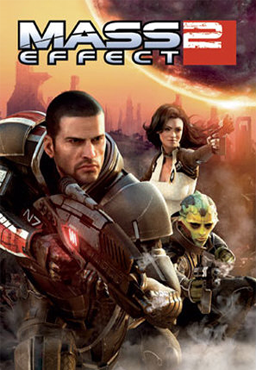
If Dragon Age: Origins was the game that got me to re-think my stance on Bioware, and the original Mass Effect was the game that finally tipped me over the edge to being a full-fledged Bioware fanboy, then Mass Effect 2 is the game that makes me glad to be there.  It picked up where its predecessor left off, did a bunch more things right (and ME did plenty right on its own), and resulted in perhaps the best hybrid RPG ever.

Fans of the original, and of RPGs in general, will immediately notice that ME2 is less RPG-y than the original and than most of Bioware's earlier RPGs.  The inventory system was one of the few weaknesses in the original; at times, it felt more like we were playing Spreadsheet: The RPG.  Of course, whether to use Incendiary Ammo VII or Cryogenic Ammo VI would probably make such a slight sliver of difference to the gameplay that you'd really have to be looking for it to notice it, but let's face it: I spent far too long optimizing everyone's ammo upgrades on their tertiary weapons, and you did too.

ME2 doesn't waste time with those details.  Every character has a handful of weapons, of which they'll ever use two at the most.  Shepard's armor is customizable, but in a "hey, that's a cool bonus" sort of way as opposed to "I must squeeze every possible point of defense out of this."  And gone are the multitude of skills that you may or may not ever use; each character has three plus a bonus that's unlockable over the course of the game.  The result is something that doesn't feel exactly like an RPG, certainly less so than the first game did, but then again doesn't really sell itself as one or claim to be one.

All of those simplifications are things that could make the RPG purist whine, and fair enough to that.  (We still have the RPG-tastic Elder Scrolls series--and Bioware's own Dragon Age--to console us.)  But look at the other side of the coin: think of the pain that shooter purists must be feeling!  There's no barrel-aim acceleration, no "realistic" obstacles to hitting your target like your character's breathing or footsteps, and no fancy scopes or aiming reticules.  But as much as each of those is a sine qua non to a shooter person, they just represent inaccessibility to the rest of us.

So Mass Effect 2 manages to do something that's very rare indeed in the realm of game design: it hybridizes two genres to the satisfactions of all parties.  It strips down both genres and figures out what's fundamentally fun about each with little regard for attaching either side's sacred-cow strictures.  Then it combines all that fun into a game that turns out to be... fun.

The other thing that Mass Effect 2 does remarkably well is stray from the Bioware Path.  The in media res prologue is still there, and so is the climactic final "dungeon", but gone is the almost amusingly tried-and-true "here are four parallel tasks that you must accomplish and which take place in different corners of the world" formula that literally every other Bioware game has followed.  ME2 is stronger for pursuing its own identity.  There's no artificial unfolding of the plot and very little railroading; instead, the endgame is laid out plainly after only a few hours of gameplay, and you can choose whichever path you see fit to get there.

It's a trend in modern video gaming to make games a reflection of a story that you want to tell rather than what the developers want to tell, and no game out there accomplishes this better than ME2.  Although every playthrough of the game ends up in the same place, it's entirely up to you to get there, and your version of the game is the result of dozens of decisions that you make.  It's an engaging and ultimately more rewarding experience than playing through someone else's version of the game.

And it's that immersive storytelling that really sets Bioware apart from other game studios.  Bethesda builds worlds and lore better.  Nintendo is more prolific and has a virtual monopoly on classic franchises.  But if Bioware can make their trilogy's middle volume one of the best games in years, then consider me a fan.


Currently listening: The Valley, Eisley (review to follow!)

Thursday, February 17, 2011

Birthday Cake

My old friends the Decemberists decided they'd play a show in Oakland for my birthday, which was really nice of them, except that 1) it's impossible to get my friends excited about the Decemberists, and 2) while I'm perfectly comfortable going to concerts alone, doing that on my birthday just seemed sort of depressing.  So, I decided on the next-best thing: go to see Cake (which I could motivate some friends to go to see) the day after my birthday.

Cake is one of those bands, like, say, Guster or the Juliana Theory, that I rarely think "yes, awesome, I need to listen to this band immediately."  But when I do listen to them, I always scold myself for not being more into them, because they are awesome.  Cake has been at this a long time--they're pushing two decades--and none of their albums represent much of a departure from any of their other albums, but there's something to be said for their consistency.

So Cake has never been at the top of my List Of Bands I Must See In Concert (it exists, and Death Cab for Cutie, Rilo Kiley, and the New Pornographers are all somewhere towards the front)... but now that I've seen them, I'm scolding myself for not putting them up there.  In a reflection of their albums, their show isn't one that blows you away and leaves you, slack-jawed, gazing at the stage at the Fillmore and unable to move.  Instead, it's a show full of really solid material that comes with just enough wry humor and audience participation to make you appreciate the hell out of the band.

(Another thing that makes me, at least, appreciate them is their extensive use of the trumpet.  Trumpeter Vince DiFiore doesn't play a lot of difficult parts, though he plays them really well.  It's when he launches into improv, something you don't get to hear a lot of on the albums, that's when you really start to understand how good he is--and how you're benefiting from seeing Cake live instead of just listening to them in your room.)

The band described their own show as playing two sets, but it felt more like a long set and a half, or like Cake was opening for themselves.  The first half of the show featured some reasonably well-known older material ("Frank Sinatra") and some tracks from their new album, but it wasn't until the second half of the post-intermission set that they launched into iconic Cake, including "Love You Madly," "Sheep Go to Heaven," and "Short Skirt Long Jacket," finally ending the encore with "The Distance".

It's always a nice touch when bands make the audience sing, and it's even better when the audience plays along.  The Cake-going crowd was game enough to provide background vocals on a few tracks, which was fun.  Cake took their audience participation a step further, giving away cool stuff in exchange for knowing the answers to obscure trivia questions, including the date that Gutenberg was credited for inventing the printing press (1440; the prize was a printed page, signed by the band, from a book that Cake put together) and the identity of a mysterious tree on the stage (lemon; the prize was the tree itself).

One thing that made Cake stand out even more: throughout that trivia contest, and throughout the entirety of the show, Cake worked hard to maintain an air of civility, humility, and courteousness.  It's a lesson that a lot of rock bands would benefit from taking to heart, and coupled with some excellent music, it made for a great (if slightly belated) birthday dessert.


Currently listening: "The Only Living Boy in New York," Simon and Garfunkel

Tuesday, February 01, 2011

Black Swan: Not the Best Movie of 2010

Granted, I'm a bad choice of person to ask what the best movie of the year is.  (After all, I'm one of like six people in my demographic who still hasn't seen Inception.)  But I'm pretty sure that best movie is not Black Swan.

There's not much to be said for the plot of the movie.  As a character study of a slowly developing insanity, it's fine, but "protagonist seeks impossible goal and goes insane" has been done to death over the last five centuries.  Shakespeare did it with Hamlet, Cervantes with Don Quixote, Dostoevsky with Crime and Punishment, and Joseph Conrad with Heart of Darkness (probably the best "descent into madness" thriller out there).  Black Swan draws from this fertile ground of storytelling but doesn't leave much of its own impact.

And let's be honest: from the moment that Natalie Portman's character Nina explains the plot of Swan Lake for the first time, we all know what's going to happen in the end.  Portman's Nina--whose "White Swan" allegory couldn't be made more obvious if she wrote "white swan" on her forehead (naturally, with white marker)--is obviously destined to die by her own hand.  (Black Swan did do legions of theatergoers the service of informing them how stupid the plot of Swan Lake is: girl is transformed into a swan and ends up killing herself because the guy she's after falls in love with the wrong girl?  Whatever you say, Pyotr Ilyich.)

Thematically, amateur critics could have a field day throwing out allegations of "symbolism" with Swan's black-and-white drenched mise en scene.  But in order to be symbolic, the supposed symbol must actually symbolize something.  Any viewer could make the argument that any given black or white item had some deeper significance behind it.  For a handful of costume pieces and important props, that's of course the intention, but it would be possible to seek your own impossible goal and reach your own madness trying to assign a symbolic interpretation to everything that is white or black.  Sorry, but the black doorframes do not represent unrestrained passion.  They're just part of the black/white motif--and that's totally fine--but let them be doorframes and don't make them more than they need to be.

Finally, that Natalie Portman should be lauded as heavily as she has been for her performance is baffling.  She carries the role of Nina just fine, and her dancing skills are certainly legitimate and praise-worthy, but the problem is that her character is just not interesting.  That's not Natalie Portman's fault, of course, but it feels counter-intuitive to heap awards on acting out a character based on deer-in-the-headlights stares and a frailty that comes across less as fragile vulnerability and more as bland weakness.

Black Swan isn't terrible.  Vincent Cassel plays the manipulative, twisted-artist role to perfection (and pulling off a straight French ballet director should be award-worthy in its own right), and it's entertaining enough to sort through Nina's psyche to figure out which parts of the movie are real and which ones all in her head.  Where the movie succeeds most is in giving an unflinching look at dancer culture; with its pressures and infighting, it's easy to believe that this is the kind of thing that could drive Nina mad.

It's entertaining and probably worth seeing if you're up to the challenge of putting together a few pieces yourself, but Black Swan just doesn't pave enough new ground or come together in the right places to legitimately be the best movie of its year.


Currently listening: "Pretend You're Alive," Lovedrug

Friday, January 28, 2011

The Elder Scrolls V: Skyrim, Game Informer For Free

That we're still more than nine months away from the release of Skyrim is excruciating, but at least the good folks over at Game Informer have dedicated more or less the entire month of January to the cause.  They've posted about a dozen fascinating articles about the game, ranging from insights into its development process to previews of its mechanics--but naturally, with them being a business and all, there's plenty more content in the physical magazine, in its February 2011 issue.

I'm nowhere near as big a video gamer as I was ten years ago, and my days of subscribing to video game magazines are long over... but this is Skyrim we're talking about.  I decided I needed to own a copy of this issue.  There were disappointingly few places I could have bought it on the internet, with the exception of eBay, and after shipping, it would end up costing me more money to buy a used copy than just to find my own.

"Easy," you might say.  "Go to a bookstore."  That would be a fine idea but for living in Berkeley.  There's not exactly a Barnes and Noble down the street, and it's not like the hippies at the local independent bookstore carry a vast selection of video-gaming magazines.  BART is always an option--but then I'd be spending more on my trip than on the magazine--and I have friends with cars, but I like to save my begged-for rides for things that really count, like trips that involve forty pounds of dirt from Home Depot.

But, upon entering my apartment yesterday, I noticed something: the February 2011 issue of Game Informer sitting on the shelf below my building's mailboxes.  That shelf has come to be used for abandoning pieces of mail that belong to people no longer living in your apartment--and living in a student-heavy area, that happens quite a lot.  I checked the name on the label against the name on Apartment 2's mailbox, and it was way off.  Still, there's the vague thought of the phrase "federal crime" when you steal someone else's mail, and maybe there was a perfectly good explanation for why the magazine was outside its mailbox?

I didn't have to debate postal ethics for long, though.  I opened my own mailbox to find the exact same issue of Game Informer had magically shown up in my mailbox.  There is surely no Phillip Van Sant living in Apartment 12, and between shelving the magazine next to its twin or adopting it, the choice became easy.

Here's the thing, though: my apartment has never received an issue of Game Informer prior to January 27, 2011, and I've been leaving there for nearly a year and a half.  I assume Mr. Van Sant is a prior tenant, but I've never gotten any of his mail before now.  It seems downright bizarre that the first and only one that shows up happens to be the exact magazine I'm interested in.

I must have cashed in some seriously good karma for something.  And, to keep the cycle going, Mr. Van Sant, the magazine is yours if you want it.


Currently listening: Tartini, Concerto in D, as performed by Maurice Andre

Tuesday, January 18, 2011

The Decemberists: The King is Dead

Now that they've been making albums for ten years, it doesn't look like a completely consistent Decemberists album, one that's just plain good from start to finish, is ever going to be in the cards.  Look at literally any of their six full-length albums (and many of their EPs and other assorted releases), and you'll see that half to two thirds of it is amazing, bordering on brilliant, and the remainder is... not.  Sometimes it tries too hard and becomes the indie cliche that the Decemberists are often accused of being.  Sometimes it doesn't try hard enough, and what would otherwise be a halfway decent track is lost to much better material to either side of it.  And sometimes it's just boring.

The weird thing about the Decemberists is that however they dress their music up, it turns out this same way.  Whether they're set in medieval Japan or Arthurian England, every Decemberists album follows the pattern.  So forget the "blah blah blah REM" hype, and lay the "hey look, this album was recorded in a barn, so it is rustic" to rest.  It's still a Decemberists record.  It's still indie pop with strong folk influences and a pinch of hard rock to make it interesting.  It still features Colin Meloy using words that you didn't know existed.  And it still features six or seven outstanding tracks and a handful of entirely forgettable ones.

That's not to say that The King Is Dead is the same album as any of the Decemberists' past releases--least of all The Hazards of Love.  Where Hazards was high-concept rock opera (and really cool, though not everyone's cup of tea), King is toned down a bit.  The only major "theme" on this album, if one exists at all, is the passage of time: seasons turn, calamities happen, we reminisce, we fight in wars... and everything goes on.  But the Decemberists are rarely ones to make a statement ("16 Military Wives" being possibly the sole exception).  They're content to sing songs, and that's what's great about them.

What works on King?  For starters, everything involving that "turn of the seasons" motif: "Don't Carry It All" is an upbeat way to start the album, a sincere paean to lending a helping hand.  "January Hymn" has an austere beauty that executes Fleet Foxes' concept better than Fleet Foxes can, and "June Hymn" is as unpretentious an indie-pop tune you'll ever find, reveling in some simplicity that evokes some almost-real Springville Hill.

My favorite track, strangely, is "Rox in the Box."  It has an irritating title, and the first two lines of it sound like they should be from a Charles Barkley commercial for Taco Bell, but it evolves into a complex tune with layers of bluegrass and old-style American folk that very few bands could pull off.  "All Arise!" is another stylistic experiment, mixing in zydeco harmonica, accordion, and fiddle--and like "Rox," it borrows heavily from the aesthetic of the Decemberists' so-called side project, Black Prairie.  And "Down By the Water" is a fine first single; what it lacks in usual Decemberists flamboyance, it makes up for with Gillian Welch's vocal performance.  (Welch is featured on around half of the album's tracks, but her talents are used most effectively in "Water".)

King's biggest problem is that its pacing is just a bit askew.  It's not a long album, weighing in at under 40 minutes, and every time it finishes, I want there to be more--which speaks highly for the album.  Still, it drags in parts: both "Rise to Me" and "Dear Avery" are nearly five minutes long, and neither is interesting enough to warrant that much length.  "Dear Avery" in particular is a curious, unexpectedly low-key end to the album.  It's not quite as dull as "Of Angels and Angles," the mind-numbingly emo finale to 2005's Picaresque, but it doesn't build to any sort of climax that gets me excited about the last eight minutes of the album.

But it's the Decemberists, after all, and we can't expect every single track to be a winner.  Six or seven brilliant out of ten is nothing to sneeze at.


Currently listening: "Apologies", Christie DuPree

Thursday, January 06, 2011

The Case Against a College Football Playoff

It's that time of the college football season again.  Time to watch the best teams play each other, to celebrate the achievements of the student athletes--and to argue about how we could do it all better.  It's awfully trendy these days to argue in favor of a college football playoff, but in reality, a playoff solves few of the problems it's ostensibly designed to fix, and introduces plenty of its own.

1. Someone still gets left out

One circumstance that sparks a particularly impassioned rallying cry among the football playoff's supporters is when a team gets left out.  Maybe there are three undefeated teams, only two of which can play for the national title.  Maybe there is only one undefeated team but three teams with one loss.  Supporters of the playoff argue that a playoff is inherently more fair simply because there are more slots, giving more teams a chance to contend for the title.

Admittedly, even expansion to a modest four-team playoff does allow every undefeated team to contend for the title in most years.  Expansion to a more ambitious eight-team playoff virtually guarantees that all the undefeateds will be in, barring the vanishingly rare case of enormous imparity in every football conference.  However, unless there are exactly four, or exactly eight, undefeated teams, some team with the next-best record is still going to get left out.  I'll use the 2010-2011 season as an example, referencing rankings and records as of the final BCS standings, but you can perform the same analysis on any college football season and come up with pretty much the same conclusions.

This year was an unfortunate example of the "three undefeated teams" version of the "someone gets left out" argument.  Auburn (13-0) and Oregon (12-0) are outstanding football teams and the natural choices to contend for the title.  But in letting them play in the title game, you're keeping out TCU (12-0), who essentially had no chance at ever making it to the title game unless Auburn or Oregon lost, and who showed in the Rose Bowl that they're every bit tough enough to "play with the big boys."

A four-team playoff would have allowed TCU to play for the national title.  It also would have allowed Stanford (11-1) that same chance while denying it to Wisconsin (11-1) and Ohio State (11-1).  While Stanford is also without question very good, you could make the argument that Wisconsin and Ohio State deserve the chance more because Stanford already lost to Oregon.

Want to expand to eight teams?  Okay, but now you're letting in Oklahoma (11-2) but not Michigan State (11-1) or Virginia Tech (11-2).  You're letting in Arkansas (10-2) but not LSU (10-2) or Missouri (10-2).  And you're entirely neglecting Boise State (11-1) and the only team that figured out how to beat them, 12-1 Nevada.

In summary, although a playoff is a step in the right direction toward ensuring that no undefeated team gets left without a shot at the title, it still involves drawing an arbitrary line through a cluster of teams with similar records--and the teams on the wrong side of that line get left out.

2. Bowl coexistence

The bowls are an integral part of college football history, tradition, and culture.  Fortunately, not even the most strident playoff supporters advocate getting rid of the bowls, so it's obvious that a hypothetical playoff would have to coexist with them.  There are a number of ways to do this, but none of them are particularly satisfactory.

The BCS has tried two methods of reconciling itself with the classic "major bowls".  Until 2006, the national championship rotated among the Sugar, Fiesta, Orange, and Rose Bowls.  It's easy to envision a scenario where one year, the Rose Bowl is the national championship game, and the Orange and Sugar are national semifinal games; then the next year, the Orange is the national championship, and the Sugar and Fiesta are national semifinals, etc.

But it didn't really work when the BCS tried it, and there's no reason to think it would work any better under a playoff system.  It's confusing--and it takes power out of the hands of the bowls and gives it to the playoff bracket.  These "major" bowls are classics for a reason.  The Rose Bowl is supposed to feature the best West Coast team against the best Midwest team.  The Sugar Bowl is supposed to give the SEC a chance to defend its reputation on a national stage.  College football is better off if it preserves as many of these traditions as possible.

A second option might be sending all the best teams to bowls at the end of the season... except for the really good teams, who get to enter the championship bracket.  Now, the Fiesta Bowl features the best team in the Big XII... except for those two teams that were better and got to play in the playoff.  You're watering down the bowls--they become the less exciting and less meaningful cousin to the playoff, which is fair neither to the student athletes that play in them nor to the culture of the sport.

Finally, it's conceivable to separate the bowls from the playoffs entirely; to play the bowls as they're traditionally done, then re-rank, then seed the top four or eight teams into a playoff.  That idea has the advantage of preserving the sanctity of the bowl system, but it introduces yet another wrinkle: season creep.

3. Season creep

The college football season is already pushing the limit of how long it can reasonably be.  For a long time, the climactic high point of the season was New Year's Day and the Rose Bowl.  In the BCS era, we've tolerated some early January bowls.  And now that the national championship game is its own entity, we've allowed it to take the place of honor as the very last bowl game--but it's pushing middle January.

Middle January is when virtually every college starts its spring semester--some, including my proud alma mater Georgia Tech, will have already started its semester by the time the national championship game is played.  If a hypothetical playoff added any time at all to the season, then the season will extend at least a week or two into virtually every college's spring semester.  That's okay for us fans, but it's not okay for the student athletes involved.  Commitment over an entire semester is enough; there's no justification for stretching it into another one.


In conclusion, there exists no practical approach to a college football playoff that results in both the bowl season maintaining its tradition and excitement and the playoff not encroaching into middle to late January.  And even if there were, it would rarely if ever solve the "fairness" problem that the current system presents.  We can argue all day long that the BCS is broken, but a tacked-on four- or eight-team playoff is not the way to fix it.


Currently listening: Foo Fighters, self-titled album

Friday, December 17, 2010

The Elder Scrolls V: Skyrim, First Impressions

We've only been waiting four and a half years for it, but we finally got it, and it is phenomenal.  And even though we know hardly anything about it yet, speculation about and anticipation of the new Elder Scrolls game, Skyrim, is going to occupy an unhealthy portion of the next eleven months of my life.

What do we know?  The story sounds epic--and very Morrowind.  The prophesied hero, incarnation of an ancient great power, comes to a remote province of the empire to save the day from a newly-reawakened evil.  Call it Nerevarine or call it Dovahkiin, it's a classic plot within the Elder Scrolls universe, and it's consistently fun to play through.  It's set to involve dragons, and while we know from the lore that dragons are a part of the history of Tamriel and especially Skyrim ("...and then came the northern men to help Kagrenac and they brought Ysmir again," 36 Lessons of Vivec, Sermon 36) we've never seen them in-game.

Much has been made of some comments from the developers, but in reality it's far too early to say anything about what they mean.  In particular, Skyrim has been construed as a "direct sequel" to Oblivion, leading to a lot of speculation about how closely related the two titles will be.  But as a longtime fan of the series, it's intuitive that Skyrim and will be about as closely related to Oblivion as Oblivion was related to Morrowind.  All the games take place in the same setting, and the setting being as lore-intensive as it is, the events in the previous game are naturally going to have some impact on the next game.  But a "direct sequel" to Oblivion would necessarily be set in the Imperial Province, involve the Oblivion gates crisis, and have Mehrunes Dagon as its antagonist.  It's clear already that Skyrim will do none of that.

That said, because this is the Elder Scrolls universe, it is prudent to wonder just how much the events of the previous game are going to change the setting.  A lot of crap went down in Oblivion.  The Imperial City got sacked, a Daedric Prince was defeated, and the Septim line of emperors ended.  At the very least, Tamriel is going to have a new ruling dynasty--and it's entirely possible that the Empire will have collapsed completely.  Is Mehrunes Dagon permanently destroyed, or merely rebuffed from the mortal world?  All this remains to be seen.

Finally, the announcement of Skyrim has re-ignited the senseless debate among Elder Scrolls fans about whether Morrowind or Oblivion was a better game.  I don't know why we can't all agree that Morrowind had a more immersive experience and a better story, Oblivion had a more polished structure and prettier landscapes, and they were both incredibly enjoyable games.  There are people who will insist that Morrowind is better because it has medium armor, the short blade/long blade distinction, and more attractive faces.  On the other side of the coin, Oblivion's diehards protest that Morrowind was too hard and lacked horses.

Micromanagers and effort-averse aside, most Elder Scrolls fans do agree that both Morrowind and Oblivion were excellent.  Even though we don't know much about Skyrim yet, if it builds on their successes, my social life is going to collapse next November.

A few assorted points:

--In the chorus at the end of the trailer video, a figure named "Hrothgar" is mentioned.  I thought that Hrothgar sounded familiar, so I checked him out on the Elder Scrolls Wiki.  Turns out the only mention they have of Mr. Hrothgar is that his name lives on as a mountain in Skyrim.  But!  Hrothgar is an actual mythic figure from Anglo-Saxon myth, most notable as the king in Beowulf.  It wouldn't be the first time that an Elder Scrolls myth has drawn name inspiration from a real-world myth.

--It's probably a hope in vain because level scaling is pretty much de rigeur in RPG design these days, but I really, really hope that Skyrim either eliminates or overhauls Oblivion's approach to level scaling.  Roadside bandits instantly getting tougher the second you do destroys the realism that the Elder Scrolls series tries very hard (and mostly succeeds) to create.

--Bethesda trademarked the name "Skyrim" way back in 2007, suggesting they've been planning this for a very long time indeed.  Of course, suspicion that Skyrim would be the setting for the next Elder Scrolls game started back then, which is why it isn't really a surprise that this game has that setting.  Looking at Tamriel, we've had games set in Hammerfell, High Rock, Morrowind, Cyrodiil, and now Skyrim.  Unless we really want to set a game in Argonian-land or Khajit-land, that leaves Valenwood (Bosmer) and the Summerset Isles (Altmer) as the logical choices for the next Elder Scrolls game.

--So I got to thinking: wouldn't it be totally awesome if there were an Elder Scrolls game set in Summerset, where you could go to Artaeum, visit the Crystal Tower, and join the Psijic Order?  Yes, it would.  You heard it here first: Elder Scrolls VI: Artaeum, summer 2016.


Currently listening: "Letter from an Occupant", the New Pornographers

Wednesday, December 08, 2010

The Wheel of Time: Towers of Midnight

Holy crap, Wheel of Time fans.

We're actually looking at the penultimate book of this series.  It is going to be finished in the next volume.  Twenty years later, and we can finally see the light at the end of the tunnel.  It took fourteen books, not the putative twelve; it took struggling through some real quagmires around book 10; it took two of the most accomplished fantasy authors of our generation.  But the Last Battle is really, truly about to happen.

Towers of Midnight is the second of Brandon Sanderson's three contributions to the series.  The first, The Gathering Storm, was the best Wheel of Time book probably since The Dragon Reborn, and it represented a clear return to the brilliant form of the first few books in the series.  Towers lags a little compared to Storm, but it still probably ranks among the better books in the series--and besides, it's the middle volume of a trilogy, so it's allowed to lag a little.

After having read three of Sanderson's books (his two Wheel of Time books and The Way of Kings), a few clear patterns have emerged.  Sanderson likes to spend about four hundred pages developing a few protagonists and setting up their respective conflicts, then resolving those conflicts in the three to five hundred pages that remain.  The result is that each protagonist's story--while well-developed, entertaining, and following a clear beginning/middle/end arc--is about twenty to thirty percent longer than it needs to be.

For instance, in Towers, Perrin's decisive battle with Slayer and the destruction of the Tar Valon dreamspike is necessary and entertaining; his earlier string of stalemates with Slayer are not.  Mat's decisive battle with the gholam where he sends it through the gateway to nowhere is necessary and entertaining; his earlier string of stalemates with the gholam are not.  Aviendha's vision at Rhuidean is necessary and entertaining; her introspection along the road there is not.  Elayne's accession to the throne of Andor is (presumably) necessary and (marginally) entertaining; her oh-so-subtle political maneuvering to get there iscertainly not.

Speaking of Elayne, will some Wheel of Time fan please convince me that her story is either necessary or entertaining?  She's not a terribly interesting character--at best, she's a slight variation on the "spoiled princess" archetype, and her most intriguing trait is her ability to assay and create ter'angreal, which has nothing to do with Andor at all.  And her story lacks an exciting quality that most of the rest of the characters' stories have at least sometime--even Perrin's!  We want Elayne to do something awesome; this is epic fantasy, not Machiavelli.

Elayne being about as interesting as the attendant who brushes her hair is more Robert Jordan's fault than Brandon Sanderson's.  But Sanderson makes one apparent gaffe that's all his own.  In bringing Graendal back from apparently being dead, he breaks the Megatron rule: if a villain appears to be defeated at the end of one installment, it is almost always wrong to retcon that villain into the next installment.  Sanderson has latched on to Graendal as the primary villain for his trilogy, and that's fine, but she had better play a critically important role in the last book to merit being brought back in this one.

Sanderson still does a lot right in this book.  The Tower of Ghenjei adventure is a nice antidote to the Elayne mess; it feels like a campaign in a heroic roleplaying game, and it's a fulfillment of one of the series' long-standing promises.  Exactly what point Moiraine is destined to play in the final battle remains to be seen, but a little like Graendal, she had better be important to have invested so much of the series into this rescue.  It's nice to see that Perrin, Mat, and Lan have finally decided to be real leaders, and the very last scene where Lan assumes the (figurative) throne of Malkier, raises the Golden Crane, and charges the Trolloc army at Tarwin's Gap is incredibly fulfilling.

Aside from telling a fine story, Sanderson continues to organize his narrative well.  In the latter half of his part of the Wheel of Time, Robert Jordan more or less dispensed with traditional novel structure, instead releasing collections of chapters with little holding them together as books.  While to some extent every volume in a serial is just a continuation of the story, each volume also needs to have enough internal structure to make them satisfying by themselves.  (The best episodes of Lost both contributed to the overall plot and were compelling stories in their own right.)  Fortunately, Brandon Sanderson is very good at this; reading Towers of Midnight felt like both reading a novel and continuing a series.

It's increasingly obvious that Brandon Sanderson is exactly the right person to continue the series to its conclusion.  The Gathering Storm was excellent.  Towers of Midnight was a little down but still great.  If Towers of Midnight ends up being Sanderson's Two Towers, then we're in great shape for A Memory of Light.


Currently listening: Several Arrows Later, Matt Pond PA

Midnight Harry Potter, Two Weeks Late

First thought: "This movie is going to end way past my bedtime."
Second thought: "Ah, what do I care.  When else besides grad school am I going to have the means and opportunity to watch movies at midnight?"
Third thought: "Good Lord, what have I gotten myself into?"

Now, I like Harry Potter.  I've read all seven books.  I've seen the first seven movies, and I'll undoubtedly see the eighth.  I'll even give the series credit for forming and strengthening some friendships.  I would call myself a Harry Potter fan.

There aren't many of us.

Harry Potter tends to attract not just fans, but fanatics.  Every hobby, every form of entertainment has them: people who own special clothing, who can recite lists of minor information, who spend time in the meta-community talking about the activity rather than doing it, who can engage in a half-hour conversation and not be abashed by its utter nerdiness but just be left wanting more.  (Think me with Lost.)  Whether it's gardening or Batman or Ke$ha or the New York Mets, somebody is going to go all out.  But for whatever reason, a lot more people go all out with Harry Potter than with any other hobby or activity or entertainment that I know of.

Combine me being a mere Harry Potter fan with me being Not A Movie Person, and it was strange indeed to find myself in a midnight screening of Deathly Hallows Part 1.  But I'm glad I went--because seriously, why not--because it turned out be one of the better Harry Potter movies so far.  Only a few scenes fell short.

The only truly weak part of the film is the middle-to-late "Ron has left us; what are we to do?" section.  It lasts too long with not enough happening.  I don't remember the "Harry and Hermione dance" scene from the book at all, but man was it boring and inconsequential in the movie.  One of the biggest differences in reading the book and watching the movie is that in the book, you don't know if or when Ron will come back--and it leads to an emotionally devastating few chapters.  After you've read the book, you know that Ron does come back, and that the plot really doesn't advance until he does.  With that in mind, the scenes in between go from powerful to filler pretty quickly.

Quibbles with other parts of the movie are even more minor.  As in the book, I wish that more had been made of Hedwig's death scene.  I'm probably alone among Harry Potter fans in saying this, but forget Dobby--I think Hedwig's death is the real tragedy.  It's more than just a character dying; it's a symbol that Harry really isn't going back to Hogwarts anytime soon, and it's a clear sign that the Bad Guys are Not Messing Around, when they're totally okay with killing defenseless creatures.

And speaking of our friend Dobby, the funeral scene seemed a little odd, with Harry and company carrying around a white-sheeted bundle meant to contain Dobby's corpse.  It's the only time in the movie where my suspension of disbelief utterly failed, and I started thinking in terms of actors and filmography rather than the story being told.

Finally, the intensity could have been turned way up in the Malfoy Manor scene.  Once again, this scene serves some important literary purposes: it's more evidence for Bellatrix's complete insanity and hatred for non-pureblooded wizards, and it's probably the first strong piece of evidence for Lucius Malfoy's wavering loyalty.  Sure, he's a bad guy, but the manor scene demonstrates that maybe he isn't okay with Voldemort using his place as a de facto base camp, and maybe he follows him more out of necessity than fervor.

The more potent the Malfoy Manor scene, the stronger the development of these character traits becomes.  On top of all that, we need to feel like Hermione is really in danger of dying.  This might be yet another function of having read the book and knowing what happens next, but the whole ordeal at the manor seemed started then finished in the matter of a few minutes.  Obviously there are limits to how far you can push a PG-13 rating (and clearly it makes economic sense to avoid the R rating), but it's scenes like this one that I like to point to when Harry Potter skeptics accuse the series of being "children's literature".

As usual, though, when a review comes down to criticizing a few specific scenes, that means the rest of the movie worked reasonably well.  I absolutely love Luna's character--in fact, her character is much better in the movies than in the books--and her humor (where you're never quite sure if she's being flaky or unexpectedly insightful) is one of the few instances of comic relief that is genuinely funny.  The movie is quite faithful to the book--not that it's difficult to be, with two and a half hours to cover less than 400 pages of the novel, there would be no excuse for any drastic departures.  And most importantly of all, the lovely Miss Emma Watson turns in clearly her best performance so far.

Bottom line: if you're out of the Harry Potter loop, there's no way you're going to see this movie, because it simply will not make any sense to you.  And if you're in the Harry Potter loop, even if the movie were truly horrible, it probably wouldn't cross your mind not to see it.  But here's the thing: this movie is good.  It is both a worthy followup to the first six movies and a faithful translation of the seventh book (or at least the first chunk of it).  So even all those fanatics that Harry Potter inexplicably attracts won't be disappointed.


Currently listening: Broken Bells, self-titled album